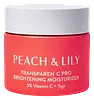
Peach & Lily Transparen C Pro Brightening Moisturizer Versus Peach & Lily Transparen-C Pro Spot Treatment
This brightening moisturizer is formulated around Ascorbyl Tetraisopalmitate and Glycyrrhiza Glabra Root Extract to brighten dull-looking skin and fade the look of dark spots.
This brightening treatment is formulated around Ascorbyl Tetraisopalmitate and Glycyrrhiza Glabra Root Extract to fade the look of dark spots and brighten dull-looking skin.

What's inside
What's inside
 Key Ingredients
Benefits
Concerns
Ingredients Side-by-side
Water
Skin ConditioningButylene Glycol
Humectant

Ascorbyl Tetraisopalmitate
Antioxidant




Glycerin
Humectant
Caprylic/Capric Triglyceride
Masking
Hydrogenated Polydecene
EmollientPolyglyceryl-6 Distearate
Emulsifying
1,2-Hexanediol
Skin Conditioning
Dipropylene Glycol
HumectantCetearyl Alcohol
Emollient



Candelilla/Jojoba/Rice Bran Polyglyceryl-3 Esters
Emulsifying
Citrus Junos Fruit Extract
Skin ConditioningBacillus/Spirodela Polyrhiza Extract/Volcanic Ash Extract Ferment Filtrate
Skin ConditioningBacillus/Houttuynia Cordata Leaf Extract/Volcanic Ash Ferment Filtrate
Skin ConditioningSodium Hyaluronate
Humectant


Hydrolyzed Hyaluronic Acid
Humectant
Hyaluronic Acid
Humectant
Hydrolyzed Sodium Hyaluronate
Skin Conditioning
Camellia Sinensis Leaf Extract
Antimicrobial


Polygonum Cuspidatum Root Extract
Antioxidant
Scutellaria Baicalensis Root Extract
Astringent
Zingiber Officinale Root Extract
Masking
Tremella Fuciformis Extract
Humectant
Sodium Hyaluronate Crosspolymer
Humectant
Glycyrrhiza Glabra Root Extract
Bleaching
Arginine
Masking
Centella Asiatica Extract
Cleansing
Lactobacillus/Papaya Fruit Ferment Extract
Abrasive
Chamomilla Recutita Flower Extract
Masking
Ananas Sativus Fruit Extract
Skin ConditioningFerulic Acid
Antimicrobial
Morus Alba Root Extract
BleachingCetearyl Olivate
Tocopherol
Antioxidant
Carbomer
Emulsion StabilisingAllantoin
Skin Conditioning
Sorbitan Olivate
Emulsifying
Xanthan Gum
EmulsifyingPaeonia Albiflora Root Extract
Skin ConditioningRosmarinus Officinalis Leaf Extract
AntimicrobialEthylhexylglycerin
Skin ConditioningCaprylyl Glycol
Emollient
Pentylene Glycol
Skin Conditioning
Sodium Polyacryloyldimethyl Taurate
Emulsion StabilisingSodium Phytate
Water, Butylene Glycol, Ascorbyl Tetraisopalmitate, Glycerin, Caprylic/Capric Triglyceride, Hydrogenated Polydecene, Polyglyceryl-6 Distearate, 1,2-Hexanediol, Dipropylene Glycol, Cetearyl Alcohol, Candelilla/Jojoba/Rice Bran Polyglyceryl-3 Esters, Citrus Junos Fruit Extract, Bacillus/Spirodela Polyrhiza Extract/Volcanic Ash Extract Ferment Filtrate, Bacillus/Houttuynia Cordata Leaf Extract/Volcanic Ash Ferment Filtrate, Sodium Hyaluronate, Hydrolyzed Hyaluronic Acid, Hyaluronic Acid, Hydrolyzed Sodium Hyaluronate, Camellia Sinensis Leaf Extract, Polygonum Cuspidatum Root Extract, Scutellaria Baicalensis Root Extract, Zingiber Officinale Root Extract, Tremella Fuciformis Extract, Sodium Hyaluronate Crosspolymer, Glycyrrhiza Glabra Root Extract, Arginine, Centella Asiatica Extract, Lactobacillus/Papaya Fruit Ferment Extract, Chamomilla Recutita Flower Extract, Ananas Sativus Fruit Extract, Ferulic Acid, Morus Alba Root Extract, Cetearyl Olivate, Tocopherol, Carbomer, Allantoin, Sorbitan Olivate, Xanthan Gum, Paeonia Albiflora Root Extract, Rosmarinus Officinalis Leaf Extract, Ethylhexylglycerin, Caprylyl Glycol, Pentylene Glycol, Sodium Polyacryloyldimethyl Taurate, Sodium Phytate
Helianthus Annuus Seed Oil
Emollient
Macadamia Ternifolia Seed Oil
Emollient
Ascorbyl Tetraisopalmitate
Antioxidant
Limnanthes Alba Seed Oil
Skin Conditioning
Simmondsia Chinensis Seed Oil
Emollient
Camellia Sinensis Seed Oil
Humectant
Squalane
Emollient
Sodium Acetylated Hyaluronate
Humectant
Hydrolyzed Hyaluronic Acid
Humectant
Glycyrrhiza Glabra Root Extract
Bleaching
Tocopherol
Antioxidant
Ferulic Acid
Antimicrobial
Sodium Hyaluronate
Humectant
Tranexamic Acid
Astringent
Kojic Dipalmitate
Emollient
1,2-Hexanediol
Skin Conditioning
Water
Skin ConditioningHelianthus Annuus Seed Oil, Macadamia Ternifolia Seed Oil, Ascorbyl Tetraisopalmitate, Limnanthes Alba Seed Oil, Simmondsia Chinensis Seed Oil, Camellia Sinensis Seed Oil, Squalane, Sodium Acetylated Hyaluronate, Hydrolyzed Hyaluronic Acid, Glycyrrhiza Glabra Root Extract, Tocopherol, Ferulic Acid, Sodium Hyaluronate, Tranexamic Acid, Kojic Dipalmitate, 1,2-Hexanediol, Water
Reviews
Ingredients Explained
These ingredients are found in both products.
Ingredients higher up in an ingredient list are typically present in a larger amount.
1,2-Hexanediol is a synthetic liquid and another multi-functional powerhouse.
It is a:
- Humectant, drawing moisture into the skin
- Emollient, helping to soften skin
- Solvent, dispersing and stabilizing formulas
- Preservative booster, enhancing the antimicrobial activity of other preservatives
Ascorbyl Tetraisopalmitate is a version of ascorbic acid, or Vitamin C.
This ingredient has many benefits including reducing wrinkles, skin soothing, dark spot fading, and fighting against free radicals.
It helps with dark spot fading by interfering with the process of skin darkening, helping to reduce hyperpigmentation. Like other forms of vitamin C, this ingredient encourages the skin to create more collagen.
As an antioxidant, it helps fight free-radicals. Free-radicals are molecules that may damage your skin cells.
One study found Ascorbyl Tetraisopalmitate to degrade in sunlight, but is stabilized when combined with acetyl zingerone.
Learn more about Ascorbyl TetraisopalmitateFerulic Acid is a plant based antioxidant that can be naturally found in the cell walls of grains like rice, oats, and corn. It has antioxidant and antimicrobial properties, and has the ability to boost the performance of other antioxidants as well.
A well-known study found that adding Ferulic Acid to a solution of Vitamins C and E doubled the photoprotection of skin. This is why you'll often see it paired with Vitamin C or Vitamin E serums rather than sold on its own.
A 2025 review of 18 human studies found that using Ferulic Acid (0.5-1%) daily for one to three months showed improvements in:
As far as allergies go, Ferulic acid is generally well-tolerated but can cause an allergic reaction in very rare cases. It's also worth noting that Ferulic acid is often extracted from plant sources like rice bran or wheat bran, so be sure to path test if you have known grain allergies.
Outside of skincare, researchers are also looking into Ferulic Acid for its potential benefits in areas like diabetes, Alzheimer's, and heart health.
Learn more about Ferulic AcidGlycyrrhiza Glabra Root Extract is an extract of the roots of Licorice. It has been found to have several benefits such as skin hydrating, conditioning, and soothing.
One component, glabridin, has extra potent antioxidant and soothing properties. It has also been found to block pigmentation from UVB rays in guinea pigs.
Licorice Root also contains a flavonoid. Flavonoids are a natural substance from in plants. Flavonoids also have antioxidant properties.
Another component, glycyrrhizin, has been found to have anti-inflammatory and antimicrobial benefits. This may make licorice root extract effective at treating acne. However, more research is needed to support this.
Liquiritin is one of the flavone compounds found in licorice. It has been found to help lighten skin by preventing tyrosinase from reacting with tyrosine. When the two react, protein is converted to melanin. Melanin is the substance in your body that gives your features pigmentation.
Learn more about Glycyrrhiza Glabra Root ExtractHydrolyzed Hyaluronic Acid is hyaluronic acid (HA) that is broken down into lower molecular weight fragments.
It's a humectant that pulls and holds water in the skin to help with hydration, plumpness, and reduce transepidermal water loss.
Because hydrolyzed hyaluronic acid is smaller in size, it can slip past your outermost layer of skin more easily than full-sized HA.
Most formulations will combine all sizes to get the best of both worlds.
Typical usage levels range from 0.01-1%. Any percentage higher than 2% might become goopy and tacky.
Learn more about Hydrolyzed Hyaluronic AcidSodium Hyaluronate is the salt form of hyaluronic acid. It is a long sugar chain that is naturally found in your skin, joints, and connective tissue that maintains hydration and elasticity.
In skincare, it works as a humectant. It pulls water from the environment and deeper layers of skin and binds it to the surface.
Interestingly, the size of the molecule affects its behavior:
Some clinical evidence links low molecular weight versions to improved wrinkle depth, elasticity, anti-inflammatory effects, and barrier repair.
Many serums use a blend of both weights so you can get surface hydration plus longer-lasting and deeper effects.
You'll typically see concentrations between 0.1-2% for this ingredient.
Learn more about Sodium HyaluronateTocopherol is a fat-soluble antioxidant known as Vitamin E.
You'll find this ingredient in the vast majority of skincare (for good reason). It works to neutralize free radicals, or unstable molecules generated by UV exposure, pollution, and other environmental stressors, before they can cause oxidative damage to your skin cells.
Topically applied tocopherol has been shown to protect against UV damage by ramping up the skin's own natural defense enzymes.
It also acts as a skin conditioning agent; some studies show that regular topical use can improve the skin's water-binding capacity over 2-4 weeks.
This ingredient is especially loved for being a team player. When combined with Vitamin C, the photoprotective effect of both ingredients roughly doubles and the combo also helps reduce UV-induced DNA damage.
This ingredient has some brightening potential but it's more of a prevention ingredient than spot-fader. Cell studies show it can slow down melanin production but it's worth noting that it's not the most powerful brightener out there.
In formulations, it also serves as a stabilizer that helps protect other oxidation-prone ingredients from degrading.
Concentrations usually range from 0.1-1% in most leave-on products.
Learn more about TocopherolWater. It's the most common cosmetic ingredient of all. You'll usually see it at the top of ingredient lists, meaning that it makes up the largest part of the product.
So why is it so popular? Water most often acts as a solvent - this means that it helps dissolve other ingredients into the formulation.
You'll also recognize water as that liquid we all need to stay alive. If you see this, drink a glass of water. Remember to stay hydrated!
Learn more about Water

