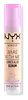
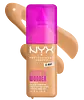
NYX Cosmetics Bare With Me Concealer Serum Versus NYX Cosmetics Make 'Em Wonder Soft Matte Buildable Foundation

What's inside
What's inside
 Key Ingredients
Benefits
Concerns
Ingredients Side-by-side
Water
Skin ConditioningHydrogenated Polyisobutene
EmollientHydrogenated Polydecene
EmollientPolyglyceryl-3 Diisostearate
Emulsifying


Glycerin
Humectant


Trimethylsiloxysilicate
Emollient
Isononyl Isononanoate
EmollientDisteardimonium Hectorite
StabilisingButylene Glycol
Humectant
Silica
Abrasive


Camellia Sinensis Leaf Extract
Antimicrobial




Helianthus Annuus Seed Oil
Emollient
Tremella Fuciformis Polysaccharide
Emulsion Stabilising
Centella Asiatica Extract
Cleansing
Allantoin
Skin Conditioning
Sorbitan Olivate
Emulsifying
Sorbitan Sesquiisostearate
Emulsifying
Glyceryl Behenate/Eicosadioate
Emollient
Sodium Chloride
MaskingMagnesium Sulfate
Ethylhexylglycerin
Skin ConditioningPolyhydroxystearic Acid
Emulsifying
Tocopherol
Antioxidant

Phenoxyethanol
Preservative
CI 77491
Cosmetic ColorantCI 77492
Cosmetic ColorantCI 77499
Cosmetic ColorantCI 77891
Cosmetic ColorantWater, Hydrogenated Polyisobutene, Hydrogenated Polydecene, Polyglyceryl-3 Diisostearate, Glycerin, Trimethylsiloxysilicate, Isononyl Isononanoate, Disteardimonium Hectorite, Butylene Glycol, Silica, Camellia Sinensis Leaf Extract, Helianthus Annuus Seed Oil, Tremella Fuciformis Polysaccharide, Centella Asiatica Extract, Allantoin, Sorbitan Olivate, Sorbitan Sesquiisostearate, Glyceryl Behenate/Eicosadioate, Sodium Chloride, Magnesium Sulfate, Ethylhexylglycerin, Polyhydroxystearic Acid, Tocopherol, Phenoxyethanol, CI 77491, CI 77492, CI 77499, CI 77891
Water
Skin ConditioningDimethicone
Emollient
Isododecane
EmollientIsohexadecane
EmollientAcrylates/Polytrimethylsiloxymethacrylate Copolymer
Skin ConditioningTrimethylsiloxysilicate
Emollient
Butylene Glycol
Humectant
Silica
Abrasive
Lauryl PEG-9 Polydimethylsiloxyethyl Dimethicone
Skin Conditioning
PEG-10 Dimethicone
Skin Conditioning
Cellulose
Absorbent
Magnesium Sulfate
Phenoxyethanol
Preservative
Disteardimonium Hectorite
StabilisingTriethoxycaprylylsilane
Dimethicone/Polyglycerin-3 Crosspolymer
Cleansing
Cetyl PEG/PPG-10/1 Dimethicone
Emulsifying
Ethylhexyl Palmitate
Emollient
Caprylyl Glycol
Emollient
Propylene Carbonate
SolventSilica Silylate
Emollient
Trisodium Ethylenediamine Disuccinate
Ethylhexylglycerin
Skin ConditioningAlumina
Abrasive
Oryza Sativa Starch
AbsorbentPropylene Glycol
Humectant

Kaolin
Abrasive
Disodium Stearoyl Glutamate
CleansingPaullinia Cupana Seed Extract
Skin ConditioningDipropylene Glycol
HumectantTrihydroxystearin
Skin Conditioning
Aluminum Hydroxide
EmollientTocopherol
Antioxidant
Sodium Hyaluronate
Humectant
Pentaerythrityl Tetra-Di-T-Butyl Hydroxyhydrocinnamate
Antioxidant
Glucomannan
Skin ConditioningCI 77491
Cosmetic ColorantCI 77492
Cosmetic ColorantCI 77499
Cosmetic ColorantCI 77891
Cosmetic ColorantCI 77007
Cosmetic ColorantWater, Dimethicone, Isododecane, Isohexadecane, Acrylates/Polytrimethylsiloxymethacrylate Copolymer, Trimethylsiloxysilicate, Butylene Glycol, Silica, Lauryl PEG-9 Polydimethylsiloxyethyl Dimethicone, PEG-10 Dimethicone, Cellulose, Magnesium Sulfate, Phenoxyethanol, Disteardimonium Hectorite, Triethoxycaprylylsilane, Dimethicone/Polyglycerin-3 Crosspolymer, Cetyl PEG/PPG-10/1 Dimethicone, Ethylhexyl Palmitate, Caprylyl Glycol, Propylene Carbonate, Silica Silylate, Trisodium Ethylenediamine Disuccinate, Ethylhexylglycerin, Alumina, Oryza Sativa Starch, Propylene Glycol, Kaolin, Disodium Stearoyl Glutamate, Paullinia Cupana Seed Extract, Dipropylene Glycol, Trihydroxystearin, Aluminum Hydroxide, Tocopherol, Sodium Hyaluronate, Pentaerythrityl Tetra-Di-T-Butyl Hydroxyhydrocinnamate, Glucomannan, CI 77491, CI 77492, CI 77499, CI 77891, CI 77007
Reviews
Ingredients Explained
These ingredients are found in both products.
Ingredients higher up in an ingredient list are typically present in a larger amount.
Butylene Glycol (or BG) is used within cosmetic products for a few different reasons:
Overall, Butylene Glycol is a safe and well-rounded ingredient that works well with other ingredients.
Though this ingredient works well with most skin types, some people with sensitive skin may experience a reaction such as allergic rashes, closed comedones, or itchiness.
Learn more about Butylene GlycolCi 77491 is also hydrated iron III oxide. It's sole purpose is to give a red/pink hue to products.
Iron III oxides are classified as inorganic chemicals for coloring.
Synthetically created Ci 77491 is considered safer than those naturally found. This is because the synthetically created version may contain less impurities. Iron oxides are generally non-toxic and non-allergenic.
Learn more about CI 77491CI 77492 is also hydrated iron III oxide. It's sole purpose is to give a yellow hue to products.
Iron III oxides are classified as inorganic chemicals for coloring.
Synthetically created CI 77492 is considered safer than those naturally found. This is because the synthetically created version may contain less impurities. Iron oxides are generally non-toxic and non-allergenic.
Learn more about CI 77492Ci 77499 is also hydrated iron III oxide. It is created from mixing red and black iron oxides. This helps give shades of darkness to a product.
Iron III oxides are classified as inorganic chemicals for coloring.
Ci 77891 is a white pigment from Titanium dioxide. It is naturally found in minerals such as rutile and ilmenite.
It's main function is to add a white color to cosmetics. It can also be mixed with other colors to create different shades.
Ci 77891 is commonly found in sunscreens due to its ability to block UV rays.
Learn more about CI 77891Disteardimonium Hectorite comes from the clay mineral named hectorite. It is used to add thickness to a product.
It can also help stabilize a product by helping to disperse other ingredients.
Hectorite is a rare, white clay mineral.
Learn more about Disteardimonium HectoriteEthylhexylglycerin is created from glycerin. It is a multitasker ingredient that:
The CIR Expert Panel found minimal skin absorption or sensitization of any kind in a safety assessment. Though this ingredient is considered well-tolerated, a small number of cases of allergic dermatitis have been published since 2002. Just be sure to patch test if you are unsure.
Industry-reported use ranges from 8% in rinse-off products and 2% in leave-on formulations.
Learn more about EthylhexylglycerinMagnesium Sulfate is a salt. More specifically, it is an epsom salt, or the bath salt used to help relieve muscle aches.
Despite having ‘sulfate’ in the name, it isn’t a surfactant or cleansing agent like sodium lauryl sulfate. Unlike those sulfates, magnesium sulfate doesn’t have the same cleansing or foaming properties (it's simply a type of salt).
In cosmetics, Magnesium Sulfate is used to thicken a product or help dilute other solids. It is a non-reactive and non-irritating ingredient.
One study shows magnesium deficiency may lead to inflammation of the skin. Applying magnesium topically may help reduce inflammation.
You can find this ingredient in sea water or mineral deposits.
Learn more about Magnesium SulfatePhenoxyethanol is a preservative that has germicide, antimicrobial, and aromatic properties. Studies show that phenoxyethanol can prevent microbial growth. By itself, it has a scent that is similar to that of a rose.
It's often used in formulations along with Caprylyl Glycol to preserve the shelf life of products.
Silica, also known as silicon dioxide, is a naturally occurring mineral. It is used as a fine, spherical, and porous powder in cosmetics.
Though it has exfoliant properties, the function of silica varies depending on the product.
The unique structure of silica enhances the spreadability and adds smoothness, making it a great texture enhancer.
It is also used as an active carrier, emulsifier, and mattifier due to its ability to absorb excess oil.
In some products, tiny microneedles called spicules are made from silica or hydrolyzed sponge. When you rub them in, they lightly polish away dead skin layers and enhance the penetration of active ingredients.
Learn more about SilicaTocopherol is a fat-soluble antioxidant known as Vitamin E.
You'll find this ingredient in the vast majority of skincare (for good reason). It works to neutralize free radicals, or unstable molecules generated by UV exposure, pollution, and other environmental stressors, before they can cause oxidative damage to your skin cells.
Topically applied tocopherol has been shown to protect against UV damage by ramping up the skin's own natural defense enzymes.
It also acts as a skin conditioning agent; some studies show that regular topical use can improve the skin's water-binding capacity over 2-4 weeks.
This ingredient is especially loved for being a team player. When combined with Vitamin C, the photoprotective effect of both ingredients roughly doubles and the combo also helps reduce UV-induced DNA damage.
This ingredient has some brightening potential but it's more of a prevention ingredient than spot-fader. Cell studies show it can slow down melanin production but it's worth noting that it's not the most powerful brightener out there.
In formulations, it also serves as a stabilizer that helps protect other oxidation-prone ingredients from degrading.
Concentrations usually range from 0.1-1% in most leave-on products.
Learn more about TocopherolThis silicone is an emollient. Emollients create a thin film on the skin to prevent moisture from escaping.
It is not soluble in water and helps increase water-resistance in products.
According to a manufacturer, it can blend seamlessly with silicone oils, such as Cyclopentasiloxane.
Learn more about TrimethylsiloxysilicateWater. It's the most common cosmetic ingredient of all. You'll usually see it at the top of ingredient lists, meaning that it makes up the largest part of the product.
So why is it so popular? Water most often acts as a solvent - this means that it helps dissolve other ingredients into the formulation.
You'll also recognize water as that liquid we all need to stay alive. If you see this, drink a glass of water. Remember to stay hydrated!
Learn more about Water
