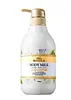
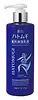
NatureLab Tokyo Diane Botanical Body Milk Versus KUMANO COSME Reihaku Hatomugi The Medicated Milky Lotion
This calming moisturizer is formulated around Dipotassium Glycyrrhizate and Allantoin to calm redness and hydrate skin.

What's inside
What's inside
 Key Ingredients
Benefits
Concerns
Ingredients Side-by-side
Water
Skin ConditioningGlycerin
Humectant


Propanediol
Solvent
Triethylhexanoin
MaskingButylene Glycol
Humectant
PEG-60 Hydrogenated Castor Oil
Emulsifying


Dipotassium Glycyrrhizate
Humectant

Ceramide NP
Skin Conditioning

Sodium Hyaluronate
Humectant
Althaea Officinalis Root Extract
Skin Conditioning
Chamomilla Recutita Flower Extract
Masking
Santalum Album Extract
CleansingSalvia Officinalis Leaf Extract
CleansingOcimum Basilicum Flower/Leaf Extract
TonicRosa Damascena Flower Extract
Masking
Flower Extract
Solanum Nigrum Extract
Skin ConditioningLavandula Angustifolia Flower Extract
Cleansing
Rosmarinus Officinalis Leaf Extract
AntimicrobialPrunus Domestica Seed Extract
EmollientArgania Spinosa Kernel Oil
Emollient

Bixa Orellana Seed Oil
Emollient
Mangifera Indica Seed Oil
Emollient
Theobroma Grandiflorum Seed Butter
Skin Conditioning
Adansonia Digitata Seed Oil
Emollient
Carapa Guaianensis Seed Oil
Skin Conditioning
Sclerocarya Birrea Seed Oil
Humectant

Citrus Junos Fruit Extract
Skin ConditioningGlucosyl Ceramide
Skin Conditioning
Rosa Rubiginosa Seed Oil
Emollient
Leontopodium Alpinum Flower/Leaf Extract
Skin ConditioningGlycine Soja Sterols
Emollient
Oryza Sativa Bran Oil
Emollient
Hydroxypropyl Cyclodextrin
MaskingCarbomer
Emulsion StabilisingXanthan Gum
EmulsifyingHydrogenated Lecithin
Emulsifying
Polyglyceryl-10 Oleate
Skin Conditioning
Lecithin
Emollient
Sodium Hydroxide
BufferingTocopherol
Antioxidant


Disodium EDTA
ChelatingPhenoxyethanol
Preservative
Iodopropynyl Butylcarbamate
Preservative
Parfum
Masking

Water, Glycerin, Propanediol, Triethylhexanoin, Butylene Glycol, PEG-60 Hydrogenated Castor Oil, Dipotassium Glycyrrhizate, Ceramide NP, Sodium Hyaluronate, Althaea Officinalis Root Extract, Chamomilla Recutita Flower Extract, Santalum Album Extract, Salvia Officinalis Leaf Extract, Ocimum Basilicum Flower/Leaf Extract, Rosa Damascena Flower Extract, Flower Extract, Solanum Nigrum Extract, Lavandula Angustifolia Flower Extract, Rosmarinus Officinalis Leaf Extract, Prunus Domestica Seed Extract, Argania Spinosa Kernel Oil, Bixa Orellana Seed Oil, Mangifera Indica Seed Oil, Theobroma Grandiflorum Seed Butter, Adansonia Digitata Seed Oil, Carapa Guaianensis Seed Oil, Sclerocarya Birrea Seed Oil, Citrus Junos Fruit Extract, Glucosyl Ceramide, Rosa Rubiginosa Seed Oil, Leontopodium Alpinum Flower/Leaf Extract, Glycine Soja Sterols, Oryza Sativa Bran Oil, Hydroxypropyl Cyclodextrin, Carbomer, Xanthan Gum, Hydrogenated Lecithin, Polyglyceryl-10 Oleate, Lecithin, Sodium Hydroxide, Tocopherol, Disodium EDTA, Phenoxyethanol, Iodopropynyl Butylcarbamate, Parfum
Dipotassium Glycyrrhizate
Humectant
Allantoin
Skin Conditioning
Sodium Hyaluronate
Humectant
Coix Lacryma-Jobi Ma-Yuen Seed Extract
Skin ConditioningGlycerin
Humectant
Dipropylene Glycol
HumectantPEG/PPG/Polybutylene Glycol-8/5/3 Glycerin
HumectantMethyl Gluceth-10
EmulsifyingCitric Acid
Buffering
Sodium Citrate
BufferingMethylparaben
Preservative

Phenoxyethanol
Preservative
Styrene/Acrylamide Copolymer
Butylene Glycol
Humectant
PEG-60 Hydrogenated Castor Oil
Emulsifying
Prunus Persica Leaf Extract
Emollient
Soluble Collagen
Humectant
Sodium Hydroxide
BufferingXanthan Gum
EmulsifyingDipotassium Glycyrrhizate, Allantoin, Sodium Hyaluronate, Coix Lacryma-Jobi Ma-Yuen Seed Extract, Glycerin, Dipropylene Glycol, PEG/PPG/Polybutylene Glycol-8/5/3 Glycerin, Methyl Gluceth-10, Citric Acid, Sodium Citrate, Methylparaben, Phenoxyethanol, Styrene/Acrylamide Copolymer, Butylene Glycol, PEG-60 Hydrogenated Castor Oil, Prunus Persica Leaf Extract, Soluble Collagen, Sodium Hydroxide, Xanthan Gum
Reviews
Ingredients Explained
These ingredients are found in both products.
Ingredients higher up in an ingredient list are typically present in a larger amount.
Butylene Glycol (or BG) is used within cosmetic products for a few different reasons:
Overall, Butylene Glycol is a safe and well-rounded ingredient that works well with other ingredients.
Though this ingredient works well with most skin types, some people with sensitive skin may experience a reaction such as allergic rashes, closed comedones, or itchiness.
Learn more about Butylene GlycolDipotassium Glycyrrhizate comes from licorice root.
Extracts of licorice have demonstrated to have antibacterial, anti‐inflammatory, antiviral, antioxidant properties.
One component, glabridin, has extra potent antioxidant and soothing properties. It has also been found to block pigmentation from UVB rays in guinea pigs.
Licorice Root also contains a flavonoid. Flavonoids are a natural substance from in plants. Flavonoids also have antioxidant properties.
Another component, glycyrrhizin, has been found to have anti-inflammatory and antimicrobial benefits. This may make licorice root extract effective at treating acne. However, more research is needed to support this.
Liquiritin is one of the flavone compounds found in licorice. It has been found to help lighten skin by preventing tyrosinase from reacting with tyrosine. When the two react, protein is converted to melanin. Melanin is the substance in your body that gives your features pigmentation.
Licorice root is native to Southern Europe and Asia. It has been used in traditional Chinese medicine to help with respiratory issues.
Learn more about Dipotassium GlycyrrhizateGlycerin (or glycerol) is a compound naturally found in your skin. It's a powerhouse humectant that pulls water into the stratum corneum.
Topically, glycerin does several things at once:
Your skin makes glycerin on its own (mostly from sebaceous oil breakdown) and shuttles it to your outermost layer of skin, or your epidermis, via aquaporin-3.
Aquaporin-3 is a transporter that is essential for normal skin hydration, elasticity, and repair. Interestingly, mice lacking in AQP3 have dry and less elastic skin that can be fully corrected with glycerin.
This ingredient is non-irritating, plays well with almost every ingredient, and works across all skin types. Typical use is anywhere between 3-10% but can go up to 79% in some leave-on products.
Just know very high concentrations (>40%) can feel tacky in low humidity.
Glycerin is the name for this ingredient in American English. British English uses Glycerol/Glycerine.
Learn more about GlycerinPeg-60 Hydrogenated Castor Oil comes from hydrogenated castor oil. It is a solubilizer and emulsifier.
As a solubilizer, it helps dissolve ingredients into a water-based version. It is also an emulsifer. Emulsifier help prevent oils and water from separating. Both these properties help create evenly-spread and uniform products.
Basically, Peg-60 Hydrogenated Castor Oil helps hold ingredients together.
Learn more about PEG-60 Hydrogenated Castor OilPhenoxyethanol is one of the most widely used preservatives in skincare (and for good reason!).
It has a large spectrum of antimicrobial activity and especially effective bacteria, yeast, and mold while only having a weak effect on your skin's natural microbiome.
On a cellular level, it disrupts the cell membranes of microbes by poking holes that make the cell leak. This shuts down the chemical reactions the microbe needs to make energy so it can no longer survive.
Another perk of this ingredient is that it stays functional across a wide pH range (3-10).
You'll often see it paired with boosters like Ethylhexylglycerin; one study showed that a 1:9 ratio of Ethylhexylglycerin to Phenoxyethanol damages bacterial membranes as effectively as doubling the Phenoxyethanol concentration on its own.
Typical use concentrations range from 0.3-1% depending on the formula, and this ingredient is capped at 1% int the EU.
Safety-wise, the fear mongering does not hold up to the evidence. The EU's Scientific Committee on Consumer Safety and FDA consider it safe as a preservative at up to 1%, including for children of all ages.
Adverse systemic effects only showed up in animal studies at exposures roughly 200x higher than what people get from cosmetics. And despite its very widespread use, this ingredient is a rare sensitizer and allergic reactions are uncommon.
Learn more about PhenoxyethanolSodium Hyaluronate is the salt form of hyaluronic acid. It is a long sugar chain that is naturally found in your skin, joints, and connective tissue that maintains hydration and elasticity.
In skincare, it works as a humectant. It pulls water from the environment and deeper layers of skin and binds it to the surface.
Interestingly, the size of the molecule affects its behavior:
Some clinical evidence links low molecular weight versions to improved wrinkle depth, elasticity, anti-inflammatory effects, and barrier repair.
Many serums use a blend of both weights so you can get surface hydration plus longer-lasting and deeper effects.
You'll typically see concentrations between 0.1-2% for this ingredient.
Learn more about Sodium HyaluronateSodium Hydroxide is also known as lye or caustic soda. It is used to adjust the pH of products; many ingredients require a specific pH to be effective.
In small amounts, sodium hydroxide is considered safe to use. However, large amounts may cause chemical burns due to its high alkaline.
Your skin has a natural pH and acid mantle. This acid mantle helps prevent harmful bacteria from breaking through. The acid mantle also helps keep your skin hydrated.
"Alkaline" refers to a high pH level. A low pH level would be considered acidic.
Learn more about Sodium HydroxideXanthan gum is used as a stabilizer and thickener within cosmetic products. It helps give products a sticky, thick feeling - preventing them from being too runny.
On the technical side of things, xanthan gum is a polysaccharide - a combination consisting of multiple sugar molecules bonded together.
Xanthan gum is a pretty common and great ingredient. It is a natural, non-toxic, non-irritating ingredient that is also commonly used in food products.
Learn more about Xanthan Gum

