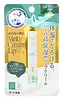
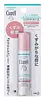
Rohto Mentholatum Melty Cream Lip Balm SPF 25+++ Versus Curel Intensive Moisture Care Moisture Lip Care Cream Light Pink Type

What's inside
What's inside
 Key Ingredients
Benefits
Concerns
Ingredients Side-by-side
Squalane
Emollient


Petrolatum
Emollient

Paraffin
Perfuming
Paraffinum Liquidum
Emollient
Hydrogenated Polyisobutene
EmollientDiisostearyl Malate
EmollientEthylhexyl Methoxycinnamate
UV Absorber


Dipentaerythrityl Hexahydroxystearate/Hexastearate/Hexarosinate
Skin ConditioningMicrocrystalline Wax
Emulsion StabilisingButyrospermum Parkii Butter
Skin Conditioning

Polyglyceryl-2 Diisostearate
Emulsifying
Phytosteryl Macadamiate
Skin Conditioning
Ceramide NP
Skin Conditioning


Ceramide Ns
Skin Conditioning
Ceramide AP
Skin Conditioning
Honey
Humectant
Persea Gratissima Oil
Skin Conditioning
Macadamia Ternifolia Seed Oil
Emollient
Olea Europaea Fruit Oil
Masking
Simmondsia Chinensis Seed Oil
Emollient
Butyl Methoxydibenzoylmethane
UV Absorber
Dipropylene Glycol
HumectantVp/Eicosene Copolymer
Polyglyceryl-4 Oleate
Emulsifying
Cholesterol
Emollient
Argania Spinosa Kernel Oil
Emollient

Tocopheryl Acetate
Antioxidant


Synthetic Wax
Abrasive
Iron Oxides
Water
Skin ConditioningHydrogenated Lecithin
Emulsifying
Glycine Soja Sterols
Emollient
Isopropyl Titanium Triisostearate
Emollient
Butylene Glycol
Humectant
Royal Jelly Extract
Skin Conditioning
Camellia Sinensis Leaf Extract
Antimicrobial
Epigallocatechin Gallate
Antioxidant
Parfum
Masking


Ultramarines
CI 19140
Cosmetic ColorantSqualane, Petrolatum, Paraffin, Paraffinum Liquidum, Hydrogenated Polyisobutene, Diisostearyl Malate, Ethylhexyl Methoxycinnamate, Dipentaerythrityl Hexahydroxystearate/Hexastearate/Hexarosinate, Microcrystalline Wax, Butyrospermum Parkii Butter, Polyglyceryl-2 Diisostearate, Phytosteryl Macadamiate, Ceramide NP, Ceramide Ns, Ceramide AP, Honey, Persea Gratissima Oil, Macadamia Ternifolia Seed Oil, Olea Europaea Fruit Oil, Simmondsia Chinensis Seed Oil, Butyl Methoxydibenzoylmethane, Dipropylene Glycol, Vp/Eicosene Copolymer, Polyglyceryl-4 Oleate, Cholesterol, Argania Spinosa Kernel Oil, Tocopheryl Acetate, Synthetic Wax, Iron Oxides, Water, Hydrogenated Lecithin, Glycine Soja Sterols, Isopropyl Titanium Triisostearate, Butylene Glycol, Royal Jelly Extract, Camellia Sinensis Leaf Extract, Epigallocatechin Gallate, Parfum, Ultramarines, CI 19140
Paraffinum Liquidum
Emollient
Petrolatum
Emollient
Ceresin
Emulsion StabilisingHydrogenated Polyisobutene
EmollientMicrocrystalline Wax
Emulsion StabilisingOctyldodecanol
Emollient
Phytosteryl/Octyldodecyl Lauroyl Glutamate
Skin ConditioningTitanium Dioxide
Cosmetic Colorant
Mica
Cosmetic ColorantBis-Methoxypropylamido Isodocosane
EmollientCetyl-Pg Hydroxyethyl Palmitamide
Skin ConditioningGlycyrrhetinic Acid
Skin Conditioning
Simmondsia Chinensis Seed Oil
Emollient
Chamomilla Recutita Flower Extract
Masking
Squalane
Emollient
Silica
Abrasive
Iron Oxides
BHT
Antioxidant
Paraffinum Liquidum, Petrolatum, Ceresin, Hydrogenated Polyisobutene, Microcrystalline Wax, Octyldodecanol, Phytosteryl/Octyldodecyl Lauroyl Glutamate, Titanium Dioxide, Mica, Bis-Methoxypropylamido Isodocosane, Cetyl-Pg Hydroxyethyl Palmitamide, Glycyrrhetinic Acid, Simmondsia Chinensis Seed Oil, Chamomilla Recutita Flower Extract, Squalane, Silica, Iron Oxides, BHT
Reviews
Ingredients Explained
These ingredients are found in both products.
Ingredients higher up in an ingredient list are typically present in a larger amount.
Hydrogenated Polyisobutene is a synthetic polymer. Polymers are compounds with high molecular weight. Hydrogenated Polyisobutene is an emollient and texture enhancer.
In one study, Hydrogenated Polyisobutene showed better skin hydration levels than Caprylic/Capric Triglyceride. As an emollient, it helps keep your skin soft and hydrated by trapping moisture in.
Hydrogenated Polyisobutene is often used as a mineral oil replacement.
Learn more about Hydrogenated PolyisobuteneMicrocrystalline Wax is derived from petroleum through a de-oiling process, then highly refined and purified before use in cosmetics.
In skincare formulations, it is used to improve texture and create a smooth, even consistency. It also helps stabilize products by preventing ingredients from separating.
Paraffinum Liquidum is a highly-refined cosmetic-grade mineral oil. It is also known as liquid paraffin.
Despite its controversial reputation, the science is pretty clear: it's one of the most well-studied and effective moisturizing ingredients out there.
As an occlusive, it forms a protective layer on the skin that locks in moisture and prevents transepidermal water loss (TEWL). This makes it especially great for compromised skin barriers.
The "it clogs your pores" myth has been around for decades; a study found that industrial-grade mineral oil may be comedogenic but cosmetic-grade mineral oil is not (these two are very, very different).
A 2017 review concluded that cosmetic use of mineral oils and waxes does not present a risk to consumers due to absorption.
Mineral oil got a bad rap from the old rabbit ear studies. When tested on actual human skin, cosmetic-grade mineral oil showed no comedogenic activity. The rating of 0 is a correction of outdated science.
Mineral oil is an inert substance with no fatty acids so there's nothing to feed Malassezia. This ingredient is fungal acne safe.
Learn more about Paraffinum LiquidumPetrolatum is more commonly known as petroleum jelly. It is created by mixing waxes and mineral oils.
This ingredient is effective at reducing water loss by 99%. This is because it is an occlusive. Occlusives create a hydrophobic barrier on the skin to prevent evaporation. This property makes it great for hydrating dry skin.
Pro tip: Use occlusives, such as this ingredient, on damp skin for the best results.
The quality or origin of petrolatum is only known when disclosed by the brand. Most cosmetic petrolatum has gone through several purification stages.
Another benefit of occlusives is it protects your skin against infection or allergies.
Petrolatum is fungal acne safe. It is a hydrocarbon with no fatty acid structure, so Malassezia cannot metabolize it. In-vitro studies support negligible growth stimulation as well.
It's also worth noting that petrolatum has a comedogenic rating of 0. In updated rabbit ear testing (and in human testing), petrolatum was found to be not comedogenic. This means it didn’t promote comedone formation in standard models.
Learn more about PetrolatumJojoba oil is one of the most well-studied plant-derived ingredients in cosmetics. It is an emollient with a special structure.
Because it is made up of 97-98% wax esters, it closely mirrors the linear monoesters found in human sebum. This makes it skin compatible, non-greasy, and lightweight.
Unlike other plant oils, jojoba wax doesn't easily penetrate skin. It mostly works in the uppermost layers as an emollient. This just means it forms a light barrier on the skin to help retain moisture.
Formulations with jojoba esters up to 90% reduced transepidermal water loss (TEWL) and increased barrier recovery by 81% (outperforming bisabolol at 47%).
Besides barrier support, the science also suggests jojoba to have anti-inflammatory effects and potential applications for skin infections, aging, and wound healing.
Fun fact: Indigenous cultures have used jojoba as a moisturizer and to help treat burns for centuries.
Due to its fatty acid content, Jojoba oil may not be fungal acne safe.
Learn more about Simmondsia Chinensis Seed OilSqualane is the hydrogenated and shelf-stable form of squalene (a lipid that naturally occurs in human sebum).
It is an emollient and skin conditioning agent that is able to integrate seamlessly into the skin's lipid barrier without clogging pores.
This is due to how structurally similar it is to what your skin already produces.
Though it is mostly an emollient that helps soften and hydrate skin, it also has some humectant and occlusive action. Humectants help the skin retain moisture while occlusives seal it in, making squalane a triple-threat moisturizer.
Research shows it has antioxidant capabilities that help protect against stressors like UV exposure, specifically UVA induced oxidative stress. This study also found that it supports collagen biosynthesis in human dermal fibroblasts.
No clinical study has reported significant adverse effects and irritation reactions are very rare from this ingredient (even at 100% concentration).
Overall, it's a fantastic ingredient for hydration and is suitable for all skin types.
This depends on the source. Squalane can be derived from both plants and animals. Most squalane used in skincare comes from plants.
Please note: the source of squalane is only known if disclosed by the brand. We recommend reaching out to the brand if you have any questions about their squalane.
Read more about squalene with an "e".
Though squalane is often called an oil, it’s technically not one. It is a hydrocarbon, meaning it is only made of carbon and hydrogen. True oils are triglycerides and made of fatty acids and glycerol.
The term “oil-free” isn’t regulated so companies can define it however they want. Some exclude all oils, while others just avoid mineral oil or comedogenic oils.
Squalane has a comedogenic rating of 1 from the original 1972 study that tested raw ingredients under occlusion on rabbit ears. This system is not standardized or peer-reviewed, and using the raw ingredients is very different from how diluted cosmetic formulations are used on human skin.
A comedogenic rating of 1 means it is "unlikely to clog pores" according to the original rating system.
The overall formula of a product matters more than the individual ingredients on whether or not it will cause clogged pores.
Learn more about SqualaneThis ingredient is a combination of red, black, and yellow iron oxide pigments. This combination of colors is usually found in foundation, because it results in a "skin" color.
The EU typically uses CI numbers for colorants when applicable, such as CI 77489. In the US, iron oxides are regulated as color additives and "iron oxides" is the most commonly used name in US cosmetic practice.
A 2021 paper looked at skincare formulations containing iron oxides and found that they reduced transmission of blue light when measured optically. In simple terms, the pigment particles helped block or scatter part of the visible light spectrum in lab testing and the authors suggest this could translate into better protection against blue-light-related skin effects.
There is also clinical and experimental research showing that tinted products containing iron oxides can reduce visible light-induced pigmentation:
Please note, whether a product reduces visible or blue light depends on things like:
In the EU's CosIng database, iron oxides are only listed as a colorant. CosIng groups ingredients by their main cosmetic role, such as colorant, preservative, or UV filter.
Though studies say iron oxides can "attenuate blue light", they're describing an optical property and not an officially recognized cosmetic function.
So CosIng isn’t contradicting the research. It’s just classifying iron oxides by what they officially are: pigments that add color.
Learn more about Iron Oxides
