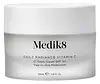
This brightening day moisturizer is formulated around Tetrahexyldecyl Ascorbate and Tocopheryl Acetate to brighten dull-looking skin and soften the look of wrinkles.
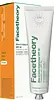
This brightening day moisturizer is formulated around Niacinamide and Sodium Ascorbyl Phosphate to brighten dull-looking skin and refine skin texture.

What's inside
What's inside
 Key Ingredients
Benefits
Concerns
Ingredients Side-by-side
Water
Skin ConditioningTetrahexyldecyl Ascorbate
Antioxidant






Diethylamino Hydroxybenzoyl Hexyl Benzoate
UV Filter
Dibutyl Adipate
EmollientDimethicone
Emollient
Ethylhexyl Triazone
UV Absorber
Bis-Ethylhexyloxyphenol Methoxyphenyl Triazine
UV Absorber
C12-15 Alkyl Benzoate
AntimicrobialDicaprylyl Carbonate
EmollientCetearyl Alcohol
Emollient






Glycerin
Humectant

Coco-Glucoside
Cleansing
Phenoxyethanol
Preservative
Acrylates/C10-30 Alkyl Acrylate Crosspolymer
Emulsion StabilisingCetearyl Glucoside
Emulsifying
Tocopheryl Acetate
Antioxidant
Hydroxyacetophenone
Antioxidant
Disodium EDTA
Benzoic Acid
Masking
Xanthan Gum
EmulsifyingCitrus Grandis Peel Oil
Masking




Sodium Hydroxide
BufferingDehydroacetic Acid
Preservative
Sodium Hyaluronate
Humectant

Citrus Limon Peel Oil
Masking
Citrus Aurantium Bergamia Fruit Oil
Masking
Pelargonium Graveolens Flower Oil
Masking
Ethylhexylglycerin
Skin ConditioningLimonene
Perfuming
Citronellol
Perfuming
Linalool
Perfuming
Geraniol
Perfuming
Citral
Perfuming
Water, Tetrahexyldecyl Ascorbate, Diethylamino Hydroxybenzoyl Hexyl Benzoate, Dibutyl Adipate, Dimethicone, Ethylhexyl Triazone, Bis-Ethylhexyloxyphenol Methoxyphenyl Triazine, C12-15 Alkyl Benzoate, Dicaprylyl Carbonate, Cetearyl Alcohol, Glycerin, Coco-Glucoside, Phenoxyethanol, Acrylates/C10-30 Alkyl Acrylate Crosspolymer, Cetearyl Glucoside, Tocopheryl Acetate, Hydroxyacetophenone, Disodium EDTA, Benzoic Acid, Xanthan Gum, Citrus Grandis Peel Oil, Sodium Hydroxide, Dehydroacetic Acid, Sodium Hyaluronate, Citrus Limon Peel Oil, Citrus Aurantium Bergamia Fruit Oil, Pelargonium Graveolens Flower Oil, Ethylhexylglycerin, Limonene, Citronellol, Linalool, Geraniol, Citral
Water
Skin ConditioningBis-Ethylhexyloxyphenol Methoxyphenyl Triazine
UV Absorber
Niacinamide
Smoothing




Coco-Caprylate
Emollient
Butyloctyl Salicylate
Skin Conditioning
Glyceryl Stearate
Emollient
Polyglyceryl-6 Stearate
Emollient
Microcrystalline Cellulose
AbsorbentCetyl Alcohol
Emollient
Tocopherol
Antioxidant
Sodium Ascorbyl Phosphate
Antioxidant
Glycerin
Humectant
Sodium Anisate
AntimicrobialSodium Levulinate
Skin ConditioningCitrus Paradisi Peel Oil
Masking
Lactic Acid
Buffering
Cetyl Hydroxyethylcellulose
Emulsion StabilisingGlyceryl Caprylate
Emollient3-O-Ethyl Ascorbic Acid
Skin Conditioning
Polyglyceryl-6 Behenate
Emulsion Stabilising
Sodium Phytate
Xanthan Gum
EmulsifyingRosa Canina Seed Oil
Emollient
Citral
Perfuming
Limonene
Perfuming
Linalool
Perfuming
Water, Bis-Ethylhexyloxyphenol Methoxyphenyl Triazine, Niacinamide, Coco-Caprylate, Butyloctyl Salicylate, Glyceryl Stearate, Polyglyceryl-6 Stearate, Microcrystalline Cellulose, Cetyl Alcohol, Tocopherol, Sodium Ascorbyl Phosphate, Glycerin, Sodium Anisate, Sodium Levulinate, Citrus Paradisi Peel Oil, Lactic Acid, Cetyl Hydroxyethylcellulose, Glyceryl Caprylate, 3-O-Ethyl Ascorbic Acid, Polyglyceryl-6 Behenate, Sodium Phytate, Xanthan Gum, Rosa Canina Seed Oil, Citral, Limonene, Linalool
Reviews
Ingredients Explained
These ingredients are found in both products.
Ingredients higher up in an ingredient list are typically present in a larger amount.
This ingredient is better known as bemotrizinol or Tinosorb S and is one of the best broad-spectrum UV filters in modern sunscreen.
It works by absorbing UV light across a whole range (280-400 nm) with peaks around 310 nm (UVB) and 340-345 nm (UVA). This means it covers UVB plus the deeper UVA wavelengths that drive photoaging and pigmentation.
Another pro?
It's exceptionally photostable, barely degrades in sunlight, and acts as a "bodyguard" for less stable filters.
That's why you'll see it paired with avobenzone or octinoxate; this team up ensures they keep working through sun exposure.
Safety reviews have been reassuring across the board. This ingredient shows low absorption through the skin, rarely irritates, and lab studies found it doesn't act like a hormone in the body (a concern that's been raised about some older sunscreen filters).
On maximum concentrations:
In 2026, the US F.D.A finally added it as an OTC sunscreen ingredient at concentrations up to 6% for adults / children 6 months and older
Learn more about Bis-Ethylhexyloxyphenol Methoxyphenyl TriazineCitral is the molecule responsible for the fresh lemon scent in lemon, lime, and lemongrass. It is a fragrance ingredient that can be created from plant essential oils or synthetically.
Though Citral has documented antimicrobial activity against acne bacteria (which is where the marketing claims about it being good for acne-prone skin originate), real formulas use it at fragrance-level concentrations under 1% so there's likely no skin benefit.
You should know this ingredient is a known EU fragrance allergen.
Animal studies classifies this ingredient as a weak-to-moderate skin sensitizer and clinical patch testing on eczema patients confirmed it to be both a contact allergen and irritant.
The term 'citral' is a collective term for two geometric isomers: geranial/Citral A and neral/Citral B.
The term 'fragrance' is not regulated in many countries. In many cases, it is up to the brand to define this term. For instance, many brands choose to label themselves as "fragrance-free" because they are not using synthetic fragrances. However, their products may still contain ingredients such as essential oils that are considered a fragrance.
Learn more about CitralGlycerin (or glycerol) is a compound naturally found in your skin. It's a powerhouse humectant that pulls water into the stratum corneum.
Topically, glycerin does several things at once:
Your skin makes glycerin on its own (mostly from sebaceous oil breakdown) and shuttles it to your outermost layer of skin, or your epidermis, via aquaporin-3.
Aquaporin-3 is a transporter that is essential for normal skin hydration, elasticity, and repair. Interestingly, mice lacking in AQP3 have dry and less elastic skin that can be fully corrected with glycerin.
This ingredient is non-irritating, plays well with almost every ingredient, and works across all skin types. Typical use is anywhere between 3-10% but can go up to 79% in some leave-on products.
Just know very high concentrations (>40%) can feel tacky in low humidity.
Glycerin is the name for this ingredient in American English. British English uses Glycerol/Glycerine.
Learn more about GlycerinLimonene is a fragrance that adds scent and taste to a formulation.
It's found in the peel oil of citrus fruits and other plants such as lavender and eucalyptus. The scent of limonene is generally described as "sweet citrus".
Limonene acts as an antioxidant, meaning it helps neutralize free radicals.
When exposed to air, oxidized limonene may sensitize the skin. Because of this, limonene is often avoided by people with sensitive skin.
The term 'fragrance' is not regulated in many countries. In many cases, it is up to the brand to define this term. For instance, many brands choose to label themselves as "fragrance-free" because they are not using synthetic fragrances. However, their products may still contain ingredients such as essential oils that are considered a fragrance.
Learn more about LimoneneLinalool is a fragrance and helps add scent to products. It's derived from common plants such as cinnamon, mint, citrus, and lavender.
Like Limonene, this ingredient oxidizes when exposed to air. Oxidized linalool can cause allergies and skin sensitivity.
This ingredient has a scent that is floral, spicy tropical, and citrus-like.
Learn more about LinaloolWater. It's the most common cosmetic ingredient of all. You'll usually see it at the top of ingredient lists, meaning that it makes up the largest part of the product.
So why is it so popular? Water most often acts as a solvent - this means that it helps dissolve other ingredients into the formulation.
You'll also recognize water as that liquid we all need to stay alive. If you see this, drink a glass of water. Remember to stay hydrated!
Learn more about WaterXanthan gum is used as a stabilizer and thickener within cosmetic products. It helps give products a sticky, thick feeling - preventing them from being too runny.
On the technical side of things, xanthan gum is a polysaccharide - a combination consisting of multiple sugar molecules bonded together.
Xanthan gum is a pretty common and great ingredient. It is a natural, non-toxic, non-irritating ingredient that is also commonly used in food products.
Learn more about Xanthan Gum

