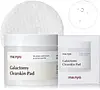
This smoothing exfoliating pad uses a pre-saturated pad with Galactomyces Ferment Filtrate and Salix Alba Bark Extract to refine skin texture and refine the look of pores.
This wash off mask is made with Salix Alba Bark Extract and Papain for a rinse-off oil-control boost.

What's inside
What's inside
 Key Ingredients
Benefits
Concerns
Ingredients Side-by-side
Water
Skin ConditioningGalactomyces Ferment Filtrate
Humectant







Oryza Sativa Bran Extract
Skin Conditioning
Chamaecyparis Obtusa Leaf Extract
Skin ConditioningAloe Barbadensis Leaf Extract
Emollient
Centella Asiatica Extract
Cleansing

Hamamelis Virginiana Extract
Antiseborrhoeic


Salix Alba Bark Extract
Astringent
1,2-Hexanediol
Skin Conditioning
Butylene Glycol
Humectant
Lactic Acid
Buffering


Sea Water
HumectantCamellia Sinensis Leaf Extract
Antimicrobial
Citric Acid
Buffering
Malic Acid
Buffering
Rosa Centifolia Flower Water
Skin ConditioningCarica Papaya Fruit Extract
Skin ConditioningScutellaria Baicalensis Root Extract
Astringent
Illicium Verum Fruit Extract
Perfuming
Allantoin
Skin Conditioning
Dipotassium Glycyrrhizate
Humectant
Potassium Hydroxide
BufferingRosa Damascena Flower Oil
Masking


Water, Galactomyces Ferment Filtrate, Oryza Sativa Bran Extract, Chamaecyparis Obtusa Leaf Extract, Aloe Barbadensis Leaf Extract, Centella Asiatica Extract, Hamamelis Virginiana Extract, Salix Alba Bark Extract, 1,2-Hexanediol, Butylene Glycol, Lactic Acid, Sea Water, Camellia Sinensis Leaf Extract, Citric Acid, Malic Acid, Rosa Centifolia Flower Water, Carica Papaya Fruit Extract, Scutellaria Baicalensis Root Extract, Illicium Verum Fruit Extract, Allantoin, Dipotassium Glycyrrhizate, Potassium Hydroxide, Rosa Damascena Flower Oil
Water
Skin Conditioning1,2-Hexanediol
Skin Conditioning
Glycerin
Humectant
Ganoderma Lucidum Extract
Skin Protecting
Salix Alba Bark Extract
Astringent
Codonopsis Lanceolata Root Extract
Skin ConditioningArctium Lappa Root Extract
Skin Conditioning
Chrysanthemum Sinense Flower Extract
CleansingButylene Glycol
Humectant
Polyglyceryl-10 Oleate
Skin Conditioning
Viscum Album Leaf Extract
SoothingHamamelis Virginiana Extract
Antiseborrhoeic
Hydrogenated Lecithin
Emulsifying
Polyglyceryl-10 Isostearate
Skin Conditioning
Lavandula Angustifolia Extract
Skin Conditioning
Phytosterols
Skin Conditioning
Ethylhexylglycerin
Skin ConditioningIllicium Verum Fruit Extract
Perfuming
Sodium Gluconate
ChelatingLavandula Angustifolia Oil
Masking
Panthenol
Skin Conditioning
Scutellaria Baicalensis Root Extract
Astringent
Carica Papaya Fruit Extract
Skin ConditioningSqualane
Emollient
Glucose
Humectant
Chamomilla Recutita Flower Extract
Masking
Centella Asiatica Extract
Cleansing
Prunus Mume Fruit Extract
Humectant
Malus Domestica Fruit Extract
Antioxidant
Vitis Vinifera Fruit Extract
Skin ConditioningPapain
Skin Conditioning
Houttuynia Cordata Extract
Skin Conditioning
Chamaecyparis Obtusa Leaf Extract
Skin ConditioningOriganum Vulgare Leaf Extract
Skin ConditioningPortulaca Oleracea Extract
Skin Conditioning
Cinnamomum Cassia Bark Extract
Masking
Lactobacillus/Soybean Ferment Extract
Skin ConditioningMadecassoside
Antioxidant
Citric Acid
Buffering
Gardenia Florida Fruit Extract
Skin ConditioningPolygonum Cuspidatum Root Extract
Antioxidant
Myrciaria Dubia Fruit Extract
Skin ConditioningTerminalia Ferdinandiana Fruit Extract
Antioxidant
Water, 1,2-Hexanediol, Glycerin, Ganoderma Lucidum Extract, Salix Alba Bark Extract, Codonopsis Lanceolata Root Extract, Arctium Lappa Root Extract, Chrysanthemum Sinense Flower Extract, Butylene Glycol, Polyglyceryl-10 Oleate, Viscum Album Leaf Extract, Hamamelis Virginiana Extract, Hydrogenated Lecithin, Polyglyceryl-10 Isostearate, Lavandula Angustifolia Extract, Phytosterols, Ethylhexylglycerin, Illicium Verum Fruit Extract, Sodium Gluconate, Lavandula Angustifolia Oil, Panthenol, Scutellaria Baicalensis Root Extract, Carica Papaya Fruit Extract, Squalane, Glucose, Chamomilla Recutita Flower Extract, Centella Asiatica Extract, Prunus Mume Fruit Extract, Malus Domestica Fruit Extract, Vitis Vinifera Fruit Extract, Papain, Houttuynia Cordata Extract, Chamaecyparis Obtusa Leaf Extract, Origanum Vulgare Leaf Extract, Portulaca Oleracea Extract, Cinnamomum Cassia Bark Extract, Lactobacillus/Soybean Ferment Extract, Madecassoside, Citric Acid, Gardenia Florida Fruit Extract, Polygonum Cuspidatum Root Extract, Myrciaria Dubia Fruit Extract, Terminalia Ferdinandiana Fruit Extract
Reviews
Ingredients Explained
These ingredients are found in both products.
Ingredients higher up in an ingredient list are typically present in a larger amount.
1,2-Hexanediol is a synthetic liquid and another multi-functional powerhouse.
It is a:
- Humectant, drawing moisture into the skin
- Emollient, helping to soften skin
- Solvent, dispersing and stabilizing formulas
- Preservative booster, enhancing the antimicrobial activity of other preservatives
Butylene Glycol (or BG) is used within cosmetic products for a few different reasons:
Overall, Butylene Glycol is a safe and well-rounded ingredient that works well with other ingredients.
Though this ingredient works well with most skin types, some people with sensitive skin may experience a reaction such as allergic rashes, closed comedones, or itchiness.
Learn more about Butylene GlycolCarica Papaya Fruit Extract comes from the flesh of the papaya. It's a skin conditioning agent that carries a mix of bioactives like papain, beta-carotene, and vitamin C.
These bioactive compounds give it two main talking points:
1. Papain is a proteolytic enzyme that provides mild exfoliation, helping skin look smoother and more even.
2. The carotenoids and vitamin C provide some antioxidant activity.
It's pretty compatible with most ingredients, but just sure to space out enzyme products with strong acids/retinoids to avoid over-doing it.
Maximum reported concentration is around 0.1% and most leave-on products use just 0.05%. If you see higher figures like 5-10%, this is usually the pre-diluted material from raw extract suppliers.
This ingredient has an assuring safety record and there's a lack of clinical case reports of dermatitis from using it.
The only caveat is allergy: patch test if you have a papaya or latex-fruit allergy.
Learn more about Carica Papaya Fruit ExtractCentella Asiatica Extract (Centella) is one of the most researched botanical extracts in skincare with decades of studies backing its effects on inflammation, collagen, and the skin barrier.
That research keeps pointing back to the same four triterpenoid saponins: Asiaticoside, Madecassoside, Asiatic Acid, and Madecassic Acid.
These compounds allow centella to dial back inflammation, encourage the skin to build and hold onto collagen, support the barrier and hydration, and bring solid antioxidant activity to protect against signs of aging.
Centella also carries a nice supporting cast of Vitamin A, vitamin C, several B vitamins, and amino acids. Put it all together and you get an ingredient that soothes, hydrates, and protects, all at once.
Most of centella's magic comes from the four big compounds (Asiaticoside, Madecassoside, Asiatic Acid, and Madecassic Acid). These are the actives doing the heavy lifting in almost every centella study.
Here is the short version of what they do in the skin:
So it is not just soothing for the sake of soothing. Centella calms the skin AND helps it rebuild.
Just FYI, not all centella on an ingredient list is the same. What you are getting actually depends on the extract:
Fun fact on the ratios: the leaves tend to be richest in Madecassoside and Asiaticoside, and lower in the two acids. The exact amounts shift with where the plant is grown and how it is processed. This means purity really does vary brand to brand.
Centella is one of the most easygoing actives out there.
It layers well with basically everything: niacinamide, hyaluronic acid, peptides, and vitamin C, and also pairs nicely with stronger actives like retinoids and exfoliating acids where it can help take the edge off irritation.
On the safety side, centella and its triterpenes are classified as weak sensitizers, meaning allergic reactions are possible but uncommon.
Patch tests at 1% and 5% came back negative in test panels, and creams at typical use levels did not cause allergic reactions across large groups of people.
But as with any new active, a patch test is still a smart move for very reactive skin.
Centella is widely used because it is effective at low percentages. For context, human safety testing found no meaningful irritation from creams containing centella extract at everyday use levels (the tested amounts were well under 1%).
The irritancy threshold in animal testing was also above 30% (so real-world formulas sit far below anything concerning).
In collagen lab studies, higher concentrations drove more collagen synthesis, so serums built around centella tend to feature it more prominently.
Bottom line: you will find centella working nicely anywhere from a fraction of a percent up to hero-ingredient levels depending on whether it is a supporting soother or the main event.
Fun fact: Centella has been used as a medicine and in food for many centuries. As a medicine, it is used to treat burns, scratches, and wounds.
Learn more about Centella Asiatica ExtractThis ingredient comes from the leaves of the Japanese cypress tree that is also called Hinoki. The leaves are rich in flavonoids with quercitrin being one of its key actives.
A 2023 study tested a 70% ethanol extract on UVA-stressed, collagen-producing skin cells. Across multiple antioxidant tests, this extract protected skin from free radicals at meaningful rates.
And the coolest part? At 1000 µg/mL, it blocked two enzymes (collagenase and elastase) almost as well as vitamin C did at the same dose. Collagenase and elastase are the enzymes that break down your skin's collagen and elastin over time.
The same study found this ingredient lowered skin-breakdown enzymes and inflammation signals while bumping up collagen production in UV-stressed cells.
A 2024 follow-up tested a fermented version (fermented with mushroom) and it calmed down several key inflammation markers in irritated immune cells. So besides anti-aging, this ingredient can also help soothe skin.
Most of the data right now is still at the cell-culture stage rather than from human clinical trials. However, there's no harm in adding this ingredient to your routine.
Just be sure to patch test if you have a history of sensitivity toward botanical extracts.
Learn more about Chamaecyparis Obtusa Leaf ExtractCitric Acid is an alpha hydroxy acid (AHA) naturally found in citrus fruits like oranges, lemons, and limes.
Like other AHAs, citric acid can exfoliate skin by breaking down the bonds that hold dead skin cells together. This helps reveal smoother and brighter skin underneath.
However, this exfoliating effect only happens at high concentrations (20%) which can be hard to find in cosmetic products.
Due to this, citric acid is usually included in small amounts as a pH adjuster. This helps keep products slightly more acidic and compatible with skin's natural pH.
In skincare formulas, citric acid can:
While it can provide some skin benefits, research shows lactic acid and glycolic acid are generally more effective and less irritating exfoliants.
Most citric acid used in skincare today is made by fermenting sugars (usually from molasses). This synthetic version is identical to the natural citrus form but easier to stabilize and use in formulations.
Rosacea skin has a lower threshold for acids generally, with 62.5% of rosacea subjects in one study reacting to lactic acid in a sting test. This is why we mark citric acid as a potential rosacea trigger.
However, this ingredient shows up as a pH adjuster or chelator at roughly 0.1-1% in many products. These low levels are unlikely to be an issue for rosacea skin and becomes a potential trigger at exfoliating concentrations (20%). Because everybody's skin is unique, we recommend a patch test if you are unsure.
Learn more about Citric AcidHamamelis Virginiana Extract comes from the witch hazel plant.
Unless it is specified to be non-alcohol, many types of witch hazel ingredients are distilled in denatured alcohol.
Witch Hazel has astringent, anti-inflammatory, antioxidant, and antibacterial properties.
The tannin content of witch hazel constrict the appearance of pores by drying out proteins. Witch hazel water gets anti-inflammatory and antibacterial properties from its catechin and gallic acid content.
However, witch hazel may be skin-sensitizing due to the tannin and fragrance compounds.
North American Indigenous groups have used witch hazel to help treat inflammation for centuries.
Learn more about Hamamelis Virginiana ExtractStar anise extract is used to add a scent to a product. It has a similar smell to black licorice.
Salix Alba Bark Extract comes from the bark of the white willow tree. The official CosIng listing states this ingredient to have astringent, skin conditioning, soothing, and tonic properties.
Its star compound is salicin, a natural glucoside that is chemically related to salicylic acid. That's why you'll often see it marketed as a "natural BHA alternative" but that's a bit of a stretch.
Your skin can't convert salicin to salicylic acid because it needs specific enzymes that aren't present on the skin's surface. It won't behave like true salicylic acid, especially at the concentrations used in cosmetics.
However, this ingredient has its own perks. It contains flavonoids, polyphenols, and tannins that give it proven antioxidant and soothing properties.
An 8-week clinical study found a cream with 2% of this extract improved skin microcirculation, elasticity, and dark circles. This is most likely due to its role in increasing hyaluronic acid synthesis in fibroblasts and improved vascular integrity.
Another study found a topical serum with 0.5% salicin showed improvements in visible signs of aging, hyperpigmentation, and texture.
Just be careful if you have a known aspirin/salicylate allergy and be sure to consult with a medical professional about using this ingredient if you do.
Fun fact: Willow Bark extract has been used for thousands of years and ancient civilizations used white willow to help treat pain and fevers.
Learn more about Salix Alba Bark ExtractScutellaria Baicalensis Root Extract comes from the Baikal skullcap or Chinese skullcap plant. This plant is native to Northeast Asia and can be found in China, Mongolia, Korea, and Siberia.
In cosmetics, Scutellaria Baicalensis Root Extract provides antioxidant and anti-inflammatory benefits. This is due to the flavonoid composition of Scutellaria Baicalensis Root Extract.
In Chinese traditional folk medicine, Scutellaria Baicalensis Root Extract is used to help treat lung issues and hypertension.
Learn more about Scutellaria Baicalensis Root ExtractWater. It's the most common cosmetic ingredient of all. You'll usually see it at the top of ingredient lists, meaning that it makes up the largest part of the product.
So why is it so popular? Water most often acts as a solvent - this means that it helps dissolve other ingredients into the formulation.
You'll also recognize water as that liquid we all need to stay alive. If you see this, drink a glass of water. Remember to stay hydrated!
Learn more about Water

