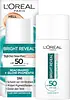
This chemical sunscreen covers the full UV range and blocks ~98% of UVB at SPF 50.


What's inside
What's inside
 Key Ingredients
Benefits
Concerns
Ingredients Side-by-side
Water
Skin ConditioningDicaprylyl Carbonate
EmollientEthylhexyl Triazone
UV Absorber
Dimethicone
Emollient

Niacinamide
Smoothing










Propanediol
Solvent
Bis-Ethylhexyloxyphenol Methoxyphenyl Triazine
UV Absorber
Butyl Methoxydibenzoylmethane
UV Absorber
Phenylbenzimidazole Sulfonic Acid
UV Absorber
Methylene Bis-Benzotriazolyl Tetramethylbutylphenol
UV Filter
Silica
Abrasive
Alcohol Denat.
Antimicrobial




Hydroxyethylpiperazine Ethane Sulfonic Acid
BufferingDiethylamino Hydroxybenzoyl Hexyl Benzoate
UV Filter
Synthetic Fluorphlogopite
CI 77891
Cosmetic ColorantCetearyl Alcohol
Emollient




Hydroxyethyl Acrylate/Sodium Acryloyldimethyl Taurate Copolymer
Emulsion StabilisingCI 77492
Cosmetic ColorantCI 77491
Cosmetic ColorantCI 77499
Cosmetic ColorantMica
Cosmetic ColorantTocopherol
Antioxidant

Sodium Hydroxide
BufferingSodium Stearoyl Glutamate
CleansingHydroxyacetophenone
Antioxidant
Phenoxyethanol
Preservative
Trisodium Ethylenediamine Disuccinate
ChelatingPolyglyceryl-10 Laurate
Skin Conditioning
Cellulose
Absorbent
Polysorbate 60
Emulsifying
Xanthan Gum
EmulsifyingTin Oxide
Abrasive
Caprylyl Glycol
Emollient
Parfum
Masking

Sorbitan Isostearate
Emulsifying
Butylene Glycol
Humectant
Cetearyl Glucoside
Emulsifying
Lauroyl Lysine
Skin Conditioning
Inulin Lauryl Carbamate
Emulsion StabilisingGlycerin
Humectant
Water, Dicaprylyl Carbonate, Ethylhexyl Triazone, Dimethicone, Niacinamide, Propanediol, Bis-Ethylhexyloxyphenol Methoxyphenyl Triazine, Butyl Methoxydibenzoylmethane, Phenylbenzimidazole Sulfonic Acid, Methylene Bis-Benzotriazolyl Tetramethylbutylphenol, Silica, Alcohol Denat., Hydroxyethylpiperazine Ethane Sulfonic Acid, Diethylamino Hydroxybenzoyl Hexyl Benzoate, Synthetic Fluorphlogopite, CI 77891, Cetearyl Alcohol, Hydroxyethyl Acrylate/Sodium Acryloyldimethyl Taurate Copolymer, CI 77492, CI 77491, CI 77499, Mica, Tocopherol, Sodium Hydroxide, Sodium Stearoyl Glutamate, Hydroxyacetophenone, Phenoxyethanol, Trisodium Ethylenediamine Disuccinate, Polyglyceryl-10 Laurate, Cellulose, Polysorbate 60, Xanthan Gum, Tin Oxide, Caprylyl Glycol, Parfum, Sorbitan Isostearate, Butylene Glycol, Cetearyl Glucoside, Lauroyl Lysine, Inulin Lauryl Carbamate, Glycerin
Octocrylene 8%
UV Absorber
Butyl Methoxydibenzoylmethane 1.3%
UV Absorber
Titanium Dioxide 4.2%
Cosmetic Colorant
Water
Skin ConditioningGlycerin
Humectant
Helianthus Annuus Seed Oil
Emollient
Cocos Nucifera Oil
Masking
Cetyl Alcohol
Emollient
Caprylic/Capric Triglyceride
Masking
Dicaprylyl Ether
Emollient
Glyceryl Stearate
Emollient
Ceteareth-20
Cleansing
Polyglyceryl-3 Stearate
Emulsifying
Sucrose Stearate
EmollientTocopheryl Acetate
Antioxidant
Hydroxyethylcellulose
Emulsion StabilisingXanthan Gum
EmulsifyingIron Oxides
Mica
Cosmetic ColorantPhenoxyethanol
Preservative
Ethylhexylglycerin
Skin ConditioningPelargonium Graveolens Flower Oil
Masking

Citronellol
Perfuming
Geraniol
Perfuming
Limonene
Perfuming
Octocrylene 8%, Butyl Methoxydibenzoylmethane 1.3%, Titanium Dioxide 4.2%, Water, Glycerin, Helianthus Annuus Seed Oil, Cocos Nucifera Oil, Cetyl Alcohol, Caprylic/Capric Triglyceride, Dicaprylyl Ether, Glyceryl Stearate, Ceteareth-20, Polyglyceryl-3 Stearate, Sucrose Stearate, Tocopheryl Acetate, Hydroxyethylcellulose, Xanthan Gum, Iron Oxides, Mica, Phenoxyethanol, Ethylhexylglycerin, Pelargonium Graveolens Flower Oil, Citronellol, Geraniol, Limonene
Reviews
Ingredients Explained
These ingredients are found in both products.
Ingredients higher up in an ingredient list are typically present in a larger amount.
Also known as Avobenzone, this ingredient is an oil-soluble used to absorb the full spectrum of UVA rays (peak 357 nm).
It's one of the most effective UVA filters available but has a major caveat of photostability: avobenzone is susceptible to photodegradation.
This means it can lose efficacy when exposed to sunlight without the help of a stabilizing agent.
Studies show antioxidants (like vitamin E or vitamin C) and some UV filters (like octocrylene and Tinosorb S) can meaningfully improve its stability in a formulation.
The maximum allowable concentration according to regulation is 3% in the US + Canada, and 5% in the EU, Australia, China, Korea, and ASEAN countries.
It has a well-support safety profile: a comprehensive 2025 review found minimal toxicity with no evidence of carcinogenicity.
Overall, avobenzone is a safe and regulated ingredient used in sunscreen for over 40 years.
Learn more about Butyl MethoxydibenzoylmethaneGlycerin (or glycerol) is a compound naturally found in your skin. It's a powerhouse humectant that pulls water into the stratum corneum.
Topically, glycerin does several things at once:
Your skin makes glycerin on its own (mostly from sebaceous oil breakdown) and shuttles it to your outermost layer of skin, or your epidermis, via aquaporin-3.
Aquaporin-3 is a transporter that is essential for normal skin hydration, elasticity, and repair. Interestingly, mice lacking in AQP3 have dry and less elastic skin that can be fully corrected with glycerin.
This ingredient is non-irritating, plays well with almost every ingredient, and works across all skin types. Typical use is anywhere between 3-10% but can go up to 79% in some leave-on products.
Just know very high concentrations (>40%) can feel tacky in low humidity.
Glycerin is the name for this ingredient in American English. British English uses Glycerol/Glycerine.
Learn more about GlycerinMica is a naturally occurring mineral used to add shimmer and color in cosmetics. It can also help improve the texture of a product or give it an opaque, white/silver color.
Serecite is the name for very fine but ragged grains of mica.
This ingredient is often coated with metal oxides like titanium dioxide. Trace amounts of heavy metals may be found in mica, but these metals are not harmful in our personal products.
Mica has been used since prehistoric times throughout the world. Ancient Egyptian, Indian, Greek, Roman, Aztec, and Chinese civilizations have used mica.
Learn more about MicaPhenoxyethanol is one of the most widely used preservatives in skincare (and for good reason!).
It has a large spectrum of antimicrobial activity and especially effective bacteria, yeast, and mold while only having a weak effect on your skin's natural microbiome.
On a cellular level, it disrupts the cell membranes of microbes by poking holes that make the cell leak. This shuts down the chemical reactions the microbe needs to make energy so it can no longer survive.
Another perk of this ingredient is that it stays functional across a wide pH range (3-10).
You'll often see it paired with boosters like Ethylhexylglycerin; one study showed that a 1:9 ratio of Ethylhexylglycerin to Phenoxyethanol damages bacterial membranes as effectively as doubling the Phenoxyethanol concentration on its own.
Typical use concentrations range from 0.3-1% depending on the formula, and this ingredient is capped at 1% int the EU.
Safety-wise, the fear mongering does not hold up to the evidence. The EU's Scientific Committee on Consumer Safety and FDA consider it safe as a preservative at up to 1%, including for children of all ages.
Adverse systemic effects only showed up in animal studies at exposures roughly 200x higher than what people get from cosmetics. And despite its very widespread use, this ingredient is a rare sensitizer and allergic reactions are uncommon.
Learn more about PhenoxyethanolWater. It's the most common cosmetic ingredient of all. You'll usually see it at the top of ingredient lists, meaning that it makes up the largest part of the product.
So why is it so popular? Water most often acts as a solvent - this means that it helps dissolve other ingredients into the formulation.
You'll also recognize water as that liquid we all need to stay alive. If you see this, drink a glass of water. Remember to stay hydrated!
Learn more about WaterXanthan gum is used as a stabilizer and thickener within cosmetic products. It helps give products a sticky, thick feeling - preventing them from being too runny.
On the technical side of things, xanthan gum is a polysaccharide - a combination consisting of multiple sugar molecules bonded together.
Xanthan gum is a pretty common and great ingredient. It is a natural, non-toxic, non-irritating ingredient that is also commonly used in food products.
Learn more about Xanthan Gum

