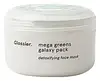
This wash off mask is made with Kaolin and Persea Gratissima Oil for a rinse-off oil-control boost.


What's inside
What's inside
 Key Ingredients
Benefits
Concerns
Ingredients Side-by-side
Water
Skin ConditioningKaolin
Abrasive



Bentonite
Absorbent
Glycerin
Humectant


Acacia Senegal Gum
MaskingXanthan Gum
EmulsifyingBenzyl Alcohol
Perfuming






Alcohol
Antimicrobial

Sodium Dehydroacetate
Preservative
CI 77491
Cosmetic ColorantCitrus Aurantium Bergamia Fruit Oil
Masking

Vitis Vinifera Fruit Extract
Skin ConditioningLimonene
Perfuming
Lavandula Angustifolia Oil
Masking
Linalool
Perfuming
Sodium Citrate
BufferingCitric Acid
Buffering

Dehydroacetic Acid
Preservative
Coffea Arabica Seed Extract
Masking
Coffea Robusta Seed Extract
Skin ConditioningCarbomer
Emulsion StabilisingCupressus Sempervirens Oil
Masking
Salvia Sclarea Oil
Masking
CI 77499
Cosmetic ColorantCommiphora Myrrha Oil
Masking
Santalum Album Oil
Masking
Anthemis Nobilis Flower Oil
Masking
Papain
Skin Conditioning
Petroselinum Crispum Seed Oil
Masking
1,2-Hexanediol
Skin Conditioning
Caprylyl Glycol
Emollient
Sodium Benzoate
Masking
Lactic Acid
Buffering
Algin
MaskingPotassium Sorbate
Preservative
Water, Kaolin, Bentonite, Glycerin, Acacia Senegal Gum, Xanthan Gum, Benzyl Alcohol, Alcohol, Sodium Dehydroacetate, CI 77491, Citrus Aurantium Bergamia Fruit Oil, Vitis Vinifera Fruit Extract, Limonene, Lavandula Angustifolia Oil, Linalool, Sodium Citrate, Citric Acid, Dehydroacetic Acid, Coffea Arabica Seed Extract, Coffea Robusta Seed Extract, Carbomer, Cupressus Sempervirens Oil, Salvia Sclarea Oil, CI 77499, Commiphora Myrrha Oil, Santalum Album Oil, Anthemis Nobilis Flower Oil, Papain, Petroselinum Crispum Seed Oil, 1,2-Hexanediol, Caprylyl Glycol, Sodium Benzoate, Lactic Acid, Algin, Potassium Sorbate
Water
Skin ConditioningKaolin
Abrasive
Glycerin
Humectant
Magnesium Aluminum Silicate
Absorbent
Cetearyl Alcohol
Emollient



Persea Gratissima Oil
Skin Conditioning
Caprylic/Capric Triglyceride
Masking
Polysorbate 60
Emulsifying
Phenoxyethanol
Preservative
Oryza Sativa Bran Extract
Skin Conditioning
Xanthan Gum
EmulsifyingCitrus Aurantium Amara Peel Powder
Skin ConditioningCitric Acid
Buffering
Helianthus Annuus Extract
Emollient
Ethylhexylglycerin
Skin ConditioningTrisodium Ethylenediamine Disuccinate
ChelatingPotassium Sorbate
Preservative
Linum Usitatissimum Seed Oil
Perfuming
Aloe Barbadensis Leaf Juice
Skin Conditioning
Tocopherol
Antioxidant

Rosmarinus Officinalis Leaf Extract
AntimicrobialLecithin
Emollient
Vaccinium Myrtillus Fruit Extract
Skin ConditioningPunica Granatum Fruit Extract
Antioxidant
Morinda Citrifolia Fruit Extract
Skin Conditioning
Lycium Barbarum Fruit Extract
Astringent
Garcinia Mangostana Fruit Extract
Skin ConditioningEuterpe Oleracea Fruit Extract
Aronia Arbutifolia Fruit Extract
Skin ConditioningAristotelia Chilensis Fruit Extract
Skin ConditioningLepidium Sativum Sprout Extract
Skin ConditioningPropanediol
Solvent
Chlorphenesin
Antimicrobial
Sorbic Acid
Preservative
Benzoic Acid
Masking
Spinacia Oleracea Leaf Extract
Skin ConditioningPetroselinum Crispum Leaf Extract
Perfuming
CI 75810
Cosmetic ColorantWater, Kaolin, Glycerin, Magnesium Aluminum Silicate, Cetearyl Alcohol, Persea Gratissima Oil, Caprylic/Capric Triglyceride, Polysorbate 60, Phenoxyethanol, Oryza Sativa Bran Extract, Xanthan Gum, Citrus Aurantium Amara Peel Powder, Citric Acid, Helianthus Annuus Extract, Ethylhexylglycerin, Trisodium Ethylenediamine Disuccinate, Potassium Sorbate, Linum Usitatissimum Seed Oil, Aloe Barbadensis Leaf Juice, Tocopherol, Rosmarinus Officinalis Leaf Extract, Lecithin, Vaccinium Myrtillus Fruit Extract, Punica Granatum Fruit Extract, Morinda Citrifolia Fruit Extract, Lycium Barbarum Fruit Extract, Garcinia Mangostana Fruit Extract, Euterpe Oleracea Fruit Extract, Aronia Arbutifolia Fruit Extract, Aristotelia Chilensis Fruit Extract, Lepidium Sativum Sprout Extract, Propanediol, Chlorphenesin, Sorbic Acid, Benzoic Acid, Spinacia Oleracea Leaf Extract, Petroselinum Crispum Leaf Extract, CI 75810
Reviews
Ingredients Explained
These ingredients are found in both products.
Ingredients higher up in an ingredient list are typically present in a larger amount.
Citric Acid is an alpha hydroxy acid (AHA) naturally found in citrus fruits like oranges, lemons, and limes.
Like other AHAs, citric acid can exfoliate skin by breaking down the bonds that hold dead skin cells together. This helps reveal smoother and brighter skin underneath.
However, this exfoliating effect only happens at high concentrations (20%) which can be hard to find in cosmetic products.
Due to this, citric acid is usually included in small amounts as a pH adjuster. This helps keep products slightly more acidic and compatible with skin's natural pH.
In skincare formulas, citric acid can:
While it can provide some skin benefits, research shows lactic acid and glycolic acid are generally more effective and less irritating exfoliants.
Most citric acid used in skincare today is made by fermenting sugars (usually from molasses). This synthetic version is identical to the natural citrus form but easier to stabilize and use in formulations.
Rosacea skin has a lower threshold for acids generally, with 62.5% of rosacea subjects in one study reacting to lactic acid in a sting test. This is why we mark citric acid as a potential rosacea trigger.
However, this ingredient shows up as a pH adjuster or chelator at roughly 0.1-1% in many products. These low levels are unlikely to be an issue for rosacea skin and becomes a potential trigger at exfoliating concentrations (20%). Because everybody's skin is unique, we recommend a patch test if you are unsure.
Learn more about Citric AcidGlycerin (or glycerol) is a compound naturally found in your skin. It's a powerhouse humectant that pulls water into the stratum corneum.
Topically, glycerin does several things at once:
Your skin makes glycerin on its own (mostly from sebaceous oil breakdown) and shuttles it to your outermost layer of skin, or your epidermis, via aquaporin-3.
Aquaporin-3 is a transporter that is essential for normal skin hydration, elasticity, and repair. Interestingly, mice lacking in AQP3 have dry and less elastic skin that can be fully corrected with glycerin.
This ingredient is non-irritating, plays well with almost every ingredient, and works across all skin types. Typical use is anywhere between 3-10% but can go up to 79% in some leave-on products.
Just know very high concentrations (>40%) can feel tacky in low humidity.
Glycerin is the name for this ingredient in American English. British English uses Glycerol/Glycerine.
Learn more about GlycerinKaolin is a clay. It is used for oil control and to help minimize pores. Like other clays, kaolin has the ability to absorb excess sebum or oil. This can help clean out pores and mattify the skin.
Some types of kaolin may have exfoliating properties. When water is added to kaolin, it becomes a paste with small abrasive particles.
Most kaolin is a white color, but may be pink/orange/red depending on where it comes from.
The name 'kaolin' comes from a Chinese village named 'Gaoling'. Kaolin clay comes from rocks rich in kaolinite. Kaolinite, the mineral, has a silicate layered structure. Kaolinite is formed from chemical weathering of aluminum siilicate minerals.
Besides skincare, kaolin is commonly used to make glossy paper, in ceramics, toothpaste, and as medicine to soothe stomach issues.
Learn more about KaolinPotassium Sorbate is a preservative used to prevent yeast and mold in products. It is commonly found in both cosmetic and food products.
This ingredient comes from potassium salt derived from sorbic acid. Sorbic acid is a natural antibiotic and effective against fungus.
Both potassium sorbate and sorbic acid can be found in baked goods, cheeses, dried meats, dried fruit, ice cream, pickles, wine, yogurt, and more.
You'll often find this ingredient used with other preservatives.
Learn more about Potassium SorbateWater. It's the most common cosmetic ingredient of all. You'll usually see it at the top of ingredient lists, meaning that it makes up the largest part of the product.
So why is it so popular? Water most often acts as a solvent - this means that it helps dissolve other ingredients into the formulation.
You'll also recognize water as that liquid we all need to stay alive. If you see this, drink a glass of water. Remember to stay hydrated!
Learn more about WaterXanthan gum is used as a stabilizer and thickener within cosmetic products. It helps give products a sticky, thick feeling - preventing them from being too runny.
On the technical side of things, xanthan gum is a polysaccharide - a combination consisting of multiple sugar molecules bonded together.
Xanthan gum is a pretty common and great ingredient. It is a natural, non-toxic, non-irritating ingredient that is also commonly used in food products.
Learn more about Xanthan Gum

