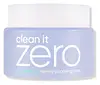
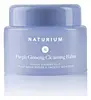
This oil-based makeup remover is made to dissolve makeup, sunscreen, and daily buildup.
This oil-based makeup remover is made to dissolve makeup, sunscreen, and daily buildup.


What's inside
What's inside
 Key Ingredients
Benefits
Concerns
Ingredients Side-by-side
Cetyl Ethylhexanoate
EmollientEthylhexyl Stearate
Emollient




PEG-20 Glyceryl Triisostearate
Emollient
PEG-10 Isostearate
Emulsifying
Synthetic Wax
Abrasive
1,2-Hexanediol
Skin Conditioning
Water
Skin ConditioningButylene Glycol
Humectant
Olea Europaea Fruit Oil
Masking

Centella Asiatica Extract
Cleansing




Simmondsia Chinensis Seed Oil
Emollient
Onsen-Sui
Dipropylene Glycol
HumectantEucalyptus Globulus Leaf Oil
Perfuming


Citrus Aurantium Bergamia Fruit Oil
Masking
Guaiazulene
Antimicrobial
Rosmarinus Officinalis Leaf Oil
Masking
Anthemis Nobilis Flower Oil
Masking
Chamomilla Recutita Flower Extract
Masking
Lactobacillus Ferment
Skin Conditioning
Asiaticoside
Antioxidant
Asiatic Acid
Skin Conditioning
Madecassoside
Antioxidant
Madecassic Acid
Skin Conditioning
Cetyl Ethylhexanoate, Ethylhexyl Stearate, PEG-20 Glyceryl Triisostearate, PEG-10 Isostearate, Synthetic Wax, 1,2-Hexanediol, Water, Butylene Glycol, Olea Europaea Fruit Oil, Centella Asiatica Extract, Simmondsia Chinensis Seed Oil, Onsen-Sui, Dipropylene Glycol, Eucalyptus Globulus Leaf Oil, Citrus Aurantium Bergamia Fruit Oil, Guaiazulene, Rosmarinus Officinalis Leaf Oil, Anthemis Nobilis Flower Oil, Chamomilla Recutita Flower Extract, Lactobacillus Ferment, Asiaticoside, Asiatic Acid, Madecassoside, Madecassic Acid
Ethylhexyl Palmitate
Emollient
Coco-Caprylate/Caprate
Emollient
Synthetic Wax
Abrasive
Polyglyceryl-10 Dioleate
Emulsifying
Sorbitan Oleate Decylglucoside Crosspolymer
CleansingIsoamyl Cocoate

Glyceryl Citrate/Lactate/Linoleate/Oleate
Emulsifying
Polygonum Bistorta Root Extract
Skin ConditioningSalvia Hispanica Seed Oil
Emollient
Simmondsia Chinensis Seed Oil
Emollient
Sorbitan Sesquioleate
Emulsifying
Glyceryl Laurate
Emollient
Aloe Barbadensis Flower Extract
EmollientMelia Azadirachta Leaf Extract
Skin ConditioningOcimum Sanctum Leaf Extract
Skin ConditioningMelia Azadirachta Flower Extract
Skin ConditioningWater
Skin ConditioningGlyceryl Caprylate
EmollientPolyglyceryl-3 Caprate
EmulsifyingPolyglyceryl-4 Cocoate
Emollient
Coccinia Indica Fruit Extract
Skin Conditioning
Corallina Officinalis Extract
Skin Conditioning
Solanum Melongena Fruit Extract
Skin ConditioningCurcuma Longa Root Extract
Antioxidant
Ocimum Basilicum Flower/Leaf Extract
TonicGlycerin
Humectant
Phenoxyethanol
Preservative
Pentylene Glycol
Skin Conditioning
Sodium Chloride
MaskingAlcohol
Antimicrobial
Tocopherol
Antioxidant


Ethylhexyl Palmitate, Coco-Caprylate/Caprate, Synthetic Wax, Polyglyceryl-10 Dioleate, Sorbitan Oleate Decylglucoside Crosspolymer, Isoamyl Cocoate, Glyceryl Citrate/Lactate/Linoleate/Oleate, Polygonum Bistorta Root Extract, Salvia Hispanica Seed Oil, Simmondsia Chinensis Seed Oil, Sorbitan Sesquioleate, Glyceryl Laurate, Aloe Barbadensis Flower Extract, Melia Azadirachta Leaf Extract, Ocimum Sanctum Leaf Extract, Melia Azadirachta Flower Extract, Water, Glyceryl Caprylate, Polyglyceryl-3 Caprate, Polyglyceryl-4 Cocoate, Coccinia Indica Fruit Extract, Corallina Officinalis Extract, Solanum Melongena Fruit Extract, Curcuma Longa Root Extract, Ocimum Basilicum Flower/Leaf Extract, Glycerin, Phenoxyethanol, Pentylene Glycol, Sodium Chloride, Alcohol, Tocopherol
Reviews
Ingredients Explained
These ingredients are found in both products.
Ingredients higher up in an ingredient list are typically present in a larger amount.
Jojoba oil is one of the most well-studied plant-derived ingredients in cosmetics. It is an emollient with a special structure.
Because it is made up of 97-98% wax esters, it closely mirrors the linear monoesters found in human sebum. This makes it skin compatible, non-greasy, and lightweight.
Unlike other plant oils, jojoba wax doesn't easily penetrate skin. It mostly works in the uppermost layers as an emollient. This just means it forms a light barrier on the skin to help retain moisture.
Formulations with jojoba esters up to 90% reduced transepidermal water loss (TEWL) and increased barrier recovery by 81% (outperforming bisabolol at 47%).
Besides barrier support, the science also suggests jojoba to have anti-inflammatory effects and potential applications for skin infections, aging, and wound healing.
Fun fact: Indigenous cultures have used jojoba as a moisturizer and to help treat burns for centuries.
Fungal acne: The Malassezia yeast is known to metabolize fatty acids in the C11-24 range and jojoba's dominant fatty acid components fall into this range. This ingredient may not be fungal acne safe.
Learn more about Simmondsia Chinensis Seed OilSynthetic Wax is a manufactured hydrocarbon wax. In formulas, it works as an occlusive emollient that helps reduce water loss and improves the spreadability of products.
Research comparing synthetic wax to traditional mineral-derived products found that formulas containing it perform as well for skin hydration.
It is considered non-comedogenic and vegan-friendly.
This ingredient has a well-established safety record by the CIR Expert Panel for Cosmetic Ingredient Safety.
Synthetic Waxes are straight/branched-chain hydrocarbons with no ester bond or fatty acids. That means there is nothing for the Malassezia yeast to feed on.
Learn more about Synthetic WaxWater. It's the most common cosmetic ingredient of all. You'll usually see it at the top of ingredient lists, meaning that it makes up the largest part of the product.
So why is it so popular? Water most often acts as a solvent - this means that it helps dissolve other ingredients into the formulation.
You'll also recognize water as that liquid we all need to stay alive. If you see this, drink a glass of water. Remember to stay hydrated!
Learn more about Water

