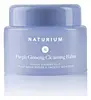
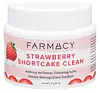
Naturium Purple Ginseng Cleansing Balm Versus Farmacy Strawberry Shortcake Clean Makeup Meltaway Cleansing Balm
This oil-based makeup remover is made to dissolve makeup, sunscreen, and daily buildup.
This oil-based makeup remover is made to dissolve makeup, sunscreen, and daily buildup.

What's inside
What's inside
 Key Ingredients
Benefits
Concerns
Ingredients Side-by-side
Ethylhexyl Palmitate
Emollient




Coco-Caprylate/Caprate
Emollient
Synthetic Wax
Abrasive
Polyglyceryl-10 Dioleate
Emulsifying
Sorbitan Oleate Decylglucoside Crosspolymer
CleansingIsoamyl Cocoate

Glyceryl Citrate/Lactate/Linoleate/Oleate
Emulsifying
Polygonum Bistorta Root Extract
Skin ConditioningSalvia Hispanica Seed Oil
Emollient
Simmondsia Chinensis Seed Oil
Emollient


Sorbitan Sesquioleate
Emulsifying
Glyceryl Laurate
Emollient
Aloe Barbadensis Flower Extract
EmollientMelia Azadirachta Leaf Extract
Skin ConditioningOcimum Sanctum Leaf Extract
Skin ConditioningMelia Azadirachta Flower Extract
Skin ConditioningWater
Skin ConditioningGlyceryl Caprylate
EmollientPolyglyceryl-3 Caprate
EmulsifyingPolyglyceryl-4 Cocoate
Emollient
Coccinia Indica Fruit Extract
Skin Conditioning

Corallina Officinalis Extract
Skin Conditioning
Solanum Melongena Fruit Extract
Skin ConditioningCurcuma Longa Root Extract
Antioxidant

Ocimum Basilicum Flower/Leaf Extract
TonicGlycerin
Humectant
Phenoxyethanol
Preservative
Pentylene Glycol
Skin Conditioning
Sodium Chloride
MaskingAlcohol
Antimicrobial

Tocopherol
Antioxidant



Ethylhexyl Palmitate, Coco-Caprylate/Caprate, Synthetic Wax, Polyglyceryl-10 Dioleate, Sorbitan Oleate Decylglucoside Crosspolymer, Isoamyl Cocoate, Glyceryl Citrate/Lactate/Linoleate/Oleate, Polygonum Bistorta Root Extract, Salvia Hispanica Seed Oil, Simmondsia Chinensis Seed Oil, Sorbitan Sesquioleate, Glyceryl Laurate, Aloe Barbadensis Flower Extract, Melia Azadirachta Leaf Extract, Ocimum Sanctum Leaf Extract, Melia Azadirachta Flower Extract, Water, Glyceryl Caprylate, Polyglyceryl-3 Caprate, Polyglyceryl-4 Cocoate, Coccinia Indica Fruit Extract, Corallina Officinalis Extract, Solanum Melongena Fruit Extract, Curcuma Longa Root Extract, Ocimum Basilicum Flower/Leaf Extract, Glycerin, Phenoxyethanol, Pentylene Glycol, Sodium Chloride, Alcohol, Tocopherol
Cetyl Ethylhexanoate
EmollientCaprylic/Capric Triglyceride
Masking
PEG-20 Glyceryl Triisostearate
Emollient
Synthetic Wax
Abrasive
PEG-10 Isostearate
Emulsifying
Moringa Oleifera Seed Oil
Emollient
Carica Papaya Fruit Extract
Skin ConditioningHelianthus Annuus Seed Oil
Emollient
Fragaria Ananassa Fruit Extract
Skin Conditioning
Sorbitan Sesquioleate
Emulsifying
Melia Azadirachta Leaf Extract
Skin ConditioningMelia Azadirachta Flower Extract
Skin ConditioningCorallina Officinalis Extract
Skin Conditioning
Amber Powder
Coccinia Indica Fruit Extract
Skin Conditioning
Solanum Melongena Fruit Extract
Skin ConditioningCurcuma Longa Leaf Extract
Skin ConditioningOcimum Sanctum Leaf Extract
Skin ConditioningEclipta Prostrata Extract
Skin Conditioning
Aroma

Phenoxyethanol
Preservative
Limonene
Perfuming
Linalool
Perfuming
Cetyl Ethylhexanoate, Caprylic/Capric Triglyceride, PEG-20 Glyceryl Triisostearate, Synthetic Wax, PEG-10 Isostearate, Moringa Oleifera Seed Oil, Carica Papaya Fruit Extract, Helianthus Annuus Seed Oil, Fragaria Ananassa Fruit Extract, Sorbitan Sesquioleate, Melia Azadirachta Leaf Extract, Melia Azadirachta Flower Extract, Corallina Officinalis Extract, Amber Powder, Coccinia Indica Fruit Extract, Solanum Melongena Fruit Extract, Curcuma Longa Leaf Extract, Ocimum Sanctum Leaf Extract, Eclipta Prostrata Extract, Aroma, Phenoxyethanol, Limonene, Linalool
Reviews
Ingredients Explained
These ingredients are found in both products.
Ingredients higher up in an ingredient list are typically present in a larger amount.
Coccinia Indica Fruit Extract is also known as Ivy Gourd Fruit Extract. It has skin conditioning properties.
The fruit is rich in flavonoids, phenolic acids, terpenoids, and sterols that show antioxidant and anti-inflammatory effect in vitro. This is because the fruit contains a thick mucilage that forms a protective and soothing layer on the skin's surface.
The extract itself has demonstrated antioxidant, soothing, and potential anti-allergy properties.
Most of this research is done in vitro and dedicated clinical studies on topical application are still limited.
Learn more about Coccinia Indica Fruit ExtractCorallina Officinalis Extract is from the red seaweed, Corallina Officinalis. This seaweed is found all over the world but is most common in the rocky shores of Great Britain and Ireland.
Corallina Officinalis Extract contains antioxidant and emollient properties.
Extracted polysaccharides, galactose and xylose, in red algae showed antioxidant activity. Antioxidants help with anti-aging by neutralizing free-radical molecules. Free-radical molecules may damage your skin cells and DNA. Galactose is also a PHA.
Corallina Officinalis is structurally similar to coral due to its high calcium content.
Learn more about Corallina Officinalis ExtractMelia Azadirachta Flower Extract is from the Neem tree. Neem trees originate from India.
Melia Azadirachta Flower Extract contains antioxidants. Antioxidants help fight free-radicals. Free-radicals are molecules that may damage your skin cells, such as pollution.
The flowers of this tree are lilac colored.
Learn more about Melia Azadirachta Flower ExtractThis ingredient is also known as neem leaf extract. It contains natural compounds like nimbidin, quercetin, and other polyphenols that give it antibacterial, antifungal, and anti-inflammatory activity.
Lab studies have shown neem leaf extract can inhibit acne-related bacteria and help calm skin. Animal studies on wound gels using 1-3% neem leaf extract found it sped up healing without causing irritation.
A wound-healing study testing gels with the extract at 1%, 2%, and 3% concentrations and found none of them irritated the skin.
Most commercial products also use it in a similar low range (typically under 5%).
Allergy-wise, there are some case reports on neem oil causing allergic contact dermatitis so people with plant/botanical sensitivities may want to patch test first.
Learn more about Melia Azadirachta Leaf ExtractOcimum Sanctum Leaf Extract comes from the Holy Basil plant. Holy Basil is native to India.
Holy Basil is rich in antioxidants due to its high romarinic acid, ferulic acid, and rutin content. This gives it skin brightening and soothing properties.
While Holy Basil has many claims to help fight acne, more research is needed.
One thing to note is the presence of tannins; tannins are naturally found in nature. However, this compound may be skin-sensitizing.
Learn more about Ocimum Sanctum Leaf ExtractPhenoxyethanol is one of the most widely used preservatives in skincare (and for good reason!).
It has a large spectrum of antimicrobial activity and especially effective bacteria, yeast, and mold while only having a weak effect on your skin's natural microbiome.
On a cellular level, it disrupts the cell membranes of microbes by poking holes that make the cell leak. This shuts down the chemical reactions the microbe needs to make energy so it can no longer survive.
Another perk of this ingredient is that it stays functional across a wide pH range (3-10).
You'll often see it paired with boosters like Ethylhexylglycerin; one study showed that a 1:9 ratio of Ethylhexylglycerin to Phenoxyethanol damages bacterial membranes as effectively as doubling the Phenoxyethanol concentration on its own.
Typical use concentrations range from 0.3-1% depending on the formula, and this ingredient is capped at 1% int the EU.
Safety-wise, the fear mongering does not hold up to the evidence. The EU's Scientific Committee on Consumer Safety and FDA consider it safe as a preservative at up to 1%, including for children of all ages.
Adverse systemic effects only showed up in animal studies at exposures roughly 200x higher than what people get from cosmetics. And despite its very widespread use, this ingredient is a rare sensitizer and allergic reactions are uncommon.
Learn more about PhenoxyethanolThis ingredient comes from eggplant (or aubergine). It has skin conditioning properties due to its abundance of antioxidants like Chlorogenic Acid, Caffeic Acid, and Nasunin.
Nasunin is the pigment concentrated in the purple peel and has demonstrated the abilityu to neutralize free radicals and bind excess iron in lab studies.
Lab studies have shown that eggplant extracts can lower oxidative stress and protect skin cell membranes from damage. A 2025 study found that specific compounds in eggplant (particularly a phenolamide called N-Trans-Feruloylputrescine) may support skin health by neutralizing 2-nonenal, a byproduct linked to aging skin.
Overall, this is a gentle, well-tolerated ingredient that adds a little extra antioxidant support to your routine.
Those with nighshade vegetable allergies (tomatoes, peppers, potatoes) should patch test as eggplant is part of the same family.
Learn more about Solanum Melongena Fruit ExtractSorbitan Sesquioleate is derived from sorbitol and oleic acid. It is an emulsifier and prevents ingredients from separating.
Specifically, this ingredient is a water-in-oil emulsifier, meaning it helps water dissolve into oil.
Some studies suggest this ingredient may cause irritation in some people. If you are unsure, it is best to patch test.
This ingredient may not be Malassezia folliculitis, or fungal-acne safe due to the oleic acid. In vitro studies have shown that Oleic Acid is one of the fatty acids that induce rapid Malassezia growth in lab settings.
Learn more about Sorbitan SesquioleateSynthetic Wax is a manufactured hydrocarbon wax. In formulas, it works as an occlusive emollient that helps reduce water loss and improves the spreadability of products.
Research comparing synthetic wax to traditional mineral-derived products found that formulas containing it perform as well for skin hydration.
It is considered non-comedogenic and vegan-friendly.
This ingredient has a well-established safety record by the CIR Expert Panel for Cosmetic Ingredient Safety.
Synthetic Waxes are straight/branched-chain hydrocarbons with no ester bond or fatty acids. That means there is nothing for the Malassezia yeast to feed on.
Learn more about Synthetic Wax

