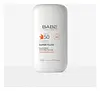
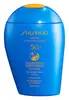
BABE Laboratorios Super Fluid Sunscreen SPF 50 Versus Shiseido Ultimate Sun Protector Lotion SPF 50+
This chemical sunscreen covers the full UV range and blocks ~98% of UVB at SPF 50.
This chemical sunscreen covers most of the UV range, lighter on the deep UVA that drives aging.


What's inside
What's inside
 Key Ingredients
Benefits
Concerns
Ingredients Side-by-side
Water
Skin ConditioningDicaprylyl Carbonate
EmollientEthylhexyl Methoxycinnamate
UV Absorber


Propanediol
Solvent

Dibutyl Adipate
EmollientButyl Methoxydibenzoylmethane
UV Absorber
Ethylhexyl Triazone
UV Absorber
Bis-Ethylhexyloxyphenol Methoxyphenyl Triazine
UV Absorber
C20-22 Alkyl Phosphate
EmulsifyingC20-22 Alcohols
Emulsion Stabilising
Benzotriazolyl Dodecyl P-Cresol
UV AbsorberSodium Hyaluronate
Humectant


Carnosine
Skin Conditioning
Tocopherol
Antioxidant



Caprylyl/Capryl Glucoside
Cleansing1,2-Hexanediol
Skin Conditioning
Xanthan Gum
EmulsifyingParfum
Masking



Polyacrylate Crosspolymer-6
Emulsion StabilisingBHT
Antioxidant
Sodium Hydroxide
BufferingO-Cymen-5-Ol
Antimicrobial
Citric Acid
Buffering
Water, Dicaprylyl Carbonate, Ethylhexyl Methoxycinnamate, Propanediol, Dibutyl Adipate, Butyl Methoxydibenzoylmethane, Ethylhexyl Triazone, Bis-Ethylhexyloxyphenol Methoxyphenyl Triazine, C20-22 Alkyl Phosphate, C20-22 Alcohols, Benzotriazolyl Dodecyl P-Cresol, Sodium Hyaluronate, Carnosine, Tocopherol, Caprylyl/Capryl Glucoside, 1,2-Hexanediol, Xanthan Gum, Parfum, Polyacrylate Crosspolymer-6, BHT, Sodium Hydroxide, O-Cymen-5-Ol, Citric Acid
Butyl Methoxydibenzoylmethane 2.3%
UV Absorber
Homosalate 10%
Skin Conditioning
Ethylhexyl Salicylate 5%
UV Absorber
Octocrylene 5%
UV Absorber
Water
Skin ConditioningDiisopropyl Sebacate
EmollientTalc
Abrasive
Methyl Methacrylate Crosspolymer

Dimethicone
Emollient
PEG/PPG-9/2 Dimethyl Ether
Skin ConditioningSd Alcohol 40-B
Astringent

Lauryl PEG-9 Polydimethylsiloxyethyl Dimethicone
Skin Conditioning
Triethylhexanoin
MaskingGlycerin
Humectant
Dextrin Palmitate
Emulsifying
Sucrose Tetrastearate Triacetate
Emollient
Isododecane
EmollientPPG-3 Dipivalate
Skin ConditioningTrimethylsiloxysilicate
Emollient
Silica
Abrasive
Sodium Chloride
MaskingPEG/PPG-14/7 Dimethyl Ether
Skin ConditioningSaxifraga Sarmentosa Extract
Skin ConditioningCamellia Sinensis Leaf Extract
Antimicrobial
Sophora Angustifolia Root Extract
Skin ConditioningPPG-17
Skin ConditioningDisteardimonium Hectorite
StabilisingCalcium Stearate
Cosmetic ColorantIsostearic Acid
Cleansing
Palmitic Acid
Emollient
Trisodium EDTA
Alcohol
Antimicrobial
Silica Dimethyl Silylate
EmollientVinyl Dimethicone/Methicone Silsesquioxane Crosspolymer
PEG-6
HumectantBHT
Antioxidant
Tocopherol
Antioxidant
Butylene Glycol
Humectant
Stearic Acid
Cleansing
Sodium Metabisulfite
Antioxidant
Syzygium Jambos Leaf Extract
Skin ConditioningPolysilicone-2
Methylparaben
Preservative
Parfum
Masking
Iron Oxides
Butyl Methoxydibenzoylmethane 2.3%, Homosalate 10%, Ethylhexyl Salicylate 5%, Octocrylene 5%, Water, Diisopropyl Sebacate, Talc, Methyl Methacrylate Crosspolymer, Dimethicone, PEG/PPG-9/2 Dimethyl Ether, Sd Alcohol 40-B, Lauryl PEG-9 Polydimethylsiloxyethyl Dimethicone, Triethylhexanoin, Glycerin, Dextrin Palmitate, Sucrose Tetrastearate Triacetate, Isododecane, PPG-3 Dipivalate, Trimethylsiloxysilicate, Silica, Sodium Chloride, PEG/PPG-14/7 Dimethyl Ether, Saxifraga Sarmentosa Extract, Camellia Sinensis Leaf Extract, Sophora Angustifolia Root Extract, PPG-17, Disteardimonium Hectorite, Calcium Stearate, Isostearic Acid, Palmitic Acid, Trisodium EDTA, Alcohol, Silica Dimethyl Silylate, Vinyl Dimethicone/Methicone Silsesquioxane Crosspolymer, PEG-6, BHT, Tocopherol, Butylene Glycol, Stearic Acid, Sodium Metabisulfite, Syzygium Jambos Leaf Extract, Polysilicone-2, Methylparaben, Parfum, Iron Oxides
Reviews
Ingredients Explained
These ingredients are found in both products.
Ingredients higher up in an ingredient list are typically present in a larger amount.
BHT is a synthetic antioxidant and preservative.
As an antioxidant, it helps your body fight off free-radicals. Free-radicals are molecules that may damage your skin cells.
As a preservative, it is used to stabilize products and prevent them from degrading. Specifically, BHT prevents degradation from oxidation.
The concerns related to BHT come from oral studies; this ingredient is currently allowed for use by both the FDA and EU.
However, it was recently restricted for use in the UK as of April 2024.
Learn more about BHTAlso known as Avobenzone, this ingredient is an oil-soluble used to absorb the full spectrum of UVA rays (peak 357 nm).
It's one of the most effective UVA filters available but has a major caveat of photostability: avobenzone is susceptible to photodegradation.
This means it can lose efficacy when exposed to sunlight without the help of a stabilizing agent.
Studies show antioxidants (like vitamin E or vitamin C) and some UV filters (like octocrylene and Tinosorb S) can meaningfully improve its stability in a formulation.
The maximum allowable concentration according to regulation is 3% in the US + Canada, and 5% in the EU, Australia, China, Korea, and ASEAN countries.
It has a well-support safety profile: a comprehensive 2025 review found minimal toxicity with no evidence of carcinogenicity.
Overall, avobenzone is a safe and regulated ingredient used in sunscreen for over 40 years.
Learn more about Butyl MethoxydibenzoylmethaneParfum is a catch-all term for an ingredient or more that is used to give a scent to products.
Also called "fragrance", this ingredient can be a blend of hundreds of chemicals or plant oils. This means every product with "fragrance" or "parfum" in the ingredients list is a different mixture.
For instance, Habanolide is a proprietary trade name for a specific aroma chemical. When used as a fragrance ingredient in cosmetics, most aroma chemicals fall under the broad labeling category of “FRAGRANCE” or “PARFUM” according to EU and US regulations.
The term 'parfum' or 'fragrance' is not regulated in many countries. In many cases, it is up to the brand to define this term.
For instance, many brands choose to label themselves as "fragrance-free" because they are not using synthetic fragrances. However, their products may still contain ingredients such as essential oils that are considered a fragrance by INCI standards.
One example is Calendula flower extract. Calendula is an essential oil that still imparts a scent or 'fragrance'.
Depending on the blend, the ingredients in the mixture can cause allergies and sensitivities on the skin. Some ingredients that are known EU allergens include linalool and citronellol.
Parfum can also be used to mask or cover an unpleasant scent.
The bottom line is: not all fragrances/parfum/ingredients are created equally. If you are worried about fragrances, we recommend taking a closer look at an ingredient. And of course, we always recommend speaking with a professional.
Learn more about ParfumTocopherol is a fat-soluble antioxidant known as Vitamin E.
You'll find this ingredient in the vast majority of skincare (for good reason). It works to neutralize free radicals, or unstable molecules generated by UV exposure, pollution, and other environmental stressors, before they can cause oxidative damage to your skin cells.
Topically applied tocopherol has been shown to protect against UV damage by ramping up the skin's own natural defense enzymes.
It also acts as a skin conditioning agent; some studies show that regular topical use can improve the skin's water-binding capacity over 2-4 weeks.
This ingredient is especially loved for being a team player. When combined with Vitamin C, the photoprotective effect of both ingredients roughly doubles and the combo also helps reduce UV-induced DNA damage.
This ingredient has some brightening potential but it's more of a prevention ingredient than spot-fader. Cell studies show it can slow down melanin production but it's worth noting that it's not the most powerful brightener out there.
In formulations, it also serves as a stabilizer that helps protect other oxidation-prone ingredients from degrading.
Concentrations usually range from 0.1-1% in most leave-on products.
Learn more about TocopherolWater. It's the most common cosmetic ingredient of all. You'll usually see it at the top of ingredient lists, meaning that it makes up the largest part of the product.
So why is it so popular? Water most often acts as a solvent - this means that it helps dissolve other ingredients into the formulation.
You'll also recognize water as that liquid we all need to stay alive. If you see this, drink a glass of water. Remember to stay hydrated!
Learn more about Water

