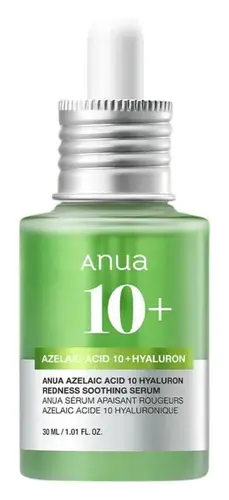
Anua Azelaic Acid 10 Hyaluron Redness Soothing Serum Versus IMAGE skincare Iluma Intense Brightening Serum
This calming serum is formulated around Azelaic Acid and Panthenol to calm redness and clear breakouts.
This brightening serum is formulated around Sodium Ascorbyl Phosphate and Arbutin to brighten dull-looking skin and fade the look of dark spots.


What's inside
What's inside
 Key Ingredients
Benefits
Concerns
Ingredients Side-by-side
Water
Skin ConditioningAzelaic Acid
Buffering









Propylene Glycol
Humectant


Sodium Hydroxide
BufferingDipropylene Glycol
Humectant1,2-Hexanediol
Skin Conditioning
Panthenol
Skin Conditioning
Hydroxyethylcellulose
Emulsion StabilisingBetaine Salicylate
Antimicrobial

Glycerin
Humectant
Biosaccharide Gum-1
Humectant
Ethylhexylglycerin
Skin ConditioningAllantoin
Skin Conditioning
Dipotassium Glycyrrhizate
Humectant
Melia Azadirachta Leaf Extract
Skin ConditioningCamellia Sinensis Leaf Water
Masking
Sodium Hyaluronate
Humectant

Melia Azadirachta Flower Extract
Skin ConditioningNiacinamide
Smoothing
Aloe Barbadensis Leaf Juice
Skin Conditioning
Beta-Glucan
Skin Conditioning
Centella Asiatica Extract
Cleansing
Centella Asiatica Leaf Extract
Skin Conditioning
Centella Asiatica Root Extract
Skin Conditioning
Madecassoside
Antioxidant
Asiaticoside
Antioxidant
Asiatic Acid
Skin Conditioning
Madecassic Acid
Skin Conditioning
Squalane
Emollient
Zinc PCA
Humectant
Butylene Glycol
Humectant
Pentylene Glycol
Skin Conditioning
Caprylyl/Capryl Glucoside
CleansingHydrogenated Lecithin
Emulsifying
Ceramide NP
Skin Conditioning
Water, Azelaic Acid, Propylene Glycol, Sodium Hydroxide, Dipropylene Glycol, 1,2-Hexanediol, Panthenol, Hydroxyethylcellulose, Betaine Salicylate, Glycerin, Biosaccharide Gum-1, Ethylhexylglycerin, Allantoin, Dipotassium Glycyrrhizate, Melia Azadirachta Leaf Extract, Camellia Sinensis Leaf Water, Sodium Hyaluronate, Melia Azadirachta Flower Extract, Niacinamide, Aloe Barbadensis Leaf Juice, Beta-Glucan, Centella Asiatica Extract, Centella Asiatica Leaf Extract, Centella Asiatica Root Extract, Madecassoside, Asiaticoside, Asiatic Acid, Madecassic Acid, Squalane, Zinc PCA, Butylene Glycol, Pentylene Glycol, Caprylyl/Capryl Glucoside, Hydrogenated Lecithin, Ceramide NP
Water
Skin ConditioningCitrus Unshiu Peel Extract
MaskingMelia Azadirachta Leaf Extract
Skin ConditioningAlgae Extract
Emollient
Artemisia Vulgaris Extract
Skin Conditioning
Camellia Sinensis Leaf Extract
Antimicrobial
Sodium Ascorbyl Phosphate
Antioxidant
Arctostaphylos Uva Ursi Leaf Extract
Skin Conditioning
Dimethicone/Methicone Copolymer

Hexylresorcinol
Antimicrobial
Arbutin
Antioxidant
Azelaic Acid
Buffering
Sucrose Palmitate
EmollientPueraria Tuberosa Leaf Cell Extract
Antioxidant
Chlorella Vulgaris Extract
Skin ConditioningHydrolyzed Corallina Officinalis
Skin ConditioningMorus Alba Leaf Extract
Skin ConditioningCentella Asiatica Extract
Cleansing
Echinacea Purpurea Extract
MoisturisingRumex Occidentalis Extract
Skin ConditioningPhyllanthus Emblica Fruit Extract
HumectantGlycyrrhiza Glabra Root Extract
Bleaching
Anthemis Nobilis Flower Extract
Masking
Salix Nigra Bark Extract
Skin ProtectingTocopheryl Acetate
Antioxidant
Magnesium Ascorbyl Phosphate
Antioxidant
Dipotassium Glycyrrhizate
Humectant
Xanthan Gum
EmulsifyingPolysorbate 20
Emulsifying
Potassium Sorbate
Preservative
Disodium EDTA
ChelatingPhenoxyethanol
Preservative
Ethylhexylglycerin
Skin ConditioningCitric Acid
Buffering
Sodium Polystyrene Sulfonate
Emulsion StabilisingWater, Citrus Unshiu Peel Extract, Melia Azadirachta Leaf Extract, Algae Extract, Artemisia Vulgaris Extract, Camellia Sinensis Leaf Extract, Sodium Ascorbyl Phosphate, Arctostaphylos Uva Ursi Leaf Extract, Dimethicone/Methicone Copolymer, Hexylresorcinol, Arbutin, Azelaic Acid, Sucrose Palmitate, Pueraria Tuberosa Leaf Cell Extract, Chlorella Vulgaris Extract, Hydrolyzed Corallina Officinalis, Morus Alba Leaf Extract, Centella Asiatica Extract, Echinacea Purpurea Extract, Rumex Occidentalis Extract, Phyllanthus Emblica Fruit Extract, Glycyrrhiza Glabra Root Extract, Anthemis Nobilis Flower Extract, Salix Nigra Bark Extract, Tocopheryl Acetate, Magnesium Ascorbyl Phosphate, Dipotassium Glycyrrhizate, Xanthan Gum, Polysorbate 20, Potassium Sorbate, Disodium EDTA, Phenoxyethanol, Ethylhexylglycerin, Citric Acid, Sodium Polystyrene Sulfonate
Reviews
Ingredients Explained
These ingredients are found in both products.
Ingredients higher up in an ingredient list are typically present in a larger amount.
Azelaic acid is a multitasker ingredient that helps treat acne, pigmentation, and irritation. It is a great option for sensitive skin.
What makes it special?
OTC Azelaic acid is usually available in concentrations from 10-15% and anything over requires a prescription.
Here's what each tier does best:
Unlike other acids, azelaic acid will not make your skin more photosensitive/sun sensitive.
Though this ingredient is naturally occurring in grains like wheat, rye, and barley, it is usually synthetically created for cosmetics to ensure stability and effectiveness.
Learn more about Azelaic AcidCentella Asiatica Extract (Centella) is one of the most researched botanical extracts in skincare with decades of studies backing its effects on inflammation, collagen, and the skin barrier.
That research keeps pointing back to the same four triterpenoid saponins: Asiaticoside, Madecassoside, Asiatic Acid, and Madecassic Acid.
These compounds allow centella to dial back inflammation, encourage the skin to build and hold onto collagen, support the barrier and hydration, and bring solid antioxidant activity to protect against signs of aging.
Centella also carries a nice supporting cast of Vitamin A, vitamin C, several B vitamins, and amino acids. Put it all together and you get an ingredient that soothes, hydrates, and protects, all at once.
Most of centella's magic comes from the four big compounds (Asiaticoside, Madecassoside, Asiatic Acid, and Madecassic Acid). These are the actives doing the heavy lifting in almost every centella study.
Here is the short version of what they do in the skin:
So it is not just soothing for the sake of soothing. Centella calms the skin AND helps it rebuild.
Just FYI, not all centella on an ingredient list is the same. What you are getting actually depends on the extract:
Fun fact on the ratios: the leaves tend to be richest in Madecassoside and Asiaticoside, and lower in the two acids. The exact amounts shift with where the plant is grown and how it is processed. This means purity really does vary brand to brand.
Centella is one of the most easygoing actives out there.
It layers well with basically everything: niacinamide, hyaluronic acid, peptides, and vitamin C, and also pairs nicely with stronger actives like retinoids and exfoliating acids where it can help take the edge off irritation.
On the safety side, centella and its triterpenes are classified as weak sensitizers, meaning allergic reactions are possible but uncommon.
Patch tests at 1% and 5% came back negative in test panels, and creams at typical use levels did not cause allergic reactions across large groups of people.
But as with any new active, a patch test is still a smart move for very reactive skin.
Centella is widely used because it is effective at low percentages. For context, human safety testing found no meaningful irritation from creams containing centella extract at everyday use levels (the tested amounts were well under 1%).
The irritancy threshold in animal testing was also above 30% (so real-world formulas sit far below anything concerning).
In collagen lab studies, higher concentrations drove more collagen synthesis, so serums built around centella tend to feature it more prominently.
Bottom line: you will find centella working nicely anywhere from a fraction of a percent up to hero-ingredient levels depending on whether it is a supporting soother or the main event.
Fun fact: Centella has been used as a medicine and in food for many centuries. As a medicine, it is used to treat burns, scratches, and wounds.
Learn more about Centella Asiatica ExtractDipotassium Glycyrrhizate comes from licorice root.
Extracts of licorice have demonstrated to have antibacterial, anti‐inflammatory, antiviral, antioxidant properties.
One component, glabridin, has extra potent antioxidant and soothing properties. It has also been found to block pigmentation from UVB rays in guinea pigs.
Licorice Root also contains a flavonoid. Flavonoids are a natural substance from in plants. Flavonoids also have antioxidant properties.
Another component, glycyrrhizin, has been found to have anti-inflammatory and antimicrobial benefits. This may make licorice root extract effective at treating acne. However, more research is needed to support this.
Liquiritin is one of the flavone compounds found in licorice. It has been found to help lighten skin by preventing tyrosinase from reacting with tyrosine. When the two react, protein is converted to melanin. Melanin is the substance in your body that gives your features pigmentation.
Licorice root is native to Southern Europe and Asia. It has been used in traditional Chinese medicine to help with respiratory issues.
Learn more about Dipotassium GlycyrrhizateEthylhexylglycerin is created from glycerin. It is a multitasker ingredient that:
The CIR Expert Panel found minimal skin absorption or sensitization of any kind in a safety assessment. Though this ingredient is considered well-tolerated, a small number of cases of allergic dermatitis have been published since 2002. Just be sure to patch test if you are unsure.
Industry-reported use ranges from 8% in rinse-off products and 2% in leave-on formulations.
Learn more about EthylhexylglycerinThis ingredient is also known as neem leaf extract. It contains natural compounds like nimbidin, quercetin, and other polyphenols that give it antibacterial, antifungal, and anti-inflammatory activity.
Lab studies have shown neem leaf extract can inhibit acne-related bacteria and help calm skin. Animal studies on wound gels using 1-3% neem leaf extract found it sped up healing without causing irritation.
A wound-healing study testing gels with the extract at 1%, 2%, and 3% concentrations and found none of them irritated the skin.
Most commercial products also use it in a similar low range (typically under 5%).
Allergy-wise, there are some case reports on neem oil causing allergic contact dermatitis so people with plant/botanical sensitivities may want to patch test first.
Learn more about Melia Azadirachta Leaf ExtractWater. It's the most common cosmetic ingredient of all. You'll usually see it at the top of ingredient lists, meaning that it makes up the largest part of the product.
So why is it so popular? Water most often acts as a solvent - this means that it helps dissolve other ingredients into the formulation.
You'll also recognize water as that liquid we all need to stay alive. If you see this, drink a glass of water. Remember to stay hydrated!
Learn more about Water

