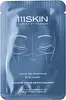
This calming eye mask is formulated around Ubiquinone and Corallina Officinalis Extract to calm redness and soften the look of wrinkles.
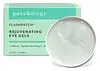
This hydrating eye mask is formulated around Panthenol and Centella Asiatica Extract to hydrate skin and soften the look of wrinkles.

What's inside
What's inside
 Key Ingredients
Benefits
Concerns
Ingredients Side-by-side
Water
Skin ConditioningGlycerin
Humectant


Dipropylene Glycol
HumectantBenzyl Glycol
SolventChondrus Crispus Powder
Abrasive


Ceratonia Siliqua Gum
EmollientXanthan Gum
EmulsifyingAllantoin
Skin Conditioning

PEG-60 Hydrogenated Castor Oil
Emulsifying


Ethylhexylglycerin
Skin ConditioningCyamopsis Tetragonoloba Gum
Emulsion StabilisingAgar
MaskingSynthetic Fluorphlogopite
Raspberry Ketone
Masking

Calcium Lactate
AstringentPotassium Chloride
Glucose
Humectant
Disodium EDTA
ChelatingTocopheryl Acetate
Antioxidant


Mica
Cosmetic ColorantCaprylic/Capric Triglyceride
Masking
Butylene Glycol
Humectant
Titanium/Titanium Dioxide
Cosmetic ColorantUbiquinone
Antioxidant
Hydrogenated Lecithin
Emulsifying
Undaria Pinnatifida Extract
Skin ConditioningTin Oxide
Abrasive
Hydrolyzed Collagen
Emollient
Phenoxyethanol
Preservative
1,2-Hexanediol
Skin Conditioning
Corallina Officinalis Extract
Skin Conditioning
Sodium Benzoate
Masking
Potassium Sorbate
Preservative
Acetyl Tetrapeptide-5
Humectant
CI 77891
Cosmetic ColorantCI 77007
Cosmetic ColorantWater, Glycerin, Dipropylene Glycol, Benzyl Glycol, Chondrus Crispus Powder, Ceratonia Siliqua Gum, Xanthan Gum, Allantoin, PEG-60 Hydrogenated Castor Oil, Ethylhexylglycerin, Cyamopsis Tetragonoloba Gum, Agar, Synthetic Fluorphlogopite, Raspberry Ketone, Calcium Lactate, Potassium Chloride, Glucose, Disodium EDTA, Tocopheryl Acetate, Mica, Caprylic/Capric Triglyceride, Butylene Glycol, Titanium/Titanium Dioxide, Ubiquinone, Hydrogenated Lecithin, Undaria Pinnatifida Extract, Tin Oxide, Hydrolyzed Collagen, Phenoxyethanol, 1,2-Hexanediol, Corallina Officinalis Extract, Sodium Benzoate, Potassium Sorbate, Acetyl Tetrapeptide-5, CI 77891, CI 77007
Water
Skin ConditioningGlycerin
Humectant
Dipropylene Glycol
HumectantCeratonia Siliqua Gum
EmollientChondrus Crispus Powder
Abrasive
Butylene Glycol
Humectant
Chondrus Crispus Extract
Skin Conditioning
Panthenol
Skin Conditioning
Centella Asiatica Extract
Cleansing
Paeonia Suffruticosa Root Extract
Skin ProtectingChamomilla Recutita Flower Extract
Masking
Portulaca Oleracea Extract
Skin Conditioning
Caffeine
Skin Conditioning
Hydrolyzed Collagen
Emollient
Cocos Nucifera Fruit Extract
Emollient
Sodium Hyaluronate
Humectant
Aloe Barbadensis Leaf Extract
Emollient
Lonicera Japonica Flower Extract
Skin ConditioningCalendula Officinalis Extract
Skin Conditioning
Lavandula Angustifolia Extract
Skin Conditioning

Syringa Vulgaris Extract
Skin ConditioningRosmarinus Officinalis Extract
AntimicrobialMentha Arvensis Leaf Extract
MaskingMonarda Didyma Leaf Extract
Skin ConditioningJasminum Officinale Extract
Masking
Freesia Refracta Extract
Skin ConditioningAcetyl Tetrapeptide-5
Humectant
Trideceth-6
EmulsifyingBetaine
Humectant
1,2-Hexanediol
Skin Conditioning
Cellulose Gum
Emulsion StabilisingXanthan Gum
EmulsifyingGlyceryl Caprylate
EmollientPotassium Chloride
Sodium Polyacrylate
Absorbent
Sucrose
Humectant
Ethylhexylglycerin
Skin ConditioningSynthetic Fluorphlogopite
Polysorbate 20
Emulsifying
Hydrogenated Polydecene
EmollientDipotassium Glycyrrhizate
Humectant
Allantoin
Skin Conditioning
Pantolactone
Humectant
Polyglutamic Acid
Skin Conditioning
Acetyl Glucosamine
Skin Conditioning
Urea
Buffering
Yeast Amino Acids
HumectantTrehalose
Humectant
Inositol
Humectant
Taurine
BufferingPotassium Sorbate
Preservative
Glutathione
Disodium EDTA
ChelatingPhenoxyethanol
Preservative
CI 77891
Cosmetic ColorantMica
Cosmetic ColorantParfum
Masking
Water, Glycerin, Dipropylene Glycol, Ceratonia Siliqua Gum, Chondrus Crispus Powder, Butylene Glycol, Chondrus Crispus Extract, Panthenol, Centella Asiatica Extract, Paeonia Suffruticosa Root Extract, Chamomilla Recutita Flower Extract, Portulaca Oleracea Extract, Caffeine, Hydrolyzed Collagen, Cocos Nucifera Fruit Extract, Sodium Hyaluronate, Aloe Barbadensis Leaf Extract, Lonicera Japonica Flower Extract, Calendula Officinalis Extract, Lavandula Angustifolia Extract, Syringa Vulgaris Extract, Rosmarinus Officinalis Extract, Mentha Arvensis Leaf Extract, Monarda Didyma Leaf Extract, Jasminum Officinale Extract, Freesia Refracta Extract, Acetyl Tetrapeptide-5, Trideceth-6, Betaine, 1,2-Hexanediol, Cellulose Gum, Xanthan Gum, Glyceryl Caprylate, Potassium Chloride, Sodium Polyacrylate, Sucrose, Ethylhexylglycerin, Synthetic Fluorphlogopite, Polysorbate 20, Hydrogenated Polydecene, Dipotassium Glycyrrhizate, Allantoin, Pantolactone, Polyglutamic Acid, Acetyl Glucosamine, Urea, Yeast Amino Acids, Trehalose, Inositol, Taurine, Potassium Sorbate, Glutathione, Disodium EDTA, Phenoxyethanol, CI 77891, Mica, Parfum
Ingredients Explained
These ingredients are found in both products.
Ingredients higher up in an ingredient list are typically present in a larger amount.
1,2-Hexanediol is a synthetic liquid and another multi-functional powerhouse.
It is a:
- Humectant, drawing moisture into the skin
- Emollient, helping to soften skin
- Solvent, dispersing and stabilizing formulas
- Preservative booster, enhancing the antimicrobial activity of other preservatives
Acetyl Tetrapeptide-5 is a peptide that goes by another name, eyeseryl, due to claims that it can help reduce eye puffiness.
The manufacturer claims this ingredient reduces eye puffiness by:
An in-vivo study from the manufacturer found 95% of volunteers saw eye bag improvement by the end of the study.
Eye puffiness is caused by two major factors: fluid retention and fat.
Those with fluid retention may see improvement from using this ingredient. However, those with eye fat will need surgical intervention in order to get rid of puffiness.
Learn more about Acetyl Tetrapeptide-5Allantoin is a soothing ingredient known for its protective and moisturizing properties; it's basically a quiet workhorse ingredient you can find in a huge range of cosmetics.
Though it can be derived from the comfrey plant, allantoin is produced synthetically for cosmetic products to ensure purity.
Research shows it can encourage your skin cells to turn over and renew by stimulating keratinocyte and fibroblast proliferation.
It also has mild keratolytic properties to help loosen and shed dead skin cells without being harsh.
Studies also suggest allantoin can help calm inflammation by dialing down some of the chemical signals your skin sends out when it is irritated.
This ingredient is typically used in the 0.1-0.5% range, and the FDA recognizes it as a skin protectant in OTC products up to 2%.
Overall, allantoin is a wonderful addition to most routines; it is stable across a wide pH range (~4-8), works well with other ingredients, and is considered non-sensitizing/non-irritating.
Fun fact: Allantoin is naturally occurring in comfrey root, beets, chamomile, and wheat sprouts. Our bodies even produce it as a byproduct of uric acid metabolism.
Learn more about AllantoinButylene Glycol (or BG) is used within cosmetic products for a few different reasons:
Overall, Butylene Glycol is a safe and well-rounded ingredient that works well with other ingredients.
Though this ingredient works well with most skin types, some people with sensitive skin may experience a reaction such as allergic rashes, closed comedones, or itchiness.
Learn more about Butylene GlycolCeratonia Siliqua Gum is extracted from the seeds of the carob tree. You might know this ingredient as Carob Gum or Locust Bean Gum. It is used to stabilize other ingredients and improve the texture of products.
Carob gum is made up of long-chain polysaccharides. This makes it a natural thickener.
Yes! This ingredient comes from the seeds of a tree. The name 'Locust Bean Gum' can be misleading.
Learn more about Ceratonia Siliqua GumChondrus Crispus Powder is just Irish moss, a red seaweed harvested, dried, and ground into a fine powder. Because it's the whole plant rather than a liquid extract, it has an official INCI job as an "abrasive".
This ingredient also happens to be loaded with carrageenan, a sugar-based polysaccharide, that allows it to double as a thickener and light hydrator.
Real world concentration is low; industry surveys report a maximum of 0.1% across 63 leave-on products.
The Cosmetic Ingredient Review Expert Panel reviewed it in 2021 and concluded it's safe at current use levels and every human sensitization study on it came back negative.
Allergy risk is very low with no documented pattern of reactions but anyone with a known seaweed or iodine sensitivity may want to patch test since dried Chondrus crispus does carry a small amount of natural iodine.
Learn more about Chondrus Crispus PowderCi 77891 is a white pigment from Titanium dioxide. It is naturally found in minerals such as rutile and ilmenite.
It's main function is to add a white color to cosmetics. It can also be mixed with other colors to create different shades.
Ci 77891 is commonly found in sunscreens due to its ability to block UV rays.
Learn more about CI 77891Dipropylene Glycol is a synthetically created humectant, stabilizer, and solvent.
This ingredient helps:
Dipropylene glycol is technically an alcohol, but it belongs to the glycol family (often considered part of the ‘good’ alcohols). This means it is hydrating and gentle on skin unlike drying solvent alcohols like denatured alcohol.
As a masking agent, Dipropylene Glycol can be used to cover the smell of other ingredients. However, it does not have a scent.
Studies show Dipropylene Glycol is considered safe to use in skincare.
Learn more about Dipropylene GlycolDisodium EDTA is a chelating agent. It grabs onto and deactivates metal ions that sneak into your products from water, packaging, or air.
This ingredient mainly works behind the scenes and helps with:
On top of that, this ingredient can counteract the effects of hard water by binding to the minerals in it.
One thing worth knowing is that Disodium EDTA has been shown to be a mild penetration enhancer. It can help other ingredients absorb into skin more effectively which can be a double-edged sword (great for actives, but can also make the active too strong if you have sensitive skin).
Clinical patch testing showed no significant skin irritation at typical use concentrations and minimal dermal absorption.
You'll most likely see this ingredient near the end of an ingredient list. It's typically found in concentrations less than 1%.
Learn more about Disodium EDTAEthylhexylglycerin is created from glycerin. It is a multitasker ingredient that:
The CIR Expert Panel found minimal skin absorption or sensitization of any kind in a safety assessment. Though this ingredient is considered well-tolerated, a small number of cases of allergic dermatitis have been published since 2002. Just be sure to patch test if you are unsure.
Industry-reported use ranges from 8% in rinse-off products and 2% in leave-on formulations.
Learn more about EthylhexylglycerinGlycerin (or glycerol) is a compound naturally found in your skin. It's a powerhouse humectant that pulls water into the stratum corneum.
Topically, glycerin does several things at once:
Your skin makes glycerin on its own (mostly from sebaceous oil breakdown) and shuttles it to your outermost layer of skin, or your epidermis, via aquaporin-3.
Aquaporin-3 is a transporter that is essential for normal skin hydration, elasticity, and repair. Interestingly, mice lacking in AQP3 have dry and less elastic skin that can be fully corrected with glycerin.
This ingredient is non-irritating, plays well with almost every ingredient, and works across all skin types. Typical use is anywhere between 3-10% but can go up to 79% in some leave-on products.
Just know very high concentrations (>40%) can feel tacky in low humidity.
Glycerin is the name for this ingredient in American English. British English uses Glycerol/Glycerine.
Learn more about GlycerinHydrolyzed Collagen is Collagen (usually sourced from fish, bovine, or porcine byproducts) that's been broken down into smaller peptides. This makes it water-soluble and easy to blend into formulations.
In a formula, it works mainly as a skin-conditioning and moisturizing agent.
The small peptides and amino acids (including Natural Moisturizing Factor components like Hydroxyproline, Serine, and Aspartic Acid) help the surface of the skin hold onto water, feel softer, and look temporarily plumper.
This ingredient also has mild film-forming and antioxidant properties with research showing the antioxidant effect is stronger the lower the molecular weight of the peptides.
It's worth being realistic here:
Topically applied Hydrolyzed Collagen conditions the upper layers of skin rather than rebuilding the structural collagen deep in your dermis (the wrinkle-and-firmness benefits people associate with Collagen mostly come from oral supplements in studies, not topicals).
However, recent lab and skin-model work on Hydrolyzed Fish Collagen has shown promising effects on cell viability and wound healing when used as an active.
Typical concentrations range from 0.2-2%, but the percentage can go much higher in rinse-off or hair products (sometimes even above 50%).
Clinical studies on this ingredient showed no irritation, sensitization, or phototoxicity.
If you are looking for vegan collagen, it usually goes by a different INCI name like hydrolyzed soy protein. Vegan collagen is derived from yeast, bacteria, or plant sources.
The results are varied.
A study from 2021 found hydrolyzed collagen increased elasticity and improved wrinkles in 1,125 participants between age 20 and 70. Another study found increased skin thickness in participants between the ages of 45 to 59.
However, It is difficult to prove that oral collagen will end up working on your skin. Many of the studies using hydrolyzed collagen also add several vitamins and nutrients into the test mixture as well.
Further studies are needed at this time.
Learn more about Hydrolyzed CollagenMica is a naturally occurring mineral used to add shimmer and color in cosmetics. It can also help improve the texture of a product or give it an opaque, white/silver color.
Serecite is the name for very fine but ragged grains of mica.
This ingredient is often coated with metal oxides like titanium dioxide. Trace amounts of heavy metals may be found in mica, but these metals are not harmful in our personal products.
Mica has been used since prehistoric times throughout the world. Ancient Egyptian, Indian, Greek, Roman, Aztec, and Chinese civilizations have used mica.
Learn more about MicaPhenoxyethanol is one of the most widely used preservatives in skincare (and for good reason!).
It has a large spectrum of antimicrobial activity and especially effective bacteria, yeast, and mold while only having a weak effect on your skin's natural microbiome.
On a cellular level, it disrupts the cell membranes of microbes by poking holes that make the cell leak. This shuts down the chemical reactions the microbe needs to make energy so it can no longer survive.
Another perk of this ingredient is that it stays functional across a wide pH range (3-10).
You'll often see it paired with boosters like Ethylhexylglycerin; one study showed that a 1:9 ratio of Ethylhexylglycerin to Phenoxyethanol damages bacterial membranes as effectively as doubling the Phenoxyethanol concentration on its own.
Typical use concentrations range from 0.3-1% depending on the formula, and this ingredient is capped at 1% int the EU.
Safety-wise, the fear mongering does not hold up to the evidence. The EU's Scientific Committee on Consumer Safety and FDA consider it safe as a preservative at up to 1%, including for children of all ages.
Adverse systemic effects only showed up in animal studies at exposures roughly 200x higher than what people get from cosmetics. And despite its very widespread use, this ingredient is a rare sensitizer and allergic reactions are uncommon.
Learn more about PhenoxyethanolWe don't have a description for Potassium Chloride yet.
Potassium Sorbate is a preservative used to prevent yeast and mold in products. It is commonly found in both cosmetic and food products.
This ingredient comes from potassium salt derived from sorbic acid. Sorbic acid is a natural antibiotic and effective against fungus.
Both potassium sorbate and sorbic acid can be found in baked goods, cheeses, dried meats, dried fruit, ice cream, pickles, wine, yogurt, and more.
You'll often find this ingredient used with other preservatives.
Learn more about Potassium SorbateSynthetic Fluorphlogopite is the synthethic version of mica. It consists of fluorine, aluminum and silicate.
Synthetic Fluorphlogopite is used to add volume to products.
It is considered non-irritating on the skin.
Learn more about Synthetic FluorphlogopiteWater. It's the most common cosmetic ingredient of all. You'll usually see it at the top of ingredient lists, meaning that it makes up the largest part of the product.
So why is it so popular? Water most often acts as a solvent - this means that it helps dissolve other ingredients into the formulation.
You'll also recognize water as that liquid we all need to stay alive. If you see this, drink a glass of water. Remember to stay hydrated!
Learn more about WaterXanthan gum is used as a stabilizer and thickener within cosmetic products. It helps give products a sticky, thick feeling - preventing them from being too runny.
On the technical side of things, xanthan gum is a polysaccharide - a combination consisting of multiple sugar molecules bonded together.
Xanthan gum is a pretty common and great ingredient. It is a natural, non-toxic, non-irritating ingredient that is also commonly used in food products.
Learn more about Xanthan Gum

