Tulus Kakadu C(e)rum Sunscreen SPF 50
A sunscreen with 28 ingredients, including vitamin C and spf.
This chemical sunscreen covers the full UV range and blocks ~98% of UVB at SPF 50.
We independently verify ingredients, backed by peer-reviewed research. Suggest an update.
What's inside
Ingredients List
Water
Skin ConditioningGlycerin
Humectant


Dibutyl Adipate
EmollientButyloctyl Salicylate
Skin Conditioning

Diethylamino Hydroxybenzoyl Hexyl Benzoate
UV Filter
Bis-Ethylhexyloxyphenol Methoxyphenyl Triazine
UV Absorber
Ethylhexyl Triazone
UV Absorber
Pentylene Glycol
Skin Conditioning
Isoamyl P-Methoxycinnamate
UV Absorber
Polysilicone-15
UV Filter
Inulin Lauryl Carbamate
Emulsion StabilisingSodium Acrylate/Sodium Acryloyldimethyl Taurate Copolymer
Emulsion StabilisingAcrylates/C10-30 Alkyl Acrylate Crosspolymer
Emulsion StabilisingTromethamine
BufferingIsohexadecane
EmollientGlyceryl Caprylate
EmollientCaprylyl Glycol
Emollient
Terminalia Ferdinandiana Fruit Extract
Antioxidant
Polysorbate 80
Emulsifying

Allantoin
Skin Conditioning

Sorbitan Oleate
Emulsifying

Resveratrol
Antioxidant

Ascorbic Acid
Antioxidant


Epigallocatechin Gallate
Antioxidant
Butylene Glycol
Humectant
1,2-Hexanediol
Skin Conditioning
Beta Vulgaris Root Extract
Skin ConditioningEthylhexylglycerin
Skin ConditioningWater, Glycerin, Dibutyl Adipate, Butyloctyl Salicylate, Diethylamino Hydroxybenzoyl Hexyl Benzoate, Bis-Ethylhexyloxyphenol Methoxyphenyl Triazine, Ethylhexyl Triazone, Pentylene Glycol, Isoamyl P-Methoxycinnamate, Polysilicone-15, Inulin Lauryl Carbamate, Sodium Acrylate/Sodium Acryloyldimethyl Taurate Copolymer, Acrylates/C10-30 Alkyl Acrylate Crosspolymer, Tromethamine, Isohexadecane, Glyceryl Caprylate, Caprylyl Glycol, Terminalia Ferdinandiana Fruit Extract, Polysorbate 80, Allantoin, Sorbitan Oleate, Resveratrol, Ascorbic Acid, Epigallocatechin Gallate, Butylene Glycol, 1,2-Hexanediol, Beta Vulgaris Root Extract, Ethylhexylglycerin
Key Ingredients
Benefits
Concerns
Ingredients Explained
Water. It's the most common cosmetic ingredient of all. You'll usually see it at the top of ingredient lists, meaning that it makes up the largest part of the product.
So why is it so popular? Water most often acts as a solvent - this means that it helps dissolve other ingredients into the formulation.
You'll also recognize water as that liquid we all need to stay alive. If you see this, drink a glass of water. Remember to stay hydrated!
Learn more about WaterGlycerin (or glycerol) is a compound naturally found in your skin. It's a powerhouse humectant that pulls water into the stratum corneum.
Topically, glycerin does several things at once:
Your skin makes glycerin on its own (mostly from sebaceous oil breakdown) and shuttles it to your outermost layer of skin, or your epidermis, via aquaporin-3.
Aquaporin-3 is a transporter that is essential for normal skin hydration, elasticity, and repair. Interestingly, mice lacking in AQP3 have dry and less elastic skin that can be fully corrected with glycerin.
This ingredient is non-irritating, plays well with almost every ingredient, and works across all skin types. Typical use is anywhere between 3-10% but can go up to 79% in some leave-on products.
Just know very high concentrations (>40%) can feel tacky in low humidity.
Glycerin is the name for this ingredient in American English. British English uses Glycerol/Glycerine.
Learn more about GlycerinDibutyl Adipate is a lightweight, oil-soluble ester that acts as an emollient and solvent. It helps products spread more easily and leaves a soft, silky, dry-touch finish without being greasy.
You'll likely see this ingredient in sunscreens because it does a nice job dissolving UV filters and keeping them evenly distributed.
This ingredient has been found to be safe as used in cosmetics, wasn't a skin or eye irritant in clinical patch testing, and wasn't phototoxic.
In a clinical comedogenicity test, this ingredient tested negative so it isn't likely to clog pores.
Typical use levels are about 5-8% for sunscreens + nail products, but can range from 0.005%-8% depending on the product.
Learn more about Dibutyl AdipateButyloctyl Salicylate is a chemical UV filter structurally similar to octisalate. It is a photostabilizer, SPF booster, emollient and solvent. This ingredient helps evenly spread out ingredients.
According to a manufacturer, it is suitable for pairing with micro Titanium Dioxide, Zinc Oxide, and pigments.
Photostabilizers help stabilize UV-filters and prevents them from degrading quickly.
Learn more about Butyloctyl SalicylateDiethylamino Hydroxybenzoyl Hexyl Benzoate (DHHB) is a chemical UV-A absorber. It is formulated for high UVA protection (320-400 nm).
DHHB is well-liked for:
DHHB has been approved by the EU, Japan, Taiwan, and South America for use up to 10%. Unfortunately, it has not been approved for use in the US or Canada due to slow regulatory processes.
This ingredient is soluble in oils, fats, and lipids.
Learn more about Diethylamino Hydroxybenzoyl Hexyl BenzoateThis ingredient is better known as bemotrizinol or Tinosorb S and is one of the best broad-spectrum UV filters in modern sunscreen.
It works by absorbing UV light across a whole range (280-400 nm) with peaks around 310 nm (UVB) and 340-345 nm (UVA). This means it covers UVB plus the deeper UVA wavelengths that drive photoaging and pigmentation.
Another pro?
It's exceptionally photostable, barely degrades in sunlight, and acts as a "bodyguard" for less stable filters.
That's why you'll see it paired with avobenzone or octinoxate; this team up ensures they keep working through sun exposure.
Safety reviews have been reassuring across the board. This ingredient shows low absorption through the skin, rarely irritates, and lab studies found it doesn't act like a hormone in the body (a concern that's been raised about some older sunscreen filters).
On maximum concentrations:
In 2026, the US F.D.A finally added it as an OTC sunscreen ingredient at concentrations up to 6% for adults / children 6 months and older
Learn more about Bis-Ethylhexyloxyphenol Methoxyphenyl TriazineEthylhexyl Triazone (aka Octyl Triazone) is an oil-soluble organic UVB filter. It has peak absorption around 314 nm, right in the middle of the UVB range.
This ingredient is described as one of the most effective UVB filters available and small concentrations are enough to deliver a high SPF thanks to its strong UV absorbing power.
Formulators love it for its stability; its ability to filter UV stays practically unchanged even under intense radiation and it can also help boost the photostability of less stable filters like avobenzone.
It's also a great pick for water resistant products because it's insoluble in water and has a good affinity for keratin.
Because it's a big, heavy molecule, the European Scientific Committee has found to to have very low dermal penetration and negative results for allergenicity.
In vitro testing also showed a low absorption rate and clean results on irritation.
Typical use levels are 1-5% with 5% being the maximum in the EU, Japan, and other markets that allow it. However, this ingredient is not approved yet in the US or Canada.
Learn more about Ethylhexyl TriazonePentylene Glycol (1,2-pentanediol) is a multitasking little diol with three main roles in a formula:
Research on alkanediols (the family pentylene glycol belongs to) show they work by disrupting microbial cell membranes. This disruption helps the primary preservative system in a product work more effectively at lower doses.
On the safety side, the Cosmetic Ingredient Review Expert Panel has concluded this ingredient to be safe as used in current cosmetic practices + concentrations.
Typical use levels in a formula run about 1-5%.
Learn more about Pentylene GlycolIsoamyl P-Methoxycinnamate is an oil-soluble chemical UV filter whose main job is to soap up UVB rays (and a tiny bit in the UVA-II range).
It's essentially a cousin of the more common octinoxate. Because it has a cinnamate backbone, it also has some mild antioxidant + free-radical scavenging behavior.
In vitro work measuring its UV-protective efficacy and photostability among 18 EU-approved filters and a peer-review of cosmetic UV filters confirms it performs best as a UVB booster rather than a standalone sunscreen.
Typical use levels sit at or below the EU regulatory cap of 10%, and it usually runs anywhere from 2-10% depending on the target SPF.
This ingredient is approved across the EU, UK, Australia, China, India, and Asia but has not been cleared in the US or Canada yet. This is more of a regulatory backlog situation and not a safety red flag.
Learn more about Isoamyl P-MethoxycinnamatePolysilicone-15 (trade name: Parsol SLX) is a silicone-based UVB filter that soaks up UVB light (~280-320nm) with a peak around 310nm.
It's a fairly modest sunscreen filter so formulators mostly use it as an SPF booster and "light stabilizer". This just means it helps keep other light-sensitive ingredients from breaking down in sunlight.
A 2007 study measured the in-vitro SPF of 18 filters and found Polysilicone-15 contributed an SPF of about 3.64 at its maximum legal concentration (though worth noting its maker points out that in-vitro tests tend to underestimate its real performance because of its large polymeric structure).
Usage levels vary; it's approved up to 10% as a UV filter in the EU, China, Japan, Australia, ASEAN, and Mercosur countries. In the US, it's only permitted up to 1% as a light stabilizer because the FDA hasn't reviewed it as a sunscreen active.
Typical use levels range from 1-3%.
The EU's scientific committee concluded that this ingredient is safe for use as a UV absorber up to 10%, and tests came back negative for irritation, phototoxicity, and photoallergy.
There is one case of allergic lip inflammation from a lip balm with this ingredient, though this is rare.
Learn more about Polysilicone-15Inulin Lauryl Carbamate is a plant-derived emulsifier and emulsion stabilizer.
It has an interesting party trick: one end of the molecule grabs onto oil while the long (sugar) chains of the molecule wrap around each little oil droplet to hold water against it.
This keeps everything from separating in a formula and also breaks down the oily into tiny droplets so your skin can't feel them (also why these formulas feel light and non-greasy).
Typical usage dose ranges anywhere from 0.2-4.8% depending on how much oil is in the formula, and this ingredient works across a wide pH (4-11) + temperature range.
Safety-wise, it's pretty solid. It is reported as a non-irritant and is even recommended for sensitive-skin and sun care.
Learn more about Inulin Lauryl CarbamateThis long ingredient is a copolymer of sodium acrylate and sodium acryloyldimethyl taurate monomers.
It is used to help stabilize other ingredients and create a thicker gel-like texture.
Emulsifiers prevent oils and waters from separating.
Learn more about Sodium Acrylate/Sodium Acryloyldimethyl Taurate CopolymerAcrylates/C10-30 Alkyl Acrylate Crosspolymer is a synthetic polymer. It is used to thicken, emulsify, and improve the texture of products.
As an emulsifier, it helps stabilize oil-in-water emulsions to give products an elegant feel when applied.
It can also form a thin protective film on skin. One study found that a formula using this polymer helped slow down how quickly other ingredients (like DEET) were absorbed through skin.
A 2024 study of over 1,300 patients confirmed that sensitization to this ingredient is rare. It is also non-mutagenic and has a clean track record.
Learn more about Acrylates/C10-30 Alkyl Acrylate CrosspolymerTromethamine (aka THAM) is a synthetic amino acid that shows up in skincare as a helper ingredient.
It functions as a pH adjuster to help neutralize acidic ingredients and set a formula's pH to the right spot.
This matters a lot because a lot of actives (like vitamin C) needs a specific pH to work well and feel comfortable on skin.
Concentration use ranges from 0.1-1.0% depending on the formula.
Learn more about TromethamineIsohexadecane is added to enhance texture, emulsify, and to help cleanse. It is an isoparrafin. It is a component of petrolatum.
Due to its large size, Isohexadecane is not absorbed by the skin. Instead, it sits on top and acts as an emollient. Emollients help keep your skin soft and smooth by trapping moisture within.
Isohexadecane is often used in products designed to help oily skin. It is lightweight and non-greasy while helping to moisturize. When mixed with silicones, it gives a product a silky feel.
Learn more about IsohexadecaneGlyceryl Caprylate comes from glycerin and caprylic acid. It is an emollient, co-emulsifier, and preservative booster.
Its short C8 fatty acid chain makes it behave differently from its longer-chain emollient cousins like Glyceryl Stearate. It feels more lightweight, fast-absorbing, and silky instead of rich and waxy.
As a co-emulsifier, its "head" and "tail" sit at the oil-water interface. But overall, the short C8 tail and not being water soluble means it doesn't really have the muscle to emulsify a formula on its own. That's why you'll often see it paired with a primary emulsifier like Cetearyl Glucoside.
Interestingly, Glyceryl Caprylate acts as a preservative booster. This is because its fatty-acid backbone disrupts microbial lipid membranes. It shows excellent activity against bacteria and yeast but is weaker against mold.
Typical concentrations range from 0.5-1% and this ingredient is generally non-irritating.
Because this ingredient has a C8 fatty acid chain, it is outside the range that the Malassezia yeast metabolizes (making it fungal acne safe).
Learn more about Glyceryl CaprylateCaprylyl Glycol is a humectant, skin conditioner, emollient, and preservative booster derived from either caprylic acid or synthetically created.
Typical use levels vary from 0.3-1% as a preservative booster and go up to 2% to condition skin.
Because it is not a free-fatty acid, this ingredient is fungal acne safe (there's nothing for Malassezia to feed on).
Learn more about Caprylyl GlycolTerminalia Ferdinandiana Fruit Extract is from the Kakadu plum. The Kakadu plum is native to northern Australia. The Kakadu plum holds the record for having the highest amount of natural vitamin C.
This ingredient is an antioxidant. Antioxidants help fight free-radical molecules. Free-radical molecules are capable of damaging our cells and other genetic material. Antioxidants help stabilize free-radicals and thus may reduce the signs of aging.
The high vitamin C content of Kakadu plum also helps lighten skin. Vitamin C has been shown to block the process of skin darkening that leads to hyperpigmentation.
Kakadu plums have been used by indigenous cultures as medicine to help treat colds and as an antiseptic.
Learn more about Terminalia Ferdinandiana Fruit ExtractPolysorbate 80 is a synthetic surfactant and emulsifier derived from sorbitol and oleic acid.
It reduces the surface tension between oil and water phases to help them stay mixed and stable in a formulation. In other words, it prevents your formulas from separating into an oily mess.
The CIR Expert Panel has evaluated the scientific data and found this ingredient to be safe, non-irritating, and non-sensitizing at concentrations up to 5% (it's even approved by the FDA as an OTC eye drop ingredient).
Learn more about Polysorbate 80Allantoin is a soothing ingredient known for its protective and moisturizing properties; it's basically a quiet workhorse ingredient you can find in a huge range of cosmetics.
Though it can be derived from the comfrey plant, allantoin is produced synthetically for cosmetic products to ensure purity.
Research shows it can encourage your skin cells to turn over and renew by stimulating keratinocyte and fibroblast proliferation.
It also has mild keratolytic properties to help loosen and shed dead skin cells without being harsh.
Studies also suggest allantoin can help calm inflammation by dialing down some of the chemical signals your skin sends out when it is irritated.
This ingredient is typically used in the 0.1-0.5% range, and the FDA recognizes it as a skin protectant in OTC products up to 2%.
Overall, allantoin is a wonderful addition to most routines; it is stable across a wide pH range (~4-8), works well with other ingredients, and is considered non-sensitizing/non-irritating.
Fun fact: Allantoin is naturally occurring in comfrey root, beets, chamomile, and wheat sprouts. Our bodies even produce it as a byproduct of uric acid metabolism.
Learn more about AllantoinSorbitan Oleate is a PEG-free emulsifier made by esterifying sorbitol with oleic acid.
You'll likely see it paired with Polysorbate 80 to create the right emulsification balance.
Typical use levels in formulas range from 2-10%.
The CIR Expert Panel has concluded this ingredient to be safe as a cosmetic ingredient.
Since this ingredient is an ester of oleic acid, it may not be fungal acne safe. Oleic acid is a fatty acid that falls into the C11-24 range that Malassezia can metabolize.
This ingredient does have a comedogenic rating of 3, but this doesn't mean a formula with this ingredient will clog pores. Human testing has proved that any finished product with a comedogenic ingredient won't automatically make you break out; it really comes down to concentration, formula, and your skin.
Learn more about Sorbitan OleateResveratrol is a well-studied polyphenol antioxidant that has gained attention in skincare for its protective and calming effects on the skin. It’s often considered a gentler option for people who can’t tolerate retinoids.
This antioxidant is best known for its anti-aging benefits. Research suggests resveratrol helps combat visible signs of aging by:
Beyond anti-aging, resveratrol is also valued for its skin-brightening and soothing properties.
Some forms of resveratrol appear to be more effective than others. Resveratrol isobutyrate and resveratrol butyrate are often cited as more stable derivatives.
Research also suggests these two forms have stronger effects on Type I collagen stimulation and inflammation reduction compared to basic resveratrol.
Resveratrol is naturally unstable and can degrade when exposed to light and oxygen. Well-designed products often use stabilized derivatives, airless or opaque packaging, and supporting antioxidants to help maintain effectiveness on skin.
A note on resveratrol as a retinoid alternative:
While resveratrol offers antioxidant protection, inflammation control, and some collagen-supporting benefits, it does not replace retinoids in terms of cell turnover or acne treatment.
However, it can be a useful option for people with retinoid sensitivity or intolerance, or for those looking to support skin health without irritation.
Fun fact: Resveratrol is naturally found in grapes, peanuts, and berries, which is why it’s frequently associated with wine and grape-derived skincare ingredients.
Learn more about ResveratrolAscorbic Acid is is pure Vitamin C and is the biologically active form used directly by skin.
Not only is vitamin C great for your overall health and immune system, but it also has plenty of benefits for your skin. It is best supported by academic literature for:
Topical vitamin C has been shown to help neutralize oxidative stress from UV and pollution, helping to improve photoaging and hyperpigmentation when used consistently.
One clinical study found that using 5% topical vitamin C for six months improved signs of photodamaged skin, both on the surface and in the deeper structural layers of the skin.
While vitamin C doesn’t replace sunscreen, studies show it can boost photoprotection when combined with Vitamin E and ferulic acid. These two ingredients help improve stability and protective effects.
The big downside of this ingredient is formulation difficulty. Vitamin C is prone to oxidation and doesn't penetrate the skin unless formulated correctly. Research found that vitamin C absorbs into the skin best at a low pH (< 3.5) with about 20% being the upper limit for effective absorption.
Skin levels can saturate after repeated application; this means your skin won’t keep absorbing more once it’s full of vitamin C. This is why more isn’t always better with vitamin C and why very high concentrations don’t necessarily give extra benefits.
Ascorbic acid generally works well with many skincare ingredients but can be irritating when combined with other active ingredients. Strong oxidizing acne treatments like benzoyl peroxide can reduce the effectiveness of vitamin C if they are used at the same time; they are often recommended for use at different times of day.
Read more about other types of Vitamin C:
Foods rich with vitamin C include oranges, strawberries, broccoli, bell peppers, and more. When consuming Vitamin C, your skin receives a portion of the nutrients.
Learn more about Ascorbic AcidEpigallocatechin Gallate (EGCG) is the most abundant catechin in green tea. It is a heavyweight antioxidant in the green tea family.
In skincare, it helps protect skin from photoaging damage by scavenging UV-induced reactive oxygen species and tampering down inflammatory pathways.
UV-exposed skin cells treated with EGCG showed less of the enzyme that chews up collagen, lower inflammatory signaling, and better preserved barrier function.
EGCG nudges skin cells to make more of your skin's built in moisturizing molecules, filaggrin and hyaluronic acid, for better skin hydration.
Because it inhibits melanogenesis, it also provides a mild brightening effect.
Clinically, topical EGCG has helped calm radiation-related skin irritation and scalp seborrheic dermatitis with no major side effects.
In an 8-week split-face study, topical EGCG at 1% and 5% significantly reduced inflammatory and non-inflammatory acne.
A study from 2023 on patients with Seborrhea (a chronic skin condition caused by overactive sebaceous glands) found that using a 5% EGCG cream (alone and combined with 2% L-carnitine) and found meaningful sebum reduction plus better hydration.
Just one caveat here: Most clinical trials used 1-5% concentrations and most cosmetics contain only 0.1-1%.
The only headache related to this ingredient is stability. EGCG degrades quickly with heat, light, oxygen, and higher pH.
That's why you'll usually see it in low-pH formulas (4.5-6.5) or paired with vitamin C + vitamin E to slow its degradation. Hyaluronic acid also stabilizes it and boosts its antioxidant activity.
Learn more about Epigallocatechin GallateButylene Glycol (or BG) is used within cosmetic products for a few different reasons:
Overall, Butylene Glycol is a safe and well-rounded ingredient that works well with other ingredients.
Though this ingredient works well with most skin types, some people with sensitive skin may experience a reaction such as allergic rashes, closed comedones, or itchiness.
Learn more about Butylene Glycol1,2-Hexanediol is a synthetic liquid and another multi-functional powerhouse.
It is a:
- Humectant, drawing moisture into the skin
- Emollient, helping to soften skin
- Solvent, dispersing and stabilizing formulas
- Preservative booster, enhancing the antimicrobial activity of other preservatives
Beta Vulgaris Root Extract comes from the beet root plant. Beet Root has high Vitamin C content.
Beet roots also contain antioxidants. Antioxidants help fight free-radicals. Free-radicals are molecules that may damage your skin cells, such as pollution.
Beet root has many benefits when eaten. More research is needed on applying beetroot in skincare.
Beet Root is used to add pink/red color.
Learn more about Beta Vulgaris Root ExtractEthylhexylglycerin is created from glycerin. It is a multitasker ingredient that:
The CIR Expert Panel found minimal skin absorption or sensitization of any kind in a safety assessment. Though this ingredient is considered well-tolerated, a small number of cases of allergic dermatitis have been published since 2002. Just be sure to patch test if you are unsure.
Industry-reported use ranges from 8% in rinse-off products and 2% in leave-on formulations.
Learn more about EthylhexylglycerinReviews
No written reviews yet. Be the first to review this product.
Recent searches
Search reviews by skin type, ingredient, or keyword.
Where it's from
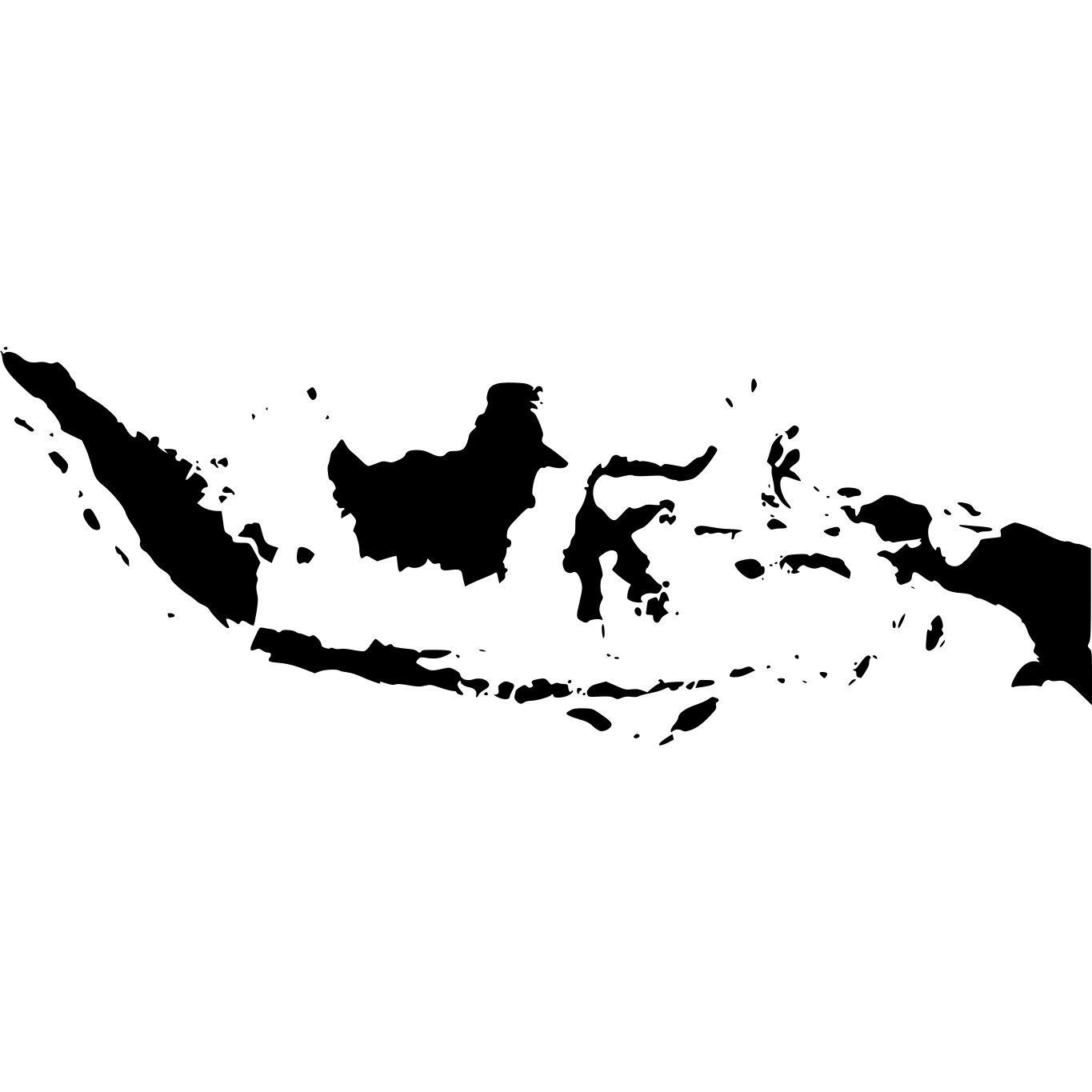
Tulus is a Indonesian brand
50 SPF Rating
With an SPF rating of 50, this product protects against 98.0% of UVB rays

We're dedicated to providing you with the most up-to-date and science-backed ingredient info out there.
The data we've presented on this page has been verified by a member of the SkinSort Team.
Read more about us· Updated December 21, 2025 • Added by abey


