
What's inside
What's inside
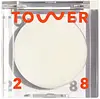 Key Ingredients
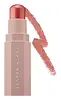
Benefits
Concerns
Ingredients Side-by-side
Hydrogenated Polyisobutene
EmollientZea Mays Starch
Absorbent
Ricinus Communis Seed Oil
Masking




Polyhydroxystearic Acid
Emulsifying
Helianthus Annuus Seed Wax
Skin Conditioning
Diisostearyl Malate
EmollientTriisostearyl Citrate
EmollientMicrocrystalline Wax
Emulsion StabilisingJojoba Esters
Emollient
Butyrospermum Parkii Butter
Skin Conditioning



Orbignya Oleifera Seed Oil
Emollient
Oryza Sativa Bran Extract
Skin Conditioning
Helianthus Annuus Extract
Emollient
Rosmarinus Officinalis Leaf Extract
AntimicrobialCamellia Sinensis Leaf Extract
Antimicrobial





Chamomilla Recutita Flower Extract
Masking
Aloe Barbadensis Leaf Extract
Emollient
Carthamus Tinctorius Seed Oil
Masking
Acacia Decurrens Flower Wax
Emollient
Persea Gratissima Oil
Skin Conditioning
Rosa Canina Fruit Oil
Emollient
Glycine Soja Oil
Emollient
Tocopherol
Antioxidant
Polyglycerin-3
Humectant
Caprylyl Glycol
Emollient
Ethylhexylglycerin
Skin ConditioningCI 77891
Cosmetic ColorantHydrogenated Polyisobutene, Zea Mays Starch, Ricinus Communis Seed Oil, Polyhydroxystearic Acid, Helianthus Annuus Seed Wax, Diisostearyl Malate, Triisostearyl Citrate, Microcrystalline Wax, Jojoba Esters, Butyrospermum Parkii Butter, Orbignya Oleifera Seed Oil, Oryza Sativa Bran Extract, Helianthus Annuus Extract, Rosmarinus Officinalis Leaf Extract, Camellia Sinensis Leaf Extract, Chamomilla Recutita Flower Extract, Aloe Barbadensis Leaf Extract, Carthamus Tinctorius Seed Oil, Acacia Decurrens Flower Wax, Persea Gratissima Oil, Rosa Canina Fruit Oil, Glycine Soja Oil, Tocopherol, Polyglycerin-3, Caprylyl Glycol, Ethylhexylglycerin, CI 77891
Mica
Cosmetic ColorantEthylhexyl Isononanoate
EmollientOctyldodecanol
Emollient
Polymethyl Methacrylate
Sucrose Acetate Isobutyrate
C20-40 Alcohols
EmulsifyingTribehenin
Emollient
Paraffin
Skin Conditioning
Polyethylene
Abrasive
Vp/Eicosene Copolymer
Vp/Hexadecene Copolymer
Diisostearyl Malate
EmollientCera Microcristallina
Emulsion StabilisingCaprylyl Glycol
Emollient
Phenoxyethanol
Preservative
Tocopheryl Acetate
Antioxidant
Hexylene Glycol
EmulsifyingTocopherol
Antioxidant
Isostearyl Alcohol
Emollient
Ascorbyl Palmitate
Antioxidant
Malic Acid
Buffering
Calcium Sodium Borosilicate
Synthetic Fluorphlogopite
Calcium Aluminum Borosilicate
Polyethylene Terephthalate
Acrylates Copolymer
Silica
Abrasive
Tin Oxide
Abrasive
CI 75470
Cosmetic ColorantCI 19140
Cosmetic ColorantCI 15850
Cosmetic ColorantCI 77891
Cosmetic ColorantCI 77491
Cosmetic ColorantMica, Ethylhexyl Isononanoate, Octyldodecanol, Polymethyl Methacrylate, Sucrose Acetate Isobutyrate, C20-40 Alcohols, Tribehenin, Paraffin, Polyethylene, Vp/Eicosene Copolymer, Vp/Hexadecene Copolymer, Diisostearyl Malate, Cera Microcristallina, Caprylyl Glycol, Phenoxyethanol, Tocopheryl Acetate, Hexylene Glycol, Tocopherol, Isostearyl Alcohol, Ascorbyl Palmitate, Malic Acid, Calcium Sodium Borosilicate, Synthetic Fluorphlogopite, Calcium Aluminum Borosilicate, Polyethylene Terephthalate, Acrylates Copolymer, Silica, Tin Oxide, CI 75470, CI 19140, CI 15850, CI 77891, CI 77491
Alternatives
Ingredients Explained
These ingredients are found in both products.
Ingredients higher up in an ingredient list are typically present in a larger amount.
Caprylyl Glycol is a humectant, skin conditioner, emollient, and preservative booster derived from either caprylic acid or synthetically created.
Typical use levels vary from 0.3-1% as a preservative booster and go up to 2% to condition skin.
Because it is not a free-fatty acid, this ingredient is fungal acne safe (there's nothing for Malassezia to feed on).
Learn more about Caprylyl GlycolCi 77891 is a white pigment from Titanium dioxide. It is naturally found in minerals such as rutile and ilmenite.
It's main function is to add a white color to cosmetics. It can also be mixed with other colors to create different shades.
Ci 77891 is commonly found in sunscreens due to its ability to block UV rays.
Learn more about CI 77891Diisostearyl Malate is an emollient and most often used in lip products. It comes from isostearyl alcohol, a fatty acid, and malic acid, an AHA.
As an emollient, Diisostearyl Malate helps create a thin film on your skin to trap moisture in. This helps keep your skin soft and smooth.
Tocopherol is a fat-soluble antioxidant known as Vitamin E.
You'll find this ingredient in the vast majority of skincare (for good reason). It works to neutralize free radicals, or unstable molecules generated by UV exposure, pollution, and other environmental stressors, before they can cause oxidative damage to your skin cells.
Topically applied tocopherol has been shown to protect against UV damage by ramping up the skin's own natural defense enzymes.
It also acts as a skin conditioning agent; some studies show that regular topical use can improve the skin's water-binding capacity over 2-4 weeks.
This ingredient is especially loved for being a team player. When combined with Vitamin C, the photoprotective effect of both ingredients roughly doubles and the combo also helps reduce UV-induced DNA damage.
This ingredient has some brightening potential but it's more of a prevention ingredient than spot-fader. Cell studies show it can slow down melanin production but it's worth noting that it's not the most powerful brightener out there.
In formulations, it also serves as a stabilizer that helps protect other oxidation-prone ingredients from degrading.
Concentrations usually range from 0.1-1% in most leave-on products.
Learn more about Tocopherol

