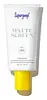
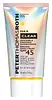
Supergoop! Mattescreen Sunscreen SPF 40 Versus Peter Thomas Roth Max Clear Invisible Priming Sunscreen Broad Spectrum SPF 45
This mineral sunscreen covers the full UV range and blocks ~98% of UVB at SPF 40.
This chemical sunscreen covers most of the UV range, lighter on the deep UVA that drives aging.

What's inside
What's inside
 Key Ingredients
Benefits
Concerns
Ingredients Side-by-side
Titanium Dioxide 0.7%
Cosmetic Colorant

Zinc Oxide 17%
Cosmetic Colorant
Cyclopentasiloxane
Emollient
Coco-Caprylate
Emollient

Isododecane
EmollientCoco-Caprylate/Caprate
Emollient
Dimethicone Crosspolymer
Emulsion Stabilising
Silica Dimethyl Silylate
EmollientDimethicone/Bis-Isobutyl PPG-20 Crosspolymer
Emollient
Argania Spinosa Kernel Oil
Emollient





Tocopheryl Acetate
Antioxidant


C12-15 Alkyl Benzoate
AntimicrobialPolyglyceryl-3 Polyricinoleate
Emulsifying
Dimethicone
Emollient
CI 77492
Cosmetic ColorantWater
Skin ConditioningIsostearic Acid
Cleansing

Propanediol
Solvent
Ethylhexylglycerin
Skin ConditioningPEG/PPG-18/18 Dimethicone
Emulsifying
Bisabolol
Antioxidant
Alumina
Abrasive
Hydrogen Dimethicone
CI 77491
Cosmetic ColorantPolyhydroxystearic Acid
Emulsifying
CI 77499
Cosmetic ColorantBuddleja Officinalis Flower Extract
UV FilterTriethoxycaprylylsilane
Hydrangea Arborescens Root Extract
Skin ConditioningMorus Alba Root Extract
BleachingPolysorbate 20
Emulsifying
Resveratrol
Antioxidant
Scutellaria Lateriflora Extract
Skin ConditioningCaprylyl Glycol
Emollient
Hexylene Glycol
EmulsifyingPentapeptide-21
Skin Conditioning
Titanium Dioxide 0.7%, Zinc Oxide 17%, Cyclopentasiloxane, Coco-Caprylate, Isododecane, Coco-Caprylate/Caprate, Dimethicone Crosspolymer, Silica Dimethyl Silylate, Dimethicone/Bis-Isobutyl PPG-20 Crosspolymer, Argania Spinosa Kernel Oil, Tocopheryl Acetate, C12-15 Alkyl Benzoate, Polyglyceryl-3 Polyricinoleate, Dimethicone, CI 77492, Water, Isostearic Acid, Propanediol, Ethylhexylglycerin, PEG/PPG-18/18 Dimethicone, Bisabolol, Alumina, Hydrogen Dimethicone, CI 77491, Polyhydroxystearic Acid, CI 77499, Buddleja Officinalis Flower Extract, Triethoxycaprylylsilane, Hydrangea Arborescens Root Extract, Morus Alba Root Extract, Polysorbate 20, Resveratrol, Scutellaria Lateriflora Extract, Caprylyl Glycol, Hexylene Glycol, Pentapeptide-21
Butyl Methoxydibenzoylmethane 3%
UV Absorber
Homosalate 15%
Skin Conditioning
Ethylhexyl Salicylate 5%
UV Absorber
Octocrylene 10%
UV Absorber
Coco-Caprylate/Caprate
Emollient
Dimethicone
Emollient
Triheptanoin
Skin ConditioningSilica
Abrasive
Butyloctyl Salicylate
Skin Conditioning
C9-12 Alkane
SolventDilinoleic Acid/Butanediol Copolymer
Silica Silylate
Emollient
Tribehenin
Emollient
Sorbitol/Sebacic Acid Copolymer Behenate
Skin ConditioningC26-28 Alkyl Dimethicone
Skin Conditioning
Dimethicone/Vinyl Dimethicone Crosspolymer
Skin Conditioning
Polyphenylsilsesquioxane
Dimethicone Crosspolymer
Emulsion Stabilising
Cellulose
Absorbent
Ethylcellulose
Water
Skin ConditioningCastor Oil/Ipdi Copolymer
Tocopheryl Acetate
Antioxidant
Bisabolol
Antioxidant
Butyl Methoxydibenzoylmethane 3%, Homosalate 15%, Ethylhexyl Salicylate 5%, Octocrylene 10%, Coco-Caprylate/Caprate, Dimethicone, Triheptanoin, Silica, Butyloctyl Salicylate, C9-12 Alkane, Dilinoleic Acid/Butanediol Copolymer, Silica Silylate, Tribehenin, Sorbitol/Sebacic Acid Copolymer Behenate, C26-28 Alkyl Dimethicone, Dimethicone/Vinyl Dimethicone Crosspolymer, Polyphenylsilsesquioxane, Dimethicone Crosspolymer, Cellulose, Ethylcellulose, Water, Castor Oil/Ipdi Copolymer, Tocopheryl Acetate, Bisabolol
Reviews
Ingredients Explained
These ingredients are found in both products.
Ingredients higher up in an ingredient list are typically present in a larger amount.
Bisabolol is a gentle skin conditioner, antioxidant, and soothing ingredient.
It's primary claim to fame is soothing and research shows topically applied bisabolol can quiet the chemical messengers that cause your skin to become inflamed, helping to sooth any irritation.
A clinical study found that applying 0.5% bisabolol daily for 8 weeks produced an average 9% decrease in skin pigmentation. Researchers found it can also suppress the process that leads to excess melanin production in skin.
In vitro studies found that bisabolol combined with propylene glycol significantly increased skin permeability by increasing lipid fluidity in the stratum corneum.
You'll likely see use concentrations quite low, usually 0.1-0.2%.
Overall, this is a well-tolerated ingredient that works well in formulas designed for sensitive, reactive, or post-procedure skin.
Learn more about BisabololCoco-Caprylate/Caprate is a lightweight ester created from coconut oil fatty acids, caprylic acid, and capric acid.
It is an emollient that helps soften skin and reduce transepidermal water loss (TEWL). What sets it apart from heavier emollients is its ultralight, non-greasy feel.
Once applied, this ingredient dries down quickly and leaves a dry, silky finish behind. This also helps improve spreadability and texture.
This ingredient has an excellent safety-record and is non-irritating.
Typical concentrations for cosmetics range from 0.5-62%.
Research on Malassezia growth found no growth on fatty acid esters with chain lengths shorter than 12 carbons (it prefers C11-24).
Since Coco-Caprylate/Caprate is built on C8 and C10 fatty acids, it is out of the range that Malassezia metabolizes, and therefore safe for fungal acne.
Learn more about Coco-Caprylate/CaprateDimethicone is a type of synthetic silicone created from natural materials such as quartz. It is also known as polydimethylsiloxane.
What it does:
Dimethicone comes in different viscosities:
Depending on the viscosity, dimethicone has different properties.
Ingredients lists don't always show which type is used, so we recommend reaching out to the brand if you have questions about the viscosity.
This ingredient is unlikely to cause irritation because it does not get absorbed into skin. However, people with silicone allergies should be careful about using this ingredient.
Note: Dimethicone may contribute to pilling. This is because it is not oil or water soluble, so pilling may occur when layered with products. When mixed with heavy oils in a formula, the outcome is also quite greasy.
Learn more about DimethiconeDimethicone Crosspolymer is a silicone created by modifying dimethicone with hydrocarbon side chains. Due to its large size, it does not penetrate skin. It is considered non-occlusive.
Dimethicone Crosspolymer is used to stabilize and thicken products. It also helps give products a silky feel.
Tocopheryl Acetate is a stable, shelf-friendly form of vitamin E.
Formulators love it because plain vitamin E oxidizes quickly once it hits air. This acetate version stays stable and resists going off, helping to extend a product's shelf life.
It's actually inactive on its own and works like a slow-release "storage" form; the enzymes in your skin called esterases gradually convert it into active vitamin E over time.
One in vivo study showed 5% of the acetate in the living layer of the epidermis converted to vitamin E after 5 days of application. This study also found the skin gained protection against UV damage even though the conversion was slow and small.
Once converted, vitamin E acts as a skin's main fat-soluble antioxidant that fights free radicals to protect skin from damage.
Topical vitamin E generally boosts the skin's photoprotection, and it reduced UV-damage in animal models.
This ingredient has some brightening potential but it's more of a prevention ingredient than spot-fader. Cell studies show it can slow down melanin production but it's worth noting that it's not the most powerful brightener out there.
Overall, it has a pretty solid safety profile and has been found to be non-irritating and non-comedogenic. Allergic reactions may happen but stay rare due to how widely the ingredient gets used.
The concentration will vary depending on the formula; industry data shows 0.1% in baby lotions, 3% in lipsticks, and 5% in foot powders. You can also find this ingredient at 100% in a pure vitamin E oil.
Most leave-on skincare keeps it at the lower end, often between 0.5-1%.
Learn more about Tocopheryl AcetateWater. It's the most common cosmetic ingredient of all. You'll usually see it at the top of ingredient lists, meaning that it makes up the largest part of the product.
So why is it so popular? Water most often acts as a solvent - this means that it helps dissolve other ingredients into the formulation.
You'll also recognize water as that liquid we all need to stay alive. If you see this, drink a glass of water. Remember to stay hydrated!
Learn more about Water

