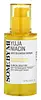
This brightening serum is formulated around Niacinamide and Glycyrrhiza Glabra Root Extract to fade the look of dark spots and brighten dull-looking skin.

What's inside
What's inside
 Key Ingredients
No key ingredients
Benefits
Concerns
Ingredients Side-by-side
Citrus Junos Fruit Extract 83%
Skin ConditioningNiacinamide 10%
Smoothing











Caprylic/Capric Triglyceride
Masking

1,2-Hexanediol
Skin Conditioning
Hydrogenated Poly(C6-14 Olefin)
EmollientBisabolol
Antioxidant
Carbomer
Emulsion StabilisingBrassica Campestris Seed Oil
Skin Conditioning


Xanthan Gum
EmulsifyingEthylhexylglycerin
Skin ConditioningAdenosine
Skin Conditioning
Citrus Junos Peel Oil
Astringent
Melia Azadirachta Flower Extract
Skin ConditioningOcimum Sanctum Leaf Extract
Skin ConditioningGlycyrrhiza Glabra Root Extract
Bleaching
Polyglyceryl-3 Diisostearate
Emulsifying


Melia Azadirachta Leaf Extract
Skin ConditioningWater
Skin ConditioningCurcuma Longa Root Extract
Antioxidant
Glycerin
Humectant
Butylene Glycol
Humectant
Althaea Officinalis Root Extract
Skin Conditioning
Oryza Sativa Bran Extract
Skin Conditioning
3-O-Ethyl Ascorbic Acid
Skin Conditioning
Hydrogenated Lecithin
Emulsifying
Ficus Carica Fruit Extract
Humectant
Punica Granatum Fruit Extract
Antioxidant
Morus Alba Fruit Extract
Antioxidant
Ginkgo Biloba Nut Extract
Skin ConditioningTocopherol
Antioxidant
Polyglyceryl-10 Stearate
Skin Conditioning
Panthenol
Skin Conditioning
Sodium Ascorbyl Phosphate
Antioxidant
Biotin
AntiseborrhoeicFolic Acid
Skin ConditioningPyridoxine
Skin ConditioningCyanocobalamin
Skin ConditioningLinoleic Acid
Cleansing
Riboflavin
Cosmetic ColorantBeta-Carotene
Skin ConditioningInositol
Humectant
Thiamine Hcl
MaskingDisodium EDTA
Limonene
Perfuming

Linalool
Perfuming
Citrus Junos Fruit Extract 83%, Niacinamide 10%, Caprylic/Capric Triglyceride, 1,2-Hexanediol, Hydrogenated Poly(C6-14 Olefin), Bisabolol, Carbomer, Brassica Campestris Seed Oil, Xanthan Gum, Ethylhexylglycerin, Adenosine, Citrus Junos Peel Oil, Melia Azadirachta Flower Extract, Ocimum Sanctum Leaf Extract, Glycyrrhiza Glabra Root Extract, Polyglyceryl-3 Diisostearate, Melia Azadirachta Leaf Extract, Water, Curcuma Longa Root Extract, Glycerin, Butylene Glycol, Althaea Officinalis Root Extract, Oryza Sativa Bran Extract, 3-O-Ethyl Ascorbic Acid, Hydrogenated Lecithin, Ficus Carica Fruit Extract, Punica Granatum Fruit Extract, Morus Alba Fruit Extract, Ginkgo Biloba Nut Extract, Tocopherol, Polyglyceryl-10 Stearate, Panthenol, Sodium Ascorbyl Phosphate, Biotin, Folic Acid, Pyridoxine, Cyanocobalamin, Linoleic Acid, Riboflavin, Beta-Carotene, Inositol, Thiamine Hcl, Disodium EDTA, Limonene, Linalool
Hippophae Rhamnoides Water
Masking
Butylene Glycol
Humectant
Helianthus Annuus Seed Oil
Emollient
Glycerin
Humectant
Cetearyl Alcohol
Emollient
1,2-Hexanediol
Skin Conditioning
Cetearyl Olivate
Sorbitan Olivate
Emulsifying
Hydroxyethyl Acrylate/Sodium Acryloyldimethyl Taurate Copolymer
Emulsion StabilisingBetaine
Humectant
Caprylic/Capric Triglyceride
Masking
Elaeis Guineensis Kernel Oil
Emollient
Panthenol
Skin Conditioning
Macadamia Ternifolia Seed Oil
Emollient
Dimethicone
Emollient
Beeswax
Emulsion Stabilising
Elaeis Guineensis Oil
Emollient
Ethyl Hexanediol
SolventAllantoin
Skin Conditioning
Arginine
Masking
Xanthan Gum
EmulsifyingCarbomer
Emulsion StabilisingEthylhexylglycerin
Skin ConditioningCitrus Limon Peel Oil
Masking

Limonene
Perfuming
Citral
Perfuming
Hippophae Rhamnoides Water, Butylene Glycol, Helianthus Annuus Seed Oil, Glycerin, Cetearyl Alcohol, 1,2-Hexanediol, Cetearyl Olivate, Sorbitan Olivate, Hydroxyethyl Acrylate/Sodium Acryloyldimethyl Taurate Copolymer, Betaine, Caprylic/Capric Triglyceride, Elaeis Guineensis Kernel Oil, Panthenol, Macadamia Ternifolia Seed Oil, Dimethicone, Beeswax, Elaeis Guineensis Oil, Ethyl Hexanediol, Allantoin, Arginine, Xanthan Gum, Carbomer, Ethylhexylglycerin, Citrus Limon Peel Oil, Limonene, Citral
Reviews
Ingredients Explained
These ingredients are found in both products.
Ingredients higher up in an ingredient list are typically present in a larger amount.
1,2-Hexanediol is a synthetic liquid and another multi-functional powerhouse.
It is a:
- Humectant, drawing moisture into the skin
- Emollient, helping to soften skin
- Solvent, dispersing and stabilizing formulas
- Preservative booster, enhancing the antimicrobial activity of other preservatives
Butylene Glycol (or BG) is used within cosmetic products for a few different reasons:
Overall, Butylene Glycol is a safe and well-rounded ingredient that works well with other ingredients.
Though this ingredient works well with most skin types, some people with sensitive skin may experience a reaction such as allergic rashes, closed comedones, or itchiness.
Learn more about Butylene GlycolCaprylic/Capric Triglyceride (aka MCT Oil) is a lightweight emollient, solvent, and texture enhancer. It is considered a skin-softener by helping to prevent moisture loss.
Though it behaves like an oil, it is not technically one due to its chemical composition. One perk of this ingredient is that it is very stable, resistant to oxidation, and unlikely to go rancid.
In practice, that translates to a long shelf life and a consistently elegant skin feel.
While there is an assumption Caprylic Triglyceride can clog pores due to it being derived from coconut oil, there is no research supporting this. Just patch test if you have concerns.
Fractionated coconut oil and MCT Oil are both listed as Caprylic/Capric Triglyceride according to INCI. This is because INCI names are based on the ingredient’s final chemical composition and not its marketing name or source.
This ingredient is treated as the gold standard fungal acne safe oil. Even though it is coconut derived, the problematic lauric acid is stripped out.
This leaves just caprylic (C8) and capric (C10) acid. These chain lengths actually trend antifungal; a 2020 study found caprylic acid was enough to disrupt Malassezia furfur cell membrane, with a caprylic acid derivative damaging membrane structures at concentrations as low as 0.2%.
Learn more about Caprylic/Capric TriglycerideCarbomer is a synthetic thickening and gelling agent. It's basically the ingredient that gives a lot of serums, gels, creams, and sunscreens their smooth, non-sticky texture.
Although legally permitted at very high levels, carbomers are normally used at concentrations below 1%.
It also needs to be neutralized to actually thicken, and because it is a large molecule, it doesn't really penetrate the skin barrier.
Allergy-wise, the risk is very low. Clinical studies show carbomers have low potential for skin irritation/sensitization even at concentrations up to 100%.
A 2024 UK study patch-tested 1,302 patients and found true allergy to the parent group of carbomer to be rare with no confirmed relevant reactions.
Learn more about CarbomerEthylhexylglycerin is created from glycerin. It is a multitasker ingredient that:
The CIR Expert Panel found minimal skin absorption or sensitization of any kind in a safety assessment. Though this ingredient is considered well-tolerated, a small number of cases of allergic dermatitis have been published since 2002. Just be sure to patch test if you are unsure.
Industry-reported use ranges from 8% in rinse-off products and 2% in leave-on formulations.
Learn more about EthylhexylglycerinGlycerin (or glycerol) is a compound naturally found in your skin. It's a powerhouse humectant that pulls water into the stratum corneum.
Topically, glycerin does several things at once:
Your skin makes glycerin on its own (mostly from sebaceous oil breakdown) and shuttles it to your outermost layer of skin, or your epidermis, via aquaporin-3.
Aquaporin-3 is a transporter that is essential for normal skin hydration, elasticity, and repair. Interestingly, mice lacking in AQP3 have dry and less elastic skin that can be fully corrected with glycerin.
This ingredient is non-irritating, plays well with almost every ingredient, and works across all skin types. Typical use is anywhere between 3-10% but can go up to 79% in some leave-on products.
Just know very high concentrations (>40%) can feel tacky in low humidity.
Glycerin is the name for this ingredient in American English. British English uses Glycerol/Glycerine.
Learn more about GlycerinLimonene is a fragrance that adds scent and taste to a formulation.
It's found in the peel oil of citrus fruits and other plants such as lavender and eucalyptus. The scent of limonene is generally described as "sweet citrus".
Limonene acts as an antioxidant, meaning it helps neutralize free radicals.
When exposed to air, oxidized limonene may sensitize the skin. Because of this, limonene is often avoided by people with sensitive skin.
The term 'fragrance' is not regulated in many countries. In many cases, it is up to the brand to define this term. For instance, many brands choose to label themselves as "fragrance-free" because they are not using synthetic fragrances. However, their products may still contain ingredients such as essential oils that are considered a fragrance.
Learn more about LimonenePanthenol is a common ingredient that helps hydrate and soothe the skin. It is found naturally in our skin and hair.
There are two forms of panthenol: D and L.
D-panthenol is also known as dexpanthenol. Most cosmetics use dexpanthenol or a mixture of D and L-panthenol.
Panthenol is famous due to its ability to go deeper into the skin's layers. Using this ingredient has numerous pros (and no cons):
Like hyaluronic acid, panthenol is a humectant. Humectants are able to bind and hold large amounts of water to keep skin hydrated.
This ingredient works well for wound healing. It works by increasing tissue in the wound and helps close open wounds.
Once oxidized, panthenol converts to pantothenic acid. Panthothenic acid is found in all living cells.
This ingredient is also referred to as pro-vitamin B5.
Learn more about PanthenolXanthan gum is used as a stabilizer and thickener within cosmetic products. It helps give products a sticky, thick feeling - preventing them from being too runny.
On the technical side of things, xanthan gum is a polysaccharide - a combination consisting of multiple sugar molecules bonded together.
Xanthan gum is a pretty common and great ingredient. It is a natural, non-toxic, non-irritating ingredient that is also commonly used in food products.
Learn more about Xanthan Gum

