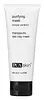
This wash off mask is made with Kaolin for a rinse-off oil-control boost.
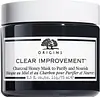
This wash off mask is made with Bentonite and Charcoal Powder for a rinse-off oil-control boost.

What's inside
What's inside
 Key Ingredients
Benefits
Concerns
Ingredients Side-by-side
Water
Skin ConditioningPumice
Abrasive

Glycine Soja Oil
Emollient








Glycerin
Humectant

Kaolin
Abrasive


Montmorillonite
AbsorbentCetyl Alcohol
Emollient

Glyceryl Stearate
Emollient
PEG-100 Stearate
Surfactant
Helianthus Annuus Seed Oil
Emollient
Hydroxypropyl Starch Phosphate
Vitis Vinifera Seed Oil
Emollient
Olivoyl Hydrolyzed Wheat Protein
CleansingPhenoxyethanol
Preservative
Decyl Glucoside
Cleansing
Xanthan Gum
EmulsifyingCaprylyl Glycol
Emollient
Citric Acid
Buffering

Ethylhexylglycerin
Skin ConditioningDisodium EDTA
ChelatingHexylene Glycol
EmulsifyingCarrageenan
Citrus Aurantium Dulcis Peel Oil
Masking
Citrus Paradisi Peel Oil
Masking


Eucalyptus Globulus Leaf Oil
Perfuming
Lavandula Angustifolia Oil
Masking
Mentha Viridis Leaf Oil
Astringent
Thymus Zygis Flower Oil
Masking
Melaleuca Alternifolia Leaf Oil
Antioxidant
Tocopheryl Acetate
Antioxidant
Glucose
Humectant
Sodium PCA
Humectant
Water, Pumice, Glycine Soja Oil, Glycerin, Kaolin, Montmorillonite, Cetyl Alcohol, Glyceryl Stearate, PEG-100 Stearate, Helianthus Annuus Seed Oil, Hydroxypropyl Starch Phosphate, Vitis Vinifera Seed Oil, Olivoyl Hydrolyzed Wheat Protein, Phenoxyethanol, Decyl Glucoside, Xanthan Gum, Caprylyl Glycol, Citric Acid, Ethylhexylglycerin, Disodium EDTA, Hexylene Glycol, Carrageenan, Citrus Aurantium Dulcis Peel Oil, Citrus Paradisi Peel Oil, Eucalyptus Globulus Leaf Oil, Lavandula Angustifolia Oil, Mentha Viridis Leaf Oil, Thymus Zygis Flower Oil, Melaleuca Alternifolia Leaf Oil, Tocopheryl Acetate, Glucose, Sodium PCA
Water
Skin ConditioningButylene Glycol
Humectant
Bentonite
Absorbent
Montmorillonite
AbsorbentMel
EmollientPolysorbate 20
Emulsifying
PEG-100 Stearate
Surfactant
Polybutene
Jojoba Esters
Emollient
Lavandula Angustifolia Oil
Masking
Citrus Limon Peel Oil
Masking
Cananga Odorata Flower Oil
Masking
Mentha Viridis Leaf Oil
Astringent
Rosmarinus Officinalis Leaf Oil
Masking
Eugenia Caryophyllus Bud Oil
Masking
Gaultheria Procumbens Leaf Oil
Masking
Citrus Aurantium Amara Flower Extract
RefreshingTriethyl Citrate
Masking
Ethyl Phenylacetate
Perfuming
Limonene
Perfuming
Linalool
Perfuming
Eugenol
Perfuming
Citral
Perfuming
Benzyl Benzoate
Antimicrobial
Faex Extract
Skin ConditioningKaolin
Abrasive
Charcoal Powder
Abrasive
Caffeine
Skin Conditioning
Sodium Hyaluronate
Humectant
Glycerin
Humectant
Trehalose
Humectant
Lecithin
Emollient
Ethylhexylglycerin
Skin ConditioningXanthan Gum
EmulsifyingCaprylyl Glycol
Emollient
PEG-150 Distearate
Emulsifying
Silica
Abrasive
Hexylene Glycol
EmulsifyingDisodium EDTA
ChelatingTetrasodium EDTA
ChelatingDehydroacetic Acid
Preservative
Phenoxyethanol
Preservative
Mica
Cosmetic ColorantCI 77891
Cosmetic ColorantIron Oxides
Water, Butylene Glycol, Bentonite, Montmorillonite, Mel, Polysorbate 20, PEG-100 Stearate, Polybutene, Jojoba Esters, Lavandula Angustifolia Oil, Citrus Limon Peel Oil, Cananga Odorata Flower Oil, Mentha Viridis Leaf Oil, Rosmarinus Officinalis Leaf Oil, Eugenia Caryophyllus Bud Oil, Gaultheria Procumbens Leaf Oil, Citrus Aurantium Amara Flower Extract, Triethyl Citrate, Ethyl Phenylacetate, Limonene, Linalool, Eugenol, Citral, Benzyl Benzoate, Faex Extract, Kaolin, Charcoal Powder, Caffeine, Sodium Hyaluronate, Glycerin, Trehalose, Lecithin, Ethylhexylglycerin, Xanthan Gum, Caprylyl Glycol, PEG-150 Distearate, Silica, Hexylene Glycol, Disodium EDTA, Tetrasodium EDTA, Dehydroacetic Acid, Phenoxyethanol, Mica, CI 77891, Iron Oxides
Ingredients Explained
These ingredients are found in both products.
Ingredients higher up in an ingredient list are typically present in a larger amount.
Caprylyl Glycol is a humectant, skin conditioner, emollient, and preservative booster derived from either caprylic acid or synthetically created.
Typical use levels vary from 0.3-1% as a preservative booster and go up to 2% to condition skin.
Because it is not a free-fatty acid, this ingredient is fungal acne safe (there's nothing for Malassezia to feed on).
Learn more about Caprylyl GlycolDisodium EDTA is a chelating agent. It grabs onto and deactivates metal ions that sneak into your products from water, packaging, or air.
This ingredient mainly works behind the scenes and helps with:
On top of that, this ingredient can counteract the effects of hard water by binding to the minerals in it.
One thing worth knowing is that Disodium EDTA has been shown to be a mild penetration enhancer. It can help other ingredients absorb into skin more effectively which can be a double-edged sword (great for actives, but can also make the active too strong if you have sensitive skin).
Clinical patch testing showed no significant skin irritation at typical use concentrations and minimal dermal absorption.
You'll most likely see this ingredient near the end of an ingredient list. It's typically found in concentrations less than 1%.
Learn more about Disodium EDTAEthylhexylglycerin is created from glycerin. It is a multitasker ingredient that:
The CIR Expert Panel found minimal skin absorption or sensitization of any kind in a safety assessment. Though this ingredient is considered well-tolerated, a small number of cases of allergic dermatitis have been published since 2002. Just be sure to patch test if you are unsure.
Industry-reported use ranges from 8% in rinse-off products and 2% in leave-on formulations.
Learn more about EthylhexylglycerinGlycerin (or glycerol) is a compound naturally found in your skin. It's a powerhouse humectant that pulls water into the stratum corneum.
Topically, glycerin does several things at once:
Your skin makes glycerin on its own (mostly from sebaceous oil breakdown) and shuttles it to your outermost layer of skin, or your epidermis, via aquaporin-3.
Aquaporin-3 is a transporter that is essential for normal skin hydration, elasticity, and repair. Interestingly, mice lacking in AQP3 have dry and less elastic skin that can be fully corrected with glycerin.
This ingredient is non-irritating, plays well with almost every ingredient, and works across all skin types. Typical use is anywhere between 3-10% but can go up to 79% in some leave-on products.
Just know very high concentrations (>40%) can feel tacky in low humidity.
Glycerin is the name for this ingredient in American English. British English uses Glycerol/Glycerine.
Learn more about GlycerinHexylene Glycol is a multitasker ingredient that works as a solvent, humectant, emulsifier, viscosity reducer, and preservative booster.
It is able to dissolve both water and oil-soluble ingredients to stabilize tricky actives and make products spread more easily.
As a humectant, it pulls water into the skin. But it's a pretty minor moisturizing ingredient compared to other humectants, like glycerin.
Interestingly, it can act as a mild penetration enhancer. One in vitro study on human skin found a 12% concentration upped the absorption of mometasone furoate (a medicinal ingredient used to treat inflammatory skin conditions) up to 7%.
This ingredient is typically used at levels of 0.1-10% depending on the role it's playing.
A patch test study on eczema patients didn't find a significant increase in irritation versus the control group, but the potential for irritation rises at higher concentrations.
Learn more about Hexylene GlycolKaolin is a clay. It is used for oil control and to help minimize pores. Like other clays, kaolin has the ability to absorb excess sebum or oil. This can help clean out pores and mattify the skin.
Some types of kaolin may have exfoliating properties. When water is added to kaolin, it becomes a paste with small abrasive particles.
Most kaolin is a white color, but may be pink/orange/red depending on where it comes from.
The name 'kaolin' comes from a Chinese village named 'Gaoling'. Kaolin clay comes from rocks rich in kaolinite. Kaolinite, the mineral, has a silicate layered structure. Kaolinite is formed from chemical weathering of aluminum siilicate minerals.
Besides skincare, kaolin is commonly used to make glossy paper, in ceramics, toothpaste, and as medicine to soothe stomach issues.
Learn more about KaolinLavandula Angustifolia Oil is more commonly known as lavender essential oil. It is considered a fragrancing ingredient.
Lavender imparts a famous scent. While the smell is lovely, this ingredient and may sensitize skin in topical products. This is because about 85% of the oil is made up of linalool and linalyl acetate.
When exposed to air, these two compounds become strong allergens. This ingredient exhibits cytotoxicity at low concentrations; amounts of 0.25% have been shown to damage skin cells.
A study from Japan found this ingredient caused lavender sensitivity after widespread exposure.
Lavender essential oil has some antimicrobial, antibacterial, and anti-inflammatory properties. However, the cons of this ingredient may outweight the pros.
More research is needed to confirm lavender essential oil's effects when used in aromatherapy.
Lavandula Angustifolia is known as the English Lavender and famous for creating purple fields in Provence, France.
Learn more about Lavandula Angustifolia OilThis ingredient is also called spearmint oil. It contains carvone (41-79%), limonene (10-22%), and small amounts of other monoterpenes depending on where it's grown.
In cosmetics, this ingredient mostly acts as a fragrancing/masking ingredient and mild astringent.
Lab studies show carvone to have antioxidant and antimicrobial activity, but it is a recognized fragrance allergen. Carvone is a mild skin sensitizer while limonene is a well-known one.
In a 21-year retrospective from a Swedish patch test clinic, 3.5% of patients tested positive for sensitive towards carvone.
Learn more about Mentha Viridis Leaf OilMontmorillonite is a clay (aluminomagnesium silicate) with strong absorption properties. It has a similar pH to skin.
This clay is named after Montmorillon in France.
Learn about other types of clay, such as Kaolin, Bentonite, or Fuller's Earth.
Learn more about MontmorillonitePeg-100 Stearate is an emollient and emulsifier. As an emollient, it helps keep skin soft by trapping moisture in. On the other hand, emulsifiers help prevent oil and water from separating in a product.
PEGS are a hydrophilic polyether compound . There are 100 ethylene oxide monomers in Peg-100 Stearate. Peg-100 Stearate is polyethylene glycol ester of stearic acid.
Phenoxyethanol is one of the most widely used preservatives in skincare (and for good reason!).
It has a large spectrum of antimicrobial activity and especially effective bacteria, yeast, and mold while only having a weak effect on your skin's natural microbiome.
On a cellular level, it disrupts the cell membranes of microbes by poking holes that make the cell leak. This shuts down the chemical reactions the microbe needs to make energy so it can no longer survive.
Another perk of this ingredient is that it stays functional across a wide pH range (3-10).
You'll often see it paired with boosters like Ethylhexylglycerin; one study showed that a 1:9 ratio of Ethylhexylglycerin to Phenoxyethanol damages bacterial membranes as effectively as doubling the Phenoxyethanol concentration on its own.
Typical use concentrations range from 0.3-1% depending on the formula, and this ingredient is capped at 1% int the EU.
Safety-wise, the fear mongering does not hold up to the evidence. The EU's Scientific Committee on Consumer Safety and FDA consider it safe as a preservative at up to 1%, including for children of all ages.
Adverse systemic effects only showed up in animal studies at exposures roughly 200x higher than what people get from cosmetics. And despite its very widespread use, this ingredient is a rare sensitizer and allergic reactions are uncommon.
Learn more about PhenoxyethanolWater. It's the most common cosmetic ingredient of all. You'll usually see it at the top of ingredient lists, meaning that it makes up the largest part of the product.
So why is it so popular? Water most often acts as a solvent - this means that it helps dissolve other ingredients into the formulation.
You'll also recognize water as that liquid we all need to stay alive. If you see this, drink a glass of water. Remember to stay hydrated!
Learn more about WaterXanthan gum is used as a stabilizer and thickener within cosmetic products. It helps give products a sticky, thick feeling - preventing them from being too runny.
On the technical side of things, xanthan gum is a polysaccharide - a combination consisting of multiple sugar molecules bonded together.
Xanthan gum is a pretty common and great ingredient. It is a natural, non-toxic, non-irritating ingredient that is also commonly used in food products.
Learn more about Xanthan Gum

