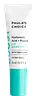
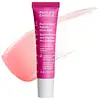
Paula's Choice Boost Hyaluronic Acid + Peptide Lip Booster Versus Paula's Choice Pro-Collagen Peptide Gloss Balm
This anti-aging lip moisturizer is formulated around Sodium Hyaluronate and Palmitoyl Tripeptide-1 to soften the look of wrinkles and hydrate lips.

What's inside
What's inside
 Key Ingredients
Benefits
Concerns
Ingredients Side-by-side
Diisostearyl Malate
EmollientHydrogenated Castor Oil/Sebacic Acid Copolymer
Emollient


Theobroma Cacao Seed Butter
Emollient


Dipentaerythrityl Tetrabehenate/Polyhydroxystearate
HumectantPolyamide-8
EmollientPolyglyceryl-3 Beeswax
Emulsifying
Dimer Dilinoleyl Dimer Dilinoleate
EmollientEthylhexyl Palmitate
Emollient
Triisostearin
Skin Conditioning
Squalane
Emollient


Butyrospermum Parkii Butter Unsaponifiables
Skin Conditioning
Cetearyl Ethylhexanoate
Emollient
Dipalmitoyl Hydroxyproline
Skin Conditioning
Water
Skin ConditioningArginine/Lysine Polypeptide
Skin Conditioning
Tocopherol
Antioxidant




Tribehenin
Emollient
Palmitic Acid
Emollient
Hydroxystearic Acid
Cleansing
Sorbitan Isostearate
Emulsifying
Trihydroxystearin
Skin Conditioning
Glycine Soja Oil
Emollient
Pentaerythrityl Tetra-Di-T-Butyl Hydroxyhydrocinnamate
Antioxidant
Portulaca Pilosa Extract
Skin ConditioningSodium Hyaluronate
Humectant
Lactic Acid
Buffering





Sucrose Cocoate
Emulsifying

Palmitoyl Tripeptide-1
Skin Conditioning
Palmitoyl Tripeptide-38
Skin Conditioning
Glucomannan
Skin ConditioningSorbic Acid
Preservative
Diisostearyl Malate, Hydrogenated Castor Oil/Sebacic Acid Copolymer, Theobroma Cacao Seed Butter, Dipentaerythrityl Tetrabehenate/Polyhydroxystearate, Polyamide-8, Polyglyceryl-3 Beeswax, Dimer Dilinoleyl Dimer Dilinoleate, Ethylhexyl Palmitate, Triisostearin, Squalane, Butyrospermum Parkii Butter Unsaponifiables, Cetearyl Ethylhexanoate, Dipalmitoyl Hydroxyproline, Water, Arginine/Lysine Polypeptide, Tocopherol, Tribehenin, Palmitic Acid, Hydroxystearic Acid, Sorbitan Isostearate, Trihydroxystearin, Glycine Soja Oil, Pentaerythrityl Tetra-Di-T-Butyl Hydroxyhydrocinnamate, Portulaca Pilosa Extract, Sodium Hyaluronate, Lactic Acid, Sucrose Cocoate, Palmitoyl Tripeptide-1, Palmitoyl Tripeptide-38, Glucomannan, Sorbic Acid
Hydrogenated Polyisobutene
EmollientPolybutene
Diisostearyl Malate
EmollientBis-Diglyceryl Polyacyladipate-2
Emollient
Glyceryl Behenate
Emollient
Synthetic Beeswax
Emulsion Stabilising
Caprylic/Capric Triglyceride
Masking
Butyrospermum Parkii Butter
Skin Conditioning
Cetearyl Ethylhexanoate
Emollient
Ethylhexyl Palmitate
Emollient
Ricinus Communis Seed Oil
Masking
Dimethyl Isosorbide
SolventPalmitoyl Tripeptide-1
Skin Conditioning
Palmitoyl Tripeptide-38
Skin Conditioning
Tridecapeptide-1
Skin Conditioning
Sesamum Indicum Seed Extract
Skin Conditioning
Portulaca Pilosa Extract
Skin ConditioningPentylene Glycol
Skin Conditioning
Prunus Domestica Seed Oil
Skin Conditioning
Water
Skin ConditioningSodium Hyaluronate
Humectant
Tribehenin
Emollient
Sorbitan Isostearate
Emulsifying
Hydrogenated Castor Oil
Emollient
Lactic Acid
Buffering
Tocopherol
Antioxidant
Sucrose Cocoate
Emulsifying
Vanillin
Masking
CI 15850
Cosmetic ColorantHydrogenated Polyisobutene, Polybutene, Diisostearyl Malate, Bis-Diglyceryl Polyacyladipate-2, Glyceryl Behenate, Synthetic Beeswax, Caprylic/Capric Triglyceride, Butyrospermum Parkii Butter, Cetearyl Ethylhexanoate, Ethylhexyl Palmitate, Ricinus Communis Seed Oil, Dimethyl Isosorbide, Palmitoyl Tripeptide-1, Palmitoyl Tripeptide-38, Tridecapeptide-1, Sesamum Indicum Seed Extract, Portulaca Pilosa Extract, Pentylene Glycol, Prunus Domestica Seed Oil, Water, Sodium Hyaluronate, Tribehenin, Sorbitan Isostearate, Hydrogenated Castor Oil, Lactic Acid, Tocopherol, Sucrose Cocoate, Vanillin, CI 15850
Reviews
Ingredients Explained
These ingredients are found in both products.
Ingredients higher up in an ingredient list are typically present in a larger amount.
Cetearyl Ethylhexanoate is derived from cetearyl alcohol and sorbic acid.
It is an emollient and helps hydrate the skin. Emollients form a barrier on the skin to prevent water from escaping.
Diisostearyl Malate is an emollient and most often used in lip products. It comes from isostearyl alcohol, a fatty acid, and malic acid, an AHA.
As an emollient, Diisostearyl Malate helps create a thin film on your skin to trap moisture in. This helps keep your skin soft and smooth.
Ethylhexyl Palmitate, also known as octyl palmitate, is created from 2-ethylhexyl alcohol and palmitic acid.
In cosmetics, it plays many roles:
One thing worth noting: a controlled study found this ingredient applied under occlusion to acne-prone subjects increased microcomedones. Just keep in mind this was under occlusive conditions and don't reflect how most products are used day-to-day.
For most people, this is a well-tolerated and lightweight ingredient.
This ingredient may not be fungal acne safe because it is an ester of palmitic acid, a C16 fatty acid that falls within the C11-24 range that Malassezia can metabolize.
Learn more about Ethylhexyl PalmitateLactic Acid is another well-loved alpha hydroxy acid (AHA). It is gentler than glycolic acid but still highly effective.
Its main role is to exfoliate the surface of the skin by loosening the “glue” that holds dead skin cells together. Shedding those old cells leads to smoother, softer, and more even-toned skin.
Because lactic acid molecules are larger than glycolic acid, they don’t penetrate as deeply. This means they’re less likely to sting or irritate, making it a great choice for beginners or those with sensitive skin.
Like glycolic acid, it can:
Lactic acid also acts as a humectant (like hyaluronic acid). It can draw water into the skin to improve hydration and also plays a role in the skin's natural moisturizing factor (NMF) in the form of sodium lactate.
Studies show it can boost ceramide production to strengthen the skin barrier and even help balance the skin’s microbiome.
To get results, choose products with a pH between 3-4.
Lower strengths (5-12%) focus on surface exfoliation; higher strengths (12% and up) can reach deeper in the dermis (deeper, supportive layer) to improve skin texture and firmness over time.
Though it was originally derived from milk, most modern lactic acid used in skincare is vegan. It is made through non-dairy fermentation to create a bio-identical and stable form suitable for all formulations.
When lactic acid shows up near the end of an ingredient list, it usually means the brand added just a tiny amount to adjust the product’s pH.
Legend has it that Cleopatra used to bathe in sour milk to help reduce wrinkles.
Lactic acid is truly a gentle multitasker: it exfoliates, hydrates, strengthens, and brightens. It's a great ingredient for giving your skin a smooth, glowing, and healthy look without the harshness of stronger acids.
Read more about some other popular AHA's here:
Learn more about Lactic AcidPalmitoyl Tripeptide-1 (aka Pal-GHK) is a synthetic signal peptide made of three amino acids attached to palmitic acid.
That fatty acid attachment is the key: it boosts the peptide's ability to penetrate the skin barrier. This puts it closer to the dermal cells where it can actually make a difference.
Once there, it acts as a matrikine, a signaling peptide that prompts fibroblasts to produce more collagen, fibronectin, and hyaluronic acid.
In vitro studies show it can boost collagen production in skin cells even when UV-damaged skin samples were treated with it at a tiny concentration (it almost fully restored dermal collagen at 5ppm). It achieved this at 100x lower concentration than retinoic acid, which needed 500 ppm to do the same thing.
Human clinical data is promising, but modest:
A study of 23 female volunteers found a small but statistically significant increase (~4%) in skin thickness after treatment at 4 ppm.
A separate small trial of 15 women showed statistically significant reductions in wrinkle length, depth, and skin roughness after applying it twice daily for four weeks.
You'll likely see Pal-GHK paired with Palmitoyl Tetrapeptide-7 as part of the Matrixyl 3000 complex.
Fungal acne note:
Usually a palmitic acid component can feed Malassezia in unbound form, but here is is covalently bonded to the peptide. This means it is very difficult for Malassezia to access, and therefore very unlikely to cause fungal acne.
This synthetic, signal peptide has unique skin conditioning properties in that is a matrikine-mimetic compound.
First of all, Palmitoyl Tripeptide-38 is a signal peptide; signal peptides tell the body to create more collagen.
What is a matrikine-mimetic compound?
This peptide has the ability to mimic matrikines in skin. Our skin created matrikines by breaking down matrix proteins into peptides.
Matrikines play a role in:
Though further research is needed, this ingredient seems pretty promising. In one study, women over the age of 40 with visible photoaging used a vitamin C serum with this ingredient for 56 days (15% ascorbid acid, 5 ppm palmitoyl tripeptide‐38). The results found improvement in skin roughness and skin tone.
This peptide is also part of the famous Matrixyl synthe’6, a blend of ingredients that also includes glycerin, water, and hydroxypropyl cyclodextrin.
Learn more about Palmitoyl Tripeptide-38We don't have a description for Portulaca Pilosa Extract yet.
Sodium Hyaluronate is the salt form of hyaluronic acid. It is a long sugar chain that is naturally found in your skin, joints, and connective tissue that maintains hydration and elasticity.
In skincare, it works as a humectant. It pulls water from the environment and deeper layers of skin and binds it to the surface.
Interestingly, the size of the molecule affects its behavior:
Some clinical evidence links low molecular weight versions to improved wrinkle depth, elasticity, anti-inflammatory effects, and barrier repair.
Many serums use a blend of both weights so you can get surface hydration plus longer-lasting and deeper effects.
You'll typically see concentrations between 0.1-2% for this ingredient.
Learn more about Sodium HyaluronateSorbitan Isostearate is an emulsifer. It is created from isostearic acid and sorbitol.
As an emulsifier, it keeps the water and oil ingredients from separating. This keeps formulas stable and smooth.
In a 24 hour occlusive patch test on 56 subjects, 10% sorbitan isostearate was completely non-irritating. Most formulas use less than 10%.
Because it's a fatty acid ester, it may not be fungal acne safe since the Malassezia yeast can utilize it as a nutrient source.
Learn more about Sorbitan IsostearateSucrose cocoate is a mild multitasking ingredient made by esterifying sugar with the fatty acids of coconut oil.
It functions as a surfactant, emulsifier, and skin-conditioning ingredient all in one.
Typical use concentrations range from:
This ingredient is well-tolerated across skin types and has been classified safe for use in cosmetic products by the Cosmetic Ingredient Review Expert Panel. It's even considered gentle enough for use in baby care products like shampoos and lotions.
Fungal acne note: Sucrose cocoate is a fatty acid ester derived from coconut oil that contains fatty acids in the C12-18 range. This is the range that Malassezia can metabolize, meaning this ingredient may not be fungal acne safe.
Learn more about Sucrose CocoateTocopherol is a fat-soluble antioxidant known as Vitamin E.
You'll find this ingredient in the vast majority of skincare (for good reason). It works to neutralize free radicals, or unstable molecules generated by UV exposure, pollution, and other environmental stressors, before they can cause oxidative damage to your skin cells.
Topically applied tocopherol has been shown to protect against UV damage by ramping up the skin's own natural defense enzymes.
It also acts as a skin conditioning agent; some studies show that regular topical use can improve the skin's water-binding capacity over 2-4 weeks.
This ingredient is especially loved for being a team player. When combined with Vitamin C, the photoprotective effect of both ingredients roughly doubles and the combo also helps reduce UV-induced DNA damage.
This ingredient has some brightening potential but it's more of a prevention ingredient than spot-fader. Cell studies show it can slow down melanin production but it's worth noting that it's not the most powerful brightener out there.
In formulations, it also serves as a stabilizer that helps protect other oxidation-prone ingredients from degrading.
Concentrations usually range from 0.1-1% in most leave-on products.
Learn more about TocopherolTribehenin is the triglyceride of glycerin and behenic acid. It is an emollient that helps soften and condition skin.
Safety-wise, this is a well-vetted ingredient. Repeated-insult patch tests of 0.38% tribehenin did not trigger sensitization.
This ingredient may not be fungal acne safe because behenic acid falls into the chain-length range that Malassezia yeasts can feed on.
Learn more about TribeheninWater. It's the most common cosmetic ingredient of all. You'll usually see it at the top of ingredient lists, meaning that it makes up the largest part of the product.
So why is it so popular? Water most often acts as a solvent - this means that it helps dissolve other ingredients into the formulation.
You'll also recognize water as that liquid we all need to stay alive. If you see this, drink a glass of water. Remember to stay hydrated!
Learn more about Water

