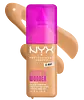
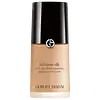
NYX Cosmetics Make 'Em Wonder Soft Matte Buildable Foundation Versus Armani Beauty Luminous Silk Perfect Glow Flawless Foundation


What's inside
What's inside
 Key Ingredients
Benefits
Concerns
Ingredients Side-by-side
Water
Skin ConditioningDimethicone
Emollient

Isododecane
EmollientIsohexadecane
EmollientAcrylates/Polytrimethylsiloxymethacrylate Copolymer
Skin ConditioningTrimethylsiloxysilicate
Emollient
Butylene Glycol
Humectant

Silica
Abrasive


Lauryl PEG-9 Polydimethylsiloxyethyl Dimethicone
Skin Conditioning
PEG-10 Dimethicone
Skin Conditioning
Cellulose
Absorbent
Magnesium Sulfate
Phenoxyethanol
Preservative
Disteardimonium Hectorite
StabilisingTriethoxycaprylylsilane
Dimethicone/Polyglycerin-3 Crosspolymer
Cleansing
Cetyl PEG/PPG-10/1 Dimethicone
Emulsifying
Ethylhexyl Palmitate
Emollient




Caprylyl Glycol
Emollient
Propylene Carbonate
SolventSilica Silylate
Emollient
Trisodium Ethylenediamine Disuccinate
ChelatingEthylhexylglycerin
Skin ConditioningAlumina
Abrasive
Oryza Sativa Starch
AbsorbentPropylene Glycol
Humectant
Kaolin
Abrasive
Disodium Stearoyl Glutamate
CleansingPaullinia Cupana Seed Extract
Skin ConditioningDipropylene Glycol
HumectantTrihydroxystearin
Skin Conditioning
Aluminum Hydroxide
EmollientTocopherol
Antioxidant





Sodium Hyaluronate
Humectant
Pentaerythrityl Tetra-Di-T-Butyl Hydroxyhydrocinnamate
Antioxidant
Glucomannan
Skin ConditioningCI 77491
Cosmetic ColorantCI 77492
Cosmetic ColorantCI 77499
Cosmetic ColorantCI 77891
Cosmetic ColorantCI 77007
Cosmetic ColorantWater, Dimethicone, Isododecane, Isohexadecane, Acrylates/Polytrimethylsiloxymethacrylate Copolymer, Trimethylsiloxysilicate, Butylene Glycol, Silica, Lauryl PEG-9 Polydimethylsiloxyethyl Dimethicone, PEG-10 Dimethicone, Cellulose, Magnesium Sulfate, Phenoxyethanol, Disteardimonium Hectorite, Triethoxycaprylylsilane, Dimethicone/Polyglycerin-3 Crosspolymer, Cetyl PEG/PPG-10/1 Dimethicone, Ethylhexyl Palmitate, Caprylyl Glycol, Propylene Carbonate, Silica Silylate, Trisodium Ethylenediamine Disuccinate, Ethylhexylglycerin, Alumina, Oryza Sativa Starch, Propylene Glycol, Kaolin, Disodium Stearoyl Glutamate, Paullinia Cupana Seed Extract, Dipropylene Glycol, Trihydroxystearin, Aluminum Hydroxide, Tocopherol, Sodium Hyaluronate, Pentaerythrityl Tetra-Di-T-Butyl Hydroxyhydrocinnamate, Glucomannan, CI 77491, CI 77492, CI 77499, CI 77891, CI 77007
Water
Skin ConditioningCyclopentasiloxane
Emollient
Glycerin
Humectant
Isododecane
EmollientAlcohol Denat.
Antimicrobial


Polyglyceryl-4 Isostearate
Emulsifying
Cetyl PEG/PPG-10/1 Dimethicone
Emulsifying
Hexyl Laurate
Emollient
Aluminum Starch Octenylsuccinate
Absorbent
Disteardimonium Hectorite
StabilisingPhenoxyethanol
Preservative
Acetylated Glycol Stearate
Emollient
Magnesium Sulfate
PEG-10 Dimethicone
Skin Conditioning
Trihydroxystearin
Skin Conditioning
Cellulose Gum
Emulsion StabilisingNylon-12

Limonene
Perfuming

Benzyl Salicylate
Perfuming
Benzyl Alcohol
Perfuming
Linalool
Perfuming
Pentaerythrityl Tetra-Di-T-Butyl Hydroxyhydrocinnamate
Antioxidant
Isobutane
Diphenyl Dimethicone
Emollient
Acrylonitrile/Methyl Methacrylate/Vinylidene Chloride Copolymer
Parfum
Masking
Disodium Stearoyl Glutamate
CleansingMethylparaben
Preservative
Butylphenyl Methylpropional
Perfuming
Aluminum Hydroxide
EmollientHexyl Cinnamal
Perfuming
CI 77891
Cosmetic ColorantCI 77491
Cosmetic ColorantCI 77492
Cosmetic ColorantCI 77499
Cosmetic ColorantWater, Cyclopentasiloxane, Glycerin, Isododecane, Alcohol Denat., Polyglyceryl-4 Isostearate, Cetyl PEG/PPG-10/1 Dimethicone, Hexyl Laurate, Aluminum Starch Octenylsuccinate, Disteardimonium Hectorite, Phenoxyethanol, Acetylated Glycol Stearate, Magnesium Sulfate, PEG-10 Dimethicone, Trihydroxystearin, Cellulose Gum, Nylon-12, Limonene, Benzyl Salicylate, Benzyl Alcohol, Linalool, Pentaerythrityl Tetra-Di-T-Butyl Hydroxyhydrocinnamate, Isobutane, Diphenyl Dimethicone, Acrylonitrile/Methyl Methacrylate/Vinylidene Chloride Copolymer, Parfum, Disodium Stearoyl Glutamate, Methylparaben, Butylphenyl Methylpropional, Aluminum Hydroxide, Hexyl Cinnamal, CI 77891, CI 77491, CI 77492, CI 77499
Reviews
Ingredients Explained
These ingredients are found in both products.
Ingredients higher up in an ingredient list are typically present in a larger amount.
Aluminum Hydroxide is a form of aluminum. It can be naturally found in nature as the mineral gibbsite. In cosmetics, Aluminum Hydroxide is used as a colorant, pH adjuster, and absorbent.
As a colorant, Aluminum Hydroxide may add opacity, or reduce the transparency. Aluminum hydroxide is contains both basic and acidic properties.
According to manufacturers, this ingredient is an emollient and humectant. This means it helps hydrate the skin.
In medicine, this ingredient is used to help relieve heartburn and help heal ulcers.
There is currently no credible scientific evidence linking aluminum hydroxide in cosmetics to increased cancer risk.
Major health organizations allow the use of aluminum hydroxide in personal care products and have not flagged it as a carcinogenic risk at typical usage levels.
Learn more about Aluminum HydroxideThis ingredient is a silicone-based emulsifer that helps the water and oil phases play nicely together.
It's pretty effective because one end of the molecule loves oil and the other one loves water.
Besides holding formulas together, it also leaves a silky and lightweight feel on skin without the greasiness. A manufacturer also claims it can help with the controlled release of active ingredients.
The CIR Expert Panel found this ingredient to not be sensitizing in concentrations up to 15% in human maximazation testing and dimethicone-based compounds were not comedogenic.
It has a high molecular weight well above 1,000 g/mol which means it limits meaningful skin penetration.
A 2019 study specifically tested this ingredient and found no observable Malassezia growth in its presence.
Learn more about Cetyl PEG/PPG-10/1 DimethiconeCi 77491 is also hydrated iron III oxide. It's sole purpose is to give a red/pink hue to products.
Iron III oxides are classified as inorganic chemicals for coloring.
Synthetically created Ci 77491 is considered safer than those naturally found. This is because the synthetically created version may contain less impurities. Iron oxides are generally non-toxic and non-allergenic.
Learn more about CI 77491CI 77492 is also hydrated iron III oxide. It's sole purpose is to give a yellow hue to products.
Iron III oxides are classified as inorganic chemicals for coloring.
Synthetically created CI 77492 is considered safer than those naturally found. This is because the synthetically created version may contain less impurities. Iron oxides are generally non-toxic and non-allergenic.
Learn more about CI 77492Ci 77499 is also hydrated iron III oxide. It is created from mixing red and black iron oxides. This helps give shades of darkness to a product.
Iron III oxides are classified as inorganic chemicals for coloring.
Ci 77891 is a white pigment from Titanium dioxide. It is naturally found in minerals such as rutile and ilmenite.
It's main function is to add a white color to cosmetics. It can also be mixed with other colors to create different shades.
Ci 77891 is commonly found in sunscreens due to its ability to block UV rays.
Learn more about CI 77891DSG is used as a surfactant.
Surfactants are cleansing ingredients that help remove oil, dirt, and other impurities from the skin. They work by reducing surface tension between water and oils/dirt to allow them to be easily rinsed away.
Disteardimonium Hectorite comes from the clay mineral named hectorite. It is used to add thickness to a product.
It can also help stabilize a product by helping to disperse other ingredients.
Hectorite is a rare, white clay mineral.
Learn more about Disteardimonium HectoriteIsododecane is a fragrance, emollient, and solvent.
As an emollient, it helps your skin stay soft and hydrated. Emollients help trap moisture into your skin.
Isododecane's role as a solvent makes it a great texture enhancer. It spreads smoothly on skin and does not leave a sticky feeling behind. Isododecane also helps prevent color transfer in makeup products.
Isododecane is not absorbed into skin.
The chemical name for this ingredient is 2,2,4,6,6-PENTAMETHYLHEPTANE.
Learn more about IsododecaneMagnesium Sulfate is a salt. More specifically, it is an epsom salt, or the bath salt used to help relieve muscle aches.
Despite having ‘sulfate’ in the name, it isn’t a surfactant or cleansing agent like sodium lauryl sulfate. Unlike those sulfates, magnesium sulfate doesn’t have the same cleansing or foaming properties (it's simply a type of salt).
In cosmetics, Magnesium Sulfate is used to thicken a product or help dilute other solids. It is a non-reactive and non-irritating ingredient.
One study shows magnesium deficiency may lead to inflammation of the skin. Applying magnesium topically may help reduce inflammation.
You can find this ingredient in sea water or mineral deposits.
Learn more about Magnesium SulfatePeg-10 Dimethicone is silicone with conditioner and emulsifier properties. It mostly acts as an emollient in skincare and and humectant in haircare.
According to the manufacturer, acidic formulations decrease the stability of this ingredient. It works best in neutral or near neutral formulations.
Pentaerythrityl Tetra-Di-T-Butyl Hydroxyhydrocinnamate (long name, huh?) is a synthetic antioxidant.
It is used to help stabilize other antioxidants or prevent the color from changing in a product.
As an antioxidant, it helps fight free-radical molecules. Free-radical molecules are capable of damaging our cells and other genetic material. Thus, antioxidants may reduce the signs of aging.
This ingredient is oil-soluble.
Learn more about Pentaerythrityl Tetra-Di-T-Butyl HydroxyhydrocinnamatePhenoxyethanol is one of the most widely used preservatives in skincare (and for good reason!).
It has a large spectrum of antimicrobial activity and especially effective bacteria, yeast, and mold while only having a weak effect on your skin's natural microbiome.
On a cellular level, it disrupts the cell membranes of microbes by poking holes that make the cell leak. This shuts down the chemical reactions the microbe needs to make energy so it can no longer survive.
Another perk of this ingredient is that it stays functional across a wide pH range (3-10).
You'll often see it paired with boosters like Ethylhexylglycerin; one study showed that a 1:9 ratio of Ethylhexylglycerin to Phenoxyethanol damages bacterial membranes as effectively as doubling the Phenoxyethanol concentration on its own.
Typical use concentrations range from 0.3-1% depending on the formula, and this ingredient is capped at 1% int the EU.
Safety-wise, the fear mongering does not hold up to the evidence. The EU's Scientific Committee on Consumer Safety and FDA consider it safe as a preservative at up to 1%, including for children of all ages.
Adverse systemic effects only showed up in animal studies at exposures roughly 200x higher than what people get from cosmetics. And despite its very widespread use, this ingredient is a rare sensitizer and allergic reactions are uncommon.
Learn more about PhenoxyethanolTrihydroxystearin is what you get when you fully hydrogenate castor oil into a waxy, fine powder.
It's mostly a behind-the-scenes texture enhancer that's especially good at "thixotropic" thing where the product stays thick but applies nicely.
Because of its structure, it also acts as a mild skin conditioning emollient that helps soften skin while preventing moisture loss.
Safety studies show it to be safe and non-irritation in clinical tests. It's typically used in concentrations up to 5%.
Since its an ester of a C18 fatty acid, it falls into the C11-24 range that Malassezia can potentially feed on. This makes it not fungal-acne safe.
Learn more about TrihydroxystearinWater. It's the most common cosmetic ingredient of all. You'll usually see it at the top of ingredient lists, meaning that it makes up the largest part of the product.
So why is it so popular? Water most often acts as a solvent - this means that it helps dissolve other ingredients into the formulation.
You'll also recognize water as that liquid we all need to stay alive. If you see this, drink a glass of water. Remember to stay hydrated!
Learn more about Water

