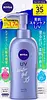
This chemical sunscreen covers most of the UV range, lighter on the deep UVA that drives aging.
This chemical sunscreen covers the full UV range and blocks ~98% of UVB at SPF 50.


What's inside
What's inside
 Key Ingredients
Benefits
Concerns
Ingredients Side-by-side
Water
Skin ConditioningAlcohol
Antimicrobial




Ethylhexyl Methoxycinnamate
UV Absorber

Propylene Glycol
Humectant
Dimethicone
Emollient

Caprylic/Capric Triglyceride
Masking

Ethylhexyl Triazone
UV Absorber
Diethylamino Hydroxybenzoyl Hexyl Benzoate
UV Filter
Aluminum Starch Octenylsuccinate
Absorbent
Sodium Hyaluronate
Humectant


Pinus Taeda Bark Extract
TonicPyrus Cydonia Fruit Extract
Skin ConditioningTocopheryl Acetate
Antioxidant


Acrylates/C10-30 Alkyl Acrylate Crosspolymer
Emulsion StabilisingCeteth-10
EmulsifyingSodium Hydroxide
BufferingMethylparaben
Preservative

Water, Alcohol, Ethylhexyl Methoxycinnamate, Propylene Glycol, Dimethicone, Caprylic/Capric Triglyceride, Ethylhexyl Triazone, Diethylamino Hydroxybenzoyl Hexyl Benzoate, Aluminum Starch Octenylsuccinate, Sodium Hyaluronate, Pinus Taeda Bark Extract, Pyrus Cydonia Fruit Extract, Tocopheryl Acetate, Acrylates/C10-30 Alkyl Acrylate Crosspolymer, Ceteth-10, Sodium Hydroxide, Methylparaben
Water
Skin ConditioningButylene Glycol
Humectant
Alcohol
Antimicrobial
Ethylhexyl Salicylate
UV Absorber
Homosalate
Skin Conditioning
Dibutyl Adipate
EmollientBis-Ethylhexyloxyphenol Methoxyphenyl Triazine
UV Absorber
Cyclopentasiloxane
Emollient
Methylene Bis-Benzotriazolyl Tetramethylbutylphenol
UV Filter
Polysilicone-15
UV Filter
Diethylamino Hydroxybenzoyl Hexyl Benzoate
UV Filter
Hexyl Benzoate
Perfuming

Centella Asiatica Extract
Cleansing

Portulaca Oleracea Extract
Skin Conditioning
Houttuynia Cordata Extract
Skin Conditioning
Pearl Extract
Antioxidant
Caulerpa Lentillifera Extract

Sea Water
HumectantUndaria Pinnatifida Extract
Skin ConditioningEcklonia Cava Extract
Skin Conditioning
Enteromorpha Compressa Extract
Skin Protecting
Laminaria Japonica Extract
Skin Protecting
Codium Fragile Extract
Skin Conditioning
Ceteth-10
EmulsifyingTromethamine
BufferingDecyl Glucoside
Cleansing
Acrylates/C10-30 Alkyl Acrylate Crosspolymer
Emulsion StabilisingCarbomer
Emulsion StabilisingCaprylic/Capric Triglyceride
Masking
Cetyl PEG/PPG-10/1 Dimethicone
Emulsifying
Propanediol
Solvent
Propylene Glycol
Humectant
1,2-Hexanediol
Skin Conditioning
Xanthan Gum
EmulsifyingSodium Hyaluronate
Humectant
Sodium Acetylated Hyaluronate
Humectant
Ethylhexylglycerin
Skin ConditioningHydrolyzed Hyaluronic Acid
Humectant
Parfum
Masking
Phenoxyethanol
Preservative
Butylphenyl Methylpropional
Perfuming
Linalool
Perfuming
Water, Butylene Glycol, Alcohol, Ethylhexyl Salicylate, Homosalate, Dibutyl Adipate, Bis-Ethylhexyloxyphenol Methoxyphenyl Triazine, Cyclopentasiloxane, Methylene Bis-Benzotriazolyl Tetramethylbutylphenol, Polysilicone-15, Diethylamino Hydroxybenzoyl Hexyl Benzoate, Hexyl Benzoate, Centella Asiatica Extract, Portulaca Oleracea Extract, Houttuynia Cordata Extract, Pearl Extract, Caulerpa Lentillifera Extract, Sea Water, Undaria Pinnatifida Extract, Ecklonia Cava Extract, Enteromorpha Compressa Extract, Laminaria Japonica Extract, Codium Fragile Extract, Ceteth-10, Tromethamine, Decyl Glucoside, Acrylates/C10-30 Alkyl Acrylate Crosspolymer, Carbomer, Caprylic/Capric Triglyceride, Cetyl PEG/PPG-10/1 Dimethicone, Propanediol, Propylene Glycol, 1,2-Hexanediol, Xanthan Gum, Sodium Hyaluronate, Sodium Acetylated Hyaluronate, Ethylhexylglycerin, Hydrolyzed Hyaluronic Acid, Parfum, Phenoxyethanol, Butylphenyl Methylpropional, Linalool
Reviews
Ingredients Explained
These ingredients are found in both products.
Ingredients higher up in an ingredient list are typically present in a larger amount.
Acrylates/C10-30 Alkyl Acrylate Crosspolymer is a synthetic polymer. It is used to thicken, emulsify, and improve the texture of products.
As an emulsifier, it helps stabilize oil-in-water emulsions to give products an elegant feel when applied.
It can also form a thin protective film on skin. One study found that a formula using this polymer helped slow down how quickly other ingredients (like DEET) were absorbed through skin.
A 2024 study of over 1,300 patients confirmed that sensitization to this ingredient is rare. It is also non-mutagenic and has a clean track record.
Learn more about Acrylates/C10-30 Alkyl Acrylate CrosspolymerThis ingredient is also called ethanol or ethyl alcohol. It is denatured, meaning made undrinkable for cosmetic use.
In formulas, it:
Is it bad for your skin?
The answer comes down to concentration. Patch and wash studies have found highly concentrated alcohol-based hand rubs (60-100%) cause less barrier disruption than washing with a basic detergent like SLS. The only measurable effect in these studies was a temporary dip in skin hydration.
Concentrations below 12-15% in leave-on cosmetics is generally well-tolerated. Concentrations above start to see increased transepidermal water loss (TEWL) and reduced hydration.
In concentrations about 58%, it creates temporary channels in your skin's lipid layers to become more permeable and allow other ingredients to slip through easily.
This ingredient can be up to 80% of the formula in alcohol-based perfumes.
Overall, this ingredient is probably harmless if found lower down an ingredients list but worth side-eyeing if it's high up (especially if your barrier is already struggling).
Alcohol can worsen dry skin, eczema, and oily skin, especially at higher concentrations. This is because it can increase transepidermal water loss and decrease hydration to disrupt the skin barrier.
According to the National Rosacea Society based in the US, you should be mindful of products with these alcohols in the top half of ingredients.
True allergic contact dermatitis to ethanol is uncommon, but be sure to patch test if you have dry or sensitive skin.
Learn more about AlcoholCaprylic/Capric Triglyceride (aka MCT Oil) is a lightweight emollient, solvent, and texture enhancer. It is considered a skin-softener by helping to prevent moisture loss.
Though it behaves like an oil, it is not technically one due to its chemical composition. One perk of this ingredient is that it is very stable, resistant to oxidation, and unlikely to go rancid.
In practice, that translates to a long shelf life and a consistently elegant skin feel.
While there is an assumption Caprylic Triglyceride can clog pores due to it being derived from coconut oil, there is no research supporting this. Just patch test if you have concerns.
Fractionated coconut oil and MCT Oil are both listed as Caprylic/Capric Triglyceride according to INCI. This is because INCI names are based on the ingredient’s final chemical composition and not its marketing name or source.
This ingredient is treated as the gold standard fungal acne safe oil. Even though it is coconut derived, the problematic lauric acid is stripped out.
This leaves just caprylic (C8) and capric (C10) acid. These chain lengths actually trend antifungal; a 2020 study found caprylic acid was enough to disrupt Malassezia furfur cell membrane, with a caprylic acid derivative damaging membrane structures at concentrations as low as 0.2%.
Learn more about Caprylic/Capric TriglycerideWe don't have a description for Ceteth-10 yet.
Diethylamino Hydroxybenzoyl Hexyl Benzoate (DHHB) is a chemical UV-A absorber. It is formulated for high UVA protection (320-400 nm).
DHHB is well-liked for:
DHHB has been approved by the EU, Japan, Taiwan, and South America for use up to 10%. Unfortunately, it has not been approved for use in the US or Canada due to slow regulatory processes.
This ingredient is soluble in oils, fats, and lipids.
Learn more about Diethylamino Hydroxybenzoyl Hexyl BenzoatePropylene Glycol is a synthetic, colorless, odorless liquid that has been a staple in cosmetics for decades. It is a skin conditioning agent, humectant, and solvent.
As a humectant, it draw water to the skin to reduce flaking and restore suppleness. It's also a solvent that helps dissolve other actives and keeps formulas stable across temperature changes.
The CIR Expert Panel has confirmed this ingredient to be nontoxic and clinical studies show no sensitization at cosmetic use concentrations.
True allergic reactions are quite rare: a 15-year retrospective study of 6,751 patients found only 0.31% had a positive reaction (and less than half were considered clinically relevant).
It seemed that when sensitization does occur, it's most commonly linked to topical medication (like corticosteroids) and not cosmetics. Allergic contact dermatitis also appears largely limited to individuals with underlying skin conditions.
Overall, propylene glycol is a well-studied ingredient that most people can tolerate without issue.
Learn more about Propylene GlycolSodium Hyaluronate is the salt form of hyaluronic acid. It is a long sugar chain that is naturally found in your skin, joints, and connective tissue that maintains hydration and elasticity.
In skincare, it works as a humectant. It pulls water from the environment and deeper layers of skin and binds it to the surface.
Interestingly, the size of the molecule affects its behavior:
Some clinical evidence links low molecular weight versions to improved wrinkle depth, elasticity, anti-inflammatory effects, and barrier repair.
Many serums use a blend of both weights so you can get surface hydration plus longer-lasting and deeper effects.
You'll typically see concentrations between 0.1-2% for this ingredient.
Learn more about Sodium HyaluronateWater. It's the most common cosmetic ingredient of all. You'll usually see it at the top of ingredient lists, meaning that it makes up the largest part of the product.
So why is it so popular? Water most often acts as a solvent - this means that it helps dissolve other ingredients into the formulation.
You'll also recognize water as that liquid we all need to stay alive. If you see this, drink a glass of water. Remember to stay hydrated!
Learn more about Water

