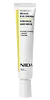
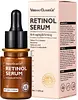
Nida Revive Eye Cream For Face And Neck Versus Vibrant Glamour Double Retinol Serum Anti-Aging Firming
This anti-aging eye moisturizer is formulated around Niacinamide and Hydroxydecyl Ubiquinone to soften the look of wrinkles.
This anti-aging serum is formulated around Centella Asiatica Extract and Acetyl Hexapeptide-8 to soften the look of wrinkles and refine skin texture.


What's inside
What's inside
 Key Ingredients
Benefits
Concerns
Ingredients Side-by-side
Water
Skin ConditioningGlycerin
Humectant


Dipropylene Glycol
HumectantCaprylic/Capric Triglyceride
Masking
Propylene Glycol Dicaprylate/Dicaprate
EmollientAlcohol
Antimicrobial




1,2-Hexanediol
Skin Conditioning
Niacinamide
Smoothing









Pentaerythrityl Tetraethylhexanoate
Emollient
Cetearyl Alcohol
Emollient



Sorbitan Olivate
Emulsifying
Cetearyl Olivate
Arginine
Masking
Acrylates/C10-30 Alkyl Acrylate Crosspolymer
Emulsion StabilisingGlyceryl Stearate
Emollient
Panthenol
Skin Conditioning
Disodium EDTA
Adenosine
Skin Conditioning
Butylene Glycol
Humectant
Hydroxydecyl Ubiquinone
Antioxidant
Allantoin
Skin Conditioning
Magnolia Officinalis Bark Extract
Antimicrobial
Lactobacillus Ferment Lysate
Skin Conditioning
Parfum
Masking

Olea Europaea Fruit Oil
Masking
Simmondsia Chinensis Seed Oil
Emollient
Macadamia Ternifolia Seed Oil
Emollient
Human Embryonic Stem Cell Conditioned Media
HumectantTocopherol
Antioxidant
Polysorbate 20
Emulsifying
Retinol
Skin Conditioning
Octyldodecanol
Emollient
Hydrolyzed Collagen
Emollient
Collagen Extract
Skin Conditioning
Sodium Hyaluronate
Humectant
Hydrogenated Lecithin
Emulsifying
BHT
Antioxidant
BHA
Antioxidant
Hydroxypropyltrimonium Hyaluronate
Ceramide NP
Skin Conditioning
Ethylhexylglycerin
Skin ConditioningCaprylyl Glycol
Emollient
Acetyl Hexapeptide-8
Humectant
Collagen Amino Acids
Moisturising
Collagen
Moisturising
Zinc Hydrolyzed Collagen
Skin Conditioning
Hydrolyzed Hyaluronic Acid
Humectant
Copper Tripeptide-1
Skin Conditioning
Sodium Acetylated Hyaluronate
Humectant
Sodium Soy Hydrolyzed Collagen
Surfactant
Soluble Collagen
Humectant
Oligopeptide-32
Antiseborrhoeic
Oligopeptide-29
Antioxidant
Hyaluronic Acid
Humectant
Palmitoyl Pentapeptide-4
Skin Conditioning
Hydrolyzed Sodium Hyaluronate
Skin Conditioning
Sodium Hyaluronate Crosspolymer
Humectant
Potassium Hyaluronate
Skin ConditioningHexyl Cinnamal
Perfuming
Water, Glycerin, Dipropylene Glycol, Caprylic/Capric Triglyceride, Propylene Glycol Dicaprylate/Dicaprate, Alcohol, 1,2-Hexanediol, Niacinamide, Pentaerythrityl Tetraethylhexanoate, Cetearyl Alcohol, Sorbitan Olivate, Cetearyl Olivate, Arginine, Acrylates/C10-30 Alkyl Acrylate Crosspolymer, Glyceryl Stearate, Panthenol, Disodium EDTA, Adenosine, Butylene Glycol, Hydroxydecyl Ubiquinone, Allantoin, Magnolia Officinalis Bark Extract, Lactobacillus Ferment Lysate, Parfum, Olea Europaea Fruit Oil, Simmondsia Chinensis Seed Oil, Macadamia Ternifolia Seed Oil, Human Embryonic Stem Cell Conditioned Media, Tocopherol, Polysorbate 20, Retinol, Octyldodecanol, Hydrolyzed Collagen, Collagen Extract, Sodium Hyaluronate, Hydrogenated Lecithin, BHT, BHA, Hydroxypropyltrimonium Hyaluronate, Ceramide NP, Ethylhexylglycerin, Caprylyl Glycol, Acetyl Hexapeptide-8, Collagen Amino Acids, Collagen, Zinc Hydrolyzed Collagen, Hydrolyzed Hyaluronic Acid, Copper Tripeptide-1, Sodium Acetylated Hyaluronate, Sodium Soy Hydrolyzed Collagen, Soluble Collagen, Oligopeptide-32, Oligopeptide-29, Hyaluronic Acid, Palmitoyl Pentapeptide-4, Hydrolyzed Sodium Hyaluronate, Sodium Hyaluronate Crosspolymer, Potassium Hyaluronate, Hexyl Cinnamal
Squalane
Emollient
Fucus Vesiculosus Extract
Emollient
Centella Asiatica Extract
Cleansing
Tremella Fuciformis Polysaccharide
Emulsion Stabilising
Beta-Glucan
Skin Conditioning
Acetyl Hexapeptide-8
Humectant
Retinol
Skin Conditioning
Ceramide AP
Skin Conditioning
Tocopherol
Antioxidant
Avena Sativa Straw Extract
Skin ConditioningPaeonia Albiflora Root Extract
Skin ConditioningArginine
Masking
Carbomer
Emulsion StabilisingXanthan Gum
EmulsifyingSodium Hyaluronate
Humectant
Ingredients Explained
These ingredients are found in both products.
Ingredients higher up in an ingredient list are typically present in a larger amount.
Acetyl Hexapeptide-8 (also known as Argireline) is a synthetic hexapeptide that is often called a "topical Botox alternative".
It works by mimicking how Botox relaxes muscles; it interferes with the signaling process that tells your facial muscles to contract. This can help soften expression lines like forehead wrinkles or crow's feet over time.
The comparison to Botox does have limits because the molecule is water-loving and relatively large.
Acetyl Hexapeptide-8 has a hard time absorbing deeply enough through the skin's outer barrier to actually reach the muscles.
So whether it truly works the way Botox does at a biological level is still up for debate, but early clinical outcomes are fairly encouraging.
A 12 week human study of a multi-ingredient regimen containing this ingredient saw:
While some studies have observed improvements in wrinkle appearance, it is important to note that more consistent results are seen in multi-ingredient formulations (vs just Acetyl Hexapeptide-8 alone).
Some research studies also used higher concentrations (up to 10%) while this ingredient is usually found in concentrations up to 0.005% in leave-on formulations.
Learn more about Acetyl Hexapeptide-8Arginine is a semi-essential amino acid. This just means our bodies can product a bit on its own, but sometimes needs a little boost from food sources.
It is a part of your skin's natural moisturizing factor (NMF), or the water-loving molecules in your outermost layer of skin (stratum corneum) that keeps everything hydrated and happy.
Here's an interesting thing about Arginine: your skin converts it into urea through the Krebs-Henseleit urea cycle. Urea is one of the most effective humectants your skin naturally produces.
A clinical study showed applying 2.5% arginine hydrochloride to atopic dermatitis skin showed significant urea levels in the stratum corneum and improved moisture in just four weeks.
Arginine is also a precursor to nitric oxide; nitric oxide improves microcirculation and supports wound healing and collagen synthesis.
One study found that an amino acid complex containing Arginine reduced skin irritation, improved hydration, and accelerated skin repair in clinical / in-vivo studies.
Arginine itself is an amino acid and not a fatty acid, oil, or ester. On its own, it's not a direct food source for Malassezia, or the yeast that causes fungal acne.
Learn more about ArginineRetinol is one of the most studied anti-aging ingredients in skincare (and for good reason!).
It's a form of vitamin A that your skin converts into Retinoic Acid, the active molecule that actually does the work in your cells.
That conversion happens in two steps: your skin first turns Retinol into Retinaldehyde (also called Retinal), then turns Retinaldehyde into Retinoic Acid.
Retinol is converted to biologically active retinoic acid via retinaldehyde by dehydrogenases in a two-step oxidation process.
Each step is a little "upgrade" toward the active form which is part of why Retinol is gentler than prescription Retinoic Acid; your skin does the work gradually. This also explains where Retinol sits in the retinoid family.
Here is the retinoid family ranked roughly by strength: Retinyl Esters (like Retinyl Palmitate) < Retinol < Retinaldehyde < Retinoic Acid.
Retinoid activity increases in that order, while tolerance runs in reverse; retinyl esters are the gentlest and retinoic acid the most irritating.
The more conversion steps an ingredient needs, the gentler (and slower) it tends to be, so Retinol lands in a nice middle spot. It's more effective than the esters, gentler than prescription options.
Once it becomes Retinoic Acid, it binds to receptors inside your cells' nuclei (called RARs and RXRs). These receptor pairs bind to specific DNA motifs called retinoic acid response elements and act like switches that turn certain genes on or off.
In practice, this means a few things happen in a formula. It:
That last two are worth a closer look.
A study that tested Retinol directly (not just prescription Retinoic Acid) found that four weeks of retinol thickened the epidermis and switched on the genes for Collagen I and Collagen III, with more procollagen I and III showing up in the skin. And after twelve weeks, facial wrinkles were visibly reduced.
Retinoids more broadly stimulate the skin's synthesis of hyaluronan and other glycosaminoglycans, part of what gives skin a plumper, more hydrated look over time.
So even the gentler OTC form is doing real structural work (not just sitting on the surface).
It's also worth knowing Retinol isn't only a wrinkle ingredient; it can help with uneven tone, dark spots, rough texture, and the look of pores as well because it speeds up turnover and influences pigment.
The research backs this up as well.
A pooled analysis of six clinical studies found that 0.1% stabilized retinol improved all signs of photoaging versus vehicle as early as week 4 and through 12 weeks, with only a few mild cases of irritation.
Another study comparing concentrations found that 0.3% and 1% Retinol were similarly effective at remodeling photodamaged skin, but 0.3% caused fewer adverse reactions when used daily (a useful reminder that more isn't always better).
Retinol is about tenfold less potent than Retinoic Acid. This is why it works as a gentler, non-prescription option that builds results over time.
Typical concentrations range from 0.1-1%, with 0.1% to 0.3% being a well-supported sweet spot for visible benefits with good tolerability.
One quirk worth mentioning: Retinol is famously unstable.
It's highly sensitive to light and oxygen, and UV exposure breaks it down into a range of degradation products.
Real-world testing bears this out, with retinoid content in some products dropping anywhere from 0% to 80% after six months at room temperature, and even more at higher temperatures.
This is why good formulations lean on opaque, air-tight packaging (think tubes and pumps, not clear jars) and often "encapsulate" the Retinol to shield it.
Signs of oxidation include your product turning yellow or smelling "off". Keeping it somewhere cool and dark, and using it up within a few months of opening helps it stay effective.
The most common side effects are mild and temporary: usually some dryness, redness, or light peeling as your skin adjusts. These tend to settle with consistent and lower-frequency use.
Like all retinoids, Retinol works best with nightly use, a good moisturizer, and daytime sunscreen.
The "ramp up" method works well: start with Retinol once a week to give your skin time to adjust, which keeps irritation low. Slowly add more nights until you reach your goal frequency once your skin feels comfortable.
Retinoids also make your skin more sensitive to the sun in the first few weeks, so wear sunscreen every morning and protect your skin from direct sun while you build up tolerance.
One safety note: topical Retinoids aren't recommended during pregnancy or breastfeeding. Systemic absorption from creams is low but because high oral vitamin A is a known teratogen and topical safety data are limited, most clinicians recommend stopping retinoids when pregnant or trying to conceive.
Learn more about RetinolSodium Hyaluronate is the salt form of hyaluronic acid. It is a long sugar chain that is naturally found in your skin, joints, and connective tissue that maintains hydration and elasticity.
In skincare, it works as a humectant. It pulls water from the environment and deeper layers of skin and binds it to the surface.
Interestingly, the size of the molecule affects its behavior:
Some clinical evidence links low molecular weight versions to improved wrinkle depth, elasticity, anti-inflammatory effects, and barrier repair.
Many serums use a blend of both weights so you can get surface hydration plus longer-lasting and deeper effects.
You'll typically see concentrations between 0.1-2% for this ingredient.
Learn more about Sodium HyaluronateTocopherol is a fat-soluble antioxidant known as Vitamin E.
You'll find this ingredient in the vast majority of skincare (for good reason). It works to neutralize free radicals, or unstable molecules generated by UV exposure, pollution, and other environmental stressors, before they can cause oxidative damage to your skin cells.
Topically applied tocopherol has been shown to protect against UV damage by ramping up the skin's own natural defense enzymes.
It also acts as a skin conditioning agent; some studies show that regular topical use can improve the skin's water-binding capacity over 2-4 weeks.
This ingredient is especially loved for being a team player. When combined with Vitamin C, the photoprotective effect of both ingredients roughly doubles and the combo also helps reduce UV-induced DNA damage.
This ingredient has some brightening potential but it's more of a prevention ingredient than spot-fader. Cell studies show it can slow down melanin production but it's worth noting that it's not the most powerful brightener out there.
In formulations, it also serves as a stabilizer that helps protect other oxidation-prone ingredients from degrading.
Concentrations usually range from 0.1-1% in most leave-on products.
Learn more about Tocopherol

