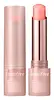
This barrier-repair lip moisturizer is formulated around Butyrospermum Parkii Butter to strengthen the lip barrier and hydrate lips.

What's inside
What's inside
 Key Ingredients
Benefits
Concerns
Ingredients Side-by-side
Polyisobutene
Phytosteryl/Isostearyl/Cetyl/Stearyl/Behenyl Dimer Dilinoleate
Skin Conditioning

Octyldodecyl Neopentanoate
EmollientDiisostearyl Malate
EmollientPentaerythrityl Tetraisostearate
Emollient
Phytosteryl/Octyldodecyl Lauroyl Glutamate
Skin ConditioningPentaerythrityl Tetraethylhexanoate
Emollient
Synthetic Wax
Abrasive

Paraffin
Skin Conditioning
Microcrystalline Wax
Emulsion StabilisingCamellia Japonica Seed Oil
Emollient
Astrocaryum Murumuru Seed Butter
Emollient

Eucalyptus Globulus Leaf Oil
Perfuming


Polyhydroxystearic Acid
Emulsifying
Ethylhexyl Palmitate
Emollient
Lecithin
Emollient
Isostearic Acid
Cleansing
Isopropyl Palmitate
Emollient
Limonene
Perfuming
CI 45380
Cosmetic ColorantPolyglyceryl-3 Polyricinoleate
Emulsifying
Polyglyceryl-2 Triisostearate
Emulsifying
CI 45410
Cosmetic ColorantCI 77891
Cosmetic ColorantCI 15985
Cosmetic ColorantPolyglyceryl-2 Diisostearate
Emulsifying
Glycerin
Humectant
Tocopherol
Antioxidant





Ceramide NP
Skin Conditioning

Phytosphingosine
Skin Conditioning
Hyaluronic Acid
Humectant
Hydrogenated Lecithin
Emulsifying
Polyisobutene, Phytosteryl/Isostearyl/Cetyl/Stearyl/Behenyl Dimer Dilinoleate, Octyldodecyl Neopentanoate, Diisostearyl Malate, Pentaerythrityl Tetraisostearate, Phytosteryl/Octyldodecyl Lauroyl Glutamate, Pentaerythrityl Tetraethylhexanoate, Synthetic Wax, Paraffin, Microcrystalline Wax, Camellia Japonica Seed Oil, Astrocaryum Murumuru Seed Butter, Eucalyptus Globulus Leaf Oil, Polyhydroxystearic Acid, Ethylhexyl Palmitate, Lecithin, Isostearic Acid, Isopropyl Palmitate, Limonene, CI 45380, Polyglyceryl-3 Polyricinoleate, Polyglyceryl-2 Triisostearate, CI 45410, CI 77891, CI 15985, Polyglyceryl-2 Diisostearate, Glycerin, Tocopherol, Ceramide NP, Phytosphingosine, Hyaluronic Acid, Hydrogenated Lecithin
Hydrogenated Polyisobutene
EmollientPhytosteryl/Isostearyl/Cetyl/Stearyl/Behenyl Dimer Dilinoleate
Skin Conditioning
Hydrogenated Poly(C6-14 Olefin)
EmollientDiisostearyl Malate
EmollientPolybutene
Phytosteryl Isostearyl Dimer Dilinoleate
EmollientCera Microcristallina
Emulsion StabilisingButyrospermum Parkii Butter
Skin Conditioning
Sucrose Tetrastearate Triacetate
Emollient
Ethylene/Propylene/Styrene Copolymer
Synthetic Wax
Abrasive
Mica
Cosmetic ColorantEuphorbia Cerifera Cera
Astringent
Astrocaryum Murumuru Seed Butter
Emollient
Parfum
Masking
Candelilla Wax Esters
CI 77891
Cosmetic ColorantPolyglyceryl-2 Diisostearate
Emulsifying
Dimethicone
Emollient
Dehydroacetic Acid
Preservative
Butylene/Ethylene/Styrene Copolymer
Methicone
Emollient
Copernicia Cerifera Cera
Emollient
Polyglyceryl-2 Triisostearate
Emulsifying
CI 15850
Cosmetic ColorantPentaerythrityl Tetra-Di-T-Butyl Hydroxyhydrocinnamate
Antioxidant
CI 42090
Cosmetic ColorantPolyhydroxystearic Acid
Emulsifying
BHT
Antioxidant
Hydrogenated Polyisobutene, Phytosteryl/Isostearyl/Cetyl/Stearyl/Behenyl Dimer Dilinoleate, Hydrogenated Poly(C6-14 Olefin), Diisostearyl Malate, Polybutene, Phytosteryl Isostearyl Dimer Dilinoleate, Cera Microcristallina, Butyrospermum Parkii Butter, Sucrose Tetrastearate Triacetate, Ethylene/Propylene/Styrene Copolymer, Synthetic Wax, Mica, Euphorbia Cerifera Cera, Astrocaryum Murumuru Seed Butter, Parfum, Candelilla Wax Esters, CI 77891, Polyglyceryl-2 Diisostearate, Dimethicone, Dehydroacetic Acid, Butylene/Ethylene/Styrene Copolymer, Methicone, Copernicia Cerifera Cera, Polyglyceryl-2 Triisostearate, CI 15850, Pentaerythrityl Tetra-Di-T-Butyl Hydroxyhydrocinnamate, CI 42090, Polyhydroxystearic Acid, BHT
Reviews
Ingredients Explained
These ingredients are found in both products.
Ingredients higher up in an ingredient list are typically present in a larger amount.
Murumuru butter is a solid fat pressed from the seeds of an Amazonian palm.
It's a bit unusual among plant butters due to its fatty acid profile: it's roughly 47% lauric acid (C12) and 26% myristic acid (C14), with about 13% oleic, 6% palmitic, 3% linoleic and 3% stearic acid.
Those are medium-chain fats which is why it melts fast on skin and feels lighter than stearic-heavy butters like shea or cacao.
In skincare, this butter works as an emollient and a temporary occlusive that helps soften the skin's surface and slows water loss.
Just to be upfront: there's no published human clinical trials on this ingredient and everything known about how it behaves on skin is from the fatty acid composition + general body of data on refined plant oils. At this time, marketing claims about wrinkles, elasticity, or "deep repair" are unsupported.
Industry survey data shows concentrations between 0.001%-7% for leave-on products and rinse-off products are capped around 0.2%.
No one has tested murumuru butter for comedogenicity in humans; the comedogenic ratings floating around trace back to lauric and myristic acid scores from the 1984 rabbit ear assay.
The author of that study later said that testing on rabbit ears is not ideal and human testing found that comedogenic ratings cannot predict how a finished formula will behave. It all comes down to formula, concentration, and your skin.
Malassezia is lipid dependent and feeds on free fatty acids between C11-24 chain lengths. This ingredient is made up entirely of chains in that range, so it may not be fungal acne safe.
Learn more about Astrocaryum Murumuru Seed ButterCi 77891 is a white pigment from Titanium dioxide. It is naturally found in minerals such as rutile and ilmenite.
It's main function is to add a white color to cosmetics. It can also be mixed with other colors to create different shades.
Ci 77891 is commonly found in sunscreens due to its ability to block UV rays.
Learn more about CI 77891Diisostearyl Malate is an emollient and most often used in lip products. It comes from isostearyl alcohol, a fatty acid, and malic acid, an AHA.
As an emollient, Diisostearyl Malate helps create a thin film on your skin to trap moisture in. This helps keep your skin soft and smooth.
This is a plant-derived ester that functions as a skin conditioner. It's basically a two linoleic acid molecules combined with fatty alcohols.
In practice, it works as a rich emollient that helps reduce moisture loss and give skin a soft appearance.
The phytosterol part of this ingredient brings an added structural bonus: phytosterols are structurally similar to cholesterol so they can fit right into the stratum corneum's lipid matrix to help reinforce the skin barrier.
Due to its molecular structure, this ingredient delivers a cushiony and glossy feeling without being excessively greasy.
It did not produce skin irritation or sensitization in clinical studies, and this ingredient is deemed safe to use in cosmetics at current practices.
Because this ingredient contains C16, C18, and C22 fatty chains, it may not be Malassezia/fungal acne safe. The Malassezia yeast potentially feeds on fatty acids in the C11-C24 range.
Learn more about Phytosteryl/Isostearyl/Cetyl/Stearyl/Behenyl Dimer DilinoleatePolyglyceryl-2 Diisostearate isn't fungal acne safe.
Polyglyceryl-2 Triisostearate is a plant-derived emulsifier and pigment-dispersing agent with a non-sticky skin feel.
It helps products glide on smoothly and prevents oil and water from separating in a formula, making it suitable for sunscreen and makeup formulations.
The EU inventory of cosmetics has no use restrictions on this ingredient and it is considered well-tolerated.
This ingredient may not be fungal acne safe because it is derived from isostearic acid.
Learn more about Polyglyceryl-2 TriisostearatePolyhydroxystearic Acid is a vegetable-derived soft wax made from castor oil. It's an emulsion stabilizer, thickener, and film former.
You'll likely see it in sunscreens because it helps disperse pigments and UV-reflecting minerals like titanium dioxide and zinc oxide evenly.
Depending on the concentration, it can drastically change the texture of a product from pasty solid (like lipstick) to sprayable liquid.
The CIR Expert Panel for Cosmetic Ingredient Safety has concluded this ingredient to be safe in cosmetics. The highest reported use concentration is 14.2% in lipsticks.
Learn more about Polyhydroxystearic AcidSynthetic Wax is a manufactured hydrocarbon wax. In formulas, it works as an occlusive emollient that helps reduce water loss and improves the spreadability of products.
Research comparing synthetic wax to traditional mineral-derived products found that formulas containing it perform as well for skin hydration.
It is considered non-comedogenic and vegan-friendly.
This ingredient has a well-established safety record by the CIR Expert Panel for Cosmetic Ingredient Safety.
Synthetic Waxes are straight/branched-chain hydrocarbons with no ester bond or fatty acids. That means there is nothing for the Malassezia yeast to feed on.
Learn more about Synthetic Wax

