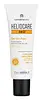
This hybrid sunscreen covers the full UV range and blocks ~98% of UVB at SPF 50.
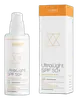
This chemical sunscreen covers the full UV range and blocks ~98% of UVB at SPF 50.


What's inside
What's inside
 Key Ingredients
Benefits
Concerns
Ingredients Side-by-side
Water
Skin ConditioningC12-15 Alkyl Benzoate
AntimicrobialArginine
Masking

Phenylbenzimidazole Sulfonic Acid
UV Absorber
Disodium Phenyl Dibenzimidazole Tetrasulfonate
UV Absorber
Bis-Ethylhexyloxyphenol Methoxyphenyl Triazine
Skin Conditioning
Titanium Dioxide
Cosmetic Colorant
Hexylene Glycol
EmulsifyingC14-22 Alcohols
Emulsion Stabilising
C12-20 Alkyl Glucoside
EmulsifyingDiethylamino Hydroxybenzoyl Hexyl Benzoate
UV Filter
Nylon-12

Myristyl Alcohol
Emollient




Dipropylene Glycol Dibenzoate
EmollientDiethylhexyl Butamido Triazone
UV Absorber
Phenoxyethanol
Preservative
Polypodium Leucotomos Leaf Extract
Skin Protecting
Ethylhexyl Ferulate
Antioxidant
Ferulic Acid
Antimicrobial

Caffeic Acid
Antioxidant
Physalis Angulata Extract
Skin ProtectingCeteareth-25
CleansingCaprylyl Glycol
Emollient
Melanin
Skin ProtectingMyristyl Glucoside
CleansingEthylhexyl Triazone
UV Absorber
Caprylyl Methicone
Skin Conditioning
Hydrolyzed Wheat Protein/Pvp Crosspolymer
Glycerin
Humectant
3-O-Ethyl Ascorbic Acid
Skin Conditioning


Alumina
Abrasive
PPG-15 Stearyl Ether Benzoate
EmollientDisodium Ethylene Dicocamide PEG-15 Disulfate
Cleansing

Camellia Sinensis Extract
Antioxidant
Ethylhexylglycerin
Skin ConditioningTocopheryl Acetate
Antioxidant
Xanthan Gum
EmulsifyingPhytosphingosine Hcl
Skin ConditioningArabidopsis Thaliana Extract
Antioxidant
Ethyl Lauroyl Arginate Hcl
Skin ConditioningPanthenyl Triacetate
Parfum
Masking


Simethicone
Emollient
Oxothiazolidine
Skin ProtectingDisodium EDTA
Silica
Abrasive
Ethyl Linoleate
Emollient
Caprylic/Capric Triglyceride
Masking
Oleyl Alcohol
Emollient
Butylene Glycol
Humectant
Lecithin
Emollient
Sodium Benzoate
Masking
Tocopherol
Antioxidant
Linalool
Perfuming
Limonene
Perfuming
Water, C12-15 Alkyl Benzoate, Arginine, Phenylbenzimidazole Sulfonic Acid, Disodium Phenyl Dibenzimidazole Tetrasulfonate, Bis-Ethylhexyloxyphenol Methoxyphenyl Triazine, Titanium Dioxide, Hexylene Glycol, C14-22 Alcohols, C12-20 Alkyl Glucoside, Diethylamino Hydroxybenzoyl Hexyl Benzoate, Nylon-12, Myristyl Alcohol, Dipropylene Glycol Dibenzoate, Diethylhexyl Butamido Triazone, Phenoxyethanol, Polypodium Leucotomos Leaf Extract, Ethylhexyl Ferulate, Ferulic Acid, Caffeic Acid, Physalis Angulata Extract, Ceteareth-25, Caprylyl Glycol, Melanin, Myristyl Glucoside, Ethylhexyl Triazone, Caprylyl Methicone, Hydrolyzed Wheat Protein/Pvp Crosspolymer, Glycerin, 3-O-Ethyl Ascorbic Acid, Alumina, PPG-15 Stearyl Ether Benzoate, Disodium Ethylene Dicocamide PEG-15 Disulfate, Camellia Sinensis Extract, Ethylhexylglycerin, Tocopheryl Acetate, Xanthan Gum, Phytosphingosine Hcl, Arabidopsis Thaliana Extract, Ethyl Lauroyl Arginate Hcl, Panthenyl Triacetate, Parfum, Simethicone, Oxothiazolidine, Disodium EDTA, Silica, Ethyl Linoleate, Caprylic/Capric Triglyceride, Oleyl Alcohol, Butylene Glycol, Lecithin, Sodium Benzoate, Tocopherol, Linalool, Limonene
Water
Skin ConditioningPropylene Glycol Diheptanoate
EmollientDiethylamino Hydroxybenzoyl Hexyl Benzoate
UV Filter
Dicaprylyl Ether
Emollient
Phenylbenzimidazole Sulfonic Acid
UV Absorber
Disodium Phenyl Dibenzimidazole Tetrasulfonate
UV Absorber
Pentylene Glycol
Skin Conditioning
Polyglyceryl-6 Stearate
Emollient
Bis-Ethylhexyloxyphenol Methoxyphenyl Triazine
Skin Conditioning
Ethylhexyl Triazone
UV Absorber
Niacinamide
Smoothing

Triethyl Citrate
Masking
Silica
Abrasive
Diisostearoyl Polyglyceryl-3 Dimer Dilinoleate
Emollient
Hydroxylauroyl Phytosphingosine
Skin ConditioningCaprylic/Capric Triglyceride
Masking
1,2-Heptanediol
Skin ConditioningCetearyl Alcohol
Emollient
Glyceryl Stearate
Emollient
Sodium Gluconate
Skin ConditioningSodium Hydroxide
BufferingSodium Stearoyl Glutamate
CleansingPolyglyceryl-6 Behenate
Emulsion Stabilising
Xanthan Gum
EmulsifyingWater, Propylene Glycol Diheptanoate, Diethylamino Hydroxybenzoyl Hexyl Benzoate, Dicaprylyl Ether, Phenylbenzimidazole Sulfonic Acid, Disodium Phenyl Dibenzimidazole Tetrasulfonate, Pentylene Glycol, Polyglyceryl-6 Stearate, Bis-Ethylhexyloxyphenol Methoxyphenyl Triazine, Ethylhexyl Triazone, Niacinamide, Triethyl Citrate, Silica, Diisostearoyl Polyglyceryl-3 Dimer Dilinoleate, Hydroxylauroyl Phytosphingosine, Caprylic/Capric Triglyceride, 1,2-Heptanediol, Cetearyl Alcohol, Glyceryl Stearate, Sodium Gluconate, Sodium Hydroxide, Sodium Stearoyl Glutamate, Polyglyceryl-6 Behenate, Xanthan Gum
Reviews
Ingredients Explained
These ingredients are found in both products.
Ingredients higher up in an ingredient list are typically present in a larger amount.
This ingredient is better known as bemotrizinol or Tinosorb S and is one of the best broad-spectrum UV filters in modern sunscreen.
It works by absorbing UV light across a whole range (280-400 nm) with peaks around 310 nm (UVB) and 340-345 nm (UVA). This means it covers UVB plus the deeper UVA wavelengths that drive photoaging and pigmentation.
Another pro?
It's exceptionally photostable, barely degrades in sunlight, and acts as a "bodyguard" for less stable filters.
That's why you'll see it paired with avobenzone or octinoxate; this team up ensures they keep working through sun exposure.
Safety reviews have been reassuring across the board. This ingredient shows low absorption through the skin, rarely irritates, and lab studies found it doesn't act like a hormone in the body (a concern that's been raised about some older sunscreen filters).
On maximum concentrations:
In 2026, the US F.D.A finally added it as an OTC sunscreen ingredient at concentrations up to 6% for adults / children 6 months and older
Learn more about Bis-Ethylhexyloxyphenol Methoxyphenyl TriazineCaprylic/Capric Triglyceride (aka MCT Oil) is a lightweight emollient, solvent, and texture enhancer. It is considered a skin-softener by helping to prevent moisture loss.
Though it behaves like an oil, it is not technically one due to its chemical composition. One perk of this ingredient is that it is very stable, resistant to oxidation, and unlikely to go rancid.
In practice, that translates to a long shelf life and a consistently elegant skin feel.
While there is an assumption Caprylic Triglyceride can clog pores due to it being derived from coconut oil, there is no research supporting this. Just patch test if you have concerns.
Fractionated coconut oil and MCT Oil are both listed as Caprylic/Capric Triglyceride according to INCI. This is because INCI names are based on the ingredient’s final chemical composition and not its marketing name or source.
This ingredient is treated as the gold standard fungal acne safe oil. Even though it is coconut derived, the problematic lauric acid is stripped out.
This leaves just caprylic (C8) and capric (C10) acid. These chain lengths actually trend antifungal; a 2020 study found caprylic acid was enough to disrupt Malassezia furfur cell membrane, with a caprylic acid derivative damaging membrane structures at concentrations as low as 0.2%.
Learn more about Caprylic/Capric TriglycerideDiethylamino Hydroxybenzoyl Hexyl Benzoate (DHHB) is a chemical UV-A absorber. It is formulated for high UVA protection (320-400 nm).
DHHB is well-liked for:
DHHB has been approved by the EU, Japan, Taiwan, and South America for use up to 10%. Unfortunately, it has not been approved for use in the US or Canada due to slow regulatory processes.
This ingredient is soluble in oils, fats, and lipids.
Learn more about Diethylamino Hydroxybenzoyl Hexyl BenzoateThis is a chemical sunscreen ingredient. It protects skin against UV-A rays (320-370 nm).
Key characteristics of this ingredient include high photo-stability and water-solubility. Being water-soluble allows it to create non-oily sunscreens.
It is approved for up to 10% in the EU and Asia. However, it is pending approval in the US.
Learn more about Disodium Phenyl Dibenzimidazole TetrasulfonateEthylhexyl Triazone (aka Octyl Triazone) is an oil-soluble organic UVB filter. It has peak absorption around 314 nm, right in the middle of the UVB range.
This ingredient is described as one of the most effective UVB filters available and small concentrations are enough to deliver a high SPF thanks to its strong UV absorbing power.
Formulators love it for its stability; its ability to filter UV stays practically unchanged even under intense radiation and it can also help boost the photostability of less stable filters like avobenzone.
It's also a great pick for water resistant products because it's insoluble in water and has a good affinity for keratin.
Because it's a big, heavy molecule, the European Scientific Committee has found to to have very low dermal penetration and negative results for allergenicity.
In vitro testing also showed a low absorption rate and clean results on irritation.
Typical use levels are 1-5% with 5% being the maximum in the EU, Japan, and other markets that allow it. However, this ingredient is not approved yet in the US or Canada.
Learn more about Ethylhexyl TriazonePhenylbenzimidazole Sulfonic Acid (aka Ensulizole) is a chemical UV filter that's a bit of a unicorn in the sunscreen world: it's water-soluble where most organic filters are oil-based.
Being water-solubility is the headline because it feels lightweight and non-greasy in formulations. This makes it suitable for oily or acne-prone skin in gel/water-based products.
Ensulizole primarily protects against UVB radiation (~290-320 nm) but offers some minimal UVA protection. You'll see it often paired with UVA filters to ensure broad-spectrum coverage.
Interestingly, it can help boost SPF and stabilize finicky filters when combined with other UVB absorbers.
The FDA has approved this ingredient for OTC sunscreens up to 4% and the EU's Scientific Committee on Consumer Products concluded that up to 8% is allowed in cosmetics.
In practice, you'll most likely see it formulated around 1-4%.
Safety-wise, it is neither irritating nor sensitizing, shows no photoallergenic potential, and in vivo tests show no mutagenic potential.
You might see discussion about the "double-edged sword" effect of this ingredient. This is because lab tests done on cells in a dish (not on humans) showed Ensulizole can create small amounts of unstable molecules called free radicals that can damage DNA when exposed to UV light. It sounds scary but this is just test-tube research. There hasn't been proof that this can happen when used in a sunscreen on skin.
Learn more about Phenylbenzimidazole Sulfonic AcidSilica, also known as silicon dioxide, is a naturally occurring mineral. It is used as a fine, spherical, and porous powder in cosmetics.
Though it has exfoliant properties, the function of silica varies depending on the product.
The unique structure of silica enhances the spreadability and adds smoothness, making it a great texture enhancer.
It is also used as an active carrier, emulsifier, and mattifier due to its ability to absorb excess oil.
In some products, tiny microneedles called spicules are made from silica or hydrolyzed sponge. When you rub them in, they lightly polish away dead skin layers and enhance the penetration of active ingredients.
Learn more about SilicaWater. It's the most common cosmetic ingredient of all. You'll usually see it at the top of ingredient lists, meaning that it makes up the largest part of the product.
So why is it so popular? Water most often acts as a solvent - this means that it helps dissolve other ingredients into the formulation.
You'll also recognize water as that liquid we all need to stay alive. If you see this, drink a glass of water. Remember to stay hydrated!
Learn more about WaterXanthan gum is used as a stabilizer and thickener within cosmetic products. It helps give products a sticky, thick feeling - preventing them from being too runny.
On the technical side of things, xanthan gum is a polysaccharide - a combination consisting of multiple sugar molecules bonded together.
Xanthan gum is a pretty common and great ingredient. It is a natural, non-toxic, non-irritating ingredient that is also commonly used in food products.
Learn more about Xanthan Gum

