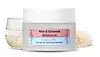
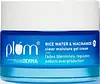
Glamveda Rice & Ceramide Moisturizer Versus Plum Goodness Thinkderma 2% Rice Water & Niacinamide Clear Moisture Gel Cream
This barrier-repair moisturizer is formulated around Sodium Hyaluronate and Oryza Sativa Extract to strengthen the skin barrier and hydrate skin.
This oil-control moisturizer is formulated around Pseudoalteromonas Ferment Extract and Niacinamide to balance excess oil and hydrate skin.

What's inside
What's inside
 Key Ingredients
Benefits
Concerns
Ingredients Side-by-side
Water
Skin ConditioningEthylhexyl Methoxycinnamate
UV Absorber


Caprylic/Capric Triglyceride
Masking


Glyceryl Stearate
Emollient

Isopropyl Myristate
Emollient


PEG-100 Stearate
Surfactant
Propylene Glycol
Humectant
Cetyl Alcohol
Emollient
Paraffinum Liquidum
Emollient
Dimethicone
Emollient

Propanediol
Solvent
Polyacrylate-13
Polyisobutene
Polysorbate 20
Emulsifying
Prunus Amygdalus Dulcis Oil
Skin Conditioning
Cetearyl Alcohol
Emollient
Stearic Acid
Cleansing
Acrylates/C10-30 Alkyl Acrylate Crosspolymer
Emulsion StabilisingPhenoxyethanol
Preservative
Ethylhexylglycerin
Skin ConditioningDimethylsilanol Hyaluronate
Humectant
Silanetriol
Hyaluronic Acid
Humectant
Sodium Hyaluronate
Humectant
Oryza Sativa Extract
Absorbent

Tocopherol
Antioxidant


Allantoin
Skin Conditioning
Titanium Dioxide
Cosmetic Colorant
Ceramide EOP
Skin Conditioning
Ceramide Ns
Skin Conditioning
Ceramide NP
Skin Conditioning
Ceramide As
Skin Conditioning
Ceramide AP
Skin Conditioning
EDTA
ChelatingDisodium EDTA
ChelatingVitis Vinifera Seed Oil
Emollient
Argania Spinosa Kernel Oil
Emollient
Parfum
Masking

Water, Ethylhexyl Methoxycinnamate, Caprylic/Capric Triglyceride, Glyceryl Stearate, Isopropyl Myristate, PEG-100 Stearate, Propylene Glycol, Cetyl Alcohol, Paraffinum Liquidum, Dimethicone, Propanediol, Polyacrylate-13, Polyisobutene, Polysorbate 20, Prunus Amygdalus Dulcis Oil, Cetearyl Alcohol, Stearic Acid, Acrylates/C10-30 Alkyl Acrylate Crosspolymer, Phenoxyethanol, Ethylhexylglycerin, Dimethylsilanol Hyaluronate, Silanetriol, Hyaluronic Acid, Sodium Hyaluronate, Oryza Sativa Extract, Tocopherol, Allantoin, Titanium Dioxide, Ceramide EOP, Ceramide Ns, Ceramide NP, Ceramide As, Ceramide AP, EDTA, Disodium EDTA, Vitis Vinifera Seed Oil, Argania Spinosa Kernel Oil, Parfum
Water
Skin ConditioningGlycerin
Humectant
Pseudoalteromonas Ferment Extract
Humectant
Niacinamide
Smoothing



Oryza Sativa Extract
Absorbent
Caprylyl Methicone
Skin Conditioning
PEG-12 Dimethicone/PPG-20 Crosspolymer
Triolein
Skin Conditioning
Opuntia Ficus-Indica Stem Water
Skin ConditioningSqualane
Emollient
Ammonium Acryloyldimethyltaurate/Vp Copolymer
Ethoxydiglycol
HumectantCyclopentasiloxane
Emollient
Phenoxyethanol
Preservative
Ethylhexylglycerin
Skin ConditioningDisodium EDTA
ChelatingWater, Glycerin, Pseudoalteromonas Ferment Extract, Niacinamide, Oryza Sativa Extract, Caprylyl Methicone, PEG-12 Dimethicone/PPG-20 Crosspolymer, Triolein, Opuntia Ficus-Indica Stem Water, Squalane, Ammonium Acryloyldimethyltaurate/Vp Copolymer, Ethoxydiglycol, Cyclopentasiloxane, Phenoxyethanol, Ethylhexylglycerin, Disodium EDTA
Ingredients Explained
These ingredients are found in both products.
Ingredients higher up in an ingredient list are typically present in a larger amount.
Disodium EDTA is a chelating agent. It grabs onto and deactivates metal ions that sneak into your products from water, packaging, or air.
This ingredient mainly works behind the scenes and helps with:
On top of that, this ingredient can counteract the effects of hard water by binding to the minerals in it.
One thing worth knowing is that Disodium EDTA has been shown to be a mild penetration enhancer. It can help other ingredients absorb into skin more effectively which can be a double-edged sword (great for actives, but can also make the active too strong if you have sensitive skin).
Clinical patch testing showed no significant skin irritation at typical use concentrations and minimal dermal absorption.
You'll most likely see this ingredient near the end of an ingredient list. It's typically found in concentrations less than 1%.
Learn more about Disodium EDTAEthylhexylglycerin is created from glycerin. It is a multitasker ingredient that:
The CIR Expert Panel found minimal skin absorption or sensitization of any kind in a safety assessment. Though this ingredient is considered well-tolerated, a small number of cases of allergic dermatitis have been published since 2002. Just be sure to patch test if you are unsure.
Industry-reported use ranges from 8% in rinse-off products and 2% in leave-on formulations.
Learn more about EthylhexylglycerinOryza Sativa Extract comes from the rice grain, Oryza sativa. Rice extract has wound healing, antioxidant, anti-inflammatory, and hydrating properties.
Rice grains contain numerous antioxidants which may help with anti-aging, such as vitamin E. Antioxidants help stabilize free-radical molecules. Unstable free-radical molecules may damage your skin cells and accelerate signs of aging.
A study from 2002 found rice to help increase the rate of wound healing. The same study found an improvement of skin barrier function in the patients after taking rice baths.
Numerous in-vitro studies have found rice water to help decrease sun damage by increasing collagen production and inhibiting the process of tyrosinase.
Long story short- tyrosinase is an enzyme that controls melanin production. Our bodies start producing melanin (AKA tanning) when exposed to UV radiation to protect against damage. Rice water is found to partially block this process.
Though more research is needed on rice's ability to help with UV protection, recent studies seem promising.
Wondering why rice is hydrating? The protein in rice have emollient properties. Emollients create a barrier on the skin to trap moisture in, keeping your skin moisturized.
Some rice extract may have mildly-exfoliating properties. These are mainly limited to Oryza Sativa (Rice) Bran and Oryza Sativa (Rice) Germ Powder.
This rice was first cultivated in China over 10,000 years ago. Many cultures throughout Asia have used rice water on skin and hair for centuries.
Learn more about Oryza Sativa ExtractPhenoxyethanol is one of the most widely used preservatives in skincare (and for good reason!).
It has a large spectrum of antimicrobial activity and especially effective bacteria, yeast, and mold while only having a weak effect on your skin's natural microbiome.
On a cellular level, it disrupts the cell membranes of microbes by poking holes that make the cell leak. This shuts down the chemical reactions the microbe needs to make energy so it can no longer survive.
Another perk of this ingredient is that it stays functional across a wide pH range (3-10).
You'll often see it paired with boosters like Ethylhexylglycerin; one study showed that a 1:9 ratio of Ethylhexylglycerin to Phenoxyethanol damages bacterial membranes as effectively as doubling the Phenoxyethanol concentration on its own.
Typical use concentrations range from 0.3-1% depending on the formula, and this ingredient is capped at 1% int the EU.
Safety-wise, the fear mongering does not hold up to the evidence. The EU's Scientific Committee on Consumer Safety and FDA consider it safe as a preservative at up to 1%, including for children of all ages.
Adverse systemic effects only showed up in animal studies at exposures roughly 200x higher than what people get from cosmetics. And despite its very widespread use, this ingredient is a rare sensitizer and allergic reactions are uncommon.
Learn more about PhenoxyethanolWater. It's the most common cosmetic ingredient of all. You'll usually see it at the top of ingredient lists, meaning that it makes up the largest part of the product.
So why is it so popular? Water most often acts as a solvent - this means that it helps dissolve other ingredients into the formulation.
You'll also recognize water as that liquid we all need to stay alive. If you see this, drink a glass of water. Remember to stay hydrated!
Learn more about Water

