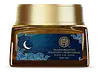
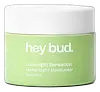
Forest Essentials Transformative Soundarya Night Cream With 24K Gold Versus Hey Bud Overnight Sensation Hemp Night Moisturiser
This anti-aging night moisturizer is formulated around Moringa Oleifera Seed Oil and Ceramide NP to soften the look of wrinkles and hydrate skin.
This barrier-repair night moisturizer is formulated around Aloe Barbadensis Leaf Juice and Butyrospermum Parkii Butter to strengthen the skin barrier and hydrate skin.


What's inside
What's inside
 Key Ingredients
Benefits
Concerns
Ingredients Side-by-side
Water
Skin ConditioningCetearyl Olivate


Moringa Oleifera Seed Oil
Emollient




Caprylic/Capric Triglyceride
Masking

Sesamum Indicum Seed Oil
Emollient
Triticum Vulgare Germ Extract
Skin ConditioningPrunus Amygdalus Dulcis Oil
Skin Conditioning
Ceramide NP
Skin Conditioning


Saccharide Isomerate
Humectant
Polyglutamic Acid
Skin Conditioning
Bakuchiol
Antimicrobial





Hydrolyzed Manihot Esculenta Tuber Extract
Skin ConditioningBetaine
Humectant
Squalane
Emollient
Propanediol
Solvent
Xanthan Gum
EmulsifyingHydrolyzed Sodium Hyaluronate
Skin Conditioning
Bacillus/Folic Acid Ferment Filtrate Extract
Antioxidant
Glycerin
Humectant
Tocopheryl Acetate
Antioxidant
Santalum Album Extract
CleansingMilk
Skin Conditioning
Crocus Sativus Flower Extract
MaskingCaprylyl Glycol
Emollient
Phenoxyethanol
Preservative
Glycyrrhiza Glabra Root Extract
Bleaching
Hexylene Glycol
EmulsifyingGold
Cosmetic ColorantCurcuma Longa Root Extract
Antioxidant
Withania Somnifera Root Extract
Skin Conditioning
Jasminum Sambac Flower Oil
Masking
Water, Cetearyl Olivate, Moringa Oleifera Seed Oil, Caprylic/Capric Triglyceride, Sesamum Indicum Seed Oil, Triticum Vulgare Germ Extract, Prunus Amygdalus Dulcis Oil, Ceramide NP, Saccharide Isomerate, Polyglutamic Acid, Bakuchiol, Hydrolyzed Manihot Esculenta Tuber Extract, Betaine, Squalane, Propanediol, Xanthan Gum, Hydrolyzed Sodium Hyaluronate, Bacillus/Folic Acid Ferment Filtrate Extract, Glycerin, Tocopheryl Acetate, Santalum Album Extract, Milk, Crocus Sativus Flower Extract, Caprylyl Glycol, Phenoxyethanol, Glycyrrhiza Glabra Root Extract, Hexylene Glycol, Gold, Curcuma Longa Root Extract, Withania Somnifera Root Extract, Jasminum Sambac Flower Oil
Water
Skin ConditioningCaprylic/Capric Triglyceride
Masking
Sorbitan Olivate
Emulsifying
Propanediol
Solvent
Cetearyl Olivate
Prunus Amygdalus Dulcis Oil
Skin Conditioning
Aloe Barbadensis Leaf Juice
Skin Conditioning
Butyrospermum Parkii Butter
Skin Conditioning
Ethylhexyl Olivate
Skin Conditioning
Sclerocarya Birrea Seed Oil
Humectant
Cannabis Sativa Seed Oil
Emollient
Saccharide Isomerate
Humectant
Camellia Sinensis Leaf Extract
Antimicrobial
Glycine Soja Oil
Emollient
Tocopherol
Antioxidant
Glycerin
Humectant
Phenoxyethanol
Preservative
Vitis Vinifera Seed Oil
Emollient
Hydroxyethyl Acrylate/Sodium Acryloyldimethyl Taurate Copolymer
Emulsion StabilisingEthylhexylglycerin
Skin ConditioningSodium Benzoate
Masking
Citric Acid
Buffering
Sodium Citrate
BufferingWater, Caprylic/Capric Triglyceride, Sorbitan Olivate, Propanediol, Cetearyl Olivate, Prunus Amygdalus Dulcis Oil, Aloe Barbadensis Leaf Juice, Butyrospermum Parkii Butter, Ethylhexyl Olivate, Sclerocarya Birrea Seed Oil, Cannabis Sativa Seed Oil, Saccharide Isomerate, Camellia Sinensis Leaf Extract, Glycine Soja Oil, Tocopherol, Glycerin, Phenoxyethanol, Vitis Vinifera Seed Oil, Hydroxyethyl Acrylate/Sodium Acryloyldimethyl Taurate Copolymer, Ethylhexylglycerin, Sodium Benzoate, Citric Acid, Sodium Citrate
Ingredients Explained
These ingredients are found in both products.
Ingredients higher up in an ingredient list are typically present in a larger amount.
Caprylic/Capric Triglyceride (aka MCT Oil) is a lightweight emollient, solvent, and texture enhancer. It is considered a skin-softener by helping to prevent moisture loss.
Though it behaves like an oil, it is not technically one due to its chemical composition. One perk of this ingredient is that it is very stable, resistant to oxidation, and unlikely to go rancid.
In practice, that translates to a long shelf life and a consistently elegant skin feel.
While there is an assumption Caprylic Triglyceride can clog pores due to it being derived from coconut oil, there is no research supporting this. Just patch test if you have concerns.
Fractionated coconut oil and MCT Oil are both listed as Caprylic/Capric Triglyceride according to INCI. This is because INCI names are based on the ingredient’s final chemical composition and not its marketing name or source.
This ingredient is treated as the gold standard fungal acne safe oil. Even though it is coconut derived, the problematic lauric acid is stripped out.
This leaves just caprylic (C8) and capric (C10) acid. These chain lengths actually trend antifungal; a 2020 study found caprylic acid was enough to disrupt Malassezia furfur cell membrane, with a caprylic acid derivative damaging membrane structures at concentrations as low as 0.2%.
Learn more about Caprylic/Capric TriglycerideCetearyl Olivate is a plant-derived emulsifier and texture enhancer. It helps keep the oil and water phases from separating so your formulas stay stable.
You'll likely see it combined with Sorbitan Olivate (together sold as the trade name Olivem 1000). This combination generates a liquid crystal structure that closely resemble the lipid organization of the stratum corneum.
These "skin-like" liquid crystals improve skin barrier integrity and promote the delivery of actives into the skin.
This ingredient is well-tolerated and has no significant sensitization data.
Because it is derived from the fatty acids in olive oil, this ingredient may not be fungal acne safe.
Learn more about Cetearyl OlivateGlycerin (or glycerol) is a compound naturally found in your skin. It's a powerhouse humectant that pulls water into the stratum corneum.
Topically, glycerin does several things at once:
Your skin makes glycerin on its own (mostly from sebaceous oil breakdown) and shuttles it to your outermost layer of skin, or your epidermis, via aquaporin-3.
Aquaporin-3 is a transporter that is essential for normal skin hydration, elasticity, and repair. Interestingly, mice lacking in AQP3 have dry and less elastic skin that can be fully corrected with glycerin.
This ingredient is non-irritating, plays well with almost every ingredient, and works across all skin types. Typical use is anywhere between 3-10% but can go up to 79% in some leave-on products.
Just know very high concentrations (>40%) can feel tacky in low humidity.
Glycerin is the name for this ingredient in American English. British English uses Glycerol/Glycerine.
Learn more about GlycerinPhenoxyethanol is one of the most widely used preservatives in skincare (and for good reason!).
It has a large spectrum of antimicrobial activity and especially effective bacteria, yeast, and mold while only having a weak effect on your skin's natural microbiome.
On a cellular level, it disrupts the cell membranes of microbes by poking holes that make the cell leak. This shuts down the chemical reactions the microbe needs to make energy so it can no longer survive.
Another perk of this ingredient is that it stays functional across a wide pH range (3-10).
You'll often see it paired with boosters like Ethylhexylglycerin; one study showed that a 1:9 ratio of Ethylhexylglycerin to Phenoxyethanol damages bacterial membranes as effectively as doubling the Phenoxyethanol concentration on its own.
Typical use concentrations range from 0.3-1% depending on the formula, and this ingredient is capped at 1% int the EU.
Safety-wise, the fear mongering does not hold up to the evidence. The EU's Scientific Committee on Consumer Safety and FDA consider it safe as a preservative at up to 1%, including for children of all ages.
Adverse systemic effects only showed up in animal studies at exposures roughly 200x higher than what people get from cosmetics. And despite its very widespread use, this ingredient is a rare sensitizer and allergic reactions are uncommon.
Learn more about PhenoxyethanolPropanediol is an all-star ingredient. It softens, hydrates, and smooths the skin.
It’s often used to:
Propanediol is not likely to cause sensitivity and considered safe to use. It is derived from corn or petroleum with a clear color and no scent.
Learn more about PropanediolThis ingredient is also known as sweet almond oil. It is a lightweight, cold-pressed oil from the ripe seeds of the sweet almond tree.
Sweet almond oil is rich in skin-nourishing fatty acids such as oleic acid (55-86%) and linolenic acid (7-35%).
As an emollient, it softens and hydrates skin by forming a thin barrier that locks in moisture.
Clinical studies have found it to be non-irritating and non-sensitizing. The CIR Expert Panel has evaluated the available safety data and concluded it is safe for topical use.
Because of the oleic acid content, this ingredient may not be fungal acne safe.
This ingredient does have a comedogenic rating of 3, but this doesn't mean a formula with this ingredient will clog pores.
Human testing has proved that any finished product with a comedogenic ingredient won't automatically make you break out; it really comes down to concentration, formula, and your skin.
Learn more about Prunus Amygdalus Dulcis OilSaccharide Isomerate comes from sugars found in corn. It is a skin hydrator.
The structure of this ingredient can be altered to be more similar to the carbohydrates found in our skin. This ability to mimic our skin gives it hydrating properties.
Specifically, saccharide Isomerate is a humectant. Humectants draw moisture from the air to our skin.
Research shows Saccharide Isomerate to be an effective moisturizer.
Learn more about Saccharide IsomerateWater. It's the most common cosmetic ingredient of all. You'll usually see it at the top of ingredient lists, meaning that it makes up the largest part of the product.
So why is it so popular? Water most often acts as a solvent - this means that it helps dissolve other ingredients into the formulation.
You'll also recognize water as that liquid we all need to stay alive. If you see this, drink a glass of water. Remember to stay hydrated!
Learn more about Water

