
What's inside
What's inside
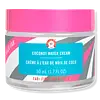 Key Ingredients
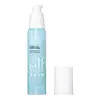
Benefits
Concerns
Ingredients Side-by-side
Cocos Nucifera Fruit Juice
EmollientGlucose
Humectant

Maltodextrin
Absorbent
Water
Skin ConditioningDimethicone
Emollient
Sodium Acrylate/Sodium Acryloyldimethyl Taurate Copolymer
Emulsion StabilisingCocos Nucifera Fruit Extract
EmollientSodium Hyaluronate
Humectant
Alteromonas Ferment Filtrate
HumectantPyrus Malus Fruit Extract
Skin Conditioning
Prunus Armeniaca Fruit Extract
Skin ConditioningVanilla Planifolia Fruit Extract
Skin Conditioning
Sea Salt
Abrasive




Lycium Barbarum Fruit Extract
Astringent
Glycyrrhiza Glabra Root Extract
Bleaching

Chrysanthemum Parthenium Extract
Skin ConditioningCamellia Sinensis Leaf Extract
Antimicrobial


Dipteryx Odorata Seed Extract
MaskingCoffea Arabica Seed Extract
Masking
Tocopherol
Antioxidant

Caprylyl Glycol
Emollient
Caprylic/Capric Triglyceride
Masking
Butylene Glycol
Humectant
Hydrogenated Polydecene
EmollientDipropylene Glycol
HumectantCetyl Diglyceryl Tris(Trimethylsiloxy)Silylethyl Dimethicone
Emulsion Stabilising
Polysilicone-11
Laureth-8
EmulsifyingPhenoxyethanol
Preservative
Cocos Nucifera Fruit Juice, Glucose, Maltodextrin, Water, Dimethicone, Sodium Acrylate/Sodium Acryloyldimethyl Taurate Copolymer, Cocos Nucifera Fruit Extract, Sodium Hyaluronate, Alteromonas Ferment Filtrate, Pyrus Malus Fruit Extract, Prunus Armeniaca Fruit Extract, Vanilla Planifolia Fruit Extract, Sea Salt, Lycium Barbarum Fruit Extract, Glycyrrhiza Glabra Root Extract, Chrysanthemum Parthenium Extract, Camellia Sinensis Leaf Extract, Dipteryx Odorata Seed Extract, Coffea Arabica Seed Extract, Tocopherol, Caprylyl Glycol, Caprylic/Capric Triglyceride, Butylene Glycol, Hydrogenated Polydecene, Dipropylene Glycol, Cetyl Diglyceryl Tris(Trimethylsiloxy)Silylethyl Dimethicone, Polysilicone-11, Laureth-8, Phenoxyethanol
Water
Skin ConditioningGlycerin
Humectant
Caprylic/Capric Triglyceride
Masking
Butylene Glycol
Humectant
Phenyl Trimethicone
Skin Conditioning
Diisostearyl Malate
EmollientJojoba Esters
Emollient
Sodium Acrylates Copolymer
Sodium Hyaluronate
Humectant
Hydrolyzed Sodium Hyaluronate
Skin Conditioning
Ceramide NP
Skin Conditioning
Ceramide AP
Skin Conditioning
Palmitoyl Tripeptide-1
Skin Conditioning
Palmitoyl Tetrapeptide-7
Skin Conditioning
Ceramide EOP
Skin Conditioning
Xylitylglucoside
Humectant
Anhydroxylitol
Humectant
Phenoxyethanol
Preservative
Hydrolyzed Jojoba Esters
Skin Conditioning
Lecithin
Emollient
Xylitol
Humectant
Tromethamine
BufferingAcrylates/C10-30 Alkyl Acrylate Crosspolymer
Emulsion StabilisingTocopherol
Antioxidant
Helianthus Annuus Seed Oil
Emollient
Caprylyl Glycol
Emollient
Ethylhexylglycerin
Skin ConditioningXanthan Gum
EmulsifyingDisodium EDTA
Saccharide Isomerate
Humectant
Sodium Citrate
BufferingCitric Acid
Buffering


Sodium Lauroyl Lactylate
EmulsifyingCarbomer
Emulsion StabilisingPhytosphingosine
Skin Conditioning
Polysorbate 20
Emulsifying
Cholesterol
Emollient
Geraniol
Perfuming

Linalool
Perfuming
Parfum
Masking
Water, Glycerin, Caprylic/Capric Triglyceride, Butylene Glycol, Phenyl Trimethicone, Diisostearyl Malate, Jojoba Esters, Sodium Acrylates Copolymer, Sodium Hyaluronate, Hydrolyzed Sodium Hyaluronate, Ceramide NP, Ceramide AP, Palmitoyl Tripeptide-1, Palmitoyl Tetrapeptide-7, Ceramide EOP, Xylitylglucoside, Anhydroxylitol, Phenoxyethanol, Hydrolyzed Jojoba Esters, Lecithin, Xylitol, Tromethamine, Acrylates/C10-30 Alkyl Acrylate Crosspolymer, Tocopherol, Helianthus Annuus Seed Oil, Caprylyl Glycol, Ethylhexylglycerin, Xanthan Gum, Disodium EDTA, Saccharide Isomerate, Sodium Citrate, Citric Acid, Sodium Lauroyl Lactylate, Carbomer, Phytosphingosine, Polysorbate 20, Cholesterol, Geraniol, Linalool, Parfum
Reviews
Ingredients Explained
These ingredients are found in both products.
Ingredients higher up in an ingredient list are typically present in a larger amount.
Butylene Glycol (or BG) is used within cosmetic products for a few different reasons:
Overall, Butylene Glycol is a safe and well-rounded ingredient that works well with other ingredients.
Though this ingredient works well with most skin types, some people with sensitive skin may experience a reaction such as allergic rashes, closed comedones, or itchiness.
Learn more about Butylene GlycolThis ingredient is an emollient, solvent, and texture enhancer. It is considered a skin-softener by helping the skin prevent moisture loss.
It helps thicken a product's formula and makes it easier to spread by dissolving clumping compounds.
Caprylic Triglyceride is made by combining glycerin with coconut oil, forming a clear liquid.
While there is an assumption Caprylic Triglyceride can clog pores due to it being derived from coconut oil, there is no research supporting this.
Learn more about Caprylic/Capric TriglycerideCaprylyl Glycol is a humectant and emollient, meaning it attracts and preserves moisture.
It is a common ingredient in many products, especially those designed to hydrate skin. The primary benefits are retaining moisture, skin softening, and promoting a healthy skin barrier.
Though Caprylyl Glycol is an alcohol derived from fatty acids, it is not the kind that can dry out skin.
This ingredient is also used as a preservative to extend the life of products. It has slight antimicrobial properties.
Learn more about Caprylyl GlycolPhenoxyethanol is a preservative that has germicide, antimicrobial, and aromatic properties. Studies show that phenoxyethanol can prevent microbial growth. By itself, it has a scent that is similar to that of a rose.
It's often used in formulations along with Caprylyl Glycol to preserve the shelf life of products.
Sodium Hyaluronate is hyaluronic acid's salt form. It is commonly derived from the sodium salt of hyaluronic acid.
Like hyaluronic acid, it is great at holding water and acts as a humectant. This makes it a great skin hydrating ingredient.
Sodium Hyaluronate is naturally occurring in our bodies and is mostly found in eye fluid and joints.
These are some other common types of Hyaluronic Acid:
Learn more about Sodium HyaluronateTocopherol (also known as Vitamin E) is a common antioxidant used to help protect the skin from free-radicals and strengthen the skin barrier. It's also fat soluble - this means our skin is great at absorbing it.
Vitamin E also helps keep your natural skin lipids healthy. Your lipid skin barrier naturally consists of lipids, ceramides, and fatty acids. Vitamin E offers extra protection for your skin’s lipid barrier, keeping your skin healthy and nourished.
Another benefit is a bit of UV protection. Vitamin E helps reduce the damage caused by UVB rays. (It should not replace your sunscreen). Combining it with Vitamin C can decrease sunburned cells and hyperpigmentation after UV exposure.
You might have noticed Vitamin E + C often paired together. This is because it is great at stabilizing Vitamin C. Using the two together helps increase the effectiveness of both ingredients.
There are often claims that Vitamin E can reduce/prevent scarring, but these claims haven't been confirmed by scientific research.
Learn more about TocopherolWater. It's the most common cosmetic ingredient of all. You'll usually see it at the top of ingredient lists, meaning that it makes up the largest part of the product.
So why is it so popular? Water most often acts as a solvent - this means that it helps dissolve other ingredients into the formulation.
You'll also recognize water as that liquid we all need to stay alive. If you see this, drink a glass of water. Stay hydrated!
Learn more about Water
