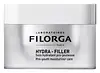
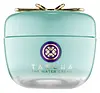
Filorga Hydra-Filler Versus Tatcha The Water Cream


What's inside
What's inside
 Key Ingredients
Benefits
Concerns
Ingredients Side-by-side
Ethylhexyl Palmitate
Emollient


Isodecyl Neopentanoate
EmollientGlycerin
Humectant


Pentaerythrityl Tetracaprylate/Tetracaprate
EmollientArachidyl Alcohol
Emollient
Behenyl Alcohol
Emollient
Polymethyl Acrylate
Ammonium Acryloyldimethyltaurate/Vp Copolymer
Sodium Hyaluronate
Humectant


1,2-Hexanediol
Skin Conditioning
Sucrose Palmitate
EmollientGlyceryl Stearate
Emollient
PEG-100 Stearate
Surfactant
Caprylic/Capric Triglyceride
Masking
Chlorphenesin
Antimicrobial
Sorbitan Oleate
Emulsifying
Glyceryl Linoleate
Emollient
Prunus Amygdalus Dulcis Oleosomes
EmollientSesamum Indicum Seed
Abrasive
Biosaccharide Gum-1
Humectant
Sorbitan Laurate
Emulsifying
Levulinic Acid
Perfuming
Polyglyceryl-10 Laurate
Skin Conditioning
Salicornia Herbacea Extract
Skin ConditioningSodium Hydroxide
BufferingMagnesium Sulfate
Glutamine
Skin ConditioningTocopherol
Antioxidant



Lysine Hcl
Skin Conditioning
Arginine Hcl
Skin ConditioningAlanine
Masking
Histidine Hcl
Skin ConditioningValine
MaskingLeucine
Skin ConditioningIsoleucine
Skin ConditioningTryptophan
MaskingPhenylalanine
Masking
Tyrosine
MaskingPolysorbate 80
Emulsifying
Serine
Masking
Cystine
MaskingCyanocobalamin
Skin ConditioningGlutathione
Asparagine
MaskingNicotinamide Adenine Dinucleotide
Skin ConditioningProline
Skin Conditioning
Methionine
Skin ConditioningTaurine
BufferingHydroxyproline
Skin ConditioningGlucosamine Hcl
Retinyl Acetate
Skin Conditioning
Inositol
Humectant
Niacin
SmoothingNiacinamide
Smoothing





Pyridoxine Hcl
Skin ConditioningBiotin
AntiseborrhoeicRiboflavin
Cosmetic ColorantEthylhexyl Palmitate, Isodecyl Neopentanoate, Glycerin, Pentaerythrityl Tetracaprylate/Tetracaprate, Arachidyl Alcohol, Behenyl Alcohol, Polymethyl Acrylate, Ammonium Acryloyldimethyltaurate/Vp Copolymer, Sodium Hyaluronate, 1,2-Hexanediol, Sucrose Palmitate, Glyceryl Stearate, PEG-100 Stearate, Caprylic/Capric Triglyceride, Chlorphenesin, Sorbitan Oleate, Glyceryl Linoleate, Prunus Amygdalus Dulcis Oleosomes, Sesamum Indicum Seed, Biosaccharide Gum-1, Sorbitan Laurate, Levulinic Acid, Polyglyceryl-10 Laurate, Salicornia Herbacea Extract, Sodium Hydroxide, Magnesium Sulfate, Glutamine, Tocopherol, Lysine Hcl, Arginine Hcl, Alanine, Histidine Hcl, Valine, Leucine, Isoleucine, Tryptophan, Phenylalanine, Tyrosine, Polysorbate 80, Serine, Cystine, Cyanocobalamin, Glutathione, Asparagine, Nicotinamide Adenine Dinucleotide, Proline, Methionine, Taurine, Hydroxyproline, Glucosamine Hcl, Retinyl Acetate, Inositol, Niacin, Niacinamide, Pyridoxine Hcl, Biotin, Riboflavin
Water
Skin ConditioningSaccharomyces/Rice Ferment Filtrate
Skin Conditioning
Dimethicone
Emollient
Propanediol
Solvent
Glycerin
Humectant
Diglycerin
Humectant
Diphenylsiloxy Phenyl Trimethicone
Skin Conditioning
Camellia Sinensis Leaf Extract
Antimicrobial
Cladosiphon Okamuranus Extract
Skin ConditioningPEG-9 Polydimethylsiloxyethyl Dimethicone
Emulsifying
Gold
Cosmetic ColorantBelamcanda Chinensis Root Extract
Skin ConditioningRosa Multiflora Fruit Extract
MaskingHouttuynia Cordata Extract
Skin Conditioning
Sophora Angustifolia Root Extract
Skin ConditioningSodium Hyaluronate
Humectant
Lecithin
Emollient
Pistacia Lentiscus Gum
MaskingSodium Chloride
MaskingSodium Citrate
BufferingMica
Cosmetic ColorantTin Oxide
Abrasive
Dimethicone/PEG-10/15 Crosspolymer
Dimethicone/Phenyl Vinyl Dimethicone Crosspolymer
Tocopherol
Antioxidant
Butylene Glycol
Humectant
Ethylhexylglycerin
Skin ConditioningDipropylene Glycol
HumectantParfum
Masking


Alcohol
Antimicrobial


Phenoxyethanol
Preservative
Limonene
Perfuming
Linalool
Perfuming
Citral
Perfuming
CI 77891
Cosmetic ColorantWater, Saccharomyces/Rice Ferment Filtrate, Dimethicone, Propanediol, Glycerin, Diglycerin, Diphenylsiloxy Phenyl Trimethicone, Camellia Sinensis Leaf Extract, Cladosiphon Okamuranus Extract, PEG-9 Polydimethylsiloxyethyl Dimethicone, Gold, Belamcanda Chinensis Root Extract, Rosa Multiflora Fruit Extract, Houttuynia Cordata Extract, Sophora Angustifolia Root Extract, Sodium Hyaluronate, Lecithin, Pistacia Lentiscus Gum, Sodium Chloride, Sodium Citrate, Mica, Tin Oxide, Dimethicone/PEG-10/15 Crosspolymer, Dimethicone/Phenyl Vinyl Dimethicone Crosspolymer, Tocopherol, Butylene Glycol, Ethylhexylglycerin, Dipropylene Glycol, Parfum, Alcohol, Phenoxyethanol, Limonene, Linalool, Citral, CI 77891
Reviews
Ingredients Explained
These ingredients are found in both products.
Ingredients higher up in an ingredient list are typically present in a larger amount.
Glycerin (or glycerol) is a compound naturally found in your skin. It's a powerhouse humectant that pulls water into the stratum corneum.
Topically, glycerin does several things at once:
Your skin makes glycerin on its own (mostly from sebaceous oil breakdown) and shuttles it to your outermost layer of skin, or your epidermis, via aquaporin-3.
Aquaporin-3 is a transporter that is essential for normal skin hydration, elasticity, and repair. Interestingly, mice lacking in AQP3 have dry and less elastic skin that can be fully corrected with glycerin.
This ingredient is non-irritating, plays well with almost every ingredient, and works across all skin types. Typical use is anywhere between 3-10% but can go up to 79% in some leave-on products.
Just know very high concentrations (>40%) can feel tacky in low humidity.
Glycerin is the name for this ingredient in American English. British English uses Glycerol/Glycerine.
Learn more about GlycerinSodium Hyaluronate is the salt form of hyaluronic acid. It is a long sugar chain that is naturally found in your skin, joints, and connective tissue that maintains hydration and elasticity.
In skincare, it works as a humectant. It pulls water from the environment and deeper layers of skin and binds it to the surface.
Interestingly, the size of the molecule affects its behavior:
Some clinical evidence links low molecular weight versions to improved wrinkle depth, elasticity, anti-inflammatory effects, and barrier repair.
Many serums use a blend of both weights so you can get surface hydration plus longer-lasting and deeper effects.
You'll typically see concentrations between 0.1-2% for this ingredient.
Learn more about Sodium HyaluronateTocopherol is a fat-soluble antioxidant known as Vitamin E.
You'll find this ingredient in the vast majority of skincare (for good reason). It works to neutralize free radicals, or unstable molecules generated by UV exposure, pollution, and other environmental stressors, before they can cause oxidative damage to your skin cells.
Topically applied tocopherol has been shown to protect against UV damage by ramping up the skin's own natural defense enzymes.
It also acts as a skin conditioning agent; some studies show that regular topical use can improve the skin's water-binding capacity over 2-4 weeks.
This ingredient is especially loved for being a team player. When combined with Vitamin C, the photoprotective effect of both ingredients roughly doubles and the combo also helps reduce UV-induced DNA damage.
This ingredient has some brightening potential but it's more of a prevention ingredient than spot-fader. Cell studies show it can slow down melanin production but it's worth noting that it's not the most powerful brightener out there.
In formulations, it also serves as a stabilizer that helps protect other oxidation-prone ingredients from degrading.
Concentrations usually range from 0.1-1% in most leave-on products.
Learn more about Tocopherol
