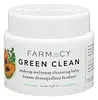
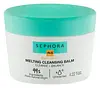
Farmacy Green Clean Makeup Meltaway Cleansing Balm Versus Sephora Collection Melting Cleansing Balm with Algae Extract
This oil-based makeup remover is made to dissolve makeup, sunscreen, and daily buildup.
This oil-based makeup remover is made to dissolve makeup, sunscreen, and daily buildup.


What's inside
What's inside
 Key Ingredients
Benefits
Concerns
Ingredients Side-by-side
Cetyl Ethylhexanoate
EmollientCaprylic/Capric Triglyceride
Masking


PEG-20 Glyceryl Triisostearate
Emollient

PEG-10 Isostearate
Emulsifying
Polyethylene
Abrasive

Echinacea Purpurea Root Extract
MoisturisingCarica Papaya Fruit Extract
Skin ConditioningMoringa Oleifera Seed Extract
Skin Conditioning
Moringa Oleifera Seed Oil
Emollient

Zingiber Officinale Root Oil
Masking


Helianthus Annuus Seed Oil
Emollient
Sorbitan Sesquioleate
Emulsifying
Citrus Aurantifolia Oil
Cleansing
Citrus Aurantium Bergamia Fruit Oil
Masking
Glycerin
Humectant
Melia Azadirachta Leaf Extract
Skin ConditioningMelia Azadirachta Flower Extract
Skin ConditioningCorallina Officinalis Extract
Skin Conditioning
Citrus Aurantium Dulcis Peel Oil
Masking
Amber Powder
Cananga Odorata Flower Oil
Masking
Coccinia Indica Fruit Extract
Skin Conditioning
Solanum Melongena Fruit Extract
Skin ConditioningCurcuma Longa Root Extract
Antioxidant
Ocimum Sanctum Leaf Extract
Skin ConditioningWater
Skin ConditioningButylene Glycol
Humectant
Disodium Phosphate
BufferingCitric Acid
Buffering

Phenoxyethanol
Preservative
Citral
Perfuming
Limonene
Perfuming
Linalool
Perfuming
Cetyl Ethylhexanoate, Caprylic/Capric Triglyceride, PEG-20 Glyceryl Triisostearate, PEG-10 Isostearate, Polyethylene, Echinacea Purpurea Root Extract, Carica Papaya Fruit Extract, Moringa Oleifera Seed Extract, Moringa Oleifera Seed Oil, Zingiber Officinale Root Oil, Helianthus Annuus Seed Oil, Sorbitan Sesquioleate, Citrus Aurantifolia Oil, Citrus Aurantium Bergamia Fruit Oil, Glycerin, Melia Azadirachta Leaf Extract, Melia Azadirachta Flower Extract, Corallina Officinalis Extract, Citrus Aurantium Dulcis Peel Oil, Amber Powder, Cananga Odorata Flower Oil, Coccinia Indica Fruit Extract, Solanum Melongena Fruit Extract, Curcuma Longa Root Extract, Ocimum Sanctum Leaf Extract, Water, Butylene Glycol, Disodium Phosphate, Citric Acid, Phenoxyethanol, Citral, Limonene, Linalool
Helianthus Annuus Seed Oil
Emollient
Glycerin
Humectant
Hydrogenated Castor Oil
Emollient
Polyglyceryl-3 Caprate
EmulsifyingTribehenin
Emollient
Water
Skin ConditioningCoco-Caprylate/Caprate
Emollient
Behenyl Alcohol
Emollient
Polyglyceryl-4 Caprate
EmulsifyingCaprylyl Glycol
Emollient
Cocamidopropyl Betaine
Cleansing
Polyglyceryl-3 Stearate
Emulsifying
Maris Aqua
HumectantTocopherol
Antioxidant


Sodium Chloride
MaskingHydrolyzed Algin
Sodium Benzoate
Masking
Phenethyl Alcohol
MaskingLaminaria Digitata Extract
Skin Protecting
Chlorella Vulgaris Extract
Skin ConditioningSaccharide Isomerate
Humectant
Citric Acid
Buffering
CI 42090
Cosmetic ColorantHelianthus Annuus Seed Oil, Glycerin, Hydrogenated Castor Oil, Polyglyceryl-3 Caprate, Tribehenin, Water, Coco-Caprylate/Caprate, Behenyl Alcohol, Polyglyceryl-4 Caprate, Caprylyl Glycol, Cocamidopropyl Betaine, Polyglyceryl-3 Stearate, Maris Aqua, Tocopherol, Sodium Chloride, Hydrolyzed Algin, Sodium Benzoate, Phenethyl Alcohol, Laminaria Digitata Extract, Chlorella Vulgaris Extract, Saccharide Isomerate, Citric Acid, CI 42090
Reviews
Ingredients Explained
These ingredients are found in both products.
Ingredients higher up in an ingredient list are typically present in a larger amount.
Citric Acid is an alpha hydroxy acid (AHA) naturally found in citrus fruits like oranges, lemons, and limes.
Like other AHAs, citric acid can exfoliate skin by breaking down the bonds that hold dead skin cells together. This helps reveal smoother and brighter skin underneath.
However, this exfoliating effect only happens at high concentrations (20%) which can be hard to find in cosmetic products.
Due to this, citric acid is usually included in small amounts as a pH adjuster. This helps keep products slightly more acidic and compatible with skin's natural pH.
In skincare formulas, citric acid can:
While it can provide some skin benefits, research shows lactic acid and glycolic acid are generally more effective and less irritating exfoliants.
Most citric acid used in skincare today is made by fermenting sugars (usually from molasses). This synthetic version is identical to the natural citrus form but easier to stabilize and use in formulations.
Rosacea skin has a lower threshold for acids generally, with 62.5% of rosacea subjects in one study reacting to lactic acid in a sting test. This is why we mark citric acid as a potential rosacea trigger.
However, this ingredient shows up as a pH adjuster or chelator at roughly 0.1-1% in many products. These low levels are unlikely to be an issue for rosacea skin and becomes a potential trigger at exfoliating concentrations (20%). Because everybody's skin is unique, we recommend a patch test if you are unsure.
Learn more about Citric AcidGlycerin (or glycerol) is a compound naturally found in your skin. It's a powerhouse humectant that pulls water into the stratum corneum.
Topically, glycerin does several things at once:
Your skin makes glycerin on its own (mostly from sebaceous oil breakdown) and shuttles it to your outermost layer of skin, or your epidermis, via aquaporin-3.
Aquaporin-3 is a transporter that is essential for normal skin hydration, elasticity, and repair. Interestingly, mice lacking in AQP3 have dry and less elastic skin that can be fully corrected with glycerin.
This ingredient is non-irritating, plays well with almost every ingredient, and works across all skin types. Typical use is anywhere between 3-10% but can go up to 79% in some leave-on products.
Just know very high concentrations (>40%) can feel tacky in low humidity.
Glycerin is the name for this ingredient in American English. British English uses Glycerol/Glycerine.
Learn more about GlycerinHelianthus Annuus Seed Oil is a plant oil derived from the seeds of a sunflower.
It is rich in fatty acids, primarily linoleic acid and oleic acid. This gives it emollient and skin conditioning properties.
The reason this ingredient is so effective is because it forms a thin film on the skin that reduces transepidermal water loss (TEWL) while supplying linoleic acid to the stratum corneum to improve barrier strength.
The high linoleic acid content is particularly noteworthy for acne-prone skin.
Research suggests that acne-prone skin tends to be deficient in linoleic acid in sebum. Topical application may help replenish this to support a healthier follicular environment and less comedone-promoting sebum.
One randomized study found sunflower seed oil preserved skin barrier integrity in adult volunteers with and without atopic dermatitis (outperforming olive oil).
This ingredient is well-studied, gentle, and an effective emollient suitable for most skin types.
On fungal acne: This ingredient may not be Fungal acne (Malassezia folliculitis) safe. This is because it contains fatty acids with carbon chain lengths in the C11-C24 range.
Learn more about Helianthus Annuus Seed OilWater. It's the most common cosmetic ingredient of all. You'll usually see it at the top of ingredient lists, meaning that it makes up the largest part of the product.
So why is it so popular? Water most often acts as a solvent - this means that it helps dissolve other ingredients into the formulation.
You'll also recognize water as that liquid we all need to stay alive. If you see this, drink a glass of water. Remember to stay hydrated!
Learn more about Water

