Farmacy Green Clean Cleansing Balm Versus e.l.f. cosmetics Holy Hydration! Makeup Melting Cleansing Balm
This oil-based makeup remover is made to dissolve makeup, sunscreen, and daily buildup.
This oil-based makeup remover is made to dissolve makeup, sunscreen, and daily buildup.

What's inside
What's inside
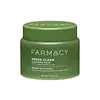 Key Ingredients
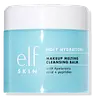
Benefits
Concerns
Ingredients Side-by-side
Cetyl Ethylhexanoate
EmollientHelianthus Annuus Seed Oil
Emollient



Polyglyceryl-6 Dicaprate
EmulsifyingHelianthus Annuus Seed Wax
Skin Conditioning
Polyglyceryl-10 Dioleate
Emulsifying
Stearyl Behenate
Emollient
C10-18 Triglycerides
Emollient
Polyhydroxystearic Acid
Emulsifying
Moringa Oleifera Seed Oil
Emollient


Ocimum Sanctum Leaf Extract
Skin ConditioningEruca Sativa Leaf Extract
Skin ConditioningCarica Papaya Fruit Extract
Skin ConditioningZingiber Officinale Root Oil
Masking


Linum Usitatissimum Seed Oil
Perfuming
Brassica Campestris Seed Oil
Skin Conditioning
Sorbitan Sesquioleate
Emulsifying
Citrus Aurantium Dulcis Peel Oil
Masking
Cananga Odorata Flower Oil
Masking
Citrus Aurantium Bergamia Fruit Oil
Masking
Citrus Aurantifolia Oil
Cleansing
Stearoyl Glutamic Acid
CleansingCaprylic/Capric Triglyceride
Masking

Glyceryl Laurate
Emollient
Tocopherol
Antioxidant





Lecithin
Emollient
CI 77288
Cosmetic ColorantCitral
Perfuming
Limonene
Perfuming
Linalool
Perfuming
Cetyl Ethylhexanoate, Helianthus Annuus Seed Oil, Polyglyceryl-6 Dicaprate, Helianthus Annuus Seed Wax, Polyglyceryl-10 Dioleate, Stearyl Behenate, C10-18 Triglycerides, Polyhydroxystearic Acid, Moringa Oleifera Seed Oil, Ocimum Sanctum Leaf Extract, Eruca Sativa Leaf Extract, Carica Papaya Fruit Extract, Zingiber Officinale Root Oil, Linum Usitatissimum Seed Oil, Brassica Campestris Seed Oil, Sorbitan Sesquioleate, Citrus Aurantium Dulcis Peel Oil, Cananga Odorata Flower Oil, Citrus Aurantium Bergamia Fruit Oil, Citrus Aurantifolia Oil, Stearoyl Glutamic Acid, Caprylic/Capric Triglyceride, Glyceryl Laurate, Tocopherol, Lecithin, CI 77288, Citral, Limonene, Linalool
Cetyl Ethylhexanoate
EmollientCaprylic/Capric Triglyceride
Masking
Hydrogenated Polydecene
EmollientPEG-20 Glyceryl Triisostearate
Emollient
Polyethylene
Abrasive
PEG-10 Isostearate
Emulsifying
Helianthus Annuus Seed Oil
Emollient
Hydrogenated Sunflower Seed Oil
Skin Conditioning
Palmitoyl Tripeptide-1
Skin Conditioning


Palmitoyl Tetrapeptide-7
Skin Conditioning
Ceramide NP
Skin Conditioning
Ceramide AP
Skin Conditioning
Ceramide EOP
Skin Conditioning
Hydrolyzed Sodium Hyaluronate
Skin Conditioning
Phytosphingosine
Skin Conditioning
Glycerin
Humectant
Butylene Glycol
Humectant
Water
Skin ConditioningPolysorbate 20
Emulsifying
Carbomer
Emulsion StabilisingXanthan Gum
EmulsifyingCholesterol
Emollient
Sodium Lauroyl Lactylate
EmulsifyingPhenoxyethanol
Preservative
Ethylhexylglycerin
Skin ConditioningCaprylyl Glycol
Emollient
Geraniol
Perfuming
Linalool
Perfuming
Parfum
Masking
Cetyl Ethylhexanoate, Caprylic/Capric Triglyceride, Hydrogenated Polydecene, PEG-20 Glyceryl Triisostearate, Polyethylene, PEG-10 Isostearate, Helianthus Annuus Seed Oil, Hydrogenated Sunflower Seed Oil, Palmitoyl Tripeptide-1, Palmitoyl Tetrapeptide-7, Ceramide NP, Ceramide AP, Ceramide EOP, Hydrolyzed Sodium Hyaluronate, Phytosphingosine, Glycerin, Butylene Glycol, Water, Polysorbate 20, Carbomer, Xanthan Gum, Cholesterol, Sodium Lauroyl Lactylate, Phenoxyethanol, Ethylhexylglycerin, Caprylyl Glycol, Geraniol, Linalool, Parfum
Reviews
Ingredients Explained
These ingredients are found in both products.
Ingredients higher up in an ingredient list are typically present in a larger amount.
Caprylic/Capric Triglyceride (aka MCT Oil) is a lightweight emollient, solvent, and texture enhancer. It is considered a skin-softener by helping to prevent moisture loss.
Though it behaves like an oil, it is not technically one due to its chemical composition. One perk of this ingredient is that it is very stable, resistant to oxidation, and unlikely to go rancid.
In practice, that translates to a long shelf life and a consistently elegant skin feel.
While there is an assumption Caprylic Triglyceride can clog pores due to it being derived from coconut oil, there is no research supporting this. Just patch test if you have concerns.
Fractionated coconut oil and MCT Oil are both listed as Caprylic/Capric Triglyceride according to INCI. This is because INCI names are based on the ingredient’s final chemical composition and not its marketing name or source.
This ingredient is treated as the gold standard fungal acne safe oil. Even though it is coconut derived, the problematic lauric acid is stripped out.
This leaves just caprylic (C8) and capric (C10) acid. These chain lengths actually trend antifungal; a 2020 study found caprylic acid was enough to disrupt Malassezia furfur cell membrane, with a caprylic acid derivative damaging membrane structures at concentrations as low as 0.2%.
Learn more about Caprylic/Capric TriglycerideCetyl Ethylhexanoate is an emollient ester. It comes from cetearyl alcohol and 2-ethylhexanoic acid.
Cetyl Ethylhexanoate is an emollient that adds a velvety feel to skin without being greasy or oily. Emollients help trap moisture into your skin, keeping your skin soft and hydrated.
Helianthus Annuus Seed Oil is a plant oil derived from the seeds of a sunflower.
It is rich in fatty acids, primarily linoleic acid and oleic acid. This gives it emollient and skin conditioning properties.
The reason this ingredient is so effective is because it forms a thin film on the skin that reduces transepidermal water loss (TEWL) while supplying linoleic acid to the stratum corneum to improve barrier strength.
The high linoleic acid content is particularly noteworthy for acne-prone skin.
Research suggests that acne-prone skin tends to be deficient in linoleic acid in sebum. Topical application may help replenish this to support a healthier follicular environment and less comedone-promoting sebum.
One randomized study found sunflower seed oil preserved skin barrier integrity in adult volunteers with and without atopic dermatitis (outperforming olive oil).
This ingredient is well-studied, gentle, and an effective emollient suitable for most skin types.
On fungal acne: This ingredient may not be Fungal acne (Malassezia folliculitis) safe. This is because it contains fatty acids with carbon chain lengths in the C11-C24 range.
Learn more about Helianthus Annuus Seed OilLinalool is a small, naturally occurring scent molecule found in plants like lavender, coriander, bergamot, and more.
It is one of the two most-used fragrance ingredients in cosmetics and added purely for smell. Since it's not used for a skin benefit, there's no "effective dose". Concentration depends on the fragrance load of the product.
The EU requires it to be named on the label above 0.001% in leave-on and 0.01% in rinse-off products.
Fresh linalool is a weak sensitizer but air exposure turns some of it into hydroperoxides, which are strong sensitizers. Those oxidation products are the actual allergy concern.
Patch-test clinics see positive reactions to linalool hydroperoxides in about 4% to 12% of dermatitis patients depending on country and test concentration.
Resassuringly, one analytical study found hydroperoxide levels in real fragranced products to be orders of magnitude below what induced sensitization in animal studies with no evidence of oxidation building up during normal storage.
The practical takeaway is that linalool is fine for most people but worth avoiding if you have a confirmed fragrance contact allergy or a badly compromised barrier.
Products stored a long time after opening are also the high-risk scenario since that is when oxidation happens.
The scent of linalool is described as floral, spicy tropical, and citrus-like.
Learn more about Linalool

