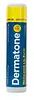
This lip moisturizer is formulated around Dimethicone and Petrolatum to hydrate lips.
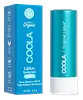
This lip moisturizer is formulated around Aloe Barbadensis Leaf Extract to hydrate lips.

What's inside
What's inside
 Key Ingredients
Benefits
Concerns
Ingredients Side-by-side
Butyl Methoxydibenzoylmethane 3%
UV Absorber
Homosalate 8.2%
Skin Conditioning
Ethylhexyl Methoxycinnamate 7.5%
UV Absorber
Octocrylene 7%
UV Absorber
Dimethicone 2%
Emollient

Ozokerite
Emulsion StabilisingParaffinum Liquidum
Emollient

Petrolatum
Emollient
Synthetic Beeswax
Emulsion Stabilising

Microcrystalline Wax
Emulsion StabilisingLanolin
Emollient
Phenyl Trimethicone
Skin Conditioning
Euphorbia Cerifera Wax
Parfum
Masking

Menthol
Masking

Phenol
Tocopheryl Acetate
Antioxidant


Retinyl Palmitate
Skin Conditioning

Helianthus Annuus Seed Oil
Emollient
Theobroma Cacao Seed Butter
Emollient
Aloe Barbadensis Leaf Extract
Emollient

Melaleuca Alternifolia Leaf Oil
Antioxidant


Butyl Methoxydibenzoylmethane 3%, Homosalate 8.2%, Ethylhexyl Methoxycinnamate 7.5%, Octocrylene 7%, Dimethicone 2%, Ozokerite, Paraffinum Liquidum, Petrolatum, Synthetic Beeswax, Microcrystalline Wax, Lanolin, Phenyl Trimethicone, Euphorbia Cerifera Wax, Parfum, Menthol, Phenol, Tocopheryl Acetate, Retinyl Palmitate, Helianthus Annuus Seed Oil, Theobroma Cacao Seed Butter, Aloe Barbadensis Leaf Extract, Melaleuca Alternifolia Leaf Oil
Butyl Methoxydibenzoylmethane 2.9%
UV Absorber
Ethylhexyl Salicylate 4.9%
UV Absorber
Octocrylene 7.6%
UV Absorber
Aloe Barbadensis Leaf Extract
Emollient
Astrocaryum Vulgare Kernel Oil
Skin Conditioning
Behenyl Behenate
EmollientButyloctyl Salicylate
Skin Conditioning
Caprylic/Capric Triglyceride
Masking

Carthamus Tinctorius Seed Oil
Masking
Cocos Nucifera Oil
Masking
Copernicia Cerifera Wax
Euphorbia Cerifera Wax
Aroma
Helianthus Annuus Seed Oil
Emollient
Linoleic Acid
Cleansing
Persea Gratissima Oil
Skin Conditioning
Phospholipids
Skin Conditioning
Phytosterols
Skin Conditioning
Polyhydroxystearic Acid
Emulsifying
Ricinus Communis Seed Oil
Masking
Rosa Canina Fruit Extract
Astringent
Rosmarinus Officinalis Leaf Extract
AntimicrobialRubus Idaeus Seed Oil
Emollient
Simmondsia Chinensis Seed Oil
Emollient
Stevia Rebaudiana Extract
Tetrahexyldecyl Ascorbate
Antioxidant


Theobroma Grandiflorum Seed Butter
Skin Conditioning
Tocopherol
Antioxidant
Butyl Methoxydibenzoylmethane 2.9%, Ethylhexyl Salicylate 4.9%, Octocrylene 7.6%, Aloe Barbadensis Leaf Extract, Astrocaryum Vulgare Kernel Oil, Behenyl Behenate, Butyloctyl Salicylate, Caprylic/Capric Triglyceride, Carthamus Tinctorius Seed Oil, Cocos Nucifera Oil, Copernicia Cerifera Wax, Euphorbia Cerifera Wax, Aroma, Helianthus Annuus Seed Oil, Linoleic Acid, Persea Gratissima Oil, Phospholipids, Phytosterols, Polyhydroxystearic Acid, Ricinus Communis Seed Oil, Rosa Canina Fruit Extract, Rosmarinus Officinalis Leaf Extract, Rubus Idaeus Seed Oil, Simmondsia Chinensis Seed Oil, Stevia Rebaudiana Extract, Tetrahexyldecyl Ascorbate, Theobroma Grandiflorum Seed Butter, Tocopherol
Reviews
Ingredients Explained
These ingredients are found in both products.
Ingredients higher up in an ingredient list are typically present in a larger amount.
Aloe Barbadensis Leaf Extract is a botanical extract pulled from the leaves of aloe vera and one of the most studied plant ingredients in cosmetics.
The inner leaf gel it comes from is mostly water (~99-99.5%) and the remaining fraction is made up of pretty good stuff: polysaccharides, vitamins, phenolics, and enzymes.
Its headline job is hydration.
The star polysaccharide in aloe, acemannan, is a humectant that retains moisture and helps reduce trans-epidermal water loss.
Aloe also has real soothing credentials; it contains anti-inflammatory compounds like bradykinase and C-glucosyl chromone that help calm irritation and redness.
On the repair side, lab work shows that acemannan wakes up your skin's repair cells (fibroblasts), prompting them to multiply and speed up healing.
There's some human data for cosmetic benefit too: a cream containing 10% Aloe Barbadensis leaf extract improved skin hydration and elasticity in a real-use study.
Safety-wise, this ingredient is well-regarded with just one rare downside; there have been some case reports of acute eczema, contact urticaria, and dermatitis in people who applied aloe-derived ingredients topically. Those with a known aloe or Liliaceae sensitivity should patch test.
Typical use levels range widely, from under 1% up to 90%+ depending on the format and the effect you are after.
Learn more about Aloe Barbadensis Leaf ExtractAlso known as Avobenzone, this ingredient is an oil-soluble used to absorb the full spectrum of UVA rays (peak 357 nm).
It's one of the most effective UVA filters available but has a major caveat of photostability: avobenzone is susceptible to photodegradation.
This means it can lose efficacy when exposed to sunlight without the help of a stabilizing agent.
Studies show antioxidants (like vitamin E or vitamin C) and some UV filters (like octocrylene and Tinosorb S) can meaningfully improve its stability in a formulation.
The maximum allowable concentration according to regulation is 3% in the US + Canada, and 5% in the EU, Australia, China, Korea, and ASEAN countries.
It has a well-support safety profile: a comprehensive 2025 review found minimal toxicity with no evidence of carcinogenicity.
Overall, avobenzone is a safe and regulated ingredient used in sunscreen for over 40 years.
Learn more about Butyl MethoxydibenzoylmethaneHelianthus Annuus Seed Oil is a plant oil derived from the seeds of a sunflower.
It is rich in fatty acids, primarily linoleic acid and oleic acid. This gives it emollient and skin conditioning properties.
The reason this ingredient is so effective is because it forms a thin film on the skin that reduces transepidermal water loss (TEWL) while supplying linoleic acid to the stratum corneum to improve barrier strength.
The high linoleic acid content is particularly noteworthy for acne-prone skin.
Research suggests that acne-prone skin tends to be deficient in linoleic acid in sebum. Topical application may help replenish this to support a healthier follicular environment and less comedone-promoting sebum.
One randomized study found sunflower seed oil preserved skin barrier integrity in adult volunteers with and without atopic dermatitis (outperforming olive oil).
This ingredient is well-studied, gentle, and an effective emollient suitable for most skin types.
On fungal acne: This ingredient may not be Fungal acne (Malassezia folliculitis) safe. This is because it contains fatty acids with carbon chain lengths in the C11-C24 range.
Learn more about Helianthus Annuus Seed OilOctocrylene is an oil-soluble organic UV filter that mainly absorbs UVB and short wave UVA II light.
Its real superpower is teamwork: octocrylene is remarkably photostable and is most famous for stabilizing avobenzone (the workhorse UVA filter).
This ingredient is commonly used to enhance both UVB and UVA protection due to its unique property in stabilizing avobenzone. It also pulls double duty by boosting water resistance and giving formulas a smooth, spreadable feel.
The EU's Scientific Committee on Consumer Safety (SCCS) has deemed octocrylene to be safe as a UV-filter at concentrations up to 10% (capped at 9% in propellant sprays). The US also permits it up to 10%.
Two things worth knowing:
You'll usually see this ingredient used in concentrations between 2-10% (higher amounts when used as a stabilizer for avobenzone).
Learn more about OctocryleneEuphorbia Cerifera Wax (aka candelilla wax) is a vegan stand-in for beeswax. It is a plant-derived wax that functions as an astringent, emulsion stabilizer, film-former, and skin conditioner.
On skin, it forms a protective barrier that helps lock in moisture while it enhances product stability, prevents separation, and helps color last longer in makeup.
This ingredient is generally safe for use in cosmetics with one nuance: some grades of candelilla wax can naturally contain benzyl alcohol at concentrations high enough to require declaration under EU labeling rules. This isn't a concern for most people but relevant for those with fragrance sensitivities.
Candelilla wax contains fatty acids (mainly C31) and wax esters that can be used by the Malassezia yeast, so this ingredient may not be fungal acne safe.
You might see Euphorbia Cerifera "Cera" instead of "wax". This is because some brands, databases, or labels use it interchangeably; they're the same ingredient.
Learn more about Euphorbia Cerifera Wax

