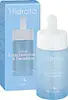
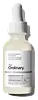
Deliplus Hidrata - Sérum Ácido Hialurónico And Ceramidas Versus The Ordinary Hyaluronic Acid 2% + B5 Serum
This hydrating serum is formulated around Sodium Hyaluronate and Retinal to hydrate skin and strengthen the skin barrier.
This hydrating serum is formulated around Sodium Hyaluronate and Panthenol to hydrate skin and strengthen the skin barrier.


What's inside
What's inside
 Key Ingredients
Benefits
Concerns
Ingredients Side-by-side
Water
Skin ConditioningBis-PEG-18 Methyl Ether Dimethyl Silane
EmollientHydrogenated Polydecene
EmollientCeteth-20
CleansingPropanediol
Solvent

C12-15 Alkyl Benzoate
AntimicrobialCyclopentasiloxane
Emollient
Glyceryl Stearate
Emollient

Phosphatidylcholine
EmulsifyingSodium Hyaluronate
Humectant


Retinal
Skin Conditioning








Retinol
Skin Conditioning
Ceramide AP
Skin Conditioning

Ceramide EOP
Skin Conditioning
Ceramide NP
Skin Conditioning
Phytosphingosine
Skin Conditioning
Cholesterol
Emollient
Ammonium Acryloyldimethyltaurate/Vp Copolymer
Alcohol
Antimicrobial


Alpha-Isomethyl Ionone
Perfuming


BHA
Antioxidant
BHT
Antioxidant
Carbomer
Emulsion StabilisingCetearyl Alcohol
Emollient



Disodium EDTA
ChelatingEthylhexylglycerin
Skin ConditioningPolysorbate 20
Emulsifying
Retinyl Palmitate
Skin Conditioning
Sodium Chloride
MaskingSodium Cholate
Skin ConditioningSodium Lauroyl Lactylate
EmulsifyingTocopherol
Antioxidant
Tocopheryl Acetate
Antioxidant
Xanthan Gum
EmulsifyingParfum
Masking
Phenoxyethanol
Preservative
Water, Bis-PEG-18 Methyl Ether Dimethyl Silane, Hydrogenated Polydecene, Ceteth-20, Propanediol, C12-15 Alkyl Benzoate, Cyclopentasiloxane, Glyceryl Stearate, Phosphatidylcholine, Sodium Hyaluronate, Retinal, Retinol, Ceramide AP, Ceramide EOP, Ceramide NP, Phytosphingosine, Cholesterol, Ammonium Acryloyldimethyltaurate/Vp Copolymer, Alcohol, Alpha-Isomethyl Ionone, BHA, BHT, Carbomer, Cetearyl Alcohol, Disodium EDTA, Ethylhexylglycerin, Polysorbate 20, Retinyl Palmitate, Sodium Chloride, Sodium Cholate, Sodium Lauroyl Lactylate, Tocopherol, Tocopheryl Acetate, Xanthan Gum, Parfum, Phenoxyethanol
Water
Skin ConditioningSodium Hyaluronate
Humectant
Propanediol
Solvent
Pentylene Glycol
Skin Conditioning
Hydrolyzed Hyaluronic Acid
Humectant
Sodium Hyaluronate Crosspolymer
Humectant
Phospholipids
Skin Conditioning
Sphingolipids
Emollient
Panthenol
Skin Conditioning
Ahnfeltiopsis Concinna Extract
Skin Conditioning
Glycerin
Humectant
Polysorbate 20
Emulsifying
Citric Acid
Buffering
Sodium Citrate
BufferingP-Anisic Acid
MaskingTocopherol
Antioxidant
Trisodium Ethylenediamine Disuccinate
ChelatingCaprylyl Glycol
Emollient
Ethoxydiglycol
HumectantEthylhexylglycerin
Skin ConditioningHexylene Glycol
EmulsifyingPhenoxyethanol
Preservative
Chlorphenesin
Antimicrobial
Water, Sodium Hyaluronate, Propanediol, Pentylene Glycol, Hydrolyzed Hyaluronic Acid, Sodium Hyaluronate Crosspolymer, Phospholipids, Sphingolipids, Panthenol, Ahnfeltiopsis Concinna Extract, Glycerin, Polysorbate 20, Citric Acid, Sodium Citrate, P-Anisic Acid, Tocopherol, Trisodium Ethylenediamine Disuccinate, Caprylyl Glycol, Ethoxydiglycol, Ethylhexylglycerin, Hexylene Glycol, Phenoxyethanol, Chlorphenesin
Reviews
Ingredients Explained
These ingredients are found in both products.
Ingredients higher up in an ingredient list are typically present in a larger amount.
Ethylhexylglycerin is created from glycerin. It is a multitasker ingredient that:
The CIR Expert Panel found minimal skin absorption or sensitization of any kind in a safety assessment. Though this ingredient is considered well-tolerated, a small number of cases of allergic dermatitis have been published since 2002. Just be sure to patch test if you are unsure.
Industry-reported use ranges from 8% in rinse-off products and 2% in leave-on formulations.
Learn more about EthylhexylglycerinPhenoxyethanol is one of the most widely used preservatives in skincare (and for good reason!).
It has a large spectrum of antimicrobial activity and especially effective bacteria, yeast, and mold while only having a weak effect on your skin's natural microbiome.
On a cellular level, it disrupts the cell membranes of microbes by poking holes that make the cell leak. This shuts down the chemical reactions the microbe needs to make energy so it can no longer survive.
Another perk of this ingredient is that it stays functional across a wide pH range (3-10).
You'll often see it paired with boosters like Ethylhexylglycerin; one study showed that a 1:9 ratio of Ethylhexylglycerin to Phenoxyethanol damages bacterial membranes as effectively as doubling the Phenoxyethanol concentration on its own.
Typical use concentrations range from 0.3-1% depending on the formula, and this ingredient is capped at 1% int the EU.
Safety-wise, the fear mongering does not hold up to the evidence. The EU's Scientific Committee on Consumer Safety and FDA consider it safe as a preservative at up to 1%, including for children of all ages.
Adverse systemic effects only showed up in animal studies at exposures roughly 200x higher than what people get from cosmetics. And despite its very widespread use, this ingredient is a rare sensitizer and allergic reactions are uncommon.
Learn more about PhenoxyethanolPolysorbate 20 is a gentle, water-soluble emulsifier and mild surfactant. It stops oil and water from separating to keep your formulas blended and stable.
It also acts as a mild penetration enhancer by helping active ingredients absorb slightly better.
The common safety discussion around this ingredient involves a manufacturing byproduct called 1,4-dioxane.
Trace amounts can form during production but the EU's Scientific Committee on Consumer Safety has concluded that levels at/below 10 ppm in finished products are safe (commercial products consistently fall within acceptable margins).
True allergic reactions are uncommon and the CIR Expert Panel has confirmed this ingredient to be safe as used in cosmetics.
Because it is derived from lauric acid, it may not be fungal acne safe.
Learn more about Polysorbate 20Propanediol is an all-star ingredient. It softens, hydrates, and smooths the skin.
It’s often used to:
Propanediol is not likely to cause sensitivity and considered safe to use. It is derived from corn or petroleum with a clear color and no scent.
Learn more about PropanediolSodium Hyaluronate is the salt form of hyaluronic acid. It is a long sugar chain that is naturally found in your skin, joints, and connective tissue that maintains hydration and elasticity.
In skincare, it works as a humectant. It pulls water from the environment and deeper layers of skin and binds it to the surface.
Interestingly, the size of the molecule affects its behavior:
Some clinical evidence links low molecular weight versions to improved wrinkle depth, elasticity, anti-inflammatory effects, and barrier repair.
Many serums use a blend of both weights so you can get surface hydration plus longer-lasting and deeper effects.
You'll typically see concentrations between 0.1-2% for this ingredient.
Learn more about Sodium HyaluronateTocopherol is a fat-soluble antioxidant known as Vitamin E.
You'll find this ingredient in the vast majority of skincare (for good reason). It works to neutralize free radicals, or unstable molecules generated by UV exposure, pollution, and other environmental stressors, before they can cause oxidative damage to your skin cells.
Topically applied tocopherol has been shown to protect against UV damage by ramping up the skin's own natural defense enzymes.
It also acts as a skin conditioning agent; some studies show that regular topical use can improve the skin's water-binding capacity over 2-4 weeks.
This ingredient is especially loved for being a team player. When combined with Vitamin C, the photoprotective effect of both ingredients roughly doubles and the combo also helps reduce UV-induced DNA damage.
This ingredient has some brightening potential but it's more of a prevention ingredient than spot-fader. Cell studies show it can slow down melanin production but it's worth noting that it's not the most powerful brightener out there.
In formulations, it also serves as a stabilizer that helps protect other oxidation-prone ingredients from degrading.
Concentrations usually range from 0.1-1% in most leave-on products.
Learn more about TocopherolWater. It's the most common cosmetic ingredient of all. You'll usually see it at the top of ingredient lists, meaning that it makes up the largest part of the product.
So why is it so popular? Water most often acts as a solvent - this means that it helps dissolve other ingredients into the formulation.
You'll also recognize water as that liquid we all need to stay alive. If you see this, drink a glass of water. Remember to stay hydrated!
Learn more about Water

