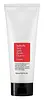
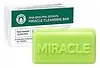
COSRX Salicylic Acid Daily Gentle Cleanser Versus Some By Mi AHA, BHA, PHA 30 Days Miracle Cleansing Bar
This salicylic acid cream cleanser is formulated around Salicylic Acid to clear breakouts and unclog pores.

What's inside
What's inside
 Key Ingredients
Benefits
Concerns
Ingredients Side-by-side
Water
Skin ConditioningMyristic Acid
Cleansing




Sodium Chloride
MaskingEthyl Hexanediol
SolventCocamidopropyl Betaine
Cleansing

Citrus Limon Fruit Oil
Astringent
Sodium Methyl Cocoyl Taurate
Cleansing
Ethylhexylglycerin
Skin ConditioningStearic Acid
Cleansing
PEG-60 Hydrogenated Castor Oil
Emulsifying
Polysorbate 80
Emulsifying
Caprylyl Glycol
Emollient
Glycerin
Humectant

Potassium Hydroxide
BufferingSalicylic Acid
Masking







Lauric Acid
Cleansing
Butylene Glycol
Humectant
Salix Alba Bark Water
Astringent
1,2-Hexanediol
Skin Conditioning
Disodium EDTA
ChelatingGlycol Distearate
Emollient
Melaleuca Alternifolia Leaf Oil
Antioxidant


Citric Acid
Buffering
Water, Myristic Acid, Sodium Chloride, Ethyl Hexanediol, Cocamidopropyl Betaine, Citrus Limon Fruit Oil, Sodium Methyl Cocoyl Taurate, Ethylhexylglycerin, Stearic Acid, PEG-60 Hydrogenated Castor Oil, Polysorbate 80, Caprylyl Glycol, Glycerin, Potassium Hydroxide, Salicylic Acid, Lauric Acid, Butylene Glycol, Salix Alba Bark Water, 1,2-Hexanediol, Disodium EDTA, Glycol Distearate, Melaleuca Alternifolia Leaf Oil, Citric Acid
Lauric Acid
Cleansing
Sodium Stearate
CleansingSodium Palmate
CleansingSodium Laurate
CleansingSodium Myristate
CleansingStearic Acid
Cleansing
Glycerin
Humectant
Sorbitol
Humectant
Lauramidopropyl Betaine
CleansingSodium Hyaluronate
Humectant


Niacinamide
Smoothing

Chlorella Vulgaris Powder
Skin ConditioningTriticum Vulgare Germ Powder
Skin ConditioningMelaleuca Alternifolia Leaf Extract
Perfuming
Houttuynia Cordata Extract
Skin Conditioning
Glycyrrhiza Glabra Root Extract
Bleaching
Leontopodium Alpinum Extract
Skin ConditioningOlea Europaea Fruit Oil
Masking
Argania Spinosa Kernel Oil
Emollient
Camellia Sinensis Seed Oil
Humectant
Hydrolyzed Adansonia Digitata Extract
EmollientSalix Alba Bark Extract
Astringent
Centella Asiatica Extract
Cleansing
Pyrus Malus Fruit Extract
Skin Conditioning
Citrus Limon Fruit Extract
Masking
Citrus Aurantium Dulcis Fruit Extract
MaskingBetula Platyphylla Japonica Bark Extract
Skin ConditioningHydrolyzed Potato Protein
Skin ConditioningHydrolyzed Wheat Protein
Skin ConditioningHydrolyzed Rice Protein
Skin ConditioningHydrolyzed Oat Protein
Skin ConditioningLactobionic Acid
Buffering
Melaleuca Alternifolia Leaf Oil
Antioxidant
Tetrasodium EDTA
ChelatingLauric Acid, Sodium Stearate, Sodium Palmate, Sodium Laurate, Sodium Myristate, Stearic Acid, Glycerin, Sorbitol, Lauramidopropyl Betaine, Sodium Hyaluronate, Niacinamide, Chlorella Vulgaris Powder, Triticum Vulgare Germ Powder, Melaleuca Alternifolia Leaf Extract, Houttuynia Cordata Extract, Glycyrrhiza Glabra Root Extract, Leontopodium Alpinum Extract, Olea Europaea Fruit Oil, Argania Spinosa Kernel Oil, Camellia Sinensis Seed Oil, Hydrolyzed Adansonia Digitata Extract, Salix Alba Bark Extract, Centella Asiatica Extract, Pyrus Malus Fruit Extract, Citrus Limon Fruit Extract, Citrus Aurantium Dulcis Fruit Extract, Betula Platyphylla Japonica Bark Extract, Hydrolyzed Potato Protein, Hydrolyzed Wheat Protein, Hydrolyzed Rice Protein, Hydrolyzed Oat Protein, Lactobionic Acid, Melaleuca Alternifolia Leaf Oil, Tetrasodium EDTA
Reviews
Ingredients Explained
These ingredients are found in both products.
Ingredients higher up in an ingredient list are typically present in a larger amount.
Glycerin (or glycerol) is a compound naturally found in your skin. It's a powerhouse humectant that pulls water into the stratum corneum.
Topically, glycerin does several things at once:
Your skin makes glycerin on its own (mostly from sebaceous oil breakdown) and shuttles it to your outermost layer of skin, or your epidermis, via aquaporin-3.
Aquaporin-3 is a transporter that is essential for normal skin hydration, elasticity, and repair. Interestingly, mice lacking in AQP3 have dry and less elastic skin that can be fully corrected with glycerin.
This ingredient is non-irritating, plays well with almost every ingredient, and works across all skin types. Typical use is anywhere between 3-10% but can go up to 79% in some leave-on products.
Just know very high concentrations (>40%) can feel tacky in low humidity.
Glycerin is the name for this ingredient in American English. British English uses Glycerol/Glycerine.
Learn more about GlycerinLauric Acid is a saturated fatty acid naturally found in coconut oil, palm kernel oil, and even breast milk.
In cosmetics, it is an:
Lab studies have found that lauric acid is surprisingly good at killing acne-causing bacteria. However, these tests were done on bacteria in a petri dish and not on real skin, so we can't say for certain it works the same in a formulation on a real face.
The comedogenic rating of 4 comes from the 1972 rabbit ear model using undiluted ingredients. Comedogenicity is highly individual and one comedogenic ingredient cannot predict how a formula will behave on skin.
This ingredient is not fungal acne safe and research has confirmed Malassezia can use it as a food source. Even though "fungal acne" has the word "acne" in it, they are completely different. Regular acne is driven by a bacteria called Cutibacterium acnes, clogged pores, and excess oil. Fungal acne isn't really acne; it's caused by an overgrowth of a yeast called Malassezia that already lives on everyone's skin. Because one is bacterial and the other is fungal, they respond to different ingredients.
Learn more about Lauric AcidThis ingredient is also known as tea tree oil. It has antioxidant, anti-inflammatory, and antimicrobial properties.
Tea tree oil is a complex lipophilic (fat-loving) oil that contains around 100 compounds with terpinen-4-ol being the most abundant (~40%).
Terpinen-4-ol is responsible for tea tree oil's broad-spectrum antimicrobial activity and makes it a well-researched option for acne.
Clinical studies support 5% tea tree oil as an effective topical treatment for mild to moderate acne. A study with 124 patients compared 5% tea tree oil gel to 5% benzoyl peroxide and both reduced acne (though tea tree oil worked more slowly).
Besides acne, it is also seen in anti-dandruff shampoos and scalp treatments for it's antimicrobial and anti-seborrheic properties.
Safety-wise, the allergic potential of low concentrations on healthy skin is considered low. However, oxidized (old or improperly stored) tea tree oil is a stronger sensitizer.
Irritation can also occur if using the undiluted oil on skin; it's best to use this ingredient as part of a carefully crafted cosmetic formula. This is because regulations require tea tree oil in cosmetics to be stabilized to prevent degradation.
This ingredient has been deemed safe up to 2% in shampoo, 1% in cleansers, and 0.1% in face cream by the EU's Scientific Committee on Consumer Safety (SCCS).
There is some lab evidence that tea tree oil is antifungal against Malassezia, but it is a supportive option at best and not a replacement for proven antifungal treatments.
Learn more about Melaleuca Alternifolia Leaf OilStearic Acid is a fatty acid that is already found in your skin. It's one of the free fatty acids that works alongside ceramides and cholesterols to maintain your barrier.
In cosmetics, it is a multitasker:
Safety-wise, the CIR Expert Panel has concluded it to be safe in cosmetics when formulated to be non-irritating and non-sensitizing.
Free stearic acid is a C18 fatty acid that the Malassezia yeast can substrate, so this ingredient may not be fungal acne safe.
Learn more about Stearic Acid

