

What's inside
What's inside
 Key Ingredients
Benefits
Concerns
Ingredients Side-by-side
Snail Secretion Filtrate
Skin Conditioning





Betaine
Humectant
Caprylic/Capric Triglyceride
Masking
Butylene Glycol
Humectant
Cetearyl Olivate

Sorbitan Olivate
Emulsifying
Cetearyl Alcohol
Emollient


Carbomer
Emulsion StabilisingEthyl Hexanediol
SolventPhenoxyethanol
Preservative
Arginine
Masking
Dimethicone
Emollient
Sodium Polyacrylate
Absorbent
Sodium Hyaluronate
Humectant

Allantoin
Skin Conditioning
Palmitic Acid
Emollient
Panthenol
Skin Conditioning
Xanthan Gum
EmulsifyingStearic Acid
Cleansing
Adenosine
Skin Conditioning
Water
Skin ConditioningMyristic Acid
Cleansing
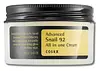
Snail Secretion Filtrate, Betaine, Caprylic/Capric Triglyceride, Butylene Glycol, Cetearyl Olivate, Sorbitan Olivate, Cetearyl Alcohol, Carbomer, Ethyl Hexanediol, Phenoxyethanol, Arginine, Dimethicone, Sodium Polyacrylate, Sodium Hyaluronate, Allantoin, Palmitic Acid, Panthenol, Xanthan Gum, Stearic Acid, Adenosine, Water, Myristic Acid
Butyl Methoxydibenzoylmethane 3%
UV Absorber
Homosalate 5%
Skin Conditioning
Ethylhexyl Salicylate 5%
UV Absorber
Octocrylene 7%
UV Absorber

Water
Skin ConditioningGlycerin
Humectant
Dimethicone
Emollient
Glyceryl Stearate
Emollient
Hydroxypropyl Tetrahydropyrantriol
Skin ConditioningSilica
Abrasive


PEG-100 Stearate
Propylene Glycol
Humectant
Euphorbia Cerifera Wax
Phenoxyethanol
Preservative
Ammonium Polyacryloyldimethyl Taurate
Emulsion StabilisingStearic Acid
Cleansing
Dicaprylyl Carbonate
EmollientCetyl Alcohol
Emollient
Palmitic Acid
Emollient
Capryloyl Salicylic Acid
Exfoliating

Caprylyl Glycol
Emollient
Xanthan Gum
EmulsifyingDimethicone/Vinyl Dimethicone Crosspolymer
Skin Conditioning
Parfum
Masking

Disodium EDTA
Tocopherol
Antioxidant


Sodium Hyaluronate
Humectant
Adenosine
Skin Conditioning
Linalool
Perfuming
Sodium Hydroxide
BufferingJasminum Officinale Flower Extract
Masking
Citronellol
Perfuming
Geraniol
Perfuming
Citral
Perfuming
Benzyl Alcohol
Perfuming
Citric Acid
Buffering
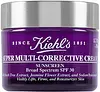
Butyl Methoxydibenzoylmethane 3%, Homosalate 5%, Ethylhexyl Salicylate 5%, Octocrylene 7%, Water, Glycerin, Dimethicone, Glyceryl Stearate, Hydroxypropyl Tetrahydropyrantriol, Silica, PEG-100 Stearate, Propylene Glycol, Euphorbia Cerifera Wax, Phenoxyethanol, Ammonium Polyacryloyldimethyl Taurate, Stearic Acid, Dicaprylyl Carbonate, Cetyl Alcohol, Palmitic Acid, Capryloyl Salicylic Acid, Caprylyl Glycol, Xanthan Gum, Dimethicone/Vinyl Dimethicone Crosspolymer, Parfum, Disodium EDTA, Tocopherol, Sodium Hyaluronate, Adenosine, Linalool, Sodium Hydroxide, Jasminum Officinale Flower Extract, Citronellol, Geraniol, Citral, Benzyl Alcohol, Citric Acid
Reviews
Ingredients Explained
These ingredients are found in both products.
Ingredients higher up in an ingredient list are typically present in a larger amount.
Adenosine is in every living organism. It is one of four components in nucleic acids that helps store our DNA.
Adenosine has many benefits when used. These benefits include hydrating the skin, smoothing skin, and reducing wrinkles. Once applied, adenosine increases collagen production. It also helps with improving firmness and tissue repair.
Studies have found adenosine may also help with wound healing.
In skincare products, Adenosine is usually derived from yeast.
Learn more about AdenosineDimethicone is a type of synthetic silicone created from natural materials such as quartz. It is also known as polydimethylsiloxane.
What it does:
Dimethicone comes in different viscosities:
Depending on the viscosity, dimethicone has different properties.
Ingredients lists don't always show which type is used, so we recommend reaching out to the brand if you have questions about the viscosity.
This ingredient is unlikely to cause irritation because it does not get absorbed into skin. However, people with silicone allergies should be careful about using this ingredient.
Note: Dimethicone may contribute to pilling. This is because it is not oil or water soluble, so pilling may occur when layered with products. When mixed with heavy oils in a formula, the outcome is also quite greasy.
Learn more about DimethiconePalmitic Acid is a fatty acid naturally found in our skin and in many plant and animal sources.
In cosmetics, it is usually derived from palm oil. It serves many purposes in skincare, acting as a cleanser, emollient, and emulsifier.
Interestingly, topically applied Palmitic Acid can be elongated into longer chain fatty acids and ceramides. A 2019 study found low levels of Palmitic Acid lead to slower development of cells, suggesting it plays a role in keeping your skin's renewal process on track.
The CIR (Cosmetic Ingredient Review) panel determined it safe as used in cosmetics at concentrations up to 13%. It is non-irritating and non-sensitizing in clinical studies.
The culprit behind fungal acne, the Malassezia yeast, feeds on fatty acids with carbon chain lengths between C11-C24. Palmitic Acid, at C16, falls right into that sweet spot.
In vitro studies have shown that Palmitic Acid is one of the fatty acids that induce rapid Malassezia growth in lab settings.
It's worth noting that what feeds yeast in a lab doesn't necessarily feed it on your face since formulation and your skin's chemistry play a bigger role.
Learn more about Palmitic AcidPhenoxyethanol is a preservative that has germicide, antimicrobial, and aromatic properties. Studies show that phenoxyethanol can prevent microbial growth. By itself, it has a scent that is similar to that of a rose.
It's often used in formulations along with Caprylyl Glycol to preserve the shelf life of products.
Sodium Hyaluronate is the salt form of hyaluronic acid. It is a long sugar chain that is naturally found in your skin, joints, and connective tissue that maintains hydration and elasticity.
In skincare, it works as a humectant. It pulls water from the environment and deeper layers of skin and binds it to the surface.
Interestingly, the size of the molecule affects its behavior:
Some clinical evidence links low molecular weight versions to improved wrinkle depth, elasticity, anti-inflammatory effects, and barrier repair.
Many serums use a blend of both weights so you can get surface hydration plus longer-lasting and deeper effects.
You'll typically see concentrations between 0.1-2% for this ingredient.
Learn more about Sodium HyaluronateStearic Acid is a fatty acid that is already found in your skin. It's one of the free fatty acids that works alongside ceramides and cholesterols to maintain your barrier.
In cosmetics, it is a multitasker:
Safety-wise, the CIR Expert Panel has concluded it to be safe in cosmetics when formulated to be non-irritating and non-sensitizing.
Free stearic acid is a C18 fatty acid that the Malassezia yeast can substrate, so this ingredient may not be fungal acne safe.
Learn more about Stearic AcidWater. It's the most common cosmetic ingredient of all. You'll usually see it at the top of ingredient lists, meaning that it makes up the largest part of the product.
So why is it so popular? Water most often acts as a solvent - this means that it helps dissolve other ingredients into the formulation.
You'll also recognize water as that liquid we all need to stay alive. If you see this, drink a glass of water. Remember to stay hydrated!
Learn more about WaterXanthan gum is used as a stabilizer and thickener within cosmetic products. It helps give products a sticky, thick feeling - preventing them from being too runny.
On the technical side of things, xanthan gum is a polysaccharide - a combination consisting of multiple sugar molecules bonded together.
Xanthan gum is a pretty common and great ingredient. It is a natural, non-toxic, non-irritating ingredient that is also commonly used in food products.
Learn more about Xanthan Gum
