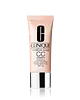
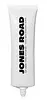
Clinique Moisture Surge CC Cream Hydrating Colour Corrector Broad Spectrum SPF 30 Versus Jones Road Just Enough Tinted Moisturizer

What's inside
What's inside
 Key Ingredients
Benefits
Concerns
Ingredients Side-by-side
Ethylhexyl Methoxycinnamate 7.5%
UV Absorber


Ethylhexyl Salicylate 5%
UV Absorber
Titanium Dioxide 5.2%
Cosmetic Colorant
Zinc Oxide 3.2%
Cosmetic Colorant
Water
Skin ConditioningSqualane
Emollient


Octyldodecyl Neopentanoate
EmollientButylene Glycol
Humectant
Propanediol
Solvent
Glyceryl Stearate
Emollient

Behenyl Alcohol
Emollient
PEG-40 Stearate
Emulsifying
Polyglyceryl-10 Pentastearate
Skin Conditioning
Aloe Barbadensis Leaf Water
MaskingThermus Thermophillus Ferment
Skin ConditioningTrehalose
Humectant
Caffeine
Skin Conditioning
Glycerin
Humectant
Linoleic Acid
Cleansing
Lecithin
Emollient
Stearic Acid
Cleansing
Hydrogenated Lecithin
Emulsifying
Sorbitol
Humectant
Polyglyceryl-6 Polyricinoleate
Emulsifying
Tocopheryl Acetate
Antioxidant


Ammonium Acryloyldimethyltaurate/Vp Copolymer
Sodium Stearoyl Lactylate
EmulsifyingSodium Hyaluronate
Humectant

Tetrahexyldecyl Ascorbate
Antioxidant


Pentaerythrityl Tetra-Di-T-Butyl Hydroxyhydrocinnamate
Antioxidant
Isopropyl Titanium Triisostearate
Emollient
Synthetic Fluorphlogopite
Xanthan Gum
EmulsifyingSilica
Abrasive
Alumina
Abrasive
Sodium Dehydroacetate
Preservative
Tin Oxide
Abrasive
Disodium EDTA
ChelatingPhenoxyethanol
Preservative
Mica
Cosmetic ColorantCI 77891
Cosmetic ColorantCI 77492
Cosmetic ColorantCI 77491
Cosmetic ColorantCI 77499
Cosmetic ColorantEthylhexyl Methoxycinnamate 7.5%, Ethylhexyl Salicylate 5%, Titanium Dioxide 5.2%, Zinc Oxide 3.2%, Water, Squalane, Octyldodecyl Neopentanoate, Butylene Glycol, Propanediol, Glyceryl Stearate, Behenyl Alcohol, PEG-40 Stearate, Polyglyceryl-10 Pentastearate, Aloe Barbadensis Leaf Water, Thermus Thermophillus Ferment, Trehalose, Caffeine, Glycerin, Linoleic Acid, Lecithin, Stearic Acid, Hydrogenated Lecithin, Sorbitol, Polyglyceryl-6 Polyricinoleate, Tocopheryl Acetate, Ammonium Acryloyldimethyltaurate/Vp Copolymer, Sodium Stearoyl Lactylate, Sodium Hyaluronate, Tetrahexyldecyl Ascorbate, Pentaerythrityl Tetra-Di-T-Butyl Hydroxyhydrocinnamate, Isopropyl Titanium Triisostearate, Synthetic Fluorphlogopite, Xanthan Gum, Silica, Alumina, Sodium Dehydroacetate, Tin Oxide, Disodium EDTA, Phenoxyethanol, Mica, CI 77891, CI 77492, CI 77491, CI 77499
Water
Skin ConditioningC13-15 Alkane
SolventGlycerin
Humectant
C9-12 Alkane
SolventHydrogenated Polyisobutene
EmollientPolyglyceryl-3 Polyricinoleate
Emulsifying
Lauroyl Lysine
Skin Conditioning
Propanediol
Solvent
1,2-Hexanediol
Skin Conditioning
Silica
Abrasive
Coco-Caprylate/Caprate
Emollient
Disteardimonium Hectorite
StabilisingMagnesium Sulfate
Triethoxycaprylylsilane

Sodium Hyaluronate
Humectant
Tocopherol
Antioxidant
CI 77891
Cosmetic ColorantCI 77491
Cosmetic ColorantCI 77492
Cosmetic ColorantCI 77499
Cosmetic ColorantWater, C13-15 Alkane, Glycerin, C9-12 Alkane, Hydrogenated Polyisobutene, Polyglyceryl-3 Polyricinoleate, Lauroyl Lysine, Propanediol, 1,2-Hexanediol, Silica, Coco-Caprylate/Caprate, Disteardimonium Hectorite, Magnesium Sulfate, Triethoxycaprylylsilane, Sodium Hyaluronate, Tocopherol, CI 77891, CI 77491, CI 77492, CI 77499
Reviews
Ingredients Explained
These ingredients are found in both products.
Ingredients higher up in an ingredient list are typically present in a larger amount.
Ci 77491 is also hydrated iron III oxide. It's sole purpose is to give a red/pink hue to products.
Iron III oxides are classified as inorganic chemicals for coloring.
Synthetically created Ci 77491 is considered safer than those naturally found. This is because the synthetically created version may contain less impurities. Iron oxides are generally non-toxic and non-allergenic.
Learn more about CI 77491CI 77492 is also hydrated iron III oxide. It's sole purpose is to give a yellow hue to products.
Iron III oxides are classified as inorganic chemicals for coloring.
Synthetically created CI 77492 is considered safer than those naturally found. This is because the synthetically created version may contain less impurities. Iron oxides are generally non-toxic and non-allergenic.
Learn more about CI 77492Ci 77499 is also hydrated iron III oxide. It is created from mixing red and black iron oxides. This helps give shades of darkness to a product.
Iron III oxides are classified as inorganic chemicals for coloring.
Ci 77891 is a white pigment from Titanium dioxide. It is naturally found in minerals such as rutile and ilmenite.
It's main function is to add a white color to cosmetics. It can also be mixed with other colors to create different shades.
Ci 77891 is commonly found in sunscreens due to its ability to block UV rays.
Learn more about CI 77891Glycerin (or glycerol) is a compound naturally found in your skin. It's a powerhouse humectant that pulls water into the stratum corneum.
Topically, glycerin does several things at once:
Your skin makes glycerin on its own (mostly from sebaceous oil breakdown) and shuttles it to your outermost layer of skin, or your epidermis, via aquaporin-3.
Aquaporin-3 is a transporter that is essential for normal skin hydration, elasticity, and repair. Interestingly, mice lacking in AQP3 have dry and less elastic skin that can be fully corrected with glycerin.
This ingredient is non-irritating, plays well with almost every ingredient, and works across all skin types. Typical use is anywhere between 3-10% but can go up to 79% in some leave-on products.
Just know very high concentrations (>40%) can feel tacky in low humidity.
Glycerin is the name for this ingredient in American English. British English uses Glycerol/Glycerine.
Learn more about GlycerinPropanediol is an all-star ingredient. It softens, hydrates, and smooths the skin.
It’s often used to:
Propanediol is not likely to cause sensitivity and considered safe to use. It is derived from corn or petroleum with a clear color and no scent.
Learn more about PropanediolSilica, also known as silicon dioxide, is a naturally occurring mineral. It is used as a fine, spherical, and porous powder in cosmetics.
Though it has exfoliant properties, the function of silica varies depending on the product.
The unique structure of silica enhances the spreadability and adds smoothness, making it a great texture enhancer.
It is also used as an active carrier, emulsifier, and mattifier due to its ability to absorb excess oil.
In some products, tiny microneedles called spicules are made from silica or hydrolyzed sponge. When you rub them in, they lightly polish away dead skin layers and enhance the penetration of active ingredients.
Learn more about SilicaSodium Hyaluronate is the salt form of hyaluronic acid. It is a long sugar chain that is naturally found in your skin, joints, and connective tissue that maintains hydration and elasticity.
In skincare, it works as a humectant. It pulls water from the environment and deeper layers of skin and binds it to the surface.
Interestingly, the size of the molecule affects its behavior:
Some clinical evidence links low molecular weight versions to improved wrinkle depth, elasticity, anti-inflammatory effects, and barrier repair.
Many serums use a blend of both weights so you can get surface hydration plus longer-lasting and deeper effects.
You'll typically see concentrations between 0.1-2% for this ingredient.
Learn more about Sodium HyaluronateWater. It's the most common cosmetic ingredient of all. You'll usually see it at the top of ingredient lists, meaning that it makes up the largest part of the product.
So why is it so popular? Water most often acts as a solvent - this means that it helps dissolve other ingredients into the formulation.
You'll also recognize water as that liquid we all need to stay alive. If you see this, drink a glass of water. Remember to stay hydrated!
Learn more about Water

