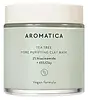
This wash off mask is made with Kaolin and Niacinamide for a rinse-off oil-control boost.


What's inside
What's inside
 Key Ingredients
Benefits
Concerns
Ingredients Side-by-side
Water
Skin ConditioningKaolin
Abrasive



Bentonite
Absorbent
Glycerin
Humectant


Acacia Senegal Gum
MaskingXanthan Gum
EmulsifyingBenzyl Alcohol
Perfuming






Alcohol
Antimicrobial

Sodium Dehydroacetate
Preservative
CI 77491
Cosmetic ColorantCitrus Aurantium Bergamia Fruit Oil
Masking

Vitis Vinifera Fruit Extract
Skin ConditioningLimonene
Perfuming
Lavandula Angustifolia Oil
Masking
Linalool
Perfuming
Sodium Citrate
BufferingCitric Acid
Buffering

Dehydroacetic Acid
Preservative
Coffea Arabica Seed Extract
Masking
Coffea Robusta Seed Extract
Skin ConditioningCarbomer
Emulsion StabilisingCupressus Sempervirens Oil
Masking
Salvia Sclarea Oil
Masking
CI 77499
Cosmetic ColorantCommiphora Myrrha Oil
Masking
Santalum Album Oil
Masking
Anthemis Nobilis Flower Oil
Masking
Papain
Skin Conditioning
Petroselinum Crispum Seed Oil
Masking
1,2-Hexanediol
Skin Conditioning
Caprylyl Glycol
Emollient
Sodium Benzoate
Masking
Lactic Acid
Buffering
Algin
MaskingPotassium Sorbate
Preservative
Water, Kaolin, Bentonite, Glycerin, Acacia Senegal Gum, Xanthan Gum, Benzyl Alcohol, Alcohol, Sodium Dehydroacetate, CI 77491, Citrus Aurantium Bergamia Fruit Oil, Vitis Vinifera Fruit Extract, Limonene, Lavandula Angustifolia Oil, Linalool, Sodium Citrate, Citric Acid, Dehydroacetic Acid, Coffea Arabica Seed Extract, Coffea Robusta Seed Extract, Carbomer, Cupressus Sempervirens Oil, Salvia Sclarea Oil, CI 77499, Commiphora Myrrha Oil, Santalum Album Oil, Anthemis Nobilis Flower Oil, Papain, Petroselinum Crispum Seed Oil, 1,2-Hexanediol, Caprylyl Glycol, Sodium Benzoate, Lactic Acid, Algin, Potassium Sorbate
Kaolin
Abrasive
Melaleuca Alternifolia Leaf Extract
Perfuming
Glycerin
Humectant
Montmorillonite
AbsorbentIllite
Abrasive
Niacinamide
Smoothing

1,2-Hexanediol
Skin Conditioning
Butylene Glycol
Humectant
Caprylic/Capric Triglyceride
Masking
Cetearyl Alcohol
Emollient


Polyglyceryl-3 Methylglucose Distearate
Emulsifying
Glyceryl Stearate
Emollient
Betaine
Humectant
Chlorella Vulgaris Powder
Skin ConditioningArginine
Masking
Acrylates/C10-30 Alkyl Acrylate Crosspolymer
Emulsion StabilisingCarbomer
Emulsion StabilisingCitrus Grandis Peel Oil
Masking
Limonene
Perfuming
Erythritol
Humectant
Melaleuca Alternifolia Leaf Oil
Antioxidant
Water
Skin ConditioningEthylhexylglycerin
Skin ConditioningChamaecyparis Obtusa Leaf Extract
Skin ConditioningLavandula Angustifolia Oil
Masking
Rosa Rugosa Leaf Extract
HumectantLinalool
Perfuming
Melissa Officinalis Leaf Extract
Skin ConditioningThiamine Hcl
MaskingBenzyl Glycol
SolventPyridoxine Hcl
Skin ConditioningAscorbic Acid
Antioxidant
Biotin
AntiseborrhoeicMenadione
MaskingRiboflavin
Cosmetic ColorantKaolin, Melaleuca Alternifolia Leaf Extract, Glycerin, Montmorillonite, Illite, Niacinamide, 1,2-Hexanediol, Butylene Glycol, Caprylic/Capric Triglyceride, Cetearyl Alcohol, Polyglyceryl-3 Methylglucose Distearate, Glyceryl Stearate, Betaine, Chlorella Vulgaris Powder, Arginine, Acrylates/C10-30 Alkyl Acrylate Crosspolymer, Carbomer, Citrus Grandis Peel Oil, Limonene, Erythritol, Melaleuca Alternifolia Leaf Oil, Water, Ethylhexylglycerin, Chamaecyparis Obtusa Leaf Extract, Lavandula Angustifolia Oil, Rosa Rugosa Leaf Extract, Linalool, Melissa Officinalis Leaf Extract, Thiamine Hcl, Benzyl Glycol, Pyridoxine Hcl, Ascorbic Acid, Biotin, Menadione, Riboflavin
Reviews
Ingredients Explained
These ingredients are found in both products.
Ingredients higher up in an ingredient list are typically present in a larger amount.
1,2-Hexanediol is a synthetic liquid and another multi-functional powerhouse.
It is a:
- Humectant, drawing moisture into the skin
- Emollient, helping to soften skin
- Solvent, dispersing and stabilizing formulas
- Preservative booster, enhancing the antimicrobial activity of other preservatives
Carbomer is a synthetic thickening and gelling agent. It's basically the ingredient that gives a lot of serums, gels, creams, and sunscreens their smooth, non-sticky texture.
Although legally permitted at very high levels, carbomers are normally used at concentrations below 1%.
It also needs to be neutralized to actually thicken, and because it is a large molecule, it doesn't really penetrate the skin barrier.
Allergy-wise, the risk is very low. Clinical studies show carbomers have low potential for skin irritation/sensitization even at concentrations up to 100%.
A 2024 UK study patch-tested 1,302 patients and found true allergy to the parent group of carbomer to be rare with no confirmed relevant reactions.
Learn more about CarbomerGlycerin (or glycerol) is a compound naturally found in your skin. It's a powerhouse humectant that pulls water into the stratum corneum.
Topically, glycerin does several things at once:
Your skin makes glycerin on its own (mostly from sebaceous oil breakdown) and shuttles it to your outermost layer of skin, or your epidermis, via aquaporin-3.
Aquaporin-3 is a transporter that is essential for normal skin hydration, elasticity, and repair. Interestingly, mice lacking in AQP3 have dry and less elastic skin that can be fully corrected with glycerin.
This ingredient is non-irritating, plays well with almost every ingredient, and works across all skin types. Typical use is anywhere between 3-10% but can go up to 79% in some leave-on products.
Just know very high concentrations (>40%) can feel tacky in low humidity.
Glycerin is the name for this ingredient in American English. British English uses Glycerol/Glycerine.
Learn more about GlycerinKaolin is a clay. It is used for oil control and to help minimize pores. Like other clays, kaolin has the ability to absorb excess sebum or oil. This can help clean out pores and mattify the skin.
Some types of kaolin may have exfoliating properties. When water is added to kaolin, it becomes a paste with small abrasive particles.
Most kaolin is a white color, but may be pink/orange/red depending on where it comes from.
The name 'kaolin' comes from a Chinese village named 'Gaoling'. Kaolin clay comes from rocks rich in kaolinite. Kaolinite, the mineral, has a silicate layered structure. Kaolinite is formed from chemical weathering of aluminum siilicate minerals.
Besides skincare, kaolin is commonly used to make glossy paper, in ceramics, toothpaste, and as medicine to soothe stomach issues.
Learn more about KaolinLavandula Angustifolia Oil is more commonly known as lavender essential oil. It is considered a fragrancing ingredient.
Lavender imparts a famous scent. While the smell is lovely, this ingredient and may sensitize skin in topical products. This is because about 85% of the oil is made up of linalool and linalyl acetate.
When exposed to air, these two compounds become strong allergens. This ingredient exhibits cytotoxicity at low concentrations; amounts of 0.25% have been shown to damage skin cells.
A study from Japan found this ingredient caused lavender sensitivity after widespread exposure.
Lavender essential oil has some antimicrobial, antibacterial, and anti-inflammatory properties. However, the cons of this ingredient may outweight the pros.
More research is needed to confirm lavender essential oil's effects when used in aromatherapy.
Lavandula Angustifolia is known as the English Lavender and famous for creating purple fields in Provence, France.
Learn more about Lavandula Angustifolia OilLimonene is the compound that gives citrus peel its smell.
In skincare, it shows up as a standalone fragrance ingredient or as a natural compound of citrus and other essential oils.
You'll typically see this ingredient used in very small amounts; anything above 0.001% in a leave-on product or 0.01% in a rinse-off has to be named on the label in the EU. The citrus oils that carry it sit around 0.5-1% in a finished formula.
Fresh limonene is a weak allergen; the real issue is that it slowly reacts with air and then breaks down from oxidation to create hydroperoxides (which are strong sensitizers). This is why suppliers are required to keep the peroxide value below 20 mmol.
Positive reactions in people being investigated for eczema vary:
It's worth skipping if you have a known fragrance allergy or a compromised barrier, but the risk is low for most people.
Older or long-opened products are also more likely to bother you than fresh ones due to oxidation.
Learn more about LimoneneLinalool is a small, naturally occurring scent molecule found in plants like lavender, coriander, bergamot, and more.
It is one of the two most-used fragrance ingredients in cosmetics and added purely for smell. Since it's not used for a skin benefit, there's no "effective dose". Concentration depends on the fragrance load of the product.
The EU requires it to be named on the label above 0.001% in leave-on and 0.01% in rinse-off products.
Fresh linalool is a weak sensitizer but air exposure turns some of it into hydroperoxides, which are strong sensitizers. Those oxidation products are the actual allergy concern.
Patch-test clinics see positive reactions to linalool hydroperoxides in about 4% to 12% of dermatitis patients depending on country and test concentration.
Resassuringly, one analytical study found hydroperoxide levels in real fragranced products to be orders of magnitude below what induced sensitization in animal studies with no evidence of oxidation building up during normal storage.
The practical takeaway is that linalool is fine for most people but worth avoiding if you have a confirmed fragrance contact allergy or a badly compromised barrier.
Products stored a long time after opening are also the high-risk scenario since that is when oxidation happens.
The scent of linalool is described as floral, spicy tropical, and citrus-like.
Learn more about LinaloolWater. It's the most common cosmetic ingredient of all. You'll usually see it at the top of ingredient lists, meaning that it makes up the largest part of the product.
So why is it so popular? Water most often acts as a solvent - this means that it helps dissolve other ingredients into the formulation.
You'll also recognize water as that liquid we all need to stay alive. If you see this, drink a glass of water. Remember to stay hydrated!
Learn more about Water

