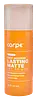
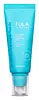
Carpe Sweat Absorbing Lasting Matte SPF 30 Primer Versus Tula Skincare Face Filter Blurring & Moisturizing Primer

What's inside
What's inside
 Key Ingredients
Benefits
Concerns
Ingredients Side-by-side
Titanium Dioxide 5.3%
Cosmetic Colorant

Zinc Oxide 2.4%
Cosmetic Colorant
Aluminum Hydroxide
EmollientCyclopentasiloxane
Emollient
Dimethicone Crosspolymer
Emulsion Stabilising
Helianthus Annuus Extract
Emollient
Hydrogen Dimethicone
Iron Oxides
Isopropyl Myristate
Emollient





Isopropyl Titanium Triisostearate
Emollient
Mica
Cosmetic ColorantOctyldodecyl Oleate
Emollient
Oryza Sativa Bran Extract
Skin Conditioning
Polyamide-5
Skin ConditioningPolysilicone-11
Propylene Carbonate
SolventRosmarinus Officinalis Leaf Extract
AntimicrobialSilica Silylate
Emollient
Stearalkonium Hectorite
Gel FormingSynthetic Wax
Abrasive
Tocopherol
Antioxidant






Titanium Dioxide 5.3%, Zinc Oxide 2.4%, Aluminum Hydroxide, Cyclopentasiloxane, Dimethicone Crosspolymer, Helianthus Annuus Extract, Hydrogen Dimethicone, Iron Oxides, Isopropyl Myristate, Isopropyl Titanium Triisostearate, Mica, Octyldodecyl Oleate, Oryza Sativa Bran Extract, Polyamide-5, Polysilicone-11, Propylene Carbonate, Rosmarinus Officinalis Leaf Extract, Silica Silylate, Stearalkonium Hectorite, Synthetic Wax, Tocopherol
Water
Skin ConditioningIsododecane
EmollientCyclopentasiloxane
Emollient
Phenyl Trimethicone
Skin Conditioning
Cyclohexasiloxane
Emollient
Dimethicone
Emollient
Ethylhexyl Palmitate
Emollient
Glycerin
Humectant
Cetyl PEG/PPG-10/1 Dimethicone
Emulsifying
PEG-10 Dimethicone
Skin Conditioning
PEG-9 Polydimethylsiloxyethyl Dimethicone
Emulsifying
Disteardimonium Hectorite
StabilisingLactococcus Ferment Lysate
Skin Conditioning
Pinus Pinaster Bark Extract
Antioxidant
Glycyrrhiza Glabra Root Extract
Bleaching
Curcuma Longa Root Extract
Antioxidant
Salvia Hispanica Seed Oil
Emollient
Lactic Acid
Buffering


Propanediol
Solvent
Tocopherol
Antioxidant
Tocopheryl Acetate
Antioxidant
Xanthan Gum
EmulsifyingCaprylic/Capric Triglyceride
Masking
Cellulose Acetate
Docosahexaenoic Acid
Skin Conditioning
Eicosapentaenoic Acid
Emollient
Acrylates/Ammonium Methacrylate Copolymer
Boron Nitride
Absorbent
Ethylhexylglycerin
Skin ConditioningHdi/Trimethylol Hexyllactone Crosspolymer
Magnesium Stearate
Cosmetic ColorantMica
Cosmetic ColorantPhosphatidylcholine
EmulsifyingPhytosphingosine
Skin Conditioning
Polyglyceryl-4 Isostearate
Emulsifying
Polymethylsilsesquioxane
Propylene Carbonate
SolventPropylene Glycol Stearate
Skin Conditioning
Silica Silylate
Emollient
Sodium Benzoate
Masking
Sodium Chloride
MaskingSorbitol
Humectant
Tetrasodium Glutamate Diacetate
ChelatingPhenoxyethanol
Preservative
CI 77891
Cosmetic ColorantCI 77492
Cosmetic ColorantCI 77491
Cosmetic ColorantCI 77499
Cosmetic ColorantWater, Isododecane, Cyclopentasiloxane, Phenyl Trimethicone, Cyclohexasiloxane, Dimethicone, Ethylhexyl Palmitate, Glycerin, Cetyl PEG/PPG-10/1 Dimethicone, PEG-10 Dimethicone, PEG-9 Polydimethylsiloxyethyl Dimethicone, Disteardimonium Hectorite, Lactococcus Ferment Lysate, Pinus Pinaster Bark Extract, Glycyrrhiza Glabra Root Extract, Curcuma Longa Root Extract, Salvia Hispanica Seed Oil, Lactic Acid, Propanediol, Tocopherol, Tocopheryl Acetate, Xanthan Gum, Caprylic/Capric Triglyceride, Cellulose Acetate, Docosahexaenoic Acid, Eicosapentaenoic Acid, Acrylates/Ammonium Methacrylate Copolymer, Boron Nitride, Ethylhexylglycerin, Hdi/Trimethylol Hexyllactone Crosspolymer, Magnesium Stearate, Mica, Phosphatidylcholine, Phytosphingosine, Polyglyceryl-4 Isostearate, Polymethylsilsesquioxane, Propylene Carbonate, Propylene Glycol Stearate, Silica Silylate, Sodium Benzoate, Sodium Chloride, Sorbitol, Tetrasodium Glutamate Diacetate, Phenoxyethanol, CI 77891, CI 77492, CI 77491, CI 77499
Reviews
Ingredients Explained
These ingredients are found in both products.
Ingredients higher up in an ingredient list are typically present in a larger amount.
Cyclopentasiloxane (D5) is a lightweight silicone that mostly acts as an emollient and solvent in cosmetics. Its the reason your products feel silky, fast-spreading, and non-greasy.
Since D5 is volatile, it does its thing and then evaporates off the skin quickly.
The safety profile of this ingredient is reassuring; the US CIR Expert Panel concluded D5 is safe as used in cosmetics and Health Canada concluded that D5 is not harmful to human health or the environment as currently used in cosmetics
There's a study that people mention about D5 in a rat study showing tumors. This study is related to long-term inhalation of high D5 levels.
Regulatory bodies have judged this study to be not applicable in topical skincare since skin absorption of D5 is very low and we're not really inhaling huge amounts of D5.
The only restriction for this ingredient is environmental. The European Chemicals Agency (ECHA) restricted D5 in wash-off cosmetics at or above 0.1% due to their persistence in water.
Learn more about CyclopentasiloxaneMica is a naturally occurring mineral used to add shimmer and color in cosmetics. It can also help improve the texture of a product or give it an opaque, white/silver color.
Serecite is the name for very fine but ragged grains of mica.
This ingredient is often coated with metal oxides like titanium dioxide. Trace amounts of heavy metals may be found in mica, but these metals are not harmful in our personal products.
Mica has been used since prehistoric times throughout the world. Ancient Egyptian, Indian, Greek, Roman, Aztec, and Chinese civilizations have used mica.
Learn more about MicaThis ingredient is a solvent. It helps dissolve active ingredients and alter the texture of products.
Propylene Carbonate is commonly used in makeup and with clay, such as montmorillonite or bentonite.
Studies show this ingredient to be safe for cosmetics. When it is undiluted, it can cause skin irritation. (It is always diluted in skincare and makeup). This ingredient is water-soluble.
Propylene Carbonate is created from propylene glycol and carbonic acid.
Learn more about Propylene CarbonateSilica Silylate is a siloxane polymer, meaning it is made up of silicon and oxygen atoms. It is not soluble in water.
This ingredient is a white powder with oil-absorbing, emollient, and anticaking properties.
Tocopherol is a fat-soluble antioxidant known as Vitamin E.
You'll find this ingredient in the vast majority of skincare (for good reason). It works to neutralize free radicals, or unstable molecules generated by UV exposure, pollution, and other environmental stressors, before they can cause oxidative damage to your skin cells.
Topically applied tocopherol has been shown to protect against UV damage by ramping up the skin's own natural defense enzymes.
It also acts as a skin conditioning agent; some studies show that regular topical use can improve the skin's water-binding capacity over 2-4 weeks.
This ingredient is especially loved for being a team player. When combined with Vitamin C, the photoprotective effect of both ingredients roughly doubles and the combo also helps reduce UV-induced DNA damage.
This ingredient has some brightening potential but it's more of a prevention ingredient than spot-fader. Cell studies show it can slow down melanin production but it's worth noting that it's not the most powerful brightener out there.
In formulations, it also serves as a stabilizer that helps protect other oxidation-prone ingredients from degrading.
Concentrations usually range from 0.1-1% in most leave-on products.
Learn more about Tocopherol

