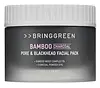
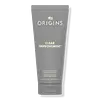
Bring Green Bamboo Charcoal Pore & Blackhead Facial Pack Versus Origins Clear Improvement Blackhead Clearing Mask-To-Scrub
This wash off mask is formulated around Salicylic Acid to clear breakouts and unclog pores.


What's inside
What's inside
 Key Ingredients
Benefits
Concerns
Ingredients Side-by-side
Water
Skin ConditioningKaolin
Abrasive



Propylene Glycol
Humectant


Dipropylene Glycol
HumectantIsononyl Isononanoate
Emollient1,2-Hexanediol
Skin Conditioning
Glycol
HumectantArachidyl Alcohol
Emollient
Glycerin
Humectant

Glyceryl Stearate
Emollient
Bentonite
Absorbent
Butylene Glycol
Humectant
Cetyl Alcohol
Emollient
Bambusa Vulgaris Leaf/Stem Extract
HumectantBambusa Vulgaris Shoot Extract
Antioxidant
Bambusa Vulgaris Water
Skin ConditioningRosmarinus Officinalis Leaf Oil
Masking
Behenyl Alcohol
Emollient
Arachidyl Glucoside
EmulsifyingCoix Lacryma-Jobi Ma-Yuen Seed Powder
HumectantXanthan Gum
EmulsifyingPotassium Cetyl Phosphate
EmulsifyingSilica
Abrasive
Charcoal Powder
Abrasive
Disodium EDTA
ChelatingBambusa Arundinacea Stem Powder
Abrasive
Hydroxyacetophenone
Antioxidant
Ethylhexylglycerin
Skin ConditioningCI 77499
Cosmetic ColorantCI 77491
Cosmetic ColorantWater, Kaolin, Propylene Glycol, Dipropylene Glycol, Isononyl Isononanoate, 1,2-Hexanediol, Glycol, Arachidyl Alcohol, Glycerin, Glyceryl Stearate, Bentonite, Butylene Glycol, Cetyl Alcohol, Bambusa Vulgaris Leaf/Stem Extract, Bambusa Vulgaris Shoot Extract, Bambusa Vulgaris Water, Rosmarinus Officinalis Leaf Oil, Behenyl Alcohol, Arachidyl Glucoside, Coix Lacryma-Jobi Ma-Yuen Seed Powder, Xanthan Gum, Potassium Cetyl Phosphate, Silica, Charcoal Powder, Disodium EDTA, Bambusa Arundinacea Stem Powder, Hydroxyacetophenone, Ethylhexylglycerin, CI 77499, CI 77491
Salicylic Acid 1%
Masking




Water
Skin ConditioningGlycerin
Humectant
Kaolin
Abrasive
Butylene Glycol
Humectant
Hamamelis Virginiana Water
Astringent
Magnesium Aluminum Silicate
Absorbent
Polyglyceryl-10 Laurate
Skin Conditioning
Silica
Abrasive
Montmorillonite
AbsorbentPerlite
Absorbent
Decyl Glucoside
Cleansing
Bambusa Arundinacea Stem Extract
Skin ConditioningSaccharomyces/Zinc Ferment
Skin Conditioning
Lactobacillus Ferment
Skin Conditioning
Zinc PCA
Humectant
Dipotassium Glycyrrhizate
Humectant
Glucomannan
Skin ConditioningCharcoal Powder
Abrasive
Caffeine
Skin Conditioning
Sucrose
Humectant
Tocopheryl Acetate
Antioxidant
Xanthan Gum
EmulsifyingCitric Acid
Buffering
Glyceryl Stearate
Emollient
Sodium Phytate
ChelatingSodium Citrate
BufferingLavandula Angustifolia Oil
Masking


Citrus Limon Peel Oil
Masking
Mentha Viridis Leaf Oil
Astringent
Gaultheria Procumbens Leaf Oil
Masking
Cananga Odorata Flower Oil
Masking
Eugenia Caryophyllus Bud Oil
Masking
Rosmarinus Officinalis Leaf Oil
Masking
Linalool
Perfuming
Citral
Perfuming
Limonene
Perfuming
Eugenol
Perfuming
Geraniol
Perfuming
Caprylyl Glycol
Emollient
Phenoxyethanol
Preservative
Potassium Sorbate
Preservative
Benzoic Acid
Masking
CI 77891
Cosmetic ColorantMica
Cosmetic ColorantSalicylic Acid 1%, Water, Glycerin, Kaolin, Butylene Glycol, Hamamelis Virginiana Water, Magnesium Aluminum Silicate, Polyglyceryl-10 Laurate, Silica, Montmorillonite, Perlite, Decyl Glucoside, Bambusa Arundinacea Stem Extract, Saccharomyces/Zinc Ferment, Lactobacillus Ferment, Zinc PCA, Dipotassium Glycyrrhizate, Glucomannan, Charcoal Powder, Caffeine, Sucrose, Tocopheryl Acetate, Xanthan Gum, Citric Acid, Glyceryl Stearate, Sodium Phytate, Sodium Citrate, Lavandula Angustifolia Oil, Citrus Limon Peel Oil, Mentha Viridis Leaf Oil, Gaultheria Procumbens Leaf Oil, Cananga Odorata Flower Oil, Eugenia Caryophyllus Bud Oil, Rosmarinus Officinalis Leaf Oil, Linalool, Citral, Limonene, Eugenol, Geraniol, Caprylyl Glycol, Phenoxyethanol, Potassium Sorbate, Benzoic Acid, CI 77891, Mica
Ingredients Explained
These ingredients are found in both products.
Ingredients higher up in an ingredient list are typically present in a larger amount.
Butylene Glycol (or BG) is used within cosmetic products for a few different reasons:
Overall, Butylene Glycol is a safe and well-rounded ingredient that works well with other ingredients.
Though this ingredient works well with most skin types, some people with sensitive skin may experience a reaction such as allergic rashes, closed comedones, or itchiness.
Learn more about Butylene GlycolCharcoal powder comes from grounded charcoal. Charcoal can originate from peat, bamboo, coal, wood, coconut shell, or petroleum.
This ingredient has absorbent properties, making it great at absorbing oil.
Glycerin (or glycerol) is a compound naturally found in your skin. It's a powerhouse humectant that pulls water into the stratum corneum.
Topically, glycerin does several things at once:
Your skin makes glycerin on its own (mostly from sebaceous oil breakdown) and shuttles it to your outermost layer of skin, or your epidermis, via aquaporin-3.
Aquaporin-3 is a transporter that is essential for normal skin hydration, elasticity, and repair. Interestingly, mice lacking in AQP3 have dry and less elastic skin that can be fully corrected with glycerin.
This ingredient is non-irritating, plays well with almost every ingredient, and works across all skin types. Typical use is anywhere between 3-10% but can go up to 79% in some leave-on products.
Just know very high concentrations (>40%) can feel tacky in low humidity.
Glycerin is the name for this ingredient in American English. British English uses Glycerol/Glycerine.
Learn more about GlycerinGlyceryl Stearate is made by reacting glycerin with stearic acid (typically sourced from plant oils like palm or coconut). It's an emulsifier, emollient, and mild occlusive.
Emulsifiers help ingredients like oil and water stay mixed so your formula stays nicely blended and uniform in texture.
This ingredient is typically used in concentrations between 1-10%. Studies have found it to be non-sensitizing, non-phototoxic, and non-photoallergenic.
A close cousin of this ingredient is Glyceryl Stearate SE ("self-emulsifying"). This just has a small amount of sodium or potassium stearate added so it can emulsify without a co-emulsifier.
Since this ingredient is an ester of a C18 fatty acid, it may not be fungal acne safe. The Malassezia yeast can potentially metabolize within the C11-C24 range.
Fun fact: The human body also creates Glyceryl Stearate naturally.
Learn more about Glyceryl StearateKaolin is a clay. It is used for oil control and to help minimize pores. Like other clays, kaolin has the ability to absorb excess sebum or oil. This can help clean out pores and mattify the skin.
Some types of kaolin may have exfoliating properties. When water is added to kaolin, it becomes a paste with small abrasive particles.
Most kaolin is a white color, but may be pink/orange/red depending on where it comes from.
The name 'kaolin' comes from a Chinese village named 'Gaoling'. Kaolin clay comes from rocks rich in kaolinite. Kaolinite, the mineral, has a silicate layered structure. Kaolinite is formed from chemical weathering of aluminum siilicate minerals.
Besides skincare, kaolin is commonly used to make glossy paper, in ceramics, toothpaste, and as medicine to soothe stomach issues.
Learn more about KaolinRosmarinus Officinalis Leaf Oil is an essential oil also known as rosemary essential oil. In skincare, it is a skin conditioning agent and also acts as a natural fragrance that gives products a fresh/herby smell.
The oil is a mix of over 100 volatile compounds with 1,8-cineole, α-pinene, camphor, and verbenone usually leading the pack.
Lab studies credit this oil with antioxidant, anti-inflammatory, and antimicrobial activity. Some research even show rosemary compounds calming acne-related inflammation.
The Cosmetic Ingredient Review (CIR) has concluded rosemary-derived ingredients to be safe when formulated to be nonsensitizing.
Since this is a fragrant essential oil, the main concern is for fragrance-sensitive folks.
Learn more about Rosmarinus Officinalis Leaf OilSilica, also known as silicon dioxide, is a naturally occurring mineral. It is used as a fine, spherical, and porous powder in cosmetics.
Though it has exfoliant properties, the function of silica varies depending on the product.
The unique structure of silica enhances the spreadability and adds smoothness, making it a great texture enhancer.
It is also used as an active carrier, emulsifier, and mattifier due to its ability to absorb excess oil.
In some products, tiny microneedles called spicules are made from silica or hydrolyzed sponge. When you rub them in, they lightly polish away dead skin layers and enhance the penetration of active ingredients.
Learn more about SilicaWater. It's the most common cosmetic ingredient of all. You'll usually see it at the top of ingredient lists, meaning that it makes up the largest part of the product.
So why is it so popular? Water most often acts as a solvent - this means that it helps dissolve other ingredients into the formulation.
You'll also recognize water as that liquid we all need to stay alive. If you see this, drink a glass of water. Remember to stay hydrated!
Learn more about WaterXanthan gum is used as a stabilizer and thickener within cosmetic products. It helps give products a sticky, thick feeling - preventing them from being too runny.
On the technical side of things, xanthan gum is a polysaccharide - a combination consisting of multiple sugar molecules bonded together.
Xanthan gum is a pretty common and great ingredient. It is a natural, non-toxic, non-irritating ingredient that is also commonly used in food products.
Learn more about Xanthan Gum

