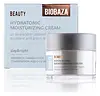
This barrier-repair moisturizer is formulated around Vitis Vinifera Seed Oil and Camellia Sinensis Leaf Extract to strengthen the skin barrier and hydrate skin.
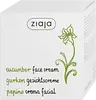
This calming moisturizer is formulated around Panthenol and Cucumis Sativus Fruit Extract to calm redness and hydrate skin.


What's inside
What's inside
 Key Ingredients
Benefits
Concerns
Ingredients Side-by-side
Water
Skin ConditioningVitis Vinifera Seed Oil
Emollient




Glyceryl Stearate
Emollient
Ceteareth-20
CleansingCeteareth-12
EmulsifyingCetearyl Alcohol
Emollient




Cetyl Palmitate
Emollient
Camellia Sinensis Leaf Extract
Antimicrobial





Prunus Armeniaca Kernel Oil
Masking
Sesamum Indicum Seed Oil
Emollient
Squalane
Emollient
Panthenol
Skin Conditioning
Persea Gratissima Oil
Skin Conditioning
Phenethyl Alcohol
MaskingCaprylyl Glycol
Emollient
Butyrospermum Parkii Butter
Skin Conditioning
Coco-Caprylate/Caprate
Emollient
Tocopheryl Acetate
Antioxidant
Propanediol
Solvent
Anogeissus Leiocarpus Bark Extract
Skin ProtectingCarbomer
Emulsion StabilisingXylitol
Humectant
Cera Alba
Emollient
Simmondsia Chinensis Seed Oil
Emollient
Sodium Hyaluronate
Humectant
Sodium Hydroxide
BufferingAroma


Hexyl Cinnamal
Perfuming

Limonene
Perfuming
Water, Vitis Vinifera Seed Oil, Glyceryl Stearate, Ceteareth-20, Ceteareth-12, Cetearyl Alcohol, Cetyl Palmitate, Camellia Sinensis Leaf Extract, Prunus Armeniaca Kernel Oil, Sesamum Indicum Seed Oil, Squalane, Panthenol, Persea Gratissima Oil, Phenethyl Alcohol, Caprylyl Glycol, Butyrospermum Parkii Butter, Coco-Caprylate/Caprate, Tocopheryl Acetate, Propanediol, Anogeissus Leiocarpus Bark Extract, Carbomer, Xylitol, Cera Alba, Simmondsia Chinensis Seed Oil, Sodium Hyaluronate, Sodium Hydroxide, Aroma, Hexyl Cinnamal, Limonene
Water
Skin ConditioningIsopropyl Palmitate
Emollient
Glycerin
Humectant
Glyceryl Stearate
Emollient
Hexyl Laurate
Emollient
Cetyl Alcohol
Emollient
Ceteareth-20
CleansingDimethicone
Emollient
Hydrogenated Coco-Glycerides
Emollient
Panthenol
Skin Conditioning
Propylene Glycol
Humectant
Cucumis Sativus Fruit Extract
Emollient
Tocopheryl Acetate
Antioxidant
Retinyl Palmitate
Skin Conditioning

Stearic Acid
Cleansing
Sodium Acrylate/Sodium Acryloyldimethyl Taurate Copolymer
Emulsion StabilisingIsohexadecane
EmollientPolysorbate 80
Emulsifying
Carbomer
Emulsion StabilisingPhenoxyethanol
Preservative
Ethylhexylglycerin
Skin ConditioningParfum
Masking
Amyl Cinnamal
Perfuming
Linalool
Perfuming
Sodium Hydroxide
BufferingWater, Isopropyl Palmitate, Glycerin, Glyceryl Stearate, Hexyl Laurate, Cetyl Alcohol, Ceteareth-20, Dimethicone, Hydrogenated Coco-Glycerides, Panthenol, Propylene Glycol, Cucumis Sativus Fruit Extract, Tocopheryl Acetate, Retinyl Palmitate, Stearic Acid, Sodium Acrylate/Sodium Acryloyldimethyl Taurate Copolymer, Isohexadecane, Polysorbate 80, Carbomer, Phenoxyethanol, Ethylhexylglycerin, Parfum, Amyl Cinnamal, Linalool, Sodium Hydroxide
Reviews
Ingredients Explained
These ingredients are found in both products.
Ingredients higher up in an ingredient list are typically present in a larger amount.
Carbomer is a synthetic thickening and gelling agent. It's basically the ingredient that gives a lot of serums, gels, creams, and sunscreens their smooth, non-sticky texture.
Although legally permitted at very high levels, carbomers are normally used at concentrations below 1%.
It also needs to be neutralized to actually thicken, and because it is a large molecule, it doesn't really penetrate the skin barrier.
Allergy-wise, the risk is very low. Clinical studies show carbomers have low potential for skin irritation/sensitization even at concentrations up to 100%.
A 2024 UK study patch-tested 1,302 patients and found true allergy to the parent group of carbomer to be rare with no confirmed relevant reactions.
Learn more about CarbomerCeteareth-20 is an emulsifier and surfactant made by reacting cetearyl alcohol with 20 moles of ethylene oxide.
This gives it both oil and water-loving properties that makes it an effect emulsifier; it's really great at pulling oil droplets into water to create a stable, creamy, and easy-to-spread base.
Typical use ranges from 0.5-30%. Most leave-on products are in the 1-10% zone.
The 20 ethylene oxide units is well above the PEG-10 threshold and therefore not a food source for Malassezia (it's fungal acne safe).
This ingredient has a comedogenic rating of 2 and an irritancy rating of 3. These numbers come from testing the raw ingredient on rabbit ears and doesn't reflect how it will behave in a finished product.
In practice, this ingredient is a well-tolerated ingredient. The ratings reflect cautious lab conditions and not real-world use. Just be sure to patch test any formulas you feel unsure about.
Learn more about Ceteareth-20Glyceryl Stearate is made by reacting glycerin with stearic acid (typically sourced from plant oils like palm or coconut). It's an emulsifier, emollient, and mild occlusive.
Emulsifiers help ingredients like oil and water stay mixed so your formula stays nicely blended and uniform in texture.
This ingredient is typically used in concentrations between 1-10%. Studies have found it to be non-sensitizing, non-phototoxic, and non-photoallergenic.
A close cousin of this ingredient is Glyceryl Stearate SE ("self-emulsifying"). This just has a small amount of sodium or potassium stearate added so it can emulsify without a co-emulsifier.
Since this ingredient is an ester of a C18 fatty acid, it may not be fungal acne safe. The Malassezia yeast can potentially metabolize within the C11-C24 range.
Fun fact: The human body also creates Glyceryl Stearate naturally.
Learn more about Glyceryl StearatePanthenol is a common ingredient that helps hydrate and soothe the skin. It is found naturally in our skin and hair.
There are two forms of panthenol: D and L.
D-panthenol is also known as dexpanthenol. Most cosmetics use dexpanthenol or a mixture of D and L-panthenol.
Panthenol is famous due to its ability to go deeper into the skin's layers. Using this ingredient has numerous pros (and no cons):
Like hyaluronic acid, panthenol is a humectant. Humectants are able to bind and hold large amounts of water to keep skin hydrated.
This ingredient works well for wound healing. It works by increasing tissue in the wound and helps close open wounds.
Once oxidized, panthenol converts to pantothenic acid. Panthothenic acid is found in all living cells.
This ingredient is also referred to as pro-vitamin B5.
Learn more about PanthenolSodium Hydroxide is also known as lye or caustic soda. It is used to adjust the pH of products; many ingredients require a specific pH to be effective.
In small amounts, sodium hydroxide is considered safe to use. However, large amounts may cause chemical burns due to its high alkaline.
Your skin has a natural pH and acid mantle. This acid mantle helps prevent harmful bacteria from breaking through. The acid mantle also helps keep your skin hydrated.
"Alkaline" refers to a high pH level. A low pH level would be considered acidic.
Learn more about Sodium HydroxideTocopheryl Acetate is a stable, shelf-friendly form of vitamin E.
Formulators love it because plain vitamin E oxidizes quickly once it hits air. This acetate version stays stable and resists going off, helping to extend a product's shelf life.
It's actually inactive on its own and works like a slow-release "storage" form; the enzymes in your skin called esterases gradually convert it into active vitamin E over time.
One in vivo study showed 5% of the acetate in the living layer of the epidermis converted to vitamin E after 5 days of application. This study also found the skin gained protection against UV damage even though the conversion was slow and small.
Once converted, vitamin E acts as a skin's main fat-soluble antioxidant that fights free radicals to protect skin from damage.
Topical vitamin E generally boosts the skin's photoprotection, and it reduced UV-damage in animal models.
This ingredient has some brightening potential but it's more of a prevention ingredient than spot-fader. Cell studies show it can slow down melanin production but it's worth noting that it's not the most powerful brightener out there.
Overall, it has a pretty solid safety profile and has been found to be non-irritating and non-comedogenic. Allergic reactions may happen but stay rare due to how widely the ingredient gets used.
The concentration will vary depending on the formula; industry data shows 0.1% in baby lotions, 3% in lipsticks, and 5% in foot powders. You can also find this ingredient at 100% in a pure vitamin E oil.
Most leave-on skincare keeps it at the lower end, often between 0.5-1%.
Learn more about Tocopheryl AcetateWater. It's the most common cosmetic ingredient of all. You'll usually see it at the top of ingredient lists, meaning that it makes up the largest part of the product.
So why is it so popular? Water most often acts as a solvent - this means that it helps dissolve other ingredients into the formulation.
You'll also recognize water as that liquid we all need to stay alive. If you see this, drink a glass of water. Remember to stay hydrated!
Learn more about Water

