IDC Hydra Balm SOS Repairing & Moisturizing Mask Cream
A moisturizer with 29 ingredients, including vitamin E, hyaluronic acid, and ectoin.
This barrier-repair moisturizer is formulated around Squalane and Ectoin to strengthen the skin barrier and hydrate skin.
We independently verify ingredients, backed by peer-reviewed research. Suggest an update.
What's inside
Ingredients List
Water
Skin ConditioningGlycerin
Humectant


Caprylic/Capric Triglyceride
Masking
Cetearyl Alcohol
Emollient





Squalane
Emollient
Coco-Glucoside
Cleansing
Persea Gratissima Oil
Skin Conditioning
Glyceryl Behenate
Emollient
Ectoin
Skin Conditioning


Panthenol
Skin Conditioning
Cucumis Sativus Fruit Extract
Emollient
Polyglutamic Acid
Skin Conditioning
Sodium Hyaluronate
Humectant
Tocopherol
Antioxidant



Dimethicone
Emollient
Sodium Stearoyl Glutamate
CleansingButylene Glycol
Humectant
C13-14 Isoparaffin
Emollient
Caprylyl Glycol
Emollient
Xanthan Gum
EmulsifyingLaureth-7
EmulsifyingPolysilicone-11

Decyl Glucoside
Cleansing
Polyacrylamide
Citric Acid
Buffering
Hydroxyacetophenone
Antioxidant
1,2-Hexanediol
Skin Conditioning
Sodium Benzoate
Masking
Potassium Sorbate
Preservative
Water, Glycerin, Caprylic/Capric Triglyceride, Cetearyl Alcohol, Squalane, Coco-Glucoside, Persea Gratissima Oil, Glyceryl Behenate, Ectoin, Panthenol, Cucumis Sativus Fruit Extract, Polyglutamic Acid, Sodium Hyaluronate, Tocopherol, Dimethicone, Sodium Stearoyl Glutamate, Butylene Glycol, C13-14 Isoparaffin, Caprylyl Glycol, Xanthan Gum, Laureth-7, Polysilicone-11, Decyl Glucoside, Polyacrylamide, Citric Acid, Hydroxyacetophenone, 1,2-Hexanediol, Sodium Benzoate, Potassium Sorbate
Key Ingredients
Benefits
Concerns
Ingredients Explained
Water. It's the most common cosmetic ingredient of all. You'll usually see it at the top of ingredient lists, meaning that it makes up the largest part of the product.
So why is it so popular? Water most often acts as a solvent - this means that it helps dissolve other ingredients into the formulation.
You'll also recognize water as that liquid we all need to stay alive. If you see this, drink a glass of water. Remember to stay hydrated!
Learn more about WaterGlycerin (or glycerol) is a compound naturally found in your skin. It's a powerhouse humectant that pulls water into the stratum corneum.
Topically, glycerin does several things at once:
Your skin makes glycerin on its own (mostly from sebaceous oil breakdown) and shuttles it to your outermost layer of skin, or your epidermis, via aquaporin-3.
Aquaporin-3 is a transporter that is essential for normal skin hydration, elasticity, and repair. Interestingly, mice lacking in AQP3 have dry and less elastic skin that can be fully corrected with glycerin.
This ingredient is non-irritating, plays well with almost every ingredient, and works across all skin types. Typical use is anywhere between 3-10% but can go up to 79% in some leave-on products.
Just know very high concentrations (>40%) can feel tacky in low humidity.
Glycerin is the name for this ingredient in American English. British English uses Glycerol/Glycerine.
Learn more about GlycerinCaprylic/Capric Triglyceride (aka MCT Oil) is a lightweight emollient, solvent, and texture enhancer. It is considered a skin-softener by helping to prevent moisture loss.
Though it behaves like an oil, it is not technically one due to its chemical composition. One perk of this ingredient is that it is very stable, resistant to oxidation, and unlikely to go rancid.
In practice, that translates to a long shelf life and a consistently elegant skin feel.
While there is an assumption Caprylic Triglyceride can clog pores due to it being derived from coconut oil, there is no research supporting this. Just patch test if you have concerns.
Fractionated coconut oil and MCT Oil are both listed as Caprylic/Capric Triglyceride according to INCI. This is because INCI names are based on the ingredient’s final chemical composition and not its marketing name or source.
This ingredient is treated as the gold standard fungal acne safe oil. Even though it is coconut derived, the problematic lauric acid is stripped out.
This leaves just caprylic (C8) and capric (C10) acid. These chain lengths actually trend antifungal; a 2020 study found caprylic acid was enough to disrupt Malassezia furfur cell membrane, with a caprylic acid derivative damaging membrane structures at concentrations as low as 0.2%.
Learn more about Caprylic/Capric TriglycerideCetearyl alcohol is a waxy mixture of two fatty alcohols: cetyl alcohol and stearyl alcohol. It is an emollient and emulsifier.
Despite having "alcohol" in its name, it has nothing to do with drying solvent alcohols; the FDA also allows "alcohol-free" products to contain fatty alcohols like this ingredient.
It plays several roles in a formula:
Typical use levels for this ingredient sit around 1-10% and the Cosmetic Ingredient Review Expert Panel has affirmed safety at concentrations up to 25% in leave-on products.
Multiple assessments have found it to be non-irritating and non-sensitizing to most people.
However, there have been some cases of allergic contact dermatitis in patients with chronically compromised skin barriers.
Cetearyl alcohol has a comedogenic rating of 2 and irritancy rating of 1. Both of these numbers come from the 1989 study that used rabbit ears; a "2" means mildly comedogenic and a "1" means low irritancy.
Here's the catch: rabbit skin is more sensitive than human skin and throws a lot of false positives. A 1996 reappraisal found that ingredients rated 1-2 in the rabbit ear tests are generally safe for humans.
Remember comedogenic ratings are unable to assess the entire formula of a product or how it will react on your skin. Just be sure to patch test if you are unsure about certain ingredients.
This ingredient is not fungal acne safe. Cetearyl alcohol is a fatty alcohol with chain lengths that fall within the range that Malassezia can metabolize.
A 2019 study has also observed Malassezia growth in the presence of this ingredient, confirming it to be not-fungal acne safe.
Learn more about Cetearyl AlcoholSqualane is the hydrogenated and shelf-stable form of squalene (a lipid that naturally occurs in human sebum).
It is an emollient and skin conditioning agent that is able to integrate seamlessly into the skin's lipid barrier without clogging pores.
This is due to how structurally similar it is to what your skin already produces.
Though it is mostly an emollient that helps soften and hydrate skin, it also has some humectant and occlusive action. Humectants help the skin retain moisture while occlusives seal it in, making squalane a triple-threat moisturizer.
Research shows it has antioxidant capabilities that help protect against stressors like UV exposure, specifically UVA induced oxidative stress. This study also found that it supports collagen biosynthesis in human dermal fibroblasts.
No clinical study has reported significant adverse effects and irritation reactions are very rare from this ingredient (even at 100% concentration).
Overall, it's a fantastic ingredient for hydration and is suitable for all skin types.
This depends on the source. Squalane can be derived from both plants and animals. Most squalane used in skincare comes from plants.
Please note: the source of squalane is only known if disclosed by the brand. We recommend reaching out to the brand if you have any questions about their squalane.
Read more about squalene with an "e".
Though squalane is often called an oil, it’s technically not one. It is a hydrocarbon, meaning it is only made of carbon and hydrogen. True oils are triglycerides and made of fatty acids and glycerol.
The term “oil-free” isn’t regulated so companies can define it however they want. Some exclude all oils, while others just avoid mineral oil or comedogenic oils.
Squalane has a comedogenic rating of 1 from the original 1972 study that tested raw ingredients under occlusion on rabbit ears. This system is not standardized or peer-reviewed, and using the raw ingredients is very different from how diluted cosmetic formulations are used on human skin.
A comedogenic rating of 1 means it is "unlikely to clog pores" according to the original rating system.
The overall formula of a product matters more than the individual ingredients on whether or not it will cause clogged pores.
Learn more about SqualaneCoco-Glucoside is a surfactant, or a cleansing ingredient. It is made from glucose and coconut oil.
Surfactants help gather dirt, oil, and other pollutants from your skin to be rinsed away.
This ingredient is considered gentle and non-comedogenic. However, it may still be irritating for some.
Learn more about Coco-GlucosideThis ingredient is also known as Avocado oil. It's the cold-pressed oil from the flesh of the avocado fruit packed with fatty acids (mostly oleic acid).
The rich fatty acid profile allows it to function as a skin conditioning agent and emollient; it helps soften and smooth skin while reducing water loss.
Preclinical research has found that topical avocado oil increased collagen synthesis and reduced inflammation during wound healing, giving it some skin-repairing credibility.
The unsaponifiable fraction of the oil is also interesting: studies on avocado unsaponifiables showed that it helped skin produce more collagen and other structural compounds that support healing.
The CIR Expert Panel has found this ingredient to be non-irritating in formulations.
This ingredient may not be fungal acne safe. This is because the oleic acid content falls within the range that Malassezia can use as a food source.
This ingredient does have a comedogenic rating of 0-3, but this doesn't mean a formula with this ingredient will clog pores. Human testing has proved that any finished product with a comedogenic ingredient won't automatically make you break out; it really comes down to concentration, formula, and your skin.
Learn more about Persea Gratissima OilGlyceryl Behenate is an emollient and emulsifier.
It has a lipophilic-hydrophilic structure that lets it sit at the oil-water interface to keep emulsions stable while leaving skin feeling soft and smooth.
In pressed powder cosmetics, it double as a compacting agent.
This ingredient can be synthetically created or plant-derived. Safety-wise, it has a solid track record.
One thing to flag for fungal acne: since this ingredient is the monoester of behenic acid (C22), it falls within the C11-24 range that Malassezia can metabolize.
Learn more about Glyceryl BehenateEctoin is a compound found naturally in some species of bacteria. It can be synthetically created for skincare use.
This ingredient is an osmolyte; Osmolytes help organisms survive osmotic shock (it protects them from extreme conditions). It does this by influencing the properties of biological fluids within cells.
When applied to the skin, ectoin helps bind water molecules to protect our skin. The water forms a sort of armor for the parts of our skin cells, enzymes, proteins, and more.
Besides this, ectoin has many uses in skincare:
A study from 2004 found ectoin to counteract the damage from UV-A exposure at different cell levels. It has also been shown to protect skin against both UV-A, UV-B rays, infrared light, and visible light.
Studies show ectoin to have dual-action pollution protection: first, it protects our skin from further pollution damage. Second, it helps repair damage from pollution.
In fact, ectoin has been shown to help with:
Fun fact: In the EU, ectoin is used in inhalation medication as an anti-pollution ingredient.
Ectoin is a highly stable ingredient. It has a wide pH range of 1-9. Light, oxygen, and temperature do not affect this ingredient.
The chemical name for this ingredient is Tetrahydromethylpyrimidine Carboxylic Acid.
Learn more about EctoinPanthenol is a common ingredient that helps hydrate and soothe the skin. It is found naturally in our skin and hair.
There are two forms of panthenol: D and L.
D-panthenol is also known as dexpanthenol. Most cosmetics use dexpanthenol or a mixture of D and L-panthenol.
Panthenol is famous due to its ability to go deeper into the skin's layers. Using this ingredient has numerous pros (and no cons):
Like hyaluronic acid, panthenol is a humectant. Humectants are able to bind and hold large amounts of water to keep skin hydrated.
This ingredient works well for wound healing. It works by increasing tissue in the wound and helps close open wounds.
Once oxidized, panthenol converts to pantothenic acid. Panthothenic acid is found in all living cells.
This ingredient is also referred to as pro-vitamin B5.
Learn more about PanthenolThis extract comes from cucumber. Cucumbers are mostly made up of water (95%), and the other 5% is composed of: vitamin C, caffeic acid, fatty acids, amino acids, and other minerals.
Cucumbers have anti-inflammatory, barrier repair, and hydrating properties.
They contain shikimate dehydrigenase, an enzyme shown to help reduce inflammation and soothe the skin.
The amino acids found in cucumbers help nourish our skin's natural acid mantle (it's an important part of our skin barrier). This slightly acidic film acts as a barrier to protect us from bacteria, viruses, and other contaminants.
Unless you have an allergy to cucumbers, this is generally a non-irritating ingredient.
Fun fact: Cucumis Sativus is native to South Asia and can now be found on every continent.
Learn more about Cucumis Sativus Fruit ExtractPolyglutamic Acid is made up many glutamic acids chained together. It is created from bacterial fermentation.
This ingredient is an effective skin hydrator and may help speed up wound healing. As a humectant, it draws and holds water to the skin. This ingredient is often compared to hyaluronic acid or glycerin. Similarly to hyaluronic acid, it can vary in molecular weights. This means polyglutamic acid is capable of bringing hydration to lower levels of the skin.
Fun fact: Polyglutamic Acid is found in the Japanese food, natto. It is also being used in cancer treatment studies.
Learn more about Polyglutamic AcidSodium Hyaluronate is the salt form of hyaluronic acid. It is a long sugar chain that is naturally found in your skin, joints, and connective tissue that maintains hydration and elasticity.
In skincare, it works as a humectant. It pulls water from the environment and deeper layers of skin and binds it to the surface.
Interestingly, the size of the molecule affects its behavior:
Some clinical evidence links low molecular weight versions to improved wrinkle depth, elasticity, anti-inflammatory effects, and barrier repair.
Many serums use a blend of both weights so you can get surface hydration plus longer-lasting and deeper effects.
You'll typically see concentrations between 0.1-2% for this ingredient.
Learn more about Sodium HyaluronateTocopherol is a fat-soluble antioxidant known as Vitamin E.
You'll find this ingredient in the vast majority of skincare (for good reason). It works to neutralize free radicals, or unstable molecules generated by UV exposure, pollution, and other environmental stressors, before they can cause oxidative damage to your skin cells.
Topically applied tocopherol has been shown to protect against UV damage by ramping up the skin's own natural defense enzymes.
It also acts as a skin conditioning agent; some studies show that regular topical use can improve the skin's water-binding capacity over 2-4 weeks.
This ingredient is especially loved for being a team player. When combined with Vitamin C, the photoprotective effect of both ingredients roughly doubles and the combo also helps reduce UV-induced DNA damage.
This ingredient has some brightening potential but it's more of a prevention ingredient than spot-fader. Cell studies show it can slow down melanin production but it's worth noting that it's not the most powerful brightener out there.
In formulations, it also serves as a stabilizer that helps protect other oxidation-prone ingredients from degrading.
Concentrations usually range from 0.1-1% in most leave-on products.
Learn more about TocopherolDimethicone is a type of synthetic silicone created from natural materials such as quartz. It is also known as polydimethylsiloxane.
What it does:
Dimethicone comes in different viscosities:
Depending on the viscosity, dimethicone has different properties.
Ingredients lists don't always show which type is used, so we recommend reaching out to the brand if you have questions about the viscosity.
This ingredient is unlikely to cause irritation because it does not get absorbed into skin. However, people with silicone allergies should be careful about using this ingredient.
Note: Dimethicone may contribute to pilling. This is because it is not oil or water soluble, so pilling may occur when layered with products. When mixed with heavy oils in a formula, the outcome is also quite greasy.
Learn more about DimethiconeSodium Stearoyl Glutamate is an amino-acid based emulsifier. It is made by combining stearic acid with L-glutamic acid and neutralizing it to a sodium salt.
As an emulsifier, it works mainly as an oil-in-water one and helps keep the oil and water in your formulas blended. It also contributes to a smooth, non-greasy skin feel.
This ingredient is biodegradable and commonly available in natural/COSMOS-certified grades.
Learn more about Sodium Stearoyl GlutamateButylene Glycol (or BG) is used within cosmetic products for a few different reasons:
Overall, Butylene Glycol is a safe and well-rounded ingredient that works well with other ingredients.
Though this ingredient works well with most skin types, some people with sensitive skin may experience a reaction such as allergic rashes, closed comedones, or itchiness.
Learn more about Butylene GlycolC13-14 Isoparaffin is a synthetic emollient, solvent, and thickening agent. It helps soften skin and improves spreadability without leaving a greasy residue.
This ingredient has been found to be non-sensitizing and safe for use in cosmetics.
Two things floating around online that cause fear-mongering:
There's one scary-sounding study related to kidney tumors in male rats; this depends on a protein called alpha-2u-globulin that binds the ingredient and clogs up kidney cells. Female rats barely make this protein, and humans don't make it at all so this effect cannot happen to us. Regulatory bodies have states this rat-only pathway shouldn't be used to judge human risk.
The other thing you'll see is 1,4-dioxane being a trace byproduct that can form during manufacturing of petroleum-derived ingredients. This is a real, but heavily managed/monitored issue. This byproduct is removed through purification steps before the ingredients goes into the formula. Regulatory bodies also actively monitor residual levels for safety.
One last thing to note: this ingredient is a pure hydrocarbon with no fatty-acid or ester chains for Malassezia to feed on, so it's considered fungal acne safe.
Learn more about C13-14 IsoparaffinCaprylyl Glycol is a humectant, skin conditioner, emollient, and preservative booster derived from either caprylic acid or synthetically created.
Typical use levels vary from 0.3-1% as a preservative booster and go up to 2% to condition skin.
Because it is not a free-fatty acid, this ingredient is fungal acne safe (there's nothing for Malassezia to feed on).
Learn more about Caprylyl GlycolXanthan gum is used as a stabilizer and thickener within cosmetic products. It helps give products a sticky, thick feeling - preventing them from being too runny.
On the technical side of things, xanthan gum is a polysaccharide - a combination consisting of multiple sugar molecules bonded together.
Xanthan gum is a pretty common and great ingredient. It is a natural, non-toxic, non-irritating ingredient that is also commonly used in food products.
Learn more about Xanthan GumLaureth-7 is created by the ethoxylation of lauryl alcohol using ethylene oxide. Lauryl alcohol is a fatty alcohol with hydrating properties.
This ingredient is an emulsifier and cleansing ingredient. As an emulsifier, it is used to prevent ingredients from separating. It also helps cleanse the skin by gathering dirt, oil, and pollutants to be rinsed away.
Polysilicone-11 is a film-forming silicone that creates a non-tacky and matte finish on the skin. It's commonly used to improve texture, absorb excess oil, and help active ingredients spread evenly.
Due to its "rubber-like" structure, it stays on the skin's surface instead of being absorbed. On the skin, it creates a flexible layer that enhances wearability and stability.
Decyl Glucoside is a plant-derived surfactant and emulsion stabilizer. It is created by reacting glucose with the fatty acids from plants.
Like all surfactants, it works by lowering the surface tension between water and oil. This makes it so that dirt, sebum, and makeup can be lifted off your skin and rinsed away. It also produces a dense and creamy foam.
Because it has a neutral charge, it is compatible with a wide range of ingredients and stays stable across a broad pH range/water hardiness conditions.
Patch testing has shown it to have the lowest irritation potential among common cleansing surfactants (like SLS).
Typical use levels range from 5-20% in rinse-off cleansers.
One thing worth knowing: The American Contact Dermatitis Society named the parent family, alkyl glucosides, "Allergen of the Year" in 2017. The prevalence of allergy is pretty low but be sure to patch test if you've reacted to "gentle" or sulfate-free cleansers before.
This ingredient is fungal acne safe because the fatty alcohol portion of this ingredient is not within the C11-24 chain length that Malassezia can metabolize.
Learn more about Decyl GlucosidePolyacrylamide is a synthetic polymer. It is used to stabilize products and bind ingredients. When hydrated, Polyacrylamide forms a soft gel.
Polyacrylamide is low-toxicity. If source properly, it is deemed safe to use in cosmetics.
It should be noted the precursor to Polyacrylamide is acrylamide. Acrylamide is a carcinogen. Most reputable sources of Polyacrylamide will screen for residual acrylamide to make sure the count is in a safe range. Acrylamide is not able to be absorbed through the skin.
We recommend speaking with a professional if you have concerns.
Learn more about PolyacrylamideCitric Acid is an alpha hydroxy acid (AHA) naturally found in citrus fruits like oranges, lemons, and limes.
Like other AHAs, citric acid can exfoliate skin by breaking down the bonds that hold dead skin cells together. This helps reveal smoother and brighter skin underneath.
However, this exfoliating effect only happens at high concentrations (20%) which can be hard to find in cosmetic products.
Due to this, citric acid is usually included in small amounts as a pH adjuster. This helps keep products slightly more acidic and compatible with skin's natural pH.
In skincare formulas, citric acid can:
While it can provide some skin benefits, research shows lactic acid and glycolic acid are generally more effective and less irritating exfoliants.
Most citric acid used in skincare today is made by fermenting sugars (usually from molasses). This synthetic version is identical to the natural citrus form but easier to stabilize and use in formulations.
Rosacea skin has a lower threshold for acids generally, with 62.5% of rosacea subjects in one study reacting to lactic acid in a sting test. This is why we mark citric acid as a potential rosacea trigger.
However, this ingredient shows up as a pH adjuster or chelator at roughly 0.1-1% in many products. These low levels are unlikely to be an issue for rosacea skin and becomes a potential trigger at exfoliating concentrations (20%). Because everybody's skin is unique, we recommend a patch test if you are unsure.
Learn more about Citric AcidHydroxyacetophenone is a small phenolic molecule that earns its place in a formulas as an antioxidant and preservative booster.
As a phenol, it is able to neutralize free radicals to protect both the product and the skin from oxidative stress.
Though it can't kill microbes on its own, it works as a good supporting agent when combined with other preservatives like Phenoxyethanol or 1,2-Hexanediol.
This ingredient naturally occurs as piceol in Norwegian spruce needles (~0.4-1.1% dry weight and in cloudberries). Though the cosmetic-grade material is synthesized for purity and consistency.
You'll usually see it used at low levels and suppliers recommend up to 1% added to a water phase.
Safety testing was done at concentrations like 0.05% in SPF products and 0.5% in a Human Repeated Insult Patch Test. The safety evidence is assuring; this ingredient is safe for cosmetics in current use and also holds safety status as a food flavoring as well.
An honest caveat: the "soothing" and "anti-inflammatory" claims come mostly from supplier marketing rather than published clinical trials. The Cosmetic Ingredient Review's own literature search found no useful efficacy studies on this ingredient.
So the antioxidant and preservative-boosting roles are the well supported ones while the calming benefit is plausible but thinly evidenced.
Overall, this is a well-tolerated, low-irritation multitasker that quietly helps a formula stay fresh and stable.
Learn more about Hydroxyacetophenone1,2-Hexanediol is a synthetic liquid and another multi-functional powerhouse.
It is a:
- Humectant, drawing moisture into the skin
- Emollient, helping to soften skin
- Solvent, dispersing and stabilizing formulas
- Preservative booster, enhancing the antimicrobial activity of other preservatives
Sodium Benzoate is a preservative. It's used in both cosmetic and food products to inhibit the growth of mold and bacteria. It is typically produced synthetically.
Both the US FDA and EU Health Committee have approved the use of sodium benzoate. In the US, levels of 0.1% (of the total product) are allowed.
Sodium benzoate works as a preservative by inhibiting the growth of bacteria inside of cells. It prevents the cell from fermenting a type of sugar using an enzyme called phosphofructokinase.
It is the salt of benzoic acid. Foods containing sodium benzoate include soda, salad dressings, condiments, fruit juices, wines, and snack foods.
Studies for using ascorbic acid and sodium benzoate in cosmetics are lacking, especially in skincare routines with multiple steps.
We always recommend speaking with a professional, such as a dermatologist, if you have any concerns.
Learn more about Sodium BenzoatePotassium Sorbate is a preservative used to prevent yeast and mold in products. It is commonly found in both cosmetic and food products.
This ingredient comes from potassium salt derived from sorbic acid. Sorbic acid is a natural antibiotic and effective against fungus.
Both potassium sorbate and sorbic acid can be found in baked goods, cheeses, dried meats, dried fruit, ice cream, pickles, wine, yogurt, and more.
You'll often find this ingredient used with other preservatives.
Learn more about Potassium SorbateReviews
No written reviews yet. Be the first to review this product.
Recent searches
Search reviews by skin type, ingredient, or keyword.
Where it's from
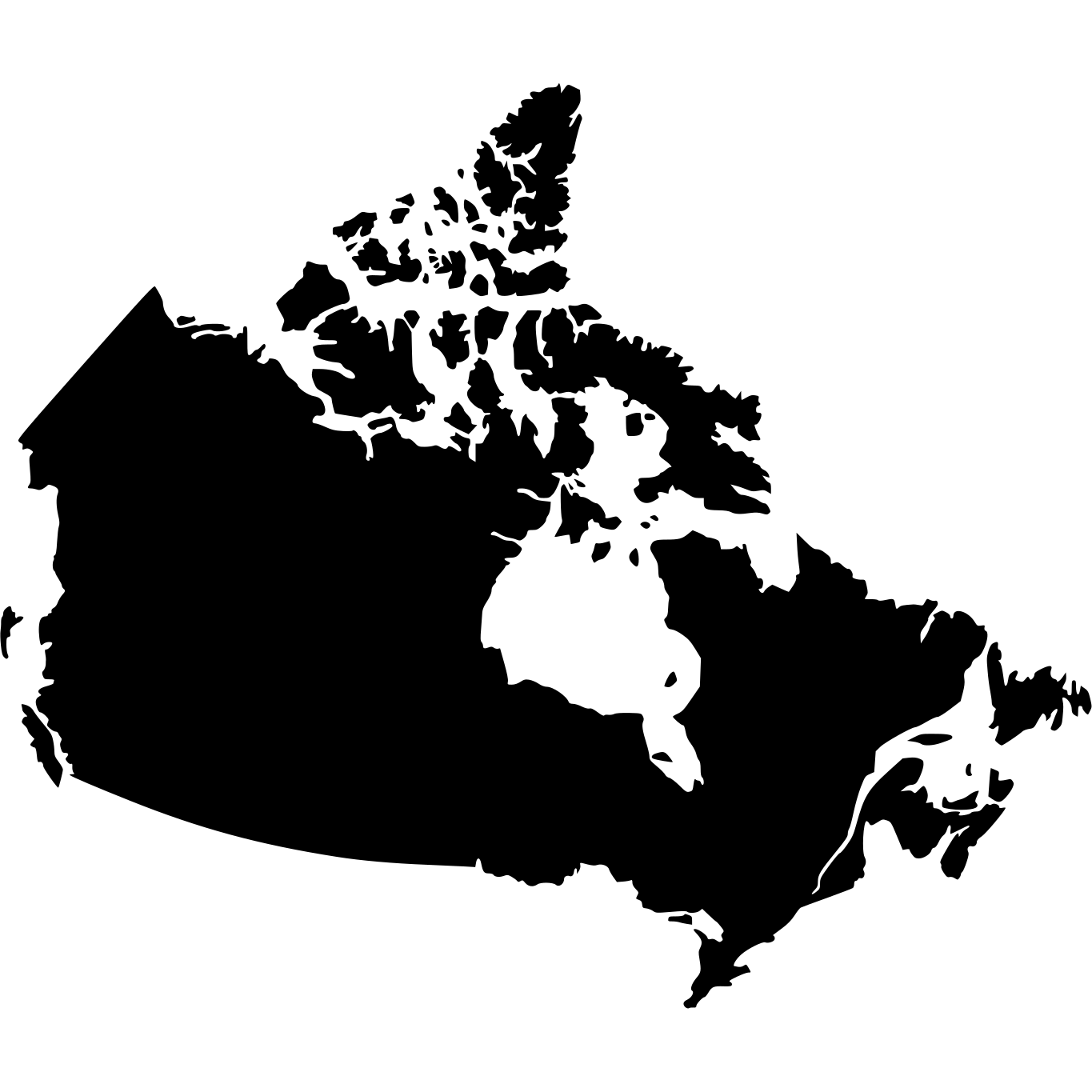
IDC is a Canadian brand
Often compared with

We're dedicated to providing you with the most up-to-date and science-backed ingredient info out there.
The data we've presented on this page has been verified by a member of the SkinSort Team.
Read more about us· Updated April 3, 2026 • Added by B_434


