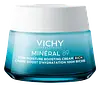
This barrier-repair moisturizer is formulated around Butyrospermum Parkii Butter and Niacinamide to strengthen the skin barrier and hydrate skin.
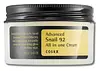
This barrier-repair moisturizer is formulated around Snail Secretion Filtrate and Allantoin to strengthen the skin barrier and hydrate skin.


What's inside
What's inside
 Key Ingredients
Benefits
Concerns
Ingredients Side-by-side
Water
Skin ConditioningGlycerin
Humectant


Cetearyl Isononanoate
Emollient
Butyrospermum Parkii Butter
Skin Conditioning



Dicaprylyl Ether
Emollient
Stearyl Alcohol
Emollient
Alcohol Denat.
Antimicrobial


Squalane
Emollient
Niacinamide
Smoothing








Pentylene Glycol
Skin Conditioning
Polyglyceryl-3 Methylglucose Distearate
Emulsifying
Simmondsia Chinensis Seed Oil
Emollient
Zea Mays Starch
Absorbent
Mannose
HumectantAdenosine
Skin Conditioning
Mineral Salts
Skin ConditioningSodium Hyaluronate
Humectant
Sodium Hydroxide
BufferingSodium PCA
Humectant
Vitreoscilla Ferment
Skin Conditioning
Tocopherol
Antioxidant

Arachidyl Alcohol
Emollient
Arachidyl Glucoside
EmulsifyingBehenyl Alcohol
Emollient
Caprylyl Glycol
Emollient
Carbomer
Emulsion StabilisingCitric Acid
Buffering
Myristic Acid
Cleansing
Palmitic Acid
Emollient
Sodium Stearoyl Glutamate
CleansingStearic Acid
Cleansing
Xanthan Gum
EmulsifyingSalicylic Acid
Masking

Parfum
Masking

Water, Glycerin, Cetearyl Isononanoate, Butyrospermum Parkii Butter, Dicaprylyl Ether, Stearyl Alcohol, Alcohol Denat., Squalane, Niacinamide, Pentylene Glycol, Polyglyceryl-3 Methylglucose Distearate, Simmondsia Chinensis Seed Oil, Zea Mays Starch, Mannose, Adenosine, Mineral Salts, Sodium Hyaluronate, Sodium Hydroxide, Sodium PCA, Vitreoscilla Ferment, Tocopherol, Arachidyl Alcohol, Arachidyl Glucoside, Behenyl Alcohol, Caprylyl Glycol, Carbomer, Citric Acid, Myristic Acid, Palmitic Acid, Sodium Stearoyl Glutamate, Stearic Acid, Xanthan Gum, Salicylic Acid, Parfum
Snail Secretion Filtrate
Skin Conditioning
Betaine
Humectant
Caprylic/Capric Triglyceride
Masking
Butylene Glycol
Humectant
Cetearyl Olivate
Sorbitan Olivate
Emulsifying
Cetearyl Alcohol
Emollient
Carbomer
Emulsion StabilisingEthyl Hexanediol
SolventPhenoxyethanol
Preservative
Arginine
Masking
Dimethicone
Emollient
Sodium Polyacrylate
Absorbent
Sodium Hyaluronate
Humectant
Allantoin
Skin Conditioning
Palmitic Acid
Emollient
Panthenol
Skin Conditioning
Xanthan Gum
EmulsifyingStearic Acid
Cleansing
Adenosine
Skin Conditioning
Water
Skin ConditioningMyristic Acid
Cleansing
Snail Secretion Filtrate, Betaine, Caprylic/Capric Triglyceride, Butylene Glycol, Cetearyl Olivate, Sorbitan Olivate, Cetearyl Alcohol, Carbomer, Ethyl Hexanediol, Phenoxyethanol, Arginine, Dimethicone, Sodium Polyacrylate, Sodium Hyaluronate, Allantoin, Palmitic Acid, Panthenol, Xanthan Gum, Stearic Acid, Adenosine, Water, Myristic Acid
Reviews
Ingredients Explained
These ingredients are found in both products.
Ingredients higher up in an ingredient list are typically present in a larger amount.
Adenosine is a purine nucleoside that your body already makes in every cell. In skincare, it acts mainly as a skin conditioning and anti-aging agent.
The way it works is fairly well mapped out:
Your skin has cells called fibroblasts that build collagen (the stuff that keeps skin firm and smooth). Adenosine basically flips a switch on these cells that tells them to get to work making more collagen and other proteins. These cells slow down on their own as skin ages, so Adenosine helps give them a little nudge to keep going.
The clinical backing is pretty solid too.
A blind, randomized, placebo-controlled trial of 126 women aged 45-65 tested a 0.1% cream twice daily and found real improvements in crow's feet and frown lines using a precise 3D skin-mapping technique; these changes showed up by week 3 and held at 2 months.
A later study using Adenosine-loaded dissolving microneedle patches reported gains in wrinkle depth, dermal density, elasticity, and hydration.
On concentrations, South Korea's Ministry of Food and Drug Safety has set 0.04% as the approved functional anti-wrinkle level. You'll typically see this ingredient used somewhere in the 0.04-0.1% range since it works at low doses.
This ingredient has been found safe for cosmetics with the data showing no irritation or sensitization.
Overall, this is a great ingredient for any anti-aging routine and has no photosensitizing effect, so it suits both AM and PM use.
Learn more about AdenosineCarbomer is a synthetic thickening and gelling agent. It's basically the ingredient that gives a lot of serums, gels, creams, and sunscreens their smooth, non-sticky texture.
Although legally permitted at very high levels, carbomers are normally used at concentrations below 1%.
It also needs to be neutralized to actually thicken, and because it is a large molecule, it doesn't really penetrate the skin barrier.
Allergy-wise, the risk is very low. Clinical studies show carbomers have low potential for skin irritation/sensitization even at concentrations up to 100%.
A 2024 UK study patch-tested 1,302 patients and found true allergy to the parent group of carbomer to be rare with no confirmed relevant reactions.
Learn more about CarbomerMyristic Acid, aka tetradecanoic acid, is a naturally occurring fatty acid found in coconut oil, milk fat, and palm oil.
In skincare, it is an:
Research indicates that this ingredient posts a low risk of irritation and sensitization.
Industry survey data collected for this ingredient puts real-world usage concentrations anywhere from 0.00002% to 20% (most of the high end sits in rinse-off products).
Myristic Acid is not a recognized contact allergen and there are no published case reports of allergic contact dermatitis to it. Human testing found it to be non-irritating at 100% and at 40-50% in mineral oil. There are complaints about high-Myristic-acid cleansers leaving a tight feeling behind, but that has more to do with soap chemistry and pH than an allergy.
This ingredient does have a comedogenic rating of 3, but this doesn't mean a formula with this ingredient will clog pores.
Human testing has proved that any finished product with this ingredient won't automatically make you break out; it really comes down to concentration, formula, and your skin. Some people still find it breaks them out. So if that's you, definitely trust your skin.
Since myristic acid is a C14 fatty acid, it falls within the range that Malassezia can metabolize (C11-24), and therefore may not be fungal acne safe.
Learn more about Myristic AcidPalmitic Acid is a fatty acid naturally found in our skin and in many plant and animal sources.
In cosmetics, it is usually derived from palm oil. It serves many purposes in skincare, acting as a cleanser, emollient, and emulsifier.
Interestingly, topically applied Palmitic Acid can be elongated into longer chain fatty acids and ceramides. A 2019 study found low levels of Palmitic Acid lead to slower development of cells, suggesting it plays a role in keeping your skin's renewal process on track.
The CIR (Cosmetic Ingredient Review) panel determined it safe as used in cosmetics at concentrations up to 13%. It is non-irritating and non-sensitizing in clinical studies.
The culprit behind fungal acne, the Malassezia yeast, feeds on fatty acids with carbon chain lengths between C11-C24. Palmitic Acid, at C16, falls right into that sweet spot.
In vitro studies have shown that Palmitic Acid is one of the fatty acids that induce rapid Malassezia growth in lab settings.
It's worth noting that what feeds yeast in a lab doesn't necessarily feed it on your face since formulation and your skin's chemistry play a bigger role.
This ingredient does have a comedogenic rating of 2, but this doesn't mean a formula with this ingredient will clog pores.
Human testing has proved that any finished product with a comedogenic ingredient won't automatically make you break out; it really comes down to concentration, formula, and your skin.
Learn more about Palmitic AcidSodium Hyaluronate is the salt form of hyaluronic acid. It is a long sugar chain that is naturally found in your skin, joints, and connective tissue that maintains hydration and elasticity.
In skincare, it works as a humectant. It pulls water from the environment and deeper layers of skin and binds it to the surface.
Interestingly, the size of the molecule affects its behavior:
Some clinical evidence links low molecular weight versions to improved wrinkle depth, elasticity, anti-inflammatory effects, and barrier repair.
Many serums use a blend of both weights so you can get surface hydration plus longer-lasting and deeper effects.
You'll typically see concentrations between 0.1-2% for this ingredient.
Learn more about Sodium HyaluronateStearic Acid is a fatty acid that is already found in your skin. It's one of the free fatty acids that works alongside ceramides and cholesterols to maintain your barrier.
In cosmetics, it is a multitasker:
Safety-wise, the CIR Expert Panel has concluded it to be safe in cosmetics when formulated to be non-irritating and non-sensitizing.
Free stearic acid is a C18 fatty acid that the Malassezia yeast can substrate, so this ingredient may not be fungal acne safe.
This ingredient does have a comedogenic rating of 2-3, but this doesn't mean a formula with this ingredient will clog pores.
Human testing has proved that any finished product with this ingredient won't automatically make you break out; it really comes down to concentration, formula, and your skin.
Learn more about Stearic AcidWater. It's the most common cosmetic ingredient of all. You'll usually see it at the top of ingredient lists, meaning that it makes up the largest part of the product.
So why is it so popular? Water most often acts as a solvent - this means that it helps dissolve other ingredients into the formulation.
You'll also recognize water as that liquid we all need to stay alive. If you see this, drink a glass of water. Remember to stay hydrated!
Learn more about WaterXanthan gum is used as a stabilizer and thickener within cosmetic products. It helps give products a sticky, thick feeling - preventing them from being too runny.
On the technical side of things, xanthan gum is a polysaccharide - a combination consisting of multiple sugar molecules bonded together.
Xanthan gum is a pretty common and great ingredient. It is a natural, non-toxic, non-irritating ingredient that is also commonly used in food products.
Learn more about Xanthan Gum

