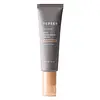
This chemical sunscreen covers most of the UV range, lighter on the deep UVA that drives aging.
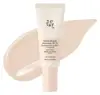
This mineral sunscreen covers the full UV range and blocks ~97% of UVB at SPF 30.


What's inside
What's inside
 Key Ingredients
Benefits
Concerns
Ingredients Side-by-side
Butyl Methoxydibenzoylmethane 3%
UV Absorber
Homosalate 7.3%
Skin Conditioning
Ethylhexyl Salicylate 5%
UV Absorber
Water
Skin ConditioningCaprylic/Capric Triglyceride
Masking


Butyloctyl Salicylate
Skin Conditioning
Ethylhexyl Methoxycrylene
Skin Conditioning
Dipropylene Glycol
HumectantBetaine
Humectant
Shorea Stenoptera Seed Butter
Emollient

Vp/Hexadecene Copolymer
Ceramide NP
Skin Conditioning


Arginine
Masking
Serine
Masking
Alanine
Masking
Glycine
Buffering
Threonine
Proline
Skin Conditioning
Valine
MaskingHistidine
Humectant
Isoleucine
Skin ConditioningPhenylalanine
Masking
Aspartic Acid
Masking
Spirodela Polyrhiza Extract
Skin ConditioningPCA
Humectant
Sodium PCA
Humectant
Bisabolol
Antioxidant
Hydroxyacetophenone
Antioxidant
Dibutyl Lauroyl Glutamide
Skin ConditioningDibutyl Ethylhexanoyl Glutamide
Skin ConditioningGlycolipids
Skin ConditioningDipotassium Glycyrrhizate
Humectant
Sodium Lactate
Buffering
Ammonium Acryloyldimethyltaurate/Vp Copolymer
Carbomer
Emulsion StabilisingPentylene Glycol
Skin Conditioning
Tromethamine
BufferingPhenoxyethanol
Preservative
Butyl Methoxydibenzoylmethane 3%, Homosalate 7.3%, Ethylhexyl Salicylate 5%, Water, Caprylic/Capric Triglyceride, Butyloctyl Salicylate, Ethylhexyl Methoxycrylene, Dipropylene Glycol, Betaine, Shorea Stenoptera Seed Butter, Vp/Hexadecene Copolymer, Ceramide NP, Arginine, Serine, Alanine, Glycine, Threonine, Proline, Valine, Histidine, Isoleucine, Phenylalanine, Aspartic Acid, Spirodela Polyrhiza Extract, PCA, Sodium PCA, Bisabolol, Hydroxyacetophenone, Dibutyl Lauroyl Glutamide, Dibutyl Ethylhexanoyl Glutamide, Glycolipids, Dipotassium Glycyrrhizate, Sodium Lactate, Ammonium Acryloyldimethyltaurate/Vp Copolymer, Carbomer, Pentylene Glycol, Tromethamine, Phenoxyethanol
Water
Skin ConditioningZinc Oxide
Cosmetic Colorant
Dimethicone
Emollient
Methyl Trimethicone
Skin Conditioning
CI 77499
Cosmetic ColorantCI 77491
Cosmetic ColorantCI 77492
Cosmetic ColorantIsododecane
EmollientButyloctyl Salicylate
Skin Conditioning
Propanediol
Solvent
Polymethylsilsesquioxane
Lauryl PEG-10 Tris(Trimethylsiloxy)Silylethyl Dimethicone
Emulsifying
Dicaprylyl Ether
Emollient
Propylheptyl Caprylate
EmollientPEG/PPG-18/18 Dimethicone
Emulsifying
Synthetic Fluorphlogopite
Trimethylsiloxysilicate
Emollient
Dimethicone/Vinyl Dimethicone Crosspolymer
Skin Conditioning
Triethoxycaprylylsilane
Magnesium Sulfate
Disteardimonium Hectorite
StabilisingDimethiconol
Emollient
Trisiloxane
Skin Conditioning
1,2-Hexanediol
Skin Conditioning
Lauryl Polyglyceryl-3 Polydimethylsiloxyethyl Dimethicone
Skin Conditioning
Glyceryl Caprylate
EmollientCaprylyl Glycol
Emollient
Ethylhexylglycerin
Skin ConditioningAdenosine
Skin Conditioning
Lactobacillus/Rice Ferment
Skin Conditioning
Tocopherol
Antioxidant


Ceramide NP
Skin Conditioning
Titanium Dioxide
Cosmetic Colorant
Aluminum Hydroxide
EmollientWater, Zinc Oxide, Dimethicone, Methyl Trimethicone, CI 77499, CI 77491, CI 77492, Isododecane, Butyloctyl Salicylate, Propanediol, Polymethylsilsesquioxane, Lauryl PEG-10 Tris(Trimethylsiloxy)Silylethyl Dimethicone, Dicaprylyl Ether, Propylheptyl Caprylate, PEG/PPG-18/18 Dimethicone, Synthetic Fluorphlogopite, Trimethylsiloxysilicate, Dimethicone/Vinyl Dimethicone Crosspolymer, Triethoxycaprylylsilane, Magnesium Sulfate, Disteardimonium Hectorite, Dimethiconol, Trisiloxane, 1,2-Hexanediol, Lauryl Polyglyceryl-3 Polydimethylsiloxyethyl Dimethicone, Glyceryl Caprylate, Caprylyl Glycol, Ethylhexylglycerin, Adenosine, Lactobacillus/Rice Ferment, Tocopherol, Ceramide NP, Titanium Dioxide, Aluminum Hydroxide
Reviews
Ingredients Explained
These ingredients are found in both products.
Ingredients higher up in an ingredient list are typically present in a larger amount.
Butyloctyl Salicylate is a chemical UV filter structurally similar to octisalate. It is a photostabilizer, SPF booster, emollient and solvent. This ingredient helps evenly spread out ingredients.
According to a manufacturer, it is suitable for pairing with micro Titanium Dioxide, Zinc Oxide, and pigments.
Photostabilizers help stabilize UV-filters and prevents them from degrading quickly.
Learn more about Butyloctyl SalicylateCeramide NP (formerly known as Ceramide 3) is one of the skin's naturally occurring lipids.
Since ceramides are the major lipid components of the skin, they are crucial for maintaining skin barrier and hydration. Ceramide NP most closely mirrors the dominant kind in human skin amongst ceramide subtypes.
This ceramide works by slotting into gaps within the stratum corneum's lipid matrix to limit trans-epidermal water loss (TEWL) and shield the skin against external irritants.
A study with 312 patients found that using a ceramide-containing routine for 4 weeks reduced the severity of atopic dermatitis by over 61%.
Another clinical study in subjects aged 60 and older found that a ceramide body wash and moisturizer improved skin dryness and itchy skin in 15 days.
Overall, ceramides are considered non-irritating and safety tests have found little to no observable adverse effects from using this ingredient.
Ceramide NP is usually sourced from plants (like soybean or rice bran), or produced synthetically.
Learn more about Ceramide NPWater. It's the most common cosmetic ingredient of all. You'll usually see it at the top of ingredient lists, meaning that it makes up the largest part of the product.
So why is it so popular? Water most often acts as a solvent - this means that it helps dissolve other ingredients into the formulation.
You'll also recognize water as that liquid we all need to stay alive. If you see this, drink a glass of water. Remember to stay hydrated!
Learn more about Water

