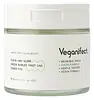
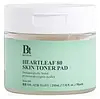
Veganifect Clean And Glow Green Barley First LHA Toner Pad Versus Benton Heartleaf 80 Skin Toner Pad
This smoothing toner pad uses a pre-saturated pad with Citric Acid and Capryloyl Salicylic Acid to refine skin texture and refine the look of pores.
This calming toner pad uses a pre-saturated pad with Houttuynia Cordata Extract and Gluconolactone to calm redness and refine skin texture.

What's inside
What's inside
 Key Ingredients
Benefits
Concerns
Ingredients Side-by-side
Oryza Sativa Bran Water
Masking
Butylene Glycol
Humectant

Dipropylene Glycol
HumectantGlycerin
Humectant
Diglycerin
Humectant
1,2-Hexanediol
Skin Conditioning
Water
Skin ConditioningPolyglyceryl-10 Laurate
Skin Conditioning

Acrylates/C10-30 Alkyl Acrylate Crosspolymer
Emulsion StabilisingTromethamine
BufferingCitric Acid
Buffering

Hydroxyethylcellulose
Emulsion StabilisingHordeum Vulgare Leaf Extract
Skin ConditioningBetaine
Humectant
Melia Azadirachta Leaf Extract
Skin ConditioningBeta-Glucan
Skin Conditioning
Dextrin
AbsorbentHordeum Vulgare Extract
EmollientMelia Azadirachta Flower Extract
Skin ConditioningSuccinic Acid
BufferingPanthenol
Skin Conditioning
Capryloyl Salicylic Acid
Exfoliating




Mandelic Acid
Antimicrobial


Gardenia Florida Fruit Extract
Skin ConditioningPinus Densiflora Leaf Extract
Antimicrobial
Coix Lacryma-Jobi Ma-Yuen Seed Extract
Skin ConditioningCitrus Junos Fruit Extract
Skin ConditioningArtemisia Princeps Leaf Extract
Skin ConditioningTocopherol
Antioxidant
Artemisia Annua Extract
Masking
Benzoic Acid
Masking

Benzaldehyde
Masking

Disodium EDTA
ChelatingEthylhexylglycerin
Skin ConditioningOryza Sativa Bran Water, Butylene Glycol, Dipropylene Glycol, Glycerin, Diglycerin, 1,2-Hexanediol, Water, Polyglyceryl-10 Laurate, Acrylates/C10-30 Alkyl Acrylate Crosspolymer, Tromethamine, Citric Acid, Hydroxyethylcellulose, Hordeum Vulgare Leaf Extract, Betaine, Melia Azadirachta Leaf Extract, Beta-Glucan, Dextrin, Hordeum Vulgare Extract, Melia Azadirachta Flower Extract, Succinic Acid, Panthenol, Capryloyl Salicylic Acid, Mandelic Acid, Gardenia Florida Fruit Extract, Pinus Densiflora Leaf Extract, Coix Lacryma-Jobi Ma-Yuen Seed Extract, Citrus Junos Fruit Extract, Artemisia Princeps Leaf Extract, Tocopherol, Artemisia Annua Extract, Benzoic Acid, Benzaldehyde, Disodium EDTA, Ethylhexylglycerin
Houttuynia Cordata Extract 80%
Skin Conditioning
Butylene Glycol
Humectant
Water
Skin Conditioning1,2-Hexanediol
Skin Conditioning
Gluconolactone
Chelating
Arginine
Masking
Allantoin
Skin Conditioning
Panthenol
Skin Conditioning
Dipotassium Glycyrrhizate
Humectant
Ammonium Acryloyldimethyltaurate/Vp Copolymer
Ethylhexylglycerin
Skin ConditioningBetaine Salicylate
Antimicrobial
Mandelic Acid
Antimicrobial
Sodium Chloride
MaskingSodium Hyaluronate
Humectant
Melaleuca Alternifolia Leaf Extract
Perfuming
Origanum Vulgare Flower/Leaf/Stem Extract
Skin ConditioningThymus Vulgaris Extract
Perfuming
Rosmarinus Officinalis Extract
AntimicrobialLavandula Angustifolia Extract
Skin Conditioning
Cynanchum Atratum Extract
Skin ConditioningCapryloyl Salicylic Acid
Exfoliating
Madecassic Acid
Skin Conditioning
Madecassoside
Antioxidant
Asiaticoside
Antioxidant
Asiatic Acid
Skin Conditioning
Dextrin
AbsorbentHouttuynia Cordata Extract 80%, Butylene Glycol, Water, 1,2-Hexanediol, Gluconolactone, Arginine, Allantoin, Panthenol, Dipotassium Glycyrrhizate, Ammonium Acryloyldimethyltaurate/Vp Copolymer, Ethylhexylglycerin, Betaine Salicylate, Mandelic Acid, Sodium Chloride, Sodium Hyaluronate, Melaleuca Alternifolia Leaf Extract, Origanum Vulgare Flower/Leaf/Stem Extract, Thymus Vulgaris Extract, Rosmarinus Officinalis Extract, Lavandula Angustifolia Extract, Cynanchum Atratum Extract, Capryloyl Salicylic Acid, Madecassic Acid, Madecassoside, Asiaticoside, Asiatic Acid, Dextrin
Ingredients Explained
These ingredients are found in both products.
Ingredients higher up in an ingredient list are typically present in a larger amount.
1,2-Hexanediol is a synthetic liquid and another multi-functional powerhouse.
It is a:
- Humectant, drawing moisture into the skin
- Emollient, helping to soften skin
- Solvent, dispersing and stabilizing formulas
- Preservative booster, enhancing the antimicrobial activity of other preservatives
Butylene Glycol (or BG) is used within cosmetic products for a few different reasons:
Overall, Butylene Glycol is a safe and well-rounded ingredient that works well with other ingredients.
Though this ingredient works well with most skin types, some people with sensitive skin may experience a reaction such as allergic rashes, closed comedones, or itchiness.
Learn more about Butylene GlycolCapryloyl Salicylic Acid comes from salicylic acid, the famous acne-fighting BHA.
It usually goes by a more common name of LHA, or lipohydroxy acid.
Like salicylic acid, this ingredient is a chemical exfoliant that can help break down the oil in your pores and reduce inflammation.
Though studies for LHA do show it to be less effective than salicylic acid. To be fair, salicylic acid is the reigning monarch of acne treatments.
However, a study from 2009 found LHA to be comparable to BPO, making it a good alternative for people with sensitive skin. Another study of 14 patients found a significant decrease in comedones after using LHA.
Another pro of LHA? It is less irritating than salicylic acid due to its large molecule size.
Large molecules cannot penetrate skin as well, so they are gentler on the skin. LHA is much less penetrative than salicylic acid.
An in-vitro study (not done on a living organism) found only 6% of LHA penetrated past the statum corneum compared to 58% of salicylic acid. An in-vivo (done on a living organism) analysis revealed ~17% of LHA was still present in the top layer of skin after 4 days, versus ~9% of salicylic acid.
Interestingly, a study from 2008 found LHA comparable to another famous acid, glycolic acid.
This study found about 10% of LHA is as effective as 20-50% of glycolic acid in treating hyperpigmentation and fine-lines.
Hydroxy acids have been found to stimulate skin protein, lipids, and thermal thickening. This may have anti-aging benefits.
Learn more about Capryloyl Salicylic AcidDextrin is a starch-derived polysaccharide. It's made by partially breaking down corn, potato, or other plant starches.
Think of it as "half-processed" starch; it's less complex than the original but not fully broken down into sugar like maltodextrin.
In cosmetics, it mainly functions as a bulking agent, viscosity controller, binder, and absorbent. It helps thicken products, stabilize powders, and get certain textures a less "wet" feel.
This ingredient has a pretty solid safety profile; it's recognized as a safe food additive and its large molecular size means it doesn't meaningfully penetrate skin.
Human repeat insult patch tests using a rinse-off facial product containing 42.69% dextrin found no skin irritation or sensitization in 54 subjects.
Typical real-world usage is much lower: usually under 1% as a texture modifier and up to 40% in masks (rinse off products use less).
Learn more about DextrinEthylhexylglycerin is created from glycerin. It is a multitasker ingredient that:
The CIR Expert Panel found minimal skin absorption or sensitization of any kind in a safety assessment. Though this ingredient is considered well-tolerated, a small number of cases of allergic dermatitis have been published since 2002. Just be sure to patch test if you are unsure.
Industry-reported use ranges from 8% in rinse-off products and 2% in leave-on formulations.
Learn more about EthylhexylglycerinMandelic Acid is an alpha hydroxy acid (AHA).
Like other AHAs, it helps exfoliate the surface of the skin by breaking down the bonds that hold dead skin cells together. This helps reveal smoother and brighter skin underneath.
Mandelic acid helps with:
Due to it having a larger molecular size than glycolic acid, mandelic acid is able to penetrate the skin more slowly and evenly. This makes it gentler and less irritating, making it a great option for sensitive or beginner skin.
Despite being milder, mandelic acid is still an effective exfoliant that improves skin texture and tone over time.
What makes mandelic acid stand out from other AHAs? It has antibacterial and antioxidant properties.
These traits make it a great option for acne-prone or problem skin by reducing active breakouts and fading post-acne marks. Studies show that mandelic acid (especially when combined with salicylic acid) can significantly reduce pimples and hyperpigmentation while causing fewer side effects than stronger acids.
Mandelic acid is effective in concentrations of 5% and up with an ideal pH range of 3-4 for at-home use.
Like other AHAs, it’s important to wear sunscreen daily to protect your newly exfoliated skin.
However, unlike glycolic acid, mandelic acid is light-sensitive. Be sure your mandelic acid is packaged in opaque containers to ensure it stays stable and effective.
In short, mandelic acid is a gentle yet powerful AHA that exfoliates, brightens, and helps clarify skin while keeping irritation low. Its antibacterial action makes it especially beneficial for those with acne-prone, sensitive, or uneven skin, offering smoother, clearer, and more even-toned results over time.
Read more about some other popular AHA's here:
Learn more about Mandelic AcidPanthenol is a common ingredient that helps hydrate and soothe the skin. It is found naturally in our skin and hair.
There are two forms of panthenol: D and L.
D-panthenol is also known as dexpanthenol. Most cosmetics use dexpanthenol or a mixture of D and L-panthenol.
Panthenol is famous due to its ability to go deeper into the skin's layers. Using this ingredient has numerous pros (and no cons):
Like hyaluronic acid, panthenol is a humectant. Humectants are able to bind and hold large amounts of water to keep skin hydrated.
This ingredient works well for wound healing. It works by increasing tissue in the wound and helps close open wounds.
Once oxidized, panthenol converts to pantothenic acid. Panthothenic acid is found in all living cells.
This ingredient is also referred to as pro-vitamin B5.
Learn more about PanthenolWater. It's the most common cosmetic ingredient of all. You'll usually see it at the top of ingredient lists, meaning that it makes up the largest part of the product.
So why is it so popular? Water most often acts as a solvent - this means that it helps dissolve other ingredients into the formulation.
You'll also recognize water as that liquid we all need to stay alive. If you see this, drink a glass of water. Remember to stay hydrated!
Learn more about Water

