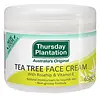
This acne moisturizer is formulated around Melaleuca Alternifolia Leaf Oil and Allantoin to clear breakouts and calm redness.
This anti-aging moisturizer is formulated around Aloe Barbadensis Leaf Juice and Acetyl Hexapeptide-8 to soften the look of wrinkles and hydrate skin.

What's inside
What's inside
 Key Ingredients
Benefits
Concerns
Ingredients Side-by-side
Water
Skin ConditioningCaprylic/Capric Triglyceride
Masking


Cetearyl Alcohol
Emollient





Glycerin
Humectant
Glyceryl Stearate
Emollient
Sorbitan Olivate
Emulsifying
Cetearyl Olivate
Macadamia Integrifolia Seed Oil
Skin Conditioning
Rosa Canina Fruit Oil
Emollient
Tocopheryl Acetate
Antioxidant


Butyrospermum Parkii Butter
Skin Conditioning
Phenoxyethanol
Preservative
Caprylyl Glycol
Emollient
Melaleuca Alternifolia Leaf Oil
Antioxidant




Xanthan Gum
EmulsifyingAllantoin
Skin Conditioning

Citrus Aurantium Dulcis Peel Oil
Masking
Lavandula Angustifolia Oil
Masking
Aloe Barbadensis Leaf Juice Powder
Skin Conditioning
Limonene
Perfuming
Linalool
Perfuming
Water, Caprylic/Capric Triglyceride, Cetearyl Alcohol, Glycerin, Glyceryl Stearate, Sorbitan Olivate, Cetearyl Olivate, Macadamia Integrifolia Seed Oil, Rosa Canina Fruit Oil, Tocopheryl Acetate, Butyrospermum Parkii Butter, Phenoxyethanol, Caprylyl Glycol, Melaleuca Alternifolia Leaf Oil, Xanthan Gum, Allantoin, Citrus Aurantium Dulcis Peel Oil, Lavandula Angustifolia Oil, Aloe Barbadensis Leaf Juice Powder, Limonene, Linalool
Water
Skin ConditioningAloe Barbadensis Leaf Juice
Skin Conditioning
Cetearyl Olivate
Sorbitan Olivate
Emulsifying
Acetyl Hexapeptide-8
Humectant

Propanediol
Solvent
Caprylic/Capric Triglyceride
Masking
Butyrospermum Parkii Butter
Skin Conditioning
Saccharide Isomerate
Humectant
Squalane
Emollient
Glyceryl Stearate
Emollient
Prunus Amygdalus Dulcis Oil
Skin Conditioning
Gypsophila Vaccaria Flower/Leaf/Stem Extract
Adansonia Digitata Pulp Extract
EmollientTetrapeptide-1
Skin Conditioning
Caprylyl Glycol
Emollient
Hydrolyzed Rice Protein
Skin ConditioningCentella Asiatica Extract
Cleansing
Leuconostoc/Radish Root Ferment Filtrate
Antimicrobial
Sodium Hyaluronate
Humectant
Ubiquinone
Antioxidant
Rosa Canina Fruit Oil
Emollient
Cocos Nucifera Oil
Masking
Tocopherol
Antioxidant
Copernicia Cerifera Wax
Xanthan Gum
EmulsifyingSodium Dehydroacetate
Preservative
Rosmarinus Officinalis Extract
AntimicrobialOlea Europaea Leaf Extract
Perfuming
Citrus Aurantifolia Oil
Cleansing
Water, Aloe Barbadensis Leaf Juice, Cetearyl Olivate, Sorbitan Olivate, Acetyl Hexapeptide-8, Propanediol, Caprylic/Capric Triglyceride, Butyrospermum Parkii Butter, Saccharide Isomerate, Squalane, Glyceryl Stearate, Prunus Amygdalus Dulcis Oil, Gypsophila Vaccaria Flower/Leaf/Stem Extract, Adansonia Digitata Pulp Extract, Tetrapeptide-1, Caprylyl Glycol, Hydrolyzed Rice Protein, Centella Asiatica Extract, Leuconostoc/Radish Root Ferment Filtrate, Sodium Hyaluronate, Ubiquinone, Rosa Canina Fruit Oil, Cocos Nucifera Oil, Tocopherol, Copernicia Cerifera Wax, Xanthan Gum, Sodium Dehydroacetate, Rosmarinus Officinalis Extract, Olea Europaea Leaf Extract, Citrus Aurantifolia Oil
Reviews
Ingredients Explained
These ingredients are found in both products.
Ingredients higher up in an ingredient list are typically present in a larger amount.
This ingredient is also known as shea butter. It is a plant-derived extract from the nuts of the Africa shea tree and one of the most well-studied emollients.
Because it has a high concentration of fatty acids (primarily oleic, stearic, and linoleic) it is able to form a protective barrier on the skin's surface. This helps seal in moisture and prevents transepidermal water loss (TEWL).
In vitro research found an increase in skin hydration by 58% and a decrease in TEWL by 37.8% after 24 hours of applying this ingredient (pretty impressive for a single ingredient!).
Besides hydration, shea butter also contains triterpenes that have anti-inflammatory potential. In particule, lupeol cinnamate has shown the highest anti-inflammatory activity in vivo.
Shea butter also contains vitamins A and E which may contribute to antioxidant activity.
While Shea Butter has an SPF rating of about 3-4, it is not a sunscreen replacement.
This ingredient may not be fungal acne safe because its fatty acids fall within the C11-C24 range that the Malassezia yeast can metabolize.
This ingredient shows up on a lot of "pore-clogging" lists but there's no real evidence behind that. It doesn't even have a comedogenic rating from an actual study; the numbers you'll find online come from blogs citing other blogs.
Ratings for other ingredients mostly come from a 1980s rabbit ear test. This test doesn't translate well to human skin or to real products because the ingredient sits at a much lower percentage.
Some people still find it breaks them out. So if that's you, definitely trust your skin. Just know this one's based on experience and not evidence.
Learn more about Butyrospermum Parkii ButterCaprylic/Capric Triglyceride (aka MCT Oil) is a lightweight emollient, solvent, and texture enhancer. It is considered a skin-softener by helping to prevent moisture loss.
Though it behaves like an oil, it is not technically one due to its chemical composition. One perk of this ingredient is that it is very stable, resistant to oxidation, and unlikely to go rancid.
In practice, that translates to a long shelf life and a consistently elegant skin feel.
While there is an assumption Caprylic Triglyceride can clog pores due to it being derived from coconut oil, there is no research supporting this. Just patch test if you have concerns.
Fractionated coconut oil and MCT Oil are both listed as Caprylic/Capric Triglyceride according to INCI. This is because INCI names are based on the ingredient’s final chemical composition and not its marketing name or source.
This ingredient is treated as the gold standard fungal acne safe oil. Even though it is coconut derived, the problematic lauric acid is stripped out.
This leaves just caprylic (C8) and capric (C10) acid. These chain lengths actually trend antifungal; a 2020 study found caprylic acid was enough to disrupt Malassezia furfur cell membrane, with a caprylic acid derivative damaging membrane structures at concentrations as low as 0.2%.
Learn more about Caprylic/Capric TriglycerideCaprylyl Glycol is a humectant, skin conditioner, emollient, and preservative booster derived from either caprylic acid or synthetically created.
Typical use levels vary from 0.3-1% as a preservative booster and go up to 2% to condition skin.
Because it is not a free-fatty acid, this ingredient is fungal acne safe (there's nothing for Malassezia to feed on).
Learn more about Caprylyl GlycolCetearyl Olivate is a plant-derived emulsifier and texture enhancer. It helps keep the oil and water phases from separating so your formulas stay stable.
You'll likely see it combined with Sorbitan Olivate (together sold as the trade name Olivem 1000). This combination generates a liquid crystal structure that closely resemble the lipid organization of the stratum corneum.
These "skin-like" liquid crystals improve skin barrier integrity and promote the delivery of actives into the skin.
This ingredient is well-tolerated and has no significant sensitization data.
Because it is derived from the fatty acids in olive oil, this ingredient may not be fungal acne safe.
Learn more about Cetearyl OlivateGlyceryl Stearate is made by reacting glycerin with stearic acid (typically sourced from plant oils like palm or coconut). It's an emulsifier, emollient, and mild occlusive.
Emulsifiers help ingredients like oil and water stay mixed so your formula stays nicely blended and uniform in texture.
This ingredient is typically used in concentrations between 1-10%. Studies have found it to be non-sensitizing, non-phototoxic, and non-photoallergenic.
A close cousin of this ingredient is Glyceryl Stearate SE ("self-emulsifying"). This just has a small amount of sodium or potassium stearate added so it can emulsify without a co-emulsifier.
Since this ingredient is an ester of a C18 fatty acid, it may not be fungal acne safe. The Malassezia yeast can potentially metabolize within the C11-C24 range.
Fun fact: The human body also creates Glyceryl Stearate naturally.
Learn more about Glyceryl StearateRosa Canina Fruit Oil is a non-fragrant plant oil that has earned its skincare reputation through chemistry.
It's dominated by fatty acids like linoleic acid (~35-55%), alpha-linolenic acid (~17-27%), and oleic acid (~14-22%). This is the exact profile that supports skin barrier, locks in hydration, and calms inflammation.
A 2024 review found evidence for the Rosa canina species supports its use for scarring, hyperpigmentation, wrinkles, and atopic dermatitis; this was mostly credited to its vitamin C content and fatty acid composition as the primary active mechanisms.
You might see this ingredient marketed as a "natural retinol". Some rosehip seed oils contains traces of all-trans-retinoic acid but these trace amounts are far below biologically active levels.
The Cosmetic Ingredient Review Panel has deemed this ingredient safe and it's well-tolerated.
Fungal acne: The fatty acids of this oil fall into the C11-24 range that Malassezia yeast can metabolize, so this ingredient may not be fungal acne safe.
Learn more about Rosa Canina Fruit OilSorbitan Olivate is created from the fatty acids in olive oil and sorbitol.
This ingredient is an oil in water emulsifier. It helps stabilize a product by preventing oils and waters from separating. Sorbitan Olivate also helps hydrate the skin.
This ingredient is also known as part of Olivem 1000, with Cetearyl Olivate being the other part.
According to a manufacturer, this ingredient helps preserve the natural microbiome of skin. Having a healthy microbiome helps keep our skin healthy and protects against harmful bacteria.
Please note, having a healthy microbiome is different from fungal acne; a healthy microbiome includes small amounts of yeast that normally live on your skin without causing problems.
Fungal acne happens when one type of yeast (Malassezia) grows out of control. This is usually because it's feeding on certain oils or fatty acids. Due to the olive oil base, this ingredient may not be fungal acne safe.
Learn more about Sorbitan OlivateWater. It's the most common cosmetic ingredient of all. You'll usually see it at the top of ingredient lists, meaning that it makes up the largest part of the product.
So why is it so popular? Water most often acts as a solvent - this means that it helps dissolve other ingredients into the formulation.
You'll also recognize water as that liquid we all need to stay alive. If you see this, drink a glass of water. Remember to stay hydrated!
Learn more about WaterXanthan gum is used as a stabilizer and thickener within cosmetic products. It helps give products a sticky, thick feeling - preventing them from being too runny.
On the technical side of things, xanthan gum is a polysaccharide - a combination consisting of multiple sugar molecules bonded together.
Xanthan gum is a pretty common and great ingredient. It is a natural, non-toxic, non-irritating ingredient that is also commonly used in food products.
Learn more about Xanthan Gum

