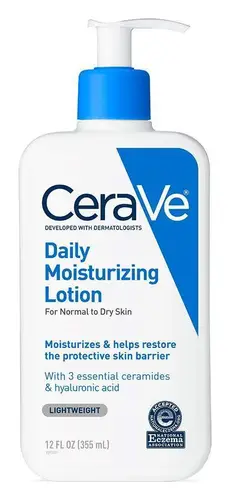
This calming moisturizer is formulated around Niacinamide and Bakuchiol to calm redness and strengthen the skin barrier.

What's inside
What's inside
 Key Ingredients
Benefits
Concerns
Ingredients Side-by-side
Water
Skin ConditioningCaprylic/Capric Triglyceride
Masking


Glycerin
Humectant
C12-15 Alkyl Benzoate
AntimicrobialCetearyl Alcohol
Emollient





Glyceryl Stearate Se
Emulsifying
Betaine
Humectant
Butylene Glycol
Humectant
Phenoxyethanol
Preservative
Benzyl Alcohol
Perfuming




Carbomer
Emulsion StabilisingButyrospermum Parkii Butter
Skin Conditioning
Sodium Stearoyl Glutamate
CleansingSodium Hydroxide
BufferingEthylhexylglycerin
Skin ConditioningSodium Gluconate
ChelatingTocopheryl Acetate
Antioxidant


Dehydroacetic Acid
Preservative
Hydrogenated Lecithin
Emulsifying
Phenethyl Alcohol
MaskingAcetyl Hexapeptide-37
Skin Conditioning
Maltodextrin
Absorbent
Pentapeptide-48
Skin Conditioning
Water, Caprylic/Capric Triglyceride, Glycerin, C12-15 Alkyl Benzoate, Cetearyl Alcohol, Glyceryl Stearate Se, Betaine, Butylene Glycol, Phenoxyethanol, Benzyl Alcohol, Carbomer, Butyrospermum Parkii Butter, Sodium Stearoyl Glutamate, Sodium Hydroxide, Ethylhexylglycerin, Sodium Gluconate, Tocopheryl Acetate, Dehydroacetic Acid, Hydrogenated Lecithin, Phenethyl Alcohol, Acetyl Hexapeptide-37, Maltodextrin, Pentapeptide-48
Water
Skin ConditioningNiacinamide
Smoothing







C12-15 Alkyl Benzoate
AntimicrobialCaprylic/Capric Triglyceride
Masking
Polysorbate 80
Emulsifying
Glycerin
Humectant
Isododecane
EmollientCetyl Alcohol
Emollient
Glyceryl Stearate
Emollient
Carbomer
Emulsion StabilisingBenzyl Alcohol
Perfuming
Bakuchiol
Antimicrobial
PEG-75 Stearate
Surfactant
Ceteth-20
CleansingSteareth-20
CleansingBisabolol
Antioxidant
Caffeine
Skin Conditioning
Quaternium-90 Bentonite
Lecithin
Emollient
Sodium Hydroxide
BufferingPotassium Chloride
Silybin
Skin ConditioningDehydroacetic Acid
Preservative
Benzoic Acid
Masking
Avena Sativa Kernel Extract
Abrasive
Camellia Sinensis Leaf Extract
Antimicrobial
Sorbic Acid
Preservative
Propylene Carbonate
SolventAloe Barbadensis Leaf Juice
Skin Conditioning
Disodium EDTA
ChelatingPotassium Sorbate
Preservative
Tocopherol
Antioxidant
Sodium Benzoate
Masking
Butylene Glycol
Humectant
Potassium Azeloyl Diglycinate
Skin Conditioning
Dextran
Palmitoyl Tripeptide-8
Skin Conditioning
CI 77891
Cosmetic ColorantCI 77289
Cosmetic ColorantCI 19140
Cosmetic ColorantCI 42090
Cosmetic ColorantWater, Niacinamide, C12-15 Alkyl Benzoate, Caprylic/Capric Triglyceride, Polysorbate 80, Glycerin, Isododecane, Cetyl Alcohol, Glyceryl Stearate, Carbomer, Benzyl Alcohol, Bakuchiol, PEG-75 Stearate, Ceteth-20, Steareth-20, Bisabolol, Caffeine, Quaternium-90 Bentonite, Lecithin, Sodium Hydroxide, Potassium Chloride, Silybin, Dehydroacetic Acid, Benzoic Acid, Avena Sativa Kernel Extract, Camellia Sinensis Leaf Extract, Sorbic Acid, Propylene Carbonate, Aloe Barbadensis Leaf Juice, Disodium EDTA, Potassium Sorbate, Tocopherol, Sodium Benzoate, Butylene Glycol, Potassium Azeloyl Diglycinate, Dextran, Palmitoyl Tripeptide-8, CI 77891, CI 77289, CI 19140, CI 42090
Reviews
Ingredients Explained
These ingredients are found in both products.
Ingredients higher up in an ingredient list are typically present in a larger amount.
Benzyl Alcohol is an aromatic alcohol with several roles: it's a preservative, solvent, and mild fragrance component with a floral scent.
This ingredient has been deemed safe for use in cosmetic formulations at concentrations up to 5%, and up to 10% in hair dyes. You'll typically see 0.5-2% in most rinse-off or leave-on products.
As a preservative, it works by disrupting the membrane of microbial proteins. This helps keep bacteria and fungi from growing in your products.
The sensitization picture is actually quite assuring as well:of nearly 71,000 patients patch tested with benzyl alcohol, only 0.21% showed a positive reaction with most of them being weakly positive.
This led researchers to conclude that benzyl alcohol cannot be regarded as a significant contact allergen.
It is worth noting this ingredient is classified as one of the EU's regulated fragrance allergens and restricted to 1% in finished products.
Labels must also declare it in concentrations above 0.001% in leave-on products and 0.01% in rinse-off products.
At concentrations around 5%, localized redness and itching can appear as a direct irritant response and not as a true allergic reaction.
Learn more about Benzyl AlcoholButylene Glycol (or BG) is used within cosmetic products for a few different reasons:
Overall, Butylene Glycol is a safe and well-rounded ingredient that works well with other ingredients.
Though this ingredient works well with most skin types, some people with sensitive skin may experience a reaction such as allergic rashes, closed comedones, or itchiness.
Learn more about Butylene GlycolC12-15 Alkyl Benzoate is a lightweight emollient made by combinig benzoic acid with fatty alcohols that are 12-15 carbons long.
In cosmetics, it plays several roles:
The Cosmetic Review Expert Panel has concluded the alkyl benzoate group to be safe as used in cosmetics; it wasn't found to be a skin irritant and unlikely to be absorbed due to its low water solubility.
This report recorded almost 1000 reported uses with concentrations up to 59% in leave-on products but your cosmetics will typically use 0.5-15% depending on the product.
It's often called a "SPF booster": this is because it keeps UV filters properly dissolved and evenly distributed to support a sunscreen's performance. It doesn't actually raise SPF on its own.
Overall, this ingredient is well tolerated.
This ingredient is fungal acne safe because it is an ester of benzoic acid.
Think of this ingredient as two parts stuck together: an oily part and an acid part. Malassezia only gets a meal when it can snip off a fatty acid to eat. With C12-15 Alkyl Benzoate, the acid part is benzoic acid, which isn't a fatty acid and which the yeast can't use as food.
Benzoic acid is actually used as a preservative to stop yeast from growing.
The oily part is a blend of C12-15 fatty alcohols but fatty alcohols in this size range can support only a little Malassezia growth (mostly for one species of Malassezia as well).
In the ingredient, those alcohols stay locked inside the molecule. The yeast can only reach them by snipping the benzoate bond, and that type of bond is harder for it to cut than a normal fatty bond.
So not much gets released. And whatever does get snipped comes packaged with benzoic acid, which discourages yeast growth.
Learn more about C12-15 Alkyl BenzoateCaprylic/Capric Triglyceride (aka MCT Oil) is a lightweight emollient, solvent, and texture enhancer. It is considered a skin-softener by helping to prevent moisture loss.
Though it behaves like an oil, it is not technically one due to its chemical composition. One perk of this ingredient is that it is very stable, resistant to oxidation, and unlikely to go rancid.
In practice, that translates to a long shelf life and a consistently elegant skin feel.
While there is an assumption Caprylic Triglyceride can clog pores due to it being derived from coconut oil, there is no research supporting this. Just patch test if you have concerns.
Fractionated coconut oil and MCT Oil are both listed as Caprylic/Capric Triglyceride according to INCI. This is because INCI names are based on the ingredient’s final chemical composition and not its marketing name or source.
This ingredient is treated as the gold standard fungal acne safe oil. Even though it is coconut derived, the problematic lauric acid is stripped out.
This leaves just caprylic (C8) and capric (C10) acid. These chain lengths actually trend antifungal; a 2020 study found caprylic acid was enough to disrupt Malassezia furfur cell membrane, with a caprylic acid derivative damaging membrane structures at concentrations as low as 0.2%.
Learn more about Caprylic/Capric TriglycerideCarbomer is a synthetic thickening and gelling agent. It's basically the ingredient that gives a lot of serums, gels, creams, and sunscreens their smooth, non-sticky texture.
Although legally permitted at very high levels, carbomers are normally used at concentrations below 1%.
It also needs to be neutralized to actually thicken, and because it is a large molecule, it doesn't really penetrate the skin barrier.
Allergy-wise, the risk is very low. Clinical studies show carbomers have low potential for skin irritation/sensitization even at concentrations up to 100%.
A 2024 UK study patch-tested 1,302 patients and found true allergy to the parent group of carbomer to be rare with no confirmed relevant reactions.
Learn more about CarbomerDehydroacetic Acid is a synthetic preservative that keeps your products safe from microbes.
As an organic acid, it penetrates microbial cell walls and disrupts cellular metabolism. This makes it effective against bacteria, yeast, and mold.
It is effective at low concentrations (<0.6%). Clinical studies have found it to be non-irritating, non-sensitizing, and non-photosensitizing.
Learn more about Dehydroacetic AcidGlycerin (or glycerol) is a compound naturally found in your skin. It's a powerhouse humectant that pulls water into the stratum corneum.
Topically, glycerin does several things at once:
Your skin makes glycerin on its own (mostly from sebaceous oil breakdown) and shuttles it to your outermost layer of skin, or your epidermis, via aquaporin-3.
Aquaporin-3 is a transporter that is essential for normal skin hydration, elasticity, and repair. Interestingly, mice lacking in AQP3 have dry and less elastic skin that can be fully corrected with glycerin.
This ingredient is non-irritating, plays well with almost every ingredient, and works across all skin types. Typical use is anywhere between 3-10% but can go up to 79% in some leave-on products.
Just know very high concentrations (>40%) can feel tacky in low humidity.
Glycerin is the name for this ingredient in American English. British English uses Glycerol/Glycerine.
Learn more about GlycerinSodium Hydroxide is also known as lye or caustic soda. It is used to adjust the pH of products; many ingredients require a specific pH to be effective.
In small amounts, sodium hydroxide is considered safe to use. However, large amounts may cause chemical burns due to its high alkaline.
Your skin has a natural pH and acid mantle. This acid mantle helps prevent harmful bacteria from breaking through. The acid mantle also helps keep your skin hydrated.
"Alkaline" refers to a high pH level. A low pH level would be considered acidic.
Learn more about Sodium HydroxideWater. It's the most common cosmetic ingredient of all. You'll usually see it at the top of ingredient lists, meaning that it makes up the largest part of the product.
So why is it so popular? Water most often acts as a solvent - this means that it helps dissolve other ingredients into the formulation.
You'll also recognize water as that liquid we all need to stay alive. If you see this, drink a glass of water. Remember to stay hydrated!
Learn more about Water