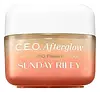
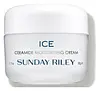
Sunday Riley C.E.O. Afterglow Brightening Vitamin C Moisturizer Versus Sunday Riley Ice Ceramide Moisturizing Cream
This brightening moisturizer is formulated around Tetrahexyldecyl Ascorbate and Ergothioneine to brighten dull-looking skin and refine skin texture.
This barrier-repair moisturizer is formulated around Chondrus Crispus Extract and Squalane to strengthen the skin barrier and hydrate skin.

What's inside
What's inside
 Key Ingredients
Benefits
Concerns
Ingredients Side-by-side
Water
Skin ConditioningDimethicone
Emollient

Neopentyl Glycol Diethylhexanoate
Emollient
Tetrahexyldecyl Ascorbate
Antioxidant





Polyglycerin-6
HumectantPropanediol
Solvent
Phenyl Trimethicone
Skin Conditioning
Glycerin
Humectant
Hydroxyethyl Acrylate/Sodium Acryloyldimethyl Taurate Copolymer
Emulsion StabilisingSodium Hyaluronate Crosspolymer
Humectant
Ergothioneine
Antioxidant

Xanthophylls
Skin ConditioningAllantoin
Skin Conditioning
Citrus Aurantium Amara Peel Oil
Skin Conditioning

Sodium Acryloyldimethyltaurate/Vp Crosspolymer
Emulsion StabilisingMannitol
Humectant
Pentylene Glycol
Skin Conditioning
Isododecane
EmollientDimethicone Crosspolymer
Emulsion Stabilising
Sodium Phytate
Pentaerythrityl Tetra-Di-T-Butyl Hydroxyhydrocinnamate
Antioxidant
Benzotriazolyl Dodecyl P-Cresol
UV AbsorberPolymethylsilsesquioxane
Ammonium Acryloyldimethyltaurate/Beheneth-25 Methacrylate Crosspolymer
Emulsion StabilisingCarthamus Tinctorius Seed Oil
Masking

Citrus Aurantium Dulcis Peel Oil
Masking
Phenoxyethanol
Preservative
Caprylyl Glycol
Emollient
Chlorphenesin
Antimicrobial
Ethylhexylglycerin
Skin ConditioningCitric Acid
Buffering
Polysorbate 60
Emulsifying
Sorbitan Isostearate
Emulsifying
Water, Dimethicone, Neopentyl Glycol Diethylhexanoate, Tetrahexyldecyl Ascorbate, Polyglycerin-6, Propanediol, Phenyl Trimethicone, Glycerin, Hydroxyethyl Acrylate/Sodium Acryloyldimethyl Taurate Copolymer, Sodium Hyaluronate Crosspolymer, Ergothioneine, Xanthophylls, Allantoin, Citrus Aurantium Amara Peel Oil, Sodium Acryloyldimethyltaurate/Vp Crosspolymer, Mannitol, Pentylene Glycol, Isododecane, Dimethicone Crosspolymer, Sodium Phytate, Pentaerythrityl Tetra-Di-T-Butyl Hydroxyhydrocinnamate, Benzotriazolyl Dodecyl P-Cresol, Polymethylsilsesquioxane, Ammonium Acryloyldimethyltaurate/Beheneth-25 Methacrylate Crosspolymer, Carthamus Tinctorius Seed Oil, Citrus Aurantium Dulcis Peel Oil, Phenoxyethanol, Caprylyl Glycol, Chlorphenesin, Ethylhexylglycerin, Citric Acid, Polysorbate 60, Sorbitan Isostearate
Water
Skin ConditioningChondrus Crispus Extract
Skin Conditioning
Squalane
Emollient
C13-15 Alkane
SolventGlycerin
Humectant
Helianthus Annuus Seed Wax
Skin Conditioning
Lanolin Alcohol
Emollient
Tri (Polyglyceryl-3/Lauryl) Hydrogenated Trilinoleate
EmulsifyingCocos Nucifera Fruit Extract
Emollient
Ceramide NP
Skin Conditioning
Ceramide EOP
Skin Conditioning
Ceramide AP
Skin Conditioning
Sodium Hyaluronate
Humectant
Prunus Amygdalus Dulcis Fruit Extract
Skin ConditioningFructooligosaccharides
Humectant
Beta Vulgaris Root Extract
Skin ConditioningShea Butter Ethyl Esters
Emollient
Prunus Armeniaca Fruit Extract
Skin ConditioningPimpinella Anisum Fruit Extract
MaskingRubus Idaeus Fruit Extract
AstringentVanilla Planifolia Fruit Extract
Skin Conditioning
Cucumis Melo Fruit Extract
Skin ConditioningPunica Granatum Sterols
Skin Conditioning
Rosa Damascena Flower Oil
Masking


Ananas Sativus Fruit Extract
Skin ConditioningCinnamomum Cassia Leaf Oil
Masking
Ricinus Communis Seed Oil
Masking
Helianthus Annuus Seed Oil
Emollient
Rhus Verniciflua Peel Wax
Sodium Lauroyl Lactylate
EmulsifyingSodium Polyacryloyldimethyl Taurate
Emulsion StabilisingTriethyl Citrate
Masking
Tapioca Starch
Maltol
MaskingPolyquaternium-80
CleansingSodium Phytate
Magnesium Stearate
Cosmetic ColorantMagnesium Aspartate
Skin ConditioningPentylene Glycol
Skin Conditioning
Tocopherol
Antioxidant
Phytosphingosine
Skin Conditioning
Cholesterol
Emollient
Lithothamnion Calcareum Extract
Skin ConditioningZinc Gluconate
Skin Conditioning


Copper Gluconate
Skin Conditioning
Phenoxyethanol
Preservative
Ethylhexylglycerin
Skin ConditioningPolymethylsilsesquioxane
Xanthan Gum
EmulsifyingCarbomer
Emulsion StabilisingAscorbyl Palmitate
Antioxidant
Pentaerythrityl Tetra-Di-T-Butyl Hydroxyhydrocinnamate
Antioxidant
Benzotriazolyl Dodecyl P-Cresol
UV AbsorberWater, Chondrus Crispus Extract, Squalane, C13-15 Alkane, Glycerin, Helianthus Annuus Seed Wax, Lanolin Alcohol, Tri (Polyglyceryl-3/Lauryl) Hydrogenated Trilinoleate, Cocos Nucifera Fruit Extract, Ceramide NP, Ceramide EOP, Ceramide AP, Sodium Hyaluronate, Prunus Amygdalus Dulcis Fruit Extract, Fructooligosaccharides, Beta Vulgaris Root Extract, Shea Butter Ethyl Esters, Prunus Armeniaca Fruit Extract, Pimpinella Anisum Fruit Extract, Rubus Idaeus Fruit Extract, Vanilla Planifolia Fruit Extract, Cucumis Melo Fruit Extract, Punica Granatum Sterols, Rosa Damascena Flower Oil, Ananas Sativus Fruit Extract, Cinnamomum Cassia Leaf Oil, Ricinus Communis Seed Oil, Helianthus Annuus Seed Oil, Rhus Verniciflua Peel Wax, Sodium Lauroyl Lactylate, Sodium Polyacryloyldimethyl Taurate, Triethyl Citrate, Tapioca Starch, Maltol, Polyquaternium-80, Sodium Phytate, Magnesium Stearate, Magnesium Aspartate, Pentylene Glycol, Tocopherol, Phytosphingosine, Cholesterol, Lithothamnion Calcareum Extract, Zinc Gluconate, Copper Gluconate, Phenoxyethanol, Ethylhexylglycerin, Polymethylsilsesquioxane, Xanthan Gum, Carbomer, Ascorbyl Palmitate, Pentaerythrityl Tetra-Di-T-Butyl Hydroxyhydrocinnamate, Benzotriazolyl Dodecyl P-Cresol
Reviews
Ingredients Explained
These ingredients are found in both products.
Ingredients higher up in an ingredient list are typically present in a larger amount.
Benzotriazolyl Dodecyl P-Cresol, also known as Tinogard TL, is a broad-spectrum UV absorber.
It helps stabilize light-sensitive ingredients and protects other ingredients from breaking down due to light exposure (especially in transparent packaging).
This ingredient helps extend a product’s shelf life by preventing both photolytic (light-induced) and photo-oxidative degradation. It’s typically used at low concentrations, around 0.01% to 0.1%.
Despite being a chemical UV filter, this ingredient can be found in "100% mineral sunscreens". This is due to regulatory loopholes.
Learn more about Benzotriazolyl Dodecyl P-CresolEthylhexylglycerin is created from glycerin. It is a multitasker ingredient that:
The CIR Expert Panel found minimal skin absorption or sensitization of any kind in a safety assessment. Though this ingredient is considered well-tolerated, a small number of cases of allergic dermatitis have been published since 2002. Just be sure to patch test if you are unsure.
Industry-reported use ranges from 8% in rinse-off products and 2% in leave-on formulations.
Learn more about EthylhexylglycerinGlycerin (or glycerol) is a compound naturally found in your skin. It's a powerhouse humectant that pulls water into the stratum corneum.
Topically, glycerin does several things at once:
Your skin makes glycerin on its own (mostly from sebaceous oil breakdown) and shuttles it to your outermost layer of skin, or your epidermis, via aquaporin-3.
Aquaporin-3 is a transporter that is essential for normal skin hydration, elasticity, and repair. Interestingly, mice lacking in AQP3 have dry and less elastic skin that can be fully corrected with glycerin.
This ingredient is non-irritating, plays well with almost every ingredient, and works across all skin types. Typical use is anywhere between 3-10% but can go up to 79% in some leave-on products.
Just know very high concentrations (>40%) can feel tacky in low humidity.
Glycerin is the name for this ingredient in American English. British English uses Glycerol/Glycerine.
Learn more about GlycerinPentaerythrityl Tetra-Di-T-Butyl Hydroxyhydrocinnamate (long name, huh?) is a synthetic antioxidant.
It is used to help stabilize other antioxidants or prevent the color from changing in a product.
As an antioxidant, it helps fight free-radical molecules. Free-radical molecules are capable of damaging our cells and other genetic material. Thus, antioxidants may reduce the signs of aging.
This ingredient is oil-soluble.
Learn more about Pentaerythrityl Tetra-Di-T-Butyl HydroxyhydrocinnamatePentylene Glycol (1,2-pentanediol) is a multitasking little diol with three main roles in a formula:
Research on alkanediols (the family pentylene glycol belongs to) show they work by disrupting microbial cell membranes. This disruption helps the primary preservative system in a product work more effectively at lower doses.
On the safety side, the Cosmetic Ingredient Review Expert Panel has concluded this ingredient to be safe as used in current cosmetic practices + concentrations.
Typical use levels in a formula run about 1-5%.
Learn more about Pentylene GlycolPhenoxyethanol is one of the most widely used preservatives in skincare (and for good reason!).
It has a large spectrum of antimicrobial activity and especially effective bacteria, yeast, and mold while only having a weak effect on your skin's natural microbiome.
On a cellular level, it disrupts the cell membranes of microbes by poking holes that make the cell leak. This shuts down the chemical reactions the microbe needs to make energy so it can no longer survive.
Another perk of this ingredient is that it stays functional across a wide pH range (3-10).
You'll often see it paired with boosters like Ethylhexylglycerin; one study showed that a 1:9 ratio of Ethylhexylglycerin to Phenoxyethanol damages bacterial membranes as effectively as doubling the Phenoxyethanol concentration on its own.
Typical use concentrations range from 0.3-1% depending on the formula, and this ingredient is capped at 1% int the EU.
Safety-wise, the fear mongering does not hold up to the evidence. The EU's Scientific Committee on Consumer Safety and FDA consider it safe as a preservative at up to 1%, including for children of all ages.
Adverse systemic effects only showed up in animal studies at exposures roughly 200x higher than what people get from cosmetics. And despite its very widespread use, this ingredient is a rare sensitizer and allergic reactions are uncommon.
Learn more about PhenoxyethanolPolymethylsilsesquioxane is a silicone used as a film forming agent.
When applied to the skin, this ingredient creates an invisible film on the surface. This film still allows oxygen to pass through, but prevents moisture from escaping. This can help condition and hydrate the skin. It also leaves a silky feel when applied.
Polymethylsilsesquioxane has not been shown to clog pores. It has been deemed safe to use up to 55%, but most cosmetics use much less.
If you have concerns about using this ingredient, we recommend speaking with a professional.
Learn more about PolymethylsilsesquioxaneSodium Phytate is the synthetic salt form of phytic acid. Phytic acid is an antioxidant and can be found in plant seeds.
Sodium Phytate is a chelating agent. Chelating agents help prevent metals from binding to water. This helps stabilize the ingredients and the product.
Water. It's the most common cosmetic ingredient of all. You'll usually see it at the top of ingredient lists, meaning that it makes up the largest part of the product.
So why is it so popular? Water most often acts as a solvent - this means that it helps dissolve other ingredients into the formulation.
You'll also recognize water as that liquid we all need to stay alive. If you see this, drink a glass of water. Remember to stay hydrated!
Learn more about Water

