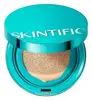
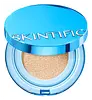
Skintific Perfect Stay Serum Matte Cushion Foundation SPF 50 Versus Skintific Perfect Stay Velvet Matte Cushion

What's inside
What's inside
 Key Ingredients
Benefits
Concerns
Ingredients Side-by-side
Aloe Barbadensis Leaf Water
MaskingDimethicone
Emollient

Trimethylsiloxysilicate
Emollient
Ethylhexyl Methoxycinnamate
UV Absorber


Titanium Dioxide
Cosmetic Colorant
Ethylhexyl Salicylate
UV Absorber
Glycerin
Humectant

Lauryl PEG-10 Tris(Trimethylsiloxy)Silylethyl Dimethicone
Emulsifying
Phenyl Trimethicone
Skin Conditioning
Synthetic Fluorphlogopite
Isononyl Isononanoate
EmollientSilica
Abrasive


Pentylene Glycol
Skin Conditioning
Disteardimonium Hectorite
StabilisingAscorbic Acid
Antioxidant





Astaxanthin
Skin Conditioning

Butylene Glycol
Humectant
1,2-Hexanediol
Skin Conditioning
Bixa Orellana Seed Extract
MaskingCentella Asiatica Extract
Cleansing
Albatrellus Confluens Extract
Humectant
Olea Europaea Leaf Extract
Perfuming
Polygonum Cuspidatum Root Extract
Antioxidant
Scutellaria Baicalensis Root Extract
Astringent
Camellia Sinensis Leaf Extract
Antimicrobial
Glycyrrhiza Glabra Root Extract
Bleaching
Chamomilla Recutita Flower Extract
Masking
Rosmarinus Officinalis Leaf Extract
AntimicrobialZinc PCA
Humectant

Aluminum Hydroxide
EmollientAloe Barbadensis Leaf Water, Dimethicone, Trimethylsiloxysilicate, Ethylhexyl Methoxycinnamate, Titanium Dioxide, Ethylhexyl Salicylate, Glycerin, Lauryl PEG-10 Tris(Trimethylsiloxy)Silylethyl Dimethicone, Phenyl Trimethicone, Synthetic Fluorphlogopite, Isononyl Isononanoate, Silica, Pentylene Glycol, Disteardimonium Hectorite, Ascorbic Acid, Astaxanthin, Butylene Glycol, 1,2-Hexanediol, Bixa Orellana Seed Extract, Centella Asiatica Extract, Albatrellus Confluens Extract, Olea Europaea Leaf Extract, Polygonum Cuspidatum Root Extract, Scutellaria Baicalensis Root Extract, Camellia Sinensis Leaf Extract, Glycyrrhiza Glabra Root Extract, Chamomilla Recutita Flower Extract, Rosmarinus Officinalis Leaf Extract, Zinc PCA, Aluminum Hydroxide
Water
Skin ConditioningCyclopentasiloxane
Emollient
CI 77891
Cosmetic ColorantTrimethylsiloxysilicate
Emollient
Butylene Glycol
Humectant
Cyclohexasiloxane
Emollient
Polyglyceryl-3 Diisostearate
Emulsifying




Synthetic Fluorphlogopite
PEG-10 Dimethicone
Skin Conditioning
Isododecane
EmollientNiacinamide
Smoothing
Copper Tripeptide-1
Skin Conditioning
Disteardimonium Hectorite
StabilisingAstaxanthin
Skin Conditioning
Tocopherol
Antioxidant
PEG/PPG-18/18 Dimethicone
Emulsifying
Triethoxycaprylylsilane
CI 77492
Cosmetic ColorantPolymethylsilsesquioxane
Ergothioneine
Antioxidant
Betaine
Humectant
Propylene Carbonate
SolventCaprylyl Glycol
Emollient
CI 77491
Cosmetic ColorantGlutathione
CI 77499
Cosmetic ColorantEthylhexylglycerin
Skin ConditioningMagnesium Sulfate
Phenoxyethanol
Preservative
Tribehenin
Emollient
Aluminum Hydroxide
EmollientTricholoma Matsutake Extract
Skin ConditioningPentylene Glycol
Skin Conditioning
Water, Cyclopentasiloxane, CI 77891, Trimethylsiloxysilicate, Butylene Glycol, Cyclohexasiloxane, Polyglyceryl-3 Diisostearate, Synthetic Fluorphlogopite, PEG-10 Dimethicone, Isododecane, Niacinamide, Copper Tripeptide-1, Disteardimonium Hectorite, Astaxanthin, Tocopherol, PEG/PPG-18/18 Dimethicone, Triethoxycaprylylsilane, CI 77492, Polymethylsilsesquioxane, Ergothioneine, Betaine, Propylene Carbonate, Caprylyl Glycol, CI 77491, Glutathione, CI 77499, Ethylhexylglycerin, Magnesium Sulfate, Phenoxyethanol, Tribehenin, Aluminum Hydroxide, Tricholoma Matsutake Extract, Pentylene Glycol
Reviews
Ingredients Explained
These ingredients are found in both products.
Ingredients higher up in an ingredient list are typically present in a larger amount.
Aluminum Hydroxide is a form of aluminum. It can be naturally found in nature as the mineral gibbsite. In cosmetics, Aluminum Hydroxide is used as a colorant, pH adjuster, and absorbent.
As a colorant, Aluminum Hydroxide may add opacity, or reduce the transparency. Aluminum hydroxide is contains both basic and acidic properties.
According to manufacturers, this ingredient is an emollient and humectant. This means it helps hydrate the skin.
In medicine, this ingredient is used to help relieve heartburn and help heal ulcers.
There is currently no credible scientific evidence linking aluminum hydroxide in cosmetics to increased cancer risk.
Major health organizations allow the use of aluminum hydroxide in personal care products and have not flagged it as a carcinogenic risk at typical usage levels.
Learn more about Aluminum HydroxideAstaxanthin is a carotene pigment and red pigment. It is a promising antioxidant with a ton of skin benefits.
This antioxidant has great anti-aging benefits by blocking the following:
Astaxanthin is also great at soothing skin due to its ability to block molecules that signal inflammation. It is currently being studied for preventing chronic inflammatory diseases.
Plus, a study from 2012 found Astaxanthin in liposomes protected mouse skin from UV-damage.
Fun fact: Astaxanthin is responsible for giving salmon a pink color.
Learn more about AstaxanthinButylene Glycol (or BG) is used within cosmetic products for a few different reasons:
Overall, Butylene Glycol is a safe and well-rounded ingredient that works well with other ingredients.
Though this ingredient works well with most skin types, some people with sensitive skin may experience a reaction such as allergic rashes, closed comedones, or itchiness.
Learn more about Butylene GlycolDisteardimonium Hectorite comes from the clay mineral named hectorite. It is used to add thickness to a product.
It can also help stabilize a product by helping to disperse other ingredients.
Hectorite is a rare, white clay mineral.
Learn more about Disteardimonium HectoritePentylene Glycol (1,2-pentanediol) is a multitasking little diol with three main roles in a formula:
Research on alkanediols (the family pentylene glycol belongs to) show they work by disrupting microbial cell membranes. This disruption helps the primary preservative system in a product work more effectively at lower doses.
On the safety side, the Cosmetic Ingredient Review Expert Panel has concluded this ingredient to be safe as used in current cosmetic practices + concentrations.
Typical use levels in a formula run about 1-5%.
Learn more about Pentylene GlycolSynthetic Fluorphlogopite is the synthethic version of mica. It consists of fluorine, aluminum and silicate.
Synthetic Fluorphlogopite is used to add volume to products.
It is considered non-irritating on the skin.
Learn more about Synthetic FluorphlogopiteThis silicone is an emollient. Emollients create a thin film on the skin to prevent moisture from escaping.
It is not soluble in water and helps increase water-resistance in products.
According to a manufacturer, it can blend seamlessly with silicone oils, such as Cyclopentasiloxane.
Learn more about Trimethylsiloxysilicate

