Peter Thomas Roth Max Complexion Correction Pads Versus Paula's Choice RESIST Advanced Smoothing Treatment 10% AHA
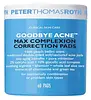
This acne treatment pad uses a pre-saturated pad with Salicylic Acid and Glycolic Acid to clear breakouts and refine skin texture.
This smoothing treatment is formulated around Glycolic Acid and Lactic Acid to refine skin texture and soften the look of wrinkles.

What's inside
What's inside
 Key Ingredients
Benefits
Concerns
Ingredients Side-by-side
Salicylic Acid 2%
Masking










Alcohol Denat.
Antimicrobial
Water
Skin ConditioningButylene Glycol
Humectant

Glycolic Acid
Buffering




Hamamelis Virginiana Water
Astringent
Aloe Barbadensis Leaf Juice
Skin Conditioning

Arginine
Masking
Sodium Hydroxide
BufferingChamomilla Recutita Flower Extract
Masking
Parfum
Masking

Prunus Persica Fruit Extract
Abrasive
Camellia Sinensis Leaf Extract
Antimicrobial
Phenoxyethanol
Preservative
Symphytum Officinale Leaf Extract
Skin ConditioningAllantoin
Skin Conditioning
Triethanolamine
BufferingAmyl Cinnamal
Perfuming
Linalool
Perfuming
Limonene
Perfuming
Benzoic Acid
Masking
Geraniol
Perfuming
Butylphenyl Methylpropional
Perfuming
Citronellol
Perfuming
Citric Acid
Buffering
Potassium Sorbate
Preservative
Sodium Benzoate
Masking
Benzyl Alcohol
Perfuming
Citral
Perfuming
Benzyl Benzoate
Antimicrobial
Salicylic Acid 2%, Alcohol Denat., Water, Butylene Glycol, Glycolic Acid, Hamamelis Virginiana Water, Aloe Barbadensis Leaf Juice, Arginine, Sodium Hydroxide, Chamomilla Recutita Flower Extract, Parfum, Prunus Persica Fruit Extract, Camellia Sinensis Leaf Extract, Phenoxyethanol, Symphytum Officinale Leaf Extract, Allantoin, Triethanolamine, Amyl Cinnamal, Linalool, Limonene, Benzoic Acid, Geraniol, Butylphenyl Methylpropional, Citronellol, Citric Acid, Potassium Sorbate, Sodium Benzoate, Benzyl Alcohol, Citral, Benzyl Benzoate
Water
Skin ConditioningButylene Glycol
Humectant
Glycolic Acid
Buffering
Glycerin
Humectant
Lactic Acid
Buffering
Caprylic/Capric Triglyceride
Masking
Malic Acid
Buffering
Tartaric Acid
Buffering
Palmitoyl Tripeptide-1
Skin Conditioning
Palmitoyl Tetrapeptide-7
Skin Conditioning
Ceramide Ng
Skin Conditioning
Salicylic Acid
Masking
Glycyrrhiza Glabra Root
Skin ConditioningCamellia Sinensis Leaf Extract
Antimicrobial
Punica Granatum Extract
AstringentLycium Barbarum Fruit Extract
Astringent
Vitis Vinifera Seed Extract
Antimicrobial
Sambucus Nigra Fruit Extract
AstringentCamellia Oleifera Leaf
MaskingChamomilla Recutita Flower Extract
Masking
Peucedanum Graveolens Extract
TonicAllantoin
Skin Conditioning
Adenosine
Skin Conditioning
Hydrogenated Lecithin
Emulsifying
Bisabolol
Antioxidant
Polyquaternium-10
Xanthan Gum
EmulsifyingCarbomer
Emulsion StabilisingPolysorbate 20
Emulsifying
Sodium Bicarbonate
Abrasive
Sodium Hydroxide
BufferingAminomethyl Propanol
BufferingPhenoxyethanol
Preservative
Benzyl Alcohol
Perfuming
Water, Butylene Glycol, Glycolic Acid, Glycerin, Lactic Acid, Caprylic/Capric Triglyceride, Malic Acid, Tartaric Acid, Palmitoyl Tripeptide-1, Palmitoyl Tetrapeptide-7, Ceramide Ng, Salicylic Acid, Glycyrrhiza Glabra Root, Camellia Sinensis Leaf Extract, Punica Granatum Extract, Lycium Barbarum Fruit Extract, Vitis Vinifera Seed Extract, Sambucus Nigra Fruit Extract, Camellia Oleifera Leaf, Chamomilla Recutita Flower Extract, Peucedanum Graveolens Extract, Allantoin, Adenosine, Hydrogenated Lecithin, Bisabolol, Polyquaternium-10, Xanthan Gum, Carbomer, Polysorbate 20, Sodium Bicarbonate, Sodium Hydroxide, Aminomethyl Propanol, Phenoxyethanol, Benzyl Alcohol
Ingredients Explained
These ingredients are found in both products.
Ingredients higher up in an ingredient list are typically present in a larger amount.
Allantoin is a soothing ingredient known for its protective and moisturizing properties; it's basically a quiet workhorse ingredient you can find in a huge range of cosmetics.
Though it can be derived from the comfrey plant, allantoin is produced synthetically for cosmetic products to ensure purity.
Research shows it can encourage your skin cells to turn over and renew by stimulating keratinocyte and fibroblast proliferation.
It also has mild keratolytic properties to help loosen and shed dead skin cells without being harsh.
Studies also suggest allantoin can help calm inflammation by dialing down some of the chemical signals your skin sends out when it is irritated.
This ingredient is typically used in the 0.1-0.5% range, and the FDA recognizes it as a skin protectant in OTC products up to 2%.
Overall, allantoin is a wonderful addition to most routines; it is stable across a wide pH range (~4-8), works well with other ingredients, and is considered non-sensitizing/non-irritating.
Fun fact: Allantoin is naturally occurring in comfrey root, beets, chamomile, and wheat sprouts. Our bodies even produce it as a byproduct of uric acid metabolism.
Learn more about AllantoinBenzyl Alcohol is an aromatic alcohol with several roles: it's a preservative, solvent, and mild fragrance component with a floral scent.
This ingredient has been deemed safe for use in cosmetic formulations at concentrations up to 5%, and up to 10% in hair dyes. You'll typically see 0.5-2% in most rinse-off or leave-on products.
As a preservative, it works by disrupting the membrane of microbial proteins. This helps keep bacteria and fungi from growing in your products.
The sensitization picture is actually quite assuring as well:of nearly 71,000 patients patch tested with benzyl alcohol, only 0.21% showed a positive reaction with most of them being weakly positive.
This led researchers to conclude that benzyl alcohol cannot be regarded as a significant contact allergen.
It is worth noting this ingredient is classified as one of the EU's regulated fragrance allergens and restricted to 1% in finished products.
Labels must also declare it in concentrations above 0.001% in leave-on products and 0.01% in rinse-off products.
At concentrations around 5%, localized redness and itching can appear as a direct irritant response and not as a true allergic reaction.
Learn more about Benzyl AlcoholButylene Glycol (or BG) is used within cosmetic products for a few different reasons:
Overall, Butylene Glycol is a safe and well-rounded ingredient that works well with other ingredients.
Though this ingredient works well with most skin types, some people with sensitive skin may experience a reaction such as allergic rashes, closed comedones, or itchiness.
Learn more about Butylene GlycolCamellia Sinensis Leaf Extract (tea extract) is one of the most well-researched plant extracts in skincare with an impressive resume.
Black tea, green tea, and oolong tea are all harvested from the Camellia Sinensis plant.
Studies show green tea extract and its catechins (like epigallocatechin gallate (EGCG)) help your skin cells product energy more efficiently and reducing the number of free-radicals that can damage your skin from the inside.
In lab-grown skin models, this translated to younger, healthier, and stronger skin.
There's also good sun protection data; researchers saw less DNA damage and redness on human skin when green tea was applied before UVB exposure. And the more they applied, the better the protection.
Needless to say, this ingredient shouldn't replace your sunscreen. But it is a great supportive ingredient that you can already find in many sunscreens and antioxidant serums.
A 2009 study found a 2% green tea lotion was effective for mild-to-moderate acne thanks to its anti-inflammatory and mild antimicrobial activity.
The quality of the extract matters a lot here:
Good extracts contain 50-90% catechins while lower quality ones are mostly there for marketing. We recommend reaching out to the brand if you have questions about the quality or source of their ingredients.
Human Repeated Insult Patch Testing showed no irritation or sensitization at use concentrations (0.86% in leave-on products and up to 30% as leaf water).
Learn more about Camellia Sinensis Leaf ExtractChamomilla Recutita Flower Extract comes from the Chamomile flower.
Chamomile is rich in antioxidants and has anti-inflammatory properties. Several compounds found in chamomile help with soothing, such as bisbolol.
Antioxidant components in chamomile make it an effective ingredient to help slow the signs of aging. Antioxidants help fight free-radical molecules, or molecules that may damage your skin.
Essential oils from chamomile have been found to improve wound healing due to its antimicrobial properties.
Ancient Greeks and Egyptians used Chamomile to treat skin redness and dryness. Chamomile has also been used to help treat stomach issues.
Learn more about Chamomilla Recutita Flower ExtractGlycolic Acid is arguably the most famous alpha hydroxy acid (AHA) with tons of research backing its benefits.
It is found naturally in sugar cane but the form used in skincare is usually synthetic for purity and stability.
Glycolic acid removes the top layer of dead skin cells to allow newer and fresher ones to emerge.
AHAs work by breaking down the structural “glue” that holds old skin cells in place. When that buildup is gone, your skin can renew itself more efficiently.
Research also shows glycolic acid stimulates collagen production, helping to firm and thicken the skin over time. This is one of its biggest advantages over other AHAs.
Overall, glycolic acid helps with:
Fun fact: Glycolic acid boosts skin hydration by helping it produce molecules that increase hyaluronic acid naturally.
To work best, glycolic acid products should have a pH between 3-4 (that’s where exfoliation is most effective but still gentle on skin).
The pH and concentration of a product are key to its effectiveness:
It is normal to feel a slight stinging sensation when using glycolic acid. This usually fades as your skin adjusts.
Because glycolic acid has the smallest molecular size in the AHA family, it can penetrate deeper, which enhances its effectiveness but also makes it more likely to irritate sensitive skin.
If your skin is very sensitive or prone to rosacea, glycolic acid may be too strong; in that case, try milder options like lactic acid or a PHA instead.
Recent studies suggest glycolic acid might even help protect against UV damage. But don’t skip sunscreen! Freshly exfoliated skin is more sensitive to the sun.
Glycolic acid is a skincare superstar. It smooths, brightens, hydrates, and firms the skin. Unless you’re highly sensitive, it’s well worth adding to your routine.
Read more about some other popular AHA's here:
Learn more about Glycolic AcidPhenoxyethanol is one of the most widely used preservatives in skincare (and for good reason!).
It has a large spectrum of antimicrobial activity and especially effective bacteria, yeast, and mold while only having a weak effect on your skin's natural microbiome.
On a cellular level, it disrupts the cell membranes of microbes by poking holes that make the cell leak. This shuts down the chemical reactions the microbe needs to make energy so it can no longer survive.
Another perk of this ingredient is that it stays functional across a wide pH range (3-10).
You'll often see it paired with boosters like Ethylhexylglycerin; one study showed that a 1:9 ratio of Ethylhexylglycerin to Phenoxyethanol damages bacterial membranes as effectively as doubling the Phenoxyethanol concentration on its own.
Typical use concentrations range from 0.3-1% depending on the formula, and this ingredient is capped at 1% int the EU.
Safety-wise, the fear mongering does not hold up to the evidence. The EU's Scientific Committee on Consumer Safety and FDA consider it safe as a preservative at up to 1%, including for children of all ages.
Adverse systemic effects only showed up in animal studies at exposures roughly 200x higher than what people get from cosmetics. And despite its very widespread use, this ingredient is a rare sensitizer and allergic reactions are uncommon.
Learn more about PhenoxyethanolSalicylic Acid (also known as beta hydroxy acid or BHA) is a well-known ingredient for treating skin that struggles with acne and clogged pores. It exfoliates both the skin's surface and deep within the pores to help clear out buildup, control oil, and reduce inflammation.
Unlike AHAs (alpha hydroxy acids), salicylic acid is oil-soluble. This allows it to penetrate into pores which makes it especially effective for treating blackheads and preventing future breakouts.
Salicylic acid is also known for its soothing properties. It has a similar structure to aspirin and can calm inflamed or irritated skin, making it a good option for acne-prone skin that is also sensitive.
Concentrations of 0.5-2% are recognized by the U.S. FDA as an over-the-counter topical acne product.
It can cause irritation and/or dryness if one's skin already has a compromised moisture barrier, so it's best to focus on repairing that before introducing this ingredient into your routine.
While salicylic acid does not increase sun sensitivity, it’s still important to wear sunscreen daily to protect your skin.
If you are looking for the ingredient called BHA or Butylated Hydroxyanisole, click here.
Learn more about Salicylic AcidSodium Hydroxide is also known as lye or caustic soda. It is used to adjust the pH of products; many ingredients require a specific pH to be effective.
In small amounts, sodium hydroxide is considered safe to use. However, large amounts may cause chemical burns due to its high alkaline.
Your skin has a natural pH and acid mantle. This acid mantle helps prevent harmful bacteria from breaking through. The acid mantle also helps keep your skin hydrated.
"Alkaline" refers to a high pH level. A low pH level would be considered acidic.
Learn more about Sodium HydroxideWater. It's the most common cosmetic ingredient of all. You'll usually see it at the top of ingredient lists, meaning that it makes up the largest part of the product.
So why is it so popular? Water most often acts as a solvent - this means that it helps dissolve other ingredients into the formulation.
You'll also recognize water as that liquid we all need to stay alive. If you see this, drink a glass of water. Remember to stay hydrated!
Learn more about Water

