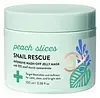
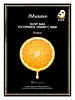
Peach Slices Snail Rescue Intensive Wash-Off Mask Versus JMsolution Glory Aqua Tocopherol Vitamin-C Mask Deluxe
This wash off mask is made with Snail Secretion Filtrate and Centella Asiatica Extract for a rinse-off calming boost.
This brightening sheet mask is formulated around Panthenol and Tocopherol to brighten dull-looking skin and hydrate skin.

What's inside
What's inside
 Key Ingredients
Benefits
Concerns
No concerns
Ingredients Side-by-side
Snail Secretion Filtrate
Skin Conditioning





Ammonium Acryloyldimethyltaurate/Beheneth-25 Methacrylate Crosspolymer
Emulsion Stabilising1,2-Hexanediol
Skin Conditioning
Centella Asiatica Extract
Cleansing

Glycyrrhiza Glabra Root Extract
Bleaching

Hydrolyzed Hyaluronic Acid
Humectant
Sodium Hyaluronate
Humectant
Hyaluronic Acid
Humectant
Water
Skin ConditioningFragaria Chiloensis Fruit Extract
Skin Conditioning
Sodium Polyacrylate Starch
AbsorbentBetula Alba Juice
AstringentPropanediol
Solvent
Butylene Glycol
Humectant
Disodium EDTA
ChelatingPhenoxyethanol
Preservative
Snail Secretion Filtrate, Ammonium Acryloyldimethyltaurate/Beheneth-25 Methacrylate Crosspolymer, 1,2-Hexanediol, Centella Asiatica Extract, Glycyrrhiza Glabra Root Extract, Hydrolyzed Hyaluronic Acid, Sodium Hyaluronate, Hyaluronic Acid, Water, Fragaria Chiloensis Fruit Extract, Sodium Polyacrylate Starch, Betula Alba Juice, Propanediol, Butylene Glycol, Disodium EDTA, Phenoxyethanol
Water
Skin ConditioningGlycerin
Humectant
Butylene Glycol
Humectant
Methylpropanediol
SolventPhenoxyethanol
Preservative
Panthenol
Skin Conditioning
Trehalose
Humectant
Hydroxyethylcellulose
Emulsion StabilisingCarbomer
Emulsion StabilisingTriethanolamine
BufferingCaprylic/Capric Triglyceride
Masking
Betaine
Humectant
Allantoin
Skin Conditioning
Polysorbate 20
Emulsifying

Ethylhexylglycerin
Skin ConditioningDisodium EDTA
ChelatingGelatin
Glyceryl Acrylate/Acrylic Acid Copolymer
Humectant1,2-Hexanediol
Skin Conditioning
Ubiquinone
Antioxidant
Parfum
Masking



Pentylene Glycol
Skin Conditioning
Acacia Senegal Gum
MaskingTocopherol
Antioxidant
Disodium Phosphate
BufferingPolysorbate 60
Emulsifying
Cellulose Gum
Emulsion StabilisingTromethamine
BufferingEthoxydiglycol
HumectantSodium Phosphate
BufferingPoloxamer 338
EmulsifyingPotassium Hyaluronate
Skin ConditioningHydrolyzed Sodium Hyaluronate
Skin Conditioning
Resveratrol
Antioxidant
Sodium Hyaluronate
Humectant
Sea Water
HumectantCitrus Limon Fruit Extract
Masking
Citrus Aurantifolia Fruit Extract
Skin ConditioningCitrus Aurantium Dulcis Fruit Extract
MaskingCitrus Paradisi Fruit Extract
Skin ConditioningUlmus Campestris Bark Extract
AstringentGlycine Max Seed Extract
Skin ConditioningHyaluronic Acid
Humectant
Saccharomyces Polypeptides
Skin Conditioning
Ferulic Acid
Antimicrobial
Citric Acid
Buffering
Ascorbic Acid
Antioxidant
Hydrolyzed Hyaluronic Acid
Humectant
Caprylyl Glycol
Emollient
Glycine Max Polypeptide
Skin Conditioning
Bacillus Ferment
Skin Conditioning
Lactobacillus Ferment
Skin Conditioning
Aspergillus Ferment
Skin ConditioningCopper Tripeptide-1
Skin Conditioning
Acetyl Hexapeptide-8
Humectant
Acetyl Tetrapeptide-5
Humectant
Palmitoyl Oligopeptide
Cleansing
Palmitoyl Pentapeptide-4
Skin Conditioning
Palmitoyl Tripeptide-5
Skin Conditioning
Palmitoyl Tetrapeptide-7
Skin Conditioning
Water, Glycerin, Butylene Glycol, Methylpropanediol, Phenoxyethanol, Panthenol, Trehalose, Hydroxyethylcellulose, Carbomer, Triethanolamine, Caprylic/Capric Triglyceride, Betaine, Allantoin, Polysorbate 20, Ethylhexylglycerin, Disodium EDTA, Gelatin, Glyceryl Acrylate/Acrylic Acid Copolymer, 1,2-Hexanediol, Ubiquinone, Parfum, Pentylene Glycol, Acacia Senegal Gum, Tocopherol, Disodium Phosphate, Polysorbate 60, Cellulose Gum, Tromethamine, Ethoxydiglycol, Sodium Phosphate, Poloxamer 338, Potassium Hyaluronate, Hydrolyzed Sodium Hyaluronate, Resveratrol, Sodium Hyaluronate, Sea Water, Citrus Limon Fruit Extract, Citrus Aurantifolia Fruit Extract, Citrus Aurantium Dulcis Fruit Extract, Citrus Paradisi Fruit Extract, Ulmus Campestris Bark Extract, Glycine Max Seed Extract, Hyaluronic Acid, Saccharomyces Polypeptides, Ferulic Acid, Citric Acid, Ascorbic Acid, Hydrolyzed Hyaluronic Acid, Caprylyl Glycol, Glycine Max Polypeptide, Bacillus Ferment, Lactobacillus Ferment, Aspergillus Ferment, Copper Tripeptide-1, Acetyl Hexapeptide-8, Acetyl Tetrapeptide-5, Palmitoyl Oligopeptide, Palmitoyl Pentapeptide-4, Palmitoyl Tripeptide-5, Palmitoyl Tetrapeptide-7
Reviews
Ingredients Explained
These ingredients are found in both products.
Ingredients higher up in an ingredient list are typically present in a larger amount.
1,2-Hexanediol is a synthetic liquid and another multi-functional powerhouse.
It is a:
- Humectant, drawing moisture into the skin
- Emollient, helping to soften skin
- Solvent, dispersing and stabilizing formulas
- Preservative booster, enhancing the antimicrobial activity of other preservatives
Butylene Glycol (or BG) is used within cosmetic products for a few different reasons:
Overall, Butylene Glycol is a safe and well-rounded ingredient that works well with other ingredients.
Though this ingredient works well with most skin types, some people with sensitive skin may experience a reaction such as allergic rashes, closed comedones, or itchiness.
Learn more about Butylene GlycolDisodium EDTA is a chelating agent. It grabs onto and deactivates metal ions that sneak into your products from water, packaging, or air.
This ingredient mainly works behind the scenes and helps with:
On top of that, this ingredient can counteract the effects of hard water by binding to the minerals in it.
One thing worth knowing is that Disodium EDTA has been shown to be a mild penetration enhancer. It can help other ingredients absorb into skin more effectively which can be a double-edged sword (great for actives, but can also make the active too strong if you have sensitive skin).
Clinical patch testing showed no significant skin irritation at typical use concentrations and minimal dermal absorption.
You'll most likely see this ingredient near the end of an ingredient list. It's typically found in concentrations less than 1%.
Learn more about Disodium EDTAHyaluronic acid (HA) is a glycosaminoglycan (basically a long sugar chain) that your skin already makes on its own. In your skin, HA lives in the extracellular matrix and acts as the body's moisture reservoir.
Topically, HA is a humectant that binds water and helps skin look more plump, smooth, and hydrated.
The only catch is that HA isn't a single thing; it actually comes in a wide range of molecular weights (~50 - 2,000+ kDA) and size matters.
Some clinical evidence links low molecular weight versions to improved wrinkle depth, elasticity, anti-inflammatory effects, and barrier repair.
This is why the best HA serums blend the two sizes together so you get the best of both worlds.
The majority of cosmetic HA is produced by bacterial fermentation, typically using Streptococcus or Bacillus strains. Typical use levels in skincare sit around 0.1-2%.
A clinical study using a 0.2% low-molecular weight HA gel showed improvement in facial seborrheic dermatitis with excellent tolerance.
These are some other common types of Hyaluronic Acid:
Learn more about Hyaluronic AcidHydrolyzed Hyaluronic Acid is hyaluronic acid (HA) that is broken down into lower molecular weight fragments.
It's a humectant that pulls and holds water in the skin to help with hydration, plumpness, and reduce transepidermal water loss.
Because hydrolyzed hyaluronic acid is smaller in size, it can slip past your outermost layer of skin more easily than full-sized HA.
Most formulations will combine all sizes to get the best of both worlds.
Typical usage levels range from 0.01-1%. Any percentage higher than 2% might become goopy and tacky.
Learn more about Hydrolyzed Hyaluronic AcidPhenoxyethanol is one of the most widely used preservatives in skincare (and for good reason!).
It has a large spectrum of antimicrobial activity and especially effective bacteria, yeast, and mold while only having a weak effect on your skin's natural microbiome.
On a cellular level, it disrupts the cell membranes of microbes by poking holes that make the cell leak. This shuts down the chemical reactions the microbe needs to make energy so it can no longer survive.
Another perk of this ingredient is that it stays functional across a wide pH range (3-10).
You'll often see it paired with boosters like Ethylhexylglycerin; one study showed that a 1:9 ratio of Ethylhexylglycerin to Phenoxyethanol damages bacterial membranes as effectively as doubling the Phenoxyethanol concentration on its own.
Typical use concentrations range from 0.3-1% depending on the formula, and this ingredient is capped at 1% int the EU.
Safety-wise, the fear mongering does not hold up to the evidence. The EU's Scientific Committee on Consumer Safety and FDA consider it safe as a preservative at up to 1%, including for children of all ages.
Adverse systemic effects only showed up in animal studies at exposures roughly 200x higher than what people get from cosmetics. And despite its very widespread use, this ingredient is a rare sensitizer and allergic reactions are uncommon.
Learn more about PhenoxyethanolSodium Hyaluronate is the salt form of hyaluronic acid. It is a long sugar chain that is naturally found in your skin, joints, and connective tissue that maintains hydration and elasticity.
In skincare, it works as a humectant. It pulls water from the environment and deeper layers of skin and binds it to the surface.
Interestingly, the size of the molecule affects its behavior:
Some clinical evidence links low molecular weight versions to improved wrinkle depth, elasticity, anti-inflammatory effects, and barrier repair.
Many serums use a blend of both weights so you can get surface hydration plus longer-lasting and deeper effects.
You'll typically see concentrations between 0.1-2% for this ingredient.
Learn more about Sodium HyaluronateWater. It's the most common cosmetic ingredient of all. You'll usually see it at the top of ingredient lists, meaning that it makes up the largest part of the product.
So why is it so popular? Water most often acts as a solvent - this means that it helps dissolve other ingredients into the formulation.
You'll also recognize water as that liquid we all need to stay alive. If you see this, drink a glass of water. Remember to stay hydrated!
Learn more about Water

