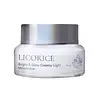
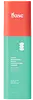
Npure Licorice Bright & Glow Creamy Light Moisturizer Versus Base Daily Radiance & Multi-Protection Serum
This brightening moisturizer is formulated around Niacinamide and Glycyrrhiza Uralensis Root Extract to brighten dull-looking skin and fade the look of dark spots.
This barrier-repair serum is formulated around Ectoin and Biosaccharide Gum-4 to strengthen the skin barrier.

What's inside
What's inside
 Key Ingredients
Benefits
Concerns
Ingredients Side-by-side
Water
Skin ConditioningCaprylic/Capric Triglyceride
Masking


Glycerin
Humectant
Niacinamide
Smoothing









Cetyl Alcohol
Emollient


1,2-Hexanediol
Skin Conditioning
Glyceryl Stearate
Emollient
Caprylyl Methicone
Skin Conditioning
Pentaerythrityl Tetraisostearate
Emollient
Polymethylsilsesquioxane
Cetearyl Alcohol
Emollient


Sodium Polyacrylate
Absorbent
Butyrospermum Parkii Butter
Skin Conditioning
Glycyrrhiza Uralensis Root Extract
Skin Conditioning
Xylitylglucoside
Humectant
Anhydroxylitol
Humectant
Palmitoyl Tetrapeptide-10
Skin Conditioning
Tranexamic Acid
Astringent
Dipotassium Glycyrrhizate
Humectant
Caprylyl Glycol
Emollient
Cetearyl Glucoside
Emulsifying
Xylitol
Humectant
Ethylhexylglycerin
Skin ConditioningTocopheryl Acetate
Antioxidant

Cetyl Palmitate
Emollient
Allantoin
Skin Conditioning
Sodium Phytate
Glucose
Humectant
Sorbitan Stearate
Emulsifying
Polysorbate 80
Emulsifying
Sodium Benzoate
Masking
Citric Acid
Buffering
Hydrogenated Lecithin
Emulsifying
Tocopherol
Antioxidant
Galactomyces Ferment Filtrate
Humectant
Phenoxyethanol
Preservative
Water, Caprylic/Capric Triglyceride, Glycerin, Niacinamide, Cetyl Alcohol, 1,2-Hexanediol, Glyceryl Stearate, Caprylyl Methicone, Pentaerythrityl Tetraisostearate, Polymethylsilsesquioxane, Cetearyl Alcohol, Sodium Polyacrylate, Butyrospermum Parkii Butter, Glycyrrhiza Uralensis Root Extract, Xylitylglucoside, Anhydroxylitol, Palmitoyl Tetrapeptide-10, Tranexamic Acid, Dipotassium Glycyrrhizate, Caprylyl Glycol, Cetearyl Glucoside, Xylitol, Ethylhexylglycerin, Tocopheryl Acetate, Cetyl Palmitate, Allantoin, Sodium Phytate, Glucose, Sorbitan Stearate, Polysorbate 80, Sodium Benzoate, Citric Acid, Hydrogenated Lecithin, Tocopherol, Galactomyces Ferment Filtrate, Phenoxyethanol
Propanediol
Solvent
Sodium Hydroxide
BufferingHydroxyethyl Acrylate/Sodium Acryloyldimethyl Taurate Copolymer
Emulsion StabilisingDisodium EDTA
Ectoin
Skin Conditioning
Sodium Acrylate/Sodium Acryloyldimethyl Taurate Copolymer
Emulsion StabilisingPhenoxyethanol
Preservative
Ethylhexylglycerin
Skin ConditioningPolysorbate 60
Emulsifying
Myrciaria Dubia Fruit Extract
Skin ConditioningCaprylic/Capric Triglyceride
Masking
Sorbitan Isostearate
Emulsifying
Biosaccharide Gum-4
Skin Conditioning
Hydrolyzed Gardenia Florida Extract
Antioxidant
Maltodextrin
Absorbent
Propanediol, Sodium Hydroxide, Hydroxyethyl Acrylate/Sodium Acryloyldimethyl Taurate Copolymer, Disodium EDTA, Ectoin, Sodium Acrylate/Sodium Acryloyldimethyl Taurate Copolymer, Phenoxyethanol, Ethylhexylglycerin, Polysorbate 60, Myrciaria Dubia Fruit Extract, Caprylic/Capric Triglyceride, Sorbitan Isostearate, Biosaccharide Gum-4, Hydrolyzed Gardenia Florida Extract, Maltodextrin
Ingredients Explained
These ingredients are found in both products.
Ingredients higher up in an ingredient list are typically present in a larger amount.
Caprylic/Capric Triglyceride (aka MCT Oil) is a lightweight emollient, solvent, and texture enhancer. It is considered a skin-softener by helping to prevent moisture loss.
Though it behaves like an oil, it is not technically one due to its chemical composition. One perk of this ingredient is that it is very stable, resistant to oxidation, and unlikely to go rancid.
In practice, that translates to a long shelf life and a consistently elegant skin feel.
While there is an assumption Caprylic Triglyceride can clog pores due to it being derived from coconut oil, there is no research supporting this. Just patch test if you have concerns.
Fractionated coconut oil and MCT Oil are both listed as Caprylic/Capric Triglyceride according to INCI. This is because INCI names are based on the ingredient’s final chemical composition and not its marketing name or source.
This ingredient is treated as the gold standard fungal acne safe oil. Even though it is coconut derived, the problematic lauric acid is stripped out.
This leaves just caprylic (C8) and capric (C10) acid. These chain lengths actually trend antifungal; a 2020 study found caprylic acid was enough to disrupt Malassezia furfur cell membrane, with a caprylic acid derivative damaging membrane structures at concentrations as low as 0.2%.
Learn more about Caprylic/Capric TriglycerideEthylhexylglycerin is created from glycerin. It is a multitasker ingredient that:
The CIR Expert Panel found minimal skin absorption or sensitization of any kind in a safety assessment. Though this ingredient is considered well-tolerated, a small number of cases of allergic dermatitis have been published since 2002. Just be sure to patch test if you are unsure.
Industry-reported use ranges from 8% in rinse-off products and 2% in leave-on formulations.
Learn more about EthylhexylglycerinPhenoxyethanol is one of the most widely used preservatives in skincare (and for good reason!).
It has a large spectrum of antimicrobial activity and especially effective bacteria, yeast, and mold while only having a weak effect on your skin's natural microbiome.
On a cellular level, it disrupts the cell membranes of microbes by poking holes that make the cell leak. This shuts down the chemical reactions the microbe needs to make energy so it can no longer survive.
Another perk of this ingredient is that it stays functional across a wide pH range (3-10).
You'll often see it paired with boosters like Ethylhexylglycerin; one study showed that a 1:9 ratio of Ethylhexylglycerin to Phenoxyethanol damages bacterial membranes as effectively as doubling the Phenoxyethanol concentration on its own.
Typical use concentrations range from 0.3-1% depending on the formula, and this ingredient is capped at 1% int the EU.
Safety-wise, the fear mongering does not hold up to the evidence. The EU's Scientific Committee on Consumer Safety and FDA consider it safe as a preservative at up to 1%, including for children of all ages.
Adverse systemic effects only showed up in animal studies at exposures roughly 200x higher than what people get from cosmetics. And despite its very widespread use, this ingredient is a rare sensitizer and allergic reactions are uncommon.
Learn more about Phenoxyethanol

